

-
Products -PCBA Manufacturing RF Connectors RF Cable Assemblys Embedded Antennas External Antennas GNSS Positioning Solutions
RF Connectors

RF Cable Assemblys
Embedded Antennas
External Antennas
GNSS Positioning Solutions































 Language


Language


Time:2026-10-16 Views:0
In modern navigation, telematics, and outdoor positioning systems, the waterproof shark fin GNSS antenna has emerged as a top-tier solution for reliable, high-precision signal reception in harsh environmental conditions. Unlike traditional rod-style or flat GNSS antennas, the shark fin-shaped antenna integrates aerodynamic design, full waterproof protection, multi-band signal compatibility, and durable structural engineering, making it the ideal choice for automotive, marine, industrial, and smart mobility applications. Whether you need stable GPS positioning for fleet vehicles, accurate GNSS tracking for marine equipment, or reliable signal performance for outdoor industrial devices, a premium waterproof shark fin GNSS antenna delivers consistent, interference-free positioning data year-round.
This comprehensive guide explores every detail of waterproof shark fin GNSS antennas, including core features, technical specifications, working principles, key benefits, application scenarios, selection criteria, installation tips, and maintenance best practices. By the end of this article, you will understand why this antenna type dominates the global GNSS accessory market and how to choose the best waterproof shark fin GNSS antenna for your specific project needs.
1. What Is a Waterproof Shark Fin GNSS Antenna?
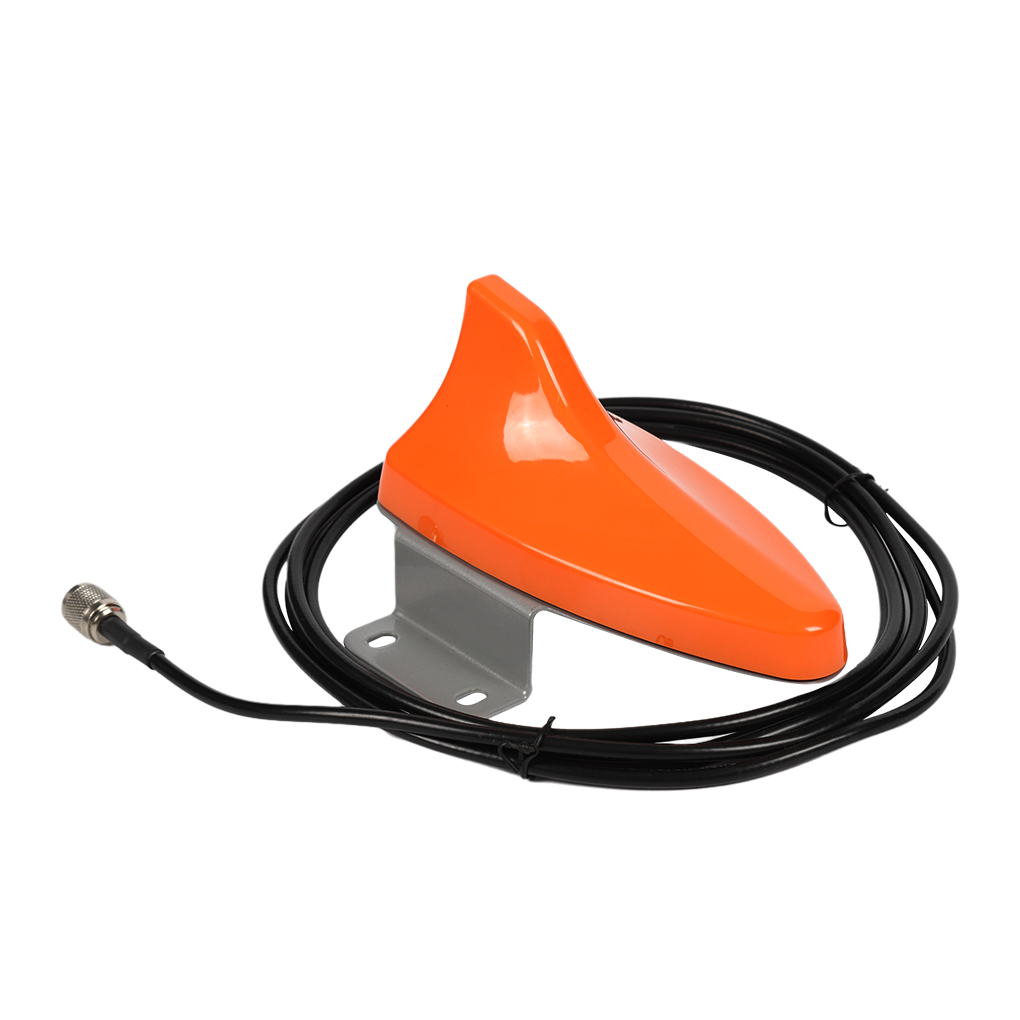
A waterproof shark fin GNSS antenna is a compact, externally mounted satellite navigation antenna designed with a streamlined shark fin housing and professional waterproof sealing technology. It is engineered to receive multi-band GNSS signals, including GPS L1/L2, GLONASS, Galileo, BeiDou, and QZSS, providing high-precision positioning, navigation, and timing (PNT) services for various devices and systems.
The “waterproof” feature is the core upgraded attribute of traditional shark fin GNSS antennas. Standard consumer-grade antennas often lack effective environmental protection and are vulnerable to rain, snow, dust, humidity, and temperature changes. In contrast, industrial and automotive-grade waterproof shark fin GNSS antennas adopt integrated sealing structures, high-strength engineering plastic housings, and professional waterproof gaskets, achieving IP65/IP67/IP68 dustproof and waterproof ratings to adapt to all outdoor and vehicle-mounted working environments .
The unique shark fin shape is not only an aesthetic design but also a functional optimization. The aerodynamic structure effectively reduces wind resistance during vehicle driving or high-speed airflow exposure, avoids signal shaking caused by strong wind impact, and prevents the accumulation of rainwater, snow, and dust on the antenna surface. This structural advantage ensures long-term stable signal reception without attenuation or failure due to environmental deposition.
2. Core Technical Features of Premium Waterproof Shark Fin GNSS Antenna
High-quality waterproof shark fin GNSS antennas are equipped with industry-leading technical configurations that distinguish them from ordinary low-cost antennas. These core features determine positioning accuracy, environmental adaptability, signal stability, and service life, which are critical for professional commercial and industrial applications.
2.1 Full-Band GNSS Signal Compatibility
Top-tier waterproof shark fin GNSS antennas support all mainstream global satellite navigation systems, achieving full-frequency signal coverage. Compatible bands include GPS L1 (1575.42MHz), GPS L2, GLONASS G1/G2, Galileo E1/E5, BeiDou B1/B2, and QZSS L1/L2. This multi-band compatibility enables the antenna to capture more satellite signals simultaneously, greatly improving positioning speed, accuracy, and anti-interference ability .
For standard single-band GPS antennas, positioning errors are prone to occur in complex environments such as urban canyons, dense forests, and high-rise buildings. Multi-band waterproof shark fin GNSS antennas can correct ionospheric errors through dual-band differential calculation, realizing meter-level or even centimeter-level high-precision positioning, which fully meets the needs of autonomous driving, precision agriculture, marine navigation, and high-precision fleet management.
2.2 Industrial-Grade Waterproof and Dustproof Performance
Waterproof performance is the most critical selling point of this antenna series. Most professional waterproof shark fin GNSS antennas adopt IP67 full waterproof rating (post-installation standard), which means completely dust-tight and resistant to temporary immersion in 1-meter deep water for 30 minutes without water ingress or performance damage . Some upgraded marine-grade models reach IP68 rating, supporting long-term underwater work and saltwater corrosion resistance.
The waterproof structure adopts an integrated injection molding process with seamless shell splicing, paired with high-temperature resistant silicone waterproof gaskets and waterproof glue filling at cable outlets. This multi-layer sealing design effectively isolates rainwater, dew, snow, dust, and humid air from the internal antenna chip and circuit board, preventing short circuits, signal attenuation, and component aging caused by water ingress .
In addition to waterproof and dustproof capabilities, the antenna has excellent weather resistance. It supports a wide operating temperature range of -40°C to +90°C, adapting to extreme cold in polar regions and high-temperature exposure in desert areas without performance degradation . The UV-resistant housing material prevents aging, yellowing, and cracking under long-term sunlight exposure, ensuring stable outdoor operation for more than 5 years.
2.3 RHCP Polarization & High-Gain Signal Reception
All professional waterproof shark fin GNSS antennas adopt Right-Hand Circular Polarization (RHCP), the standard polarization mode for satellite navigation signals . RHCP polarization can effectively reduce signal reflection and multipath interference caused by ground, buildings, and water surfaces, ensuring accurate signal reception even in complex terrain environments.
Equipped with high-performance low-noise amplifier (LNA) inside, the antenna provides stable 28dB±2dB high gain, which can amplify weak satellite signals while filtering out clutter interference such as radio frequency noise and electromagnetic signals from vehicle equipment. The built-in high-precision SAW filter further optimizes signal purity, ensuring fast satellite locking and stable positioning without drift, even in weak signal coverage areas.
2.4 Compact Aerodynamic & Integrated Design
With compact dimensions of approximately 124 × 73 × 82 mm, the shark fin antenna is small and lightweight, occupying minimal installation space . The streamlined shark fin structure reduces wind resistance by more than 60% compared with traditional protruding rod antennas. For high-speed moving vehicles and ships, this design avoids antenna shaking and signal jitter caused by strong wind, and also reduces wind noise and fuel consumption.
Moreover, the integrated all-in-one design integrates the antenna core, amplifier, filter, and waterproof structure into a single unit, eliminating the need for additional assembly parts. The simple and stylish appearance is compatible with most vehicle models and industrial equipment, achieving both functional practicability and aesthetic integration.
2.5 Stable Connection & Customizable Interface
Waterproof shark fin GNSS antennas are equipped with high-quality RG-316 low-loss coaxial cables, which have low signal attenuation and strong anti-aging ability . The standard interface supports SMA, SMB, FAKRA and other customized connectors, compatible with most vehicle navigation hosts, industrial GNSS receivers, fleet tracking terminals, and marine positioning equipment.
The cable outlet adopts a reinforced waterproof and tensile structure, which can withstand long-term bending, pulling, and vibration without wire breakage or water ingress. It fully adapts to the vibration environment of vehicle driving and ship navigation, ensuring long-term stable signal transmission.
3. Unique Advantages of Waterproof Shark Fin GNSS Antenna Over Traditional Antennas
In the GNSS antenna market, traditional rod antennas, flat patch antennas, and ordinary plastic shell antennas have obvious limitations in environmental adaptability and stability. Waterproof shark fin GNSS antennas have comprehensively upgraded these shortcomings, forming irreplaceable competitive advantages in professional applications.
3.1 Stronger Environmental Adaptability
Ordinary GNSS antennas are only suitable for indoor or mild outdoor environments, and are prone to failure in rainy, snowy, humid, or high-temperature environments. In contrast, waterproof shark fin GNSS antennas with IP67 protection grade can work stably in all weather conditions, including heavy rain, blizzard, sandstorm, high temperature, and severe cold . It is especially suitable for outdoor unattended equipment, long-distance fleet vehicles, and marine navigation equipment, reducing equipment failure rates and maintenance costs.
3.2 Higher Positioning Accuracy & Stability
Traditional single-band GPS antennas have weak anti-interference ability and are easily affected by building occlusion and electromagnetic interference, resulting in positioning drift and delay. Multi-band waterproof shark fin GNSS antennas receive signals from multiple satellite systems at the same time, with more satellite tracking channels and stronger anti-multipath interference ability. The built-in LNA and SAW filter ensure pure and stable signals, realizing real-time high-precision positioning without delay or offset.
3.3 Durable & Low Maintenance Cost
Made of high-strength ABS+PC engineering plastic and UV-resistant materials, the waterproof shark fin antenna shell is resistant to impact, compression, and aging . The fully sealed waterproof structure avoids internal circuit corrosion and water damage. Compared with traditional antennas that need frequent inspection and replacement, this antenna has a service life of more than 5 years, greatly reducing later maintenance and replacement costs for users.
3.4 Better Aerodynamic & Aesthetic Performance
Rod antennas are easy to shake and damage during high-speed driving, and have large wind resistance and loud wind noise. Flat patch antennas have poor signal reception angle and are easy to accumulate water and dust. The shark fin structure perfectly solves these problems, with low wind resistance, no water and dust accumulation, stable signal reception angle, and a more concise and beautiful appearance, which is widely used in new energy vehicles, commercial vehicles, and high-end intelligent equipment.
3.5 Multi-Functional Integration & Strong Compatibility
Many upgraded waterproof shark fin GNSS antennas support multi-functional integration, which can integrate GNSS positioning, 4G/5G communication, WiFi, AM/FM radio and other functions in a single antenna . It replaces multiple single-function antennas, simplifies equipment installation structure, reduces space occupation, and improves the overall integration and aesthetics of the equipment. It is highly compatible with automotive telematics, industrial IoT, and smart transportation systems.
4. Wide Application Scenarios of Waterproof Shark Fin GNSS Antenna
Due to its full weather resistance, high precision, high stability, and strong compatibility, the waterproof shark fin GNSS antenna is widely used in automotive, marine, industrial, agricultural, and smart city fields, covering almost all outdoor high-precision positioning scenarios.
4.1 Automotive & Intelligent Transportation Industry
The automotive field is the largest application scenario for waterproof shark fin GNSS antennas. It is suitable for passenger cars, new energy vehicles, trucks, buses, engineering vehicles, and fleet management vehicles. Installed on the roof of the vehicle, it provides high-precision positioning signals for vehicle navigation, ADAS advanced driving assistance system, autonomous driving, vehicle tracking, and fleet scheduling management .
The IP67 waterproof and shock-resistant design adapts to complex road conditions and all-weather driving environments, ensuring that the vehicle navigation system can still accurately locate in rainy days, snowy days, and high-speed driving, avoiding navigation errors and route deviation. At the same time, the aerodynamic design does not affect vehicle driving stability and energy consumption, which is the standard configuration of modern intelligent vehicles.
4.2 Marine & Waterborne Equipment
Marine working environments are humid and rainy all year round, with strong salt spray corrosion, which puts forward higher requirements for antenna waterproof and corrosion resistance. Marine-grade waterproof shark fin GNSS antennas with IP68 waterproof rating are widely used in yachts, fishing boats, cargo ships, patrol boats, and unmanned ships .
It provides stable high-precision navigation and positioning signals for marine navigation systems, ship tracking, and water traffic management. The salt spray corrosion-resistant shell and fully sealed structure can resist seawater erosion and humid marine climate, ensuring long-term stable operation of the antenna at sea and avoiding navigation failures caused by antenna damage.
4.3 Industrial IoT & Outdoor Monitoring Equipment
In the industrial field, waterproof shark fin GNSS antennas are used for outdoor industrial control equipment, intelligent monitoring terminals, unmanned aerial vehicles (UAVs), robot positioning, and outdoor IoT acquisition equipment. Most industrial equipment is deployed in unattended outdoor environments, facing extreme weather such as strong wind, heavy rain, and high temperature .
The full waterproof and weather-resistant performance of the antenna ensures continuous and accurate positioning data transmission for industrial equipment, realizing real-time monitoring, trajectory tracking, and status management of outdoor equipment, improving the intelligence and automation level of industrial operation.
4.4 Precision Agriculture & Surveying Mapping
Precision agriculture and surveying and mapping industries require centimeter-level high-precision positioning support. Waterproof shark fin GNSS antennas support multi-system differential positioning, which can provide accurate positioning data for agricultural unmanned tractors, drone plant protection, land surveying, and engineering mapping .
Farmland environments are open and exposed to wind, sun, and rain all year round. The antenna's excellent weather resistance ensures stable operation in complex farmland environments, helping precision agriculture realize automatic sowing, fertilization, and pesticide spraying, and improving surveying and mapping efficiency and accuracy.
4.5 Smart City & Public Service Facilities
In smart city construction, waterproof shark fin GNSS antennas are applied to intelligent traffic lights, mobile monitoring vehicles, public transportation scheduling, and emergency rescue equipment. It provides real-time positioning data for urban traffic management, emergency vehicle scheduling, and public facility monitoring, helping to improve urban operation efficiency and public service level.
5. How to Choose a High-Quality Waterproof Shark Fin GNSS Antenna? (Complete Buying Guide)
With the increasing market demand for waterproof shark fin GNSS antennas, there are a large number of low-cost inferior products on the market, which have problems such as poor waterproof performance, unstable signals, and easy aging. To help users select suitable and high-quality products, we summarize the core selection criteria based on professional industry experience.
5.1 Confirm Waterproof & Protection Grade
Waterproof grade is the primary selection index. For general vehicle indoor and mild outdoor use, IP65 waterproof products can meet the demand; for outdoor long-term exposure, rainy and snowy areas, and vehicle roof installation, it is recommended to choose IP67 full waterproof grade products ; for marine and underwater working scenarios, priority should be given to IP68 ultra-high waterproof grade antennas. It is necessary to confirm that the product has passed professional waterproof testing to avoid false standard labeling of inferior products.
5.2 Check GNSS Band Compatibility
According to actual positioning accuracy needs to choose single-band or multi-band products. For ordinary vehicle navigation and low-precision tracking, single-band GPS L1 antennas are cost-effective; for high-precision scenarios such as autonomous driving, precision surveying and mapping, and marine navigation, it is necessary to choose multi-band full-system GNSS antennas that support GPS, GLONASS, Galileo, and BeiDou , to ensure positioning accuracy and anti-interference ability.
5.3 Verify Signal Gain & Anti-Interference Performance
High-quality waterproof shark fin GNSS antennas have a standard gain of 28dB±2dB, with built-in LNA low-noise amplifier and SAW filter. Users should avoid low-gain antennas without filtering devices, which are prone to weak signal, slow satellite locking, and serious interference. It is recommended to check the product technical parameters to confirm the gain value and internal chip configuration to ensure stable signal performance.
5.4 Confirm Material & Structural Durability
Excellent antenna shells are made of UV-resistant and impact-resistant engineering plastics, with seamless integrated molding and multi-layer waterproof sealing structure . Inferior products use ordinary plastic shells, which are easy to age and crack, with simple sealing structure and poor waterproof effect. In addition, it is necessary to check the tensile resistance of the cable and the firmness of the interface to ensure long-term vibration and bending resistance.
5.5 Match Interface & Installation Method
Common installation methods for shark fin GNSS antennas include screw fixation and adhesive fixation, which are suitable for different installation surfaces such as vehicle roofs and equipment shells. The interface needs to be matched with the user's receiver equipment. Standard SMA, SMB, and FAKRA interfaces are optional, and customized interfaces and cable lengths can be selected according to engineering needs .
5.6 Focus on Certification & After-Sales Service
Professional waterproof shark fin GNSS antennas should pass TS16949 automotive industry certification, RoHS environmental protection certification, and REACH certification , ensuring compliance with international industry standards. At the same time, choose manufacturers with complete after-sales service and quality assurance, generally providing 1-3 years of product warranty, to avoid subsequent product failure without after-sales support.
6. Professional Installation & Maintenance Tips for Waterproof Shark Fin GNSS Antenna
Even high-quality products need standardized installation and daily maintenance to ensure long-term stable operation. Improper installation will lead to signal attenuation and waterproof failure, while scientific maintenance can effectively extend the service life of the antenna.
6.1 Standard Installation Guidelines
First, select a reasonable installation position: the antenna should be installed in an open position without shelter, such as the vehicle roof and the top of outdoor equipment, avoiding occlusion by metal objects, which will block satellite signals. Second, ensure flat installation: the installation surface should be flat and firm to avoid antenna shaking caused by uneven installation.
During installation, the waterproof gasket must be placed correctly, and the fixing screws should be tightened evenly to ensure seamless fitting between the antenna and the installation surface, so as to achieve the IP67 waterproof effect . The cable should be arranged neatly, avoiding excessive bending and pulling, and the cable outlet should be sealed with waterproof glue to prevent water ingress. After installation, conduct a waterproof test and signal test to confirm no water leakage and normal satellite locking.
6.2 Daily Maintenance & Fault Prevention
Regularly clean the antenna surface of dust, leaves, and sediment to avoid affecting signal reception. Check the cable and interface regularly to confirm no aging, cracking, or looseness. For long-term outdoor equipment, check the waterproof sealing performance every six months to ensure no aging and failure of the waterproof gasket.
Avoid manual disassembly of the antenna privately, which will destroy the integrated waterproof structure and lead to waterproof failure. If signal instability or positioning deviation is found, check whether the installation position is sheltered or the interface is loose first, and contact professional technicians for maintenance if necessary.
7. Frequently Asked Questions (FAQ) About Waterproof Shark Fin GNSS Antenna
To solve users' common doubts in the process of purchase and use, we sort out the most frequently asked professional questions and give detailed and accurate answers.
Q1: What is the difference between IP65 and IP67 waterproof shark fin GNSS antennas?
IP65 is dust-tight and resistant to low-pressure water jet impact, suitable for mild outdoor environments without long-term rain immersion. IP67 is fully dust-tight and supports short-term immersion in 1-meter deep water, with stronger waterproof and weather resistance, suitable for long-term outdoor exposure, vehicle roof, and rainy and snowy areas, which is the mainstream choice for professional applications .
Q2: Can waterproof shark fin GNSS antennas be used for autonomous driving positioning?
Yes. Multi-band IP67 waterproof shark fin GNSS antennas support multi-system satellite signal reception and differential positioning, with centimeter-level high-precision positioning capability, which fully meets the positioning and navigation needs of L2-L4 level autonomous driving and ADAS systems .
Q3: How long is the service life of a waterproof shark fin GNSS antenna?
High-quality industrial-grade products have a service life of more than 5 years. With standardized installation and regular maintenance, they can work stably for 6-8 years. Inferior products have a short service life of only 1-2 years due to poor material and waterproof structure.
Q4: Does the shark fin shape affect signal reception accuracy?
No. The streamlined shark fin shape is optimized for wind resistance and anti-deposition, and does not block or interfere with satellite signals. On the contrary, it avoids signal jitter caused by wind shaking and water and dust accumulation, which improves the stability of signal reception compared with traditional antennas.
Q5: Are waterproof shark fin GNSS antennas compatible with all GNSS receivers?
Most standard products are widely compatible with mainstream GNSS receivers, vehicle navigation hosts, and fleet tracking terminals on the market. Different interface types (SMA/SMB/FAKRA) can be customized to match different equipment, with strong universality .
As a high-performance, durable, and multi-functional satellite navigation accessory, the waterproof shark fin GNSS antenna has completely replaced traditional ordinary antennas and become the preferred solution for modern automotive navigation, marine positioning, industrial IoT, and precision surveying and mapping. Its core advantages such as IP67 industrial waterproof performance, multi-band full-system signal compatibility, high-gain anti-interference reception, aerodynamic structural design, and long-term durability make it adapt to almost all harsh outdoor working environments .
Whether you are a vehicle manufacturer, fleet operator, marine equipment supplier, industrial engineering contractor, or precision agriculture practitioner, choosing a qualified waterproof shark fin GNSS antenna can effectively improve positioning accuracy, reduce equipment failure rates, and save long-term maintenance costs. With the continuous development of intelligent transportation and industrial intelligence, waterproof shark fin GNSS antennas will have broader application prospects in the global market, becoming an indispensable core component of high-precision positioning systems.
If you are looking for a reliable, high-precision, and durable waterproof shark fin GNSS antenna, focus on industrial-grade IP67 waterproof products with full-band GNSS compatibility, professional certification, and perfect after-sales service to ensure stable and efficient operation of your positioning system in all scenarios.
Lucy Yang | lucy.y@toxutech.com
Dotty Zhao | sales04@toxutech.com
Global Business Director / Sales Team / Global Operations


 En
En Cn
Cn Korean
 Home >