

-
Products -PCBA Manufacturing RF Connectors RF Cable Assemblys Embedded Antennas External Antennas GNSS Positioning Solutions
RF Connectors

RF Cable Assemblys
Embedded Antennas
External Antennas
GNSS Positioning Solutions































 Language


Language


Time:2026-10-16 Views:0
Why Your Vehicle Needs a Roof Mount Combo Antenna
In an era where vehicles are no longer just modes of transportation but mobile communication hubs, the demand for reliable, high-performance connectivity on the move has never been greater. Whether you operate a commercial fleet, manage emergency response vehicles, or simply want seamless 5G and GPS in your RV, a vehicle roof mount combo antenna has become an essential component of modern vehicle infrastructure.
A vehicle roof mount combo antenna integrates multiple antenna elements—cellular (5G/4G), Wi-Fi, GNSS (GPS/GLONASS/BeiDou), and sometimes LMR/VHF/UHF—into a single low-profile housing that mounts permanently on the vehicle's roof. This all-in-one approach eliminates the cluttered "antenna farm" of the past, reducing installation complexity, improving aesthetics, and delivering superior signal performance across all supported frequency bands.
The global shark fin automotive antenna market alone is projected to grow from US$649 million in 2025 to US$893 million by 2032, representing a CAGR of 4.8%. This growth reflects the accelerating trend toward connected vehicles, autonomous driving systems, and the Internet of Vehicles (IoV) ecosystem. In this comprehensive guide, we will explore everything you need to know about vehicle roof mount combo antennas—from technology fundamentals and installation best practices to product comparisons and buying recommendations.
Understanding Vehicle Roof Mount Combo Antenna Technology
What Is a Combo Antenna?
A combo antenna (also called a combination antenna or multi-in-1 antenna) is a single physical unit that houses multiple antenna elements for different radio technologies. Unlike traditional setups where you might have separate antennas for GPS, cellular, and Wi-Fi, a combo antenna consolidates all these functions into one streamlined enclosure.
Modern combo antennas can integrate up to 18 antenna elements in a single low-profile enclosure. These elements typically include:
5G/4G Cellular MIMO antennas (617–6000 MHz) for broadband connectivity
Wi-Fi MIMO antennas (2.4 GHz, 5 GHz, 6 GHz, and 7.125 GHz) for local area networking
GNSS antennas (L1/L5 bands) for high-precision positioning
LMR/VHF/UHF/TETRA antennas for critical voice communications
AM/FM/DAB antennas for broadcast radio reception
The technology landscape is shifting towards high-performance ceramic or embedded metal elements within weather-resistant plastic housings. In premium vehicles, shark fin antennas equipped with MIMO structures are being adopted to support 5G and redundancy in autonomous communication systems. The trend is to integrate more sensing and communication hardware—like millimeter wave modules and V2X chips—into a single compact housing.
The Evolution from Single-Band to Multi-Band Integration
The evolution of vehicle antennas mirrors the broader transformation of automotive technology itself. Early vehicles relied on simple whip antennas for AM/FM radio reception. Then came GPS antennas for navigation, followed by cellular antennas for telematics and voice communication. Each new wireless service added another antenna, creating a cluttered roof profile and increasing installation complexity.
Today's vehicle roof mount combo antennas represent a fundamental shift from discrete single-band designs to highly integrated multi-band fusion. Modern design relies on multi-resonant structures, coupled feeding, and reconfigurable matching networks to enable single antenna elements or tightly coupled arrays to achieve excellent impedance matching and radiation efficiency across multiple discrete frequency bands.
This multi-band integration not only saves space and improves aesthetics but also reduces mutual coupling interference between antennas and potentially lowers system complexity and cost by sharing some RF front-end circuitry.
MIMO Technology in Vehicle Applications
Multiple-Input Multiple-Output (MIMO) technology is at the heart of modern vehicle combo antennas. MIMO uses multiple antennas at both the transmitter and receiver ends to improve communication performance by exploiting multipath propagation. In vehicle applications, MIMO is essential for achieving the data rates required by 5G networks.
A typical 5G MIMO multiband low-profile antenna system for automotive shark-fin applications covers 617–960 MHz (VSWR < 2), 1710–5000 MHz (VSWR < 2), and 5000–6000 MHz (VSWR < 3). These specifications ensure compatibility with global 5G and 4G LTE frequency bands, enabling seamless connectivity across different regions and network operators.
The Taoglas Raptor MAX series exemplifies the state of the art, offering up to 16-in-1 configurations with 8x LTE MIMO (617 to 6000 MHz), 6x Wi-Fi MIMO (2.4/5.8/7.125 GHz), and multiband L1/L5 GNSS. Each of the cellular antennas covers all global 5G/4G bands from 600 to 6000 MHz with excellent efficiency across all bands.
5G and V2X Integration
Vehicle-to-Everything (V2X) communication is a critical enabler for autonomous driving and intelligent transportation systems. V2X encompasses vehicle-to-vehicle (V2V), vehicle-to-infrastructure (V2I), vehicle-to-pedestrian (V2P), and vehicle-to-network (V2N) communications.
DSRC-based V2V links around 5.9 GHz typically require omnidirectional antennas with enhanced azimuth plane coverage to improve link reliability on metallic vehicle rooftops, whereas C-V2X links rely on polarization-diverse antennas operating at cellular bands to maintain robust connections with base stations.
Modern combo antennas increasingly integrate V2X functionality alongside traditional cellular, Wi-Fi, and GNSS capabilities. This integration is essential for supporting advanced driver-assistance systems (ADAS) and future autonomous driving features that depend on real-time data exchange between vehicles and their surroundings.
Key Features of Premium Vehicle Roof Mount Combo Antennas
Wideband Frequency Coverage
A premium vehicle roof mount combo antenna covers a wide frequency range from 600 MHz to 6000 MHz for cellular communications, with some models extending to 7125 MHz to support the full Wi-Fi 6E/7 spectrum. This wideband capability ensures compatibility with all major global cellular standards, including:
5G NR (Sub-6 GHz and C-band)
4G LTE and LTE-Advanced Pro
3G UMTS/HSPA
2G GSM/GPRS/EDGE
The GNSS antennas in these combo units support multiband operation on both L1 (1575.42 MHz) and L5 (1176.45 MHz) frequencies, delivering significantly improved positioning accuracy compared to single-band GNSS.
Rugged IP67/IP69K Enclosure Protection
Vehicle roof mount antennas must withstand harsh environmental conditions, from extreme temperatures and UV radiation to heavy rain, snow, and high-pressure washing. Premium combo antennas are typically rated IP67 (waterproof) or even IP69K (high-pressure, high-temperature water jet resistant).
For example, the Taoglas Patriot series features a rugged IK08and IP69K-rated housing measuring 205 mm in length by 180 mm in width, with variable whip height between 60 mm and 164 mm. The enclosure is manufactured from robust, UV-protected ABS material, ideal for use in any environment or weather condition.
Low-Profile and Aerodynamic Design
Modern combo antennas are designed with aerodynamics in mind. Their low-profile, streamlined shapes reduce wind resistance and noise while maintaining a sleek appearance that complements contemporary vehicle design. Some models, such as the Taoglas Patriot, are specifically designed to fit neatly between vehicle roof ribs, using existing OEM mounting holes and minimizing installation requirements.
Customizable Configurations
Different fleet applications require different combinations of antennas. Premium combo antenna platforms offer flexible, scalable designs that can be tailored to specific application needs. Configurations can range from basic 6-in-1 units with GNSS, 4x cellular MIMO, and Wi-Fi, to comprehensive 18-in-1 solutions that add LMR/TETRA, SDARS, and secondary GNSS.
Types of Vehicle Roof Mount Combo Antennas
Shark Fin Style
The shark fin style is the most common form factor for modern vehicle roof mount combo antennas. Named for its resemblance to a shark's dorsal fin, this design integrates multiple wireless communication functions—such as AM/FM, GPS, GNSS, LTE, 5G, Wi-Fi, and V2X—into a single aerodynamic module. The shark fin design enhances signal reception, reduces drag, and provides a sleek aesthetic that has become standard in modern vehicles.
Puck / Dome Style
Puck-style antennas feature a circular, low-profile dome design that is permanently mounted to the vehicle roof using a threaded stud. The Taoglas Synergy MA1507 is a classic example, measuring Ø161mm × 55mm and supporting 5G/4G, GPS/GLONASS/BeiDou, and Wi-Fi 2.4GHz/5GHz in a 7-in-1 configuration. Puck antennas are particularly popular for fleet and commercial vehicle applications where a robust, vandal-resistant design is required.
Whip-Style Hybrid
Some combo antennas incorporate an interchangeable whip element for LMR (Land Mobile Radio) or TETRA communications alongside the cellular, Wi-Fi, and GNSS functions. The Taoglas Raptor MAX MAX1016 offers this hybrid design, with an interchangeable whip that allows you to add frequency bands specific to your requirements in the LMR or TETRA ranges.
Comparison: Shark Fin vs. Roof Mount Combo Antenna
While both shark fin and roof mount combo antennas serve similar functions, there are important differences:
| Feature | Shark Fin | Roof Mount Combo (Puck/Flat) |
|---|---|---|
| Aerodynamics | Excellent | Good |
| Aesthetic Integration | OEM-style | Aftermarket/Commercial |
| Antenna Capacity | Moderate (up to 8 elements) | High (up to 18 elements) |
| Installation | OEM-specific or custom | Universal (standard hole) |
| Durability | Good | Excellent (IP67/IP69K) |
| Ground Plane Requirement | Yes | Minimal or none |
The choice between shark fin and puck-style combo antennas depends on your specific requirements, including the number of antenna elements needed, the vehicle type, and whether OEM integration is important.
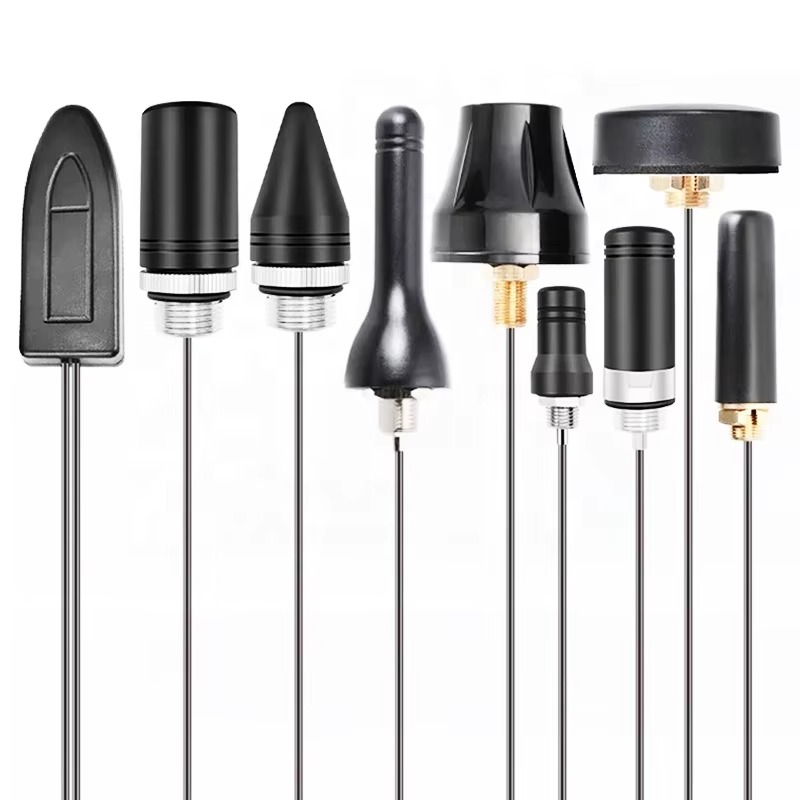
Installation Guide: Best Practices for Vehicle Roof Mount Combo Antennas
Preparation and Planning
Proper installation is critical to maximizing the performance of your vehicle roof mount combo antenna. Before beginning, consider the following:
1. Choose the Right Location: For optimal performance, mount the antenna on a flat surface in the central position of the vehicle roof. Care should be taken to mount the antenna as far as possible from other roof-mounted features such as air conditioning units, light bars, and other antennas.
2. Verify Ground Plane Requirements: For prime performance, the antenna should be fitted on a conductive metal panel. When fitting on a non-metallic panel, a conductive metal ground plane of suitable size should be fitted underneath to achieve better performance. The optimum ground plane size is typically 300mm × 300mm (11.8" × 11.8").
3. Plan Cable Routing: Ensure you have a clear path for routing cables from the antenna through the vehicle roof and to your communication equipment. Consider cable length requirements and whether low-loss cable extensions are needed.
Drilling and Mounting
Most permanent mount combo antennas require a single hole in the vehicle roof, typically ranging from 22mm to 24mm in diameter.
Step-by-Step Installation:
1. Mask and Drill: Mask the area around the hole position to protect the surface. Drill a pilot hole and increase the hole size to the specified diameter. Ensure the drill bit does not contact the headliner.
2. Prepare the Surface: Deburr and clean the area around the hole, carefully removing all waste. Remove paint and primer from the under-panel surface to ensure adequate contact with washer and nut. Apply petroleum jelly or paint around the cut edge of the hole to prevent corrosion.
3. Apply Adhesive and Feed Cables: On the underside of the antenna, there is typically a 3M adhesive patch. Peel away the protection, feed the cables through the hole, position the antenna over the hole, and press down firmly onto the panel.
4. Secure the Mount: A split nut is used to easily fit onto the thread through the cables. The nut is attached from the underside of the panel and secured with a final tighten using a spanner. Recommended mounting torque is typically 5 N·m.
Sealing and Weatherproofing
Proper sealing is essential to prevent water ingress and ensure long-term reliability. After installation, check the compression of the rubber boot against the mounting panel. A small bead of neutral cure silicone sealant can be applied around the periphery of the mounting boot if required.
For the Taoglas Patriot series, a custom-engineered foam gasket ensures a perfect seal between the antenna and the curved vehicle roof, accommodating the complex contours of modern vehicle roofs.
Cable Routing and Connection
The cables supplied with combo antennas are typically RG-174 for GNSS feed and TGC-200 for other feeds. The heatshrink will denote which cable is which for ease of installation. Connect each individual connector to the correct port of the router. If any cable is unused, fit a 50Ω terminator to the individual connection.
For installations requiring longer cable runs, low-loss cable extensions such as TGC-200 should be used to minimize signal attenuation.
Applications and Use Cases
Fleet Management and Telematics
Fleet operators increasingly rely on real-time vehicle tracking, driver behavior monitoring, and remote diagnostics. A vehicle roof mount combo antenna provides the reliable, multi-network connectivity required for these telematics applications. The Taoglas Supercombo series, with up to 8-in-1 connectivity including 2xGNSS, 2x 5G/4G MIMO, 2x Wi-Fi MIMO, AM/FM/WB, and DAB, delivers robust global connectivity for navigation, infotainment, and telematics systems—even in the harshest environments.
Emergency Services and Public Safety
Emergency response vehicles require the highest levels of connectivity reliability. The Taoglas Patriot series was originally developed for the Ford Interceptor, allowing direct replacement of the vehicle's OEM antenna while adding multi-radio connectivity. This approach eliminates the need for additional holes to be drilled in the vehicle roof, streamlining installation and reducing costs for upfitters.
Autonomous Driving and V2X
Autonomous vehicles depend on continuous, low-latency connectivity for V2X communication, real-time HD mapping updates, and remote assistance. Combo antennas with integrated V2X capability support the critical communication links needed for safe autonomous operation. The trend toward integrating more sensing and communication hardware—like millimeter wave modules and V2X chips—into a single compact housing is driving the next generation of combo antenna design.
RV and Overlanding Connectivity
Recreational vehicle owners and overlanding enthusiasts demand reliable connectivity in remote locations. A vehicle roof mount combo antenna with high-gain 5G/4G MIMO and multiband GNSS provides the signal boost needed to stay connected while traveling off the beaten path.
Public Transportation and Smart Cities
Buses, trams, and other public transportation vehicles benefit from combo antennas that support passenger Wi-Fi, real-time vehicle tracking, and communication with smart city infrastructure. The aerodynamic design and low-profile form factor make these antennas ideal for urban environments where aesthetics and space are at a premium.
Buying Guide: How to Choose the Right Vehicle Roof Mount Combo Antenna
Step 1: Determine Your Connectivity Requirements
Start by identifying the wireless technologies you need to support:
Cellular: 5G, 4G LTE, 3G fallback? How many MIMO layers (2x2, 4x4, 8x8)?
Wi-Fi: 2.4 GHz only, or also 5 GHz and 6 GHz for Wi-Fi 6E/7?
GNSS: Single-band L1 or dual-band L1/L5 for high-precision positioning?
LMR/TETRA: Do you need critical voice communication capabilities?
AM/FM/DAB: Is broadcast radio reception required?
Step 2: Choose the Right Configuration
Match the antenna configuration to your router or communication equipment. For example:
A 7-in-1 antenna (1x GNSS, 4x cellular MIMO, 2x Wi-Fi) suits most fleet telematics applications
A 15-in-1 or 16-in-1 antenna (1x GNSS, 8x cellular MIMO, 6x Wi-Fi, optional LMR) is ideal for high-bandwidth mobile edge computing and video streaming applications
An 18-in-1 antenna (dual GNSS, 8x cellular MIMO, 6x Wi-Fi, LMR/TETRA, SDARS) supports the most demanding multi-network connectivity requirements
Step 3: Verify Environmental Ratings
Ensure the antenna's IP rating matches your operating environment:
IP67: Suitable for most vehicle roof applications, protected against dust and water immersion up to 1 meter
IP69K: Recommended for vehicles subject to high-pressure washing or extreme weather conditions
Step 4: Consider Mounting Options
Evaluate your vehicle roof type and thickness:
Metal roof: Standard screw mount with ground plane
Non-metallic roof (fiberglass, composite): Requires an internal ground plane or a ground-plane-independent antenna design
Existing OEM hole: Some antennas, like the Taoglas Patriot, are designed to reuse existing OEM mounting holes
Step 5: Check Cable and Connector Compatibility
Verify that the antenna's cable type, length, and connector types are compatible with your equipment. Common connectors include SMA(M), RP-SMA(M), and FAKRA. Cable lengths are typically 300mm to 5m, with custom lengths available upon request.
Step 6: Evaluate Customization Options
If your application has unique requirements, check whether the antenna manufacturer offers customization services, including:
Custom frequency band configurations
Custom cable lengths and connector types
Custom colors to match vehicle exteriors
Custom mounting hardware for specific vehicle models
Market Trends and Future Outlook
The Connected Vehicle Revolution
The automotive industry is undergoing a fundamental transformation toward connected, autonomous, shared, and electric (CASE) mobility. Vehicle roof mount combo antennas are at the heart of this transformation, enabling the seamless connectivity that underpins advanced driver-assistance systems, over-the-air updates, and V2X communication.
Integration of Sensing and Communication
The future of vehicle roof mount antennas lies in the convergence of communication and sensing. Next-generation combo antennas will integrate millimeter-wave radar modules, UWB positioning systems, and V2X chips alongside traditional cellular, Wi-Fi, and GNSS functions. This integration will transform the roof antenna into a centralized communication and perception node, serving as a key enabler for autonomous driving functions.
Smart Beamforming Technology
The next frontier in vehicle antenna technology is the transition from passive, omnidirectional radiation patterns to active, spatially selective smart beamforming. By using antenna arrays with advanced RF and digital signal processing, beamforming can dynamically form narrow beams pointed at specific base stations or satellites, actively finding and tracking the strongest signal while suppressing interference from other directions.
Global Market Growth
The global shark fin automotive antenna market is expected to reach US$893 million by 2032, growing at a CAGR of 4.8% from 2026 to 2032. Asia-Pacific—especially China, Japan, and South Korea—dominates production and consumption due to the booming electric vehicle and smart car segments. In North America and Europe, demand for high-bandwidth antennas is rising rapidly due to stricter vehicle connectivity regulations and the increasing adoption of ADAS/AV systems.
Frequently Asked Questions
What is the difference between a combo antenna and a standard antenna?
A combo antenna integrates multiple antenna elements for different radio technologies (cellular, Wi-Fi, GNSS, LMR) into a single housing, while standard antennas typically serve only one function. Combo antennas eliminate the need for multiple separate antenna installations, reducing roof clutter and installation complexity.
Can I install a vehicle roof mount combo antenna myself?
While DIY installation is possible for experienced technicians, professional installation is recommended due to the need for precise drilling, proper sealing, and correct cable routing. Improper installation can lead to water leaks, signal degradation, and voided warranties.
How do I choose between 2x2, 4x4, and 8x8 MIMO configurations?
The MIMO configuration should match your router's capabilities and your bandwidth requirements. 2x2 MIMO is sufficient for basic telematics and voice communication. 4x4 MIMO supports higher data rates for video streaming and real-time data applications. 8x8 MIMO is recommended for maximum throughput in bandwidth-intensive applications.
What is the importance of L1/L5 GNSS?
Dual-band GNSS (L1/L5) provides significantly better positioning accuracy than single-band L1 GNSS. The L5 signal is less susceptible to multipath interference and atmospheric delays, making it ideal for applications requiring sub-meter accuracy, such as autonomous driving and precision agriculture.
How do I maintain my vehicle roof mount combo antenna?
Regular inspection of the antenna base and cable connections is recommended, especially after extreme weather events or vehicle washing. Check for signs of water ingress, corrosion, or physical damage. Clean the antenna housing with a soft cloth and mild detergent. Avoid using high-pressure washers directly on the antenna base seals.
A vehicle roof mount combo antenna is no longer a luxury—it is a necessity for any vehicle that relies on reliable, high-speed connectivity. By integrating multiple antenna elements into a single, rugged, low-profile housing, combo antennas deliver superior performance, simplified installation, and a streamlined appearance that enhances both function and form.
Whether you are upgrading a fleet of commercial vehicles, equipping an emergency response vehicle, or enhancing your RV's connectivity, investing in a quality vehicle roof mount combo antenna from a reputable manufacturer like Taoglas, Panorama Antennas, or Teltonika will pay dividends in improved signal performance, reduced installation complexity, and long-term reliability.
As the automotive industry continues its march toward full connectivity and autonomy, the vehicle roof mount combo antenna will evolve from a simple communication device into a centralized perception and communication hub—the intelligent antenna of tomorrow.
For more information on selecting and installing the right vehicle roof mount combo antenna for your application, contact a qualified antenna solutions provider today.
Lucy Yang | lucy.y@toxutech.com
Dotty Zhao | sales04@toxutech.com
Global Business Director / Sales Team / Global Operations


 En
En Cn
Cn Korean
 Home >