

-
Products -PCBA Manufacturing RF Connectors RF Cable Assemblys Embedded Antennas External Antennas GNSS Positioning Solutions
RF Connectors

RF Cable Assemblys
Embedded Antennas
External Antennas
GNSS Positioning Solutions































 Language


Language


Time:2026-10-15 Views:0
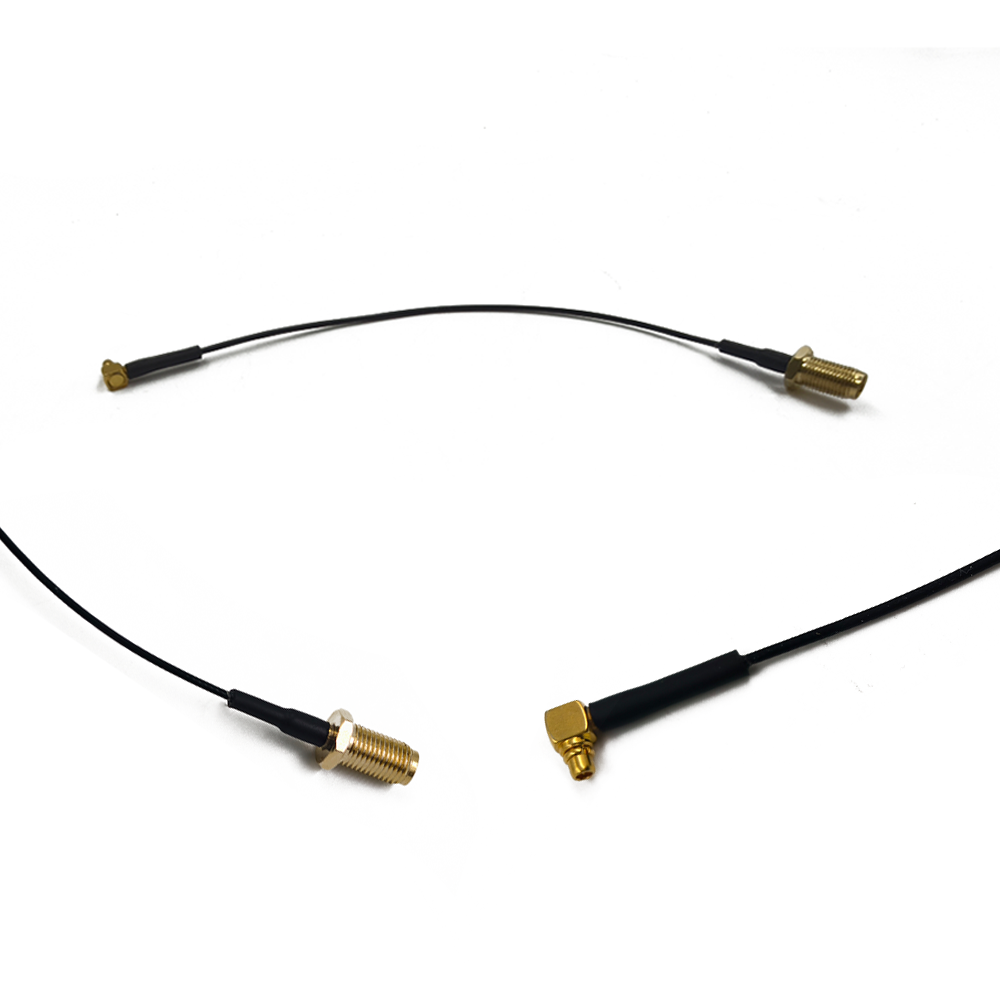
U.FL SMA antenna jumper cables are essential RF coaxial pigtail cables widely used in modern wireless communication systems, IoT devices, industrial networking, and consumer electronics. Serving as a critical bridge between miniature internal U.FL (IPEX/MHF) connectors on wireless modules and standard external SMA antenna ports, these jumper cables solve the core problem of signal transmission conversion for compact wireless devices. Whether you are upgrading WiFi antennas, modifying LTE/5G gateway devices, assembling GPS tracking equipment, or building industrial wireless sensor systems, highquality U.FL SMA jumper cables directly determine signal stability, transmission efficiency, and longterm device reliability. This comprehensive guide covers everything you need to know about U.FL SMA antenna jumper cables, including core specifications, key features, application scenarios, selection criteria, installation tips, and common troubleshooting, helping you make the best purchasing and usage decisions.
1. What Is a U.FL SMA Antenna Jumper Cable?
A U.FL SMA antenna jumper cable is a flexible coaxial adapter cable designed with dual connectors: one end features a tiny U.FL (also known as IPEX or MHF1) male/female connector for soldering or plugging into compact PCBmounted wireless modules, and the other end is equipped with a standard SMA connector for connecting external highgain antennas. As a specialized RF jumper, it acts as a signal transition component that converts the ultrasmall internal interface of mini wireless devices to a universal external antenna interface.
Different from ordinary extension cables, U.FL SMA jumper cables are professionally optimized for highfrequency wireless signal transmission. They adopt a 50ohm standard impedance matching design, which is universally compatible with most wireless communication frequency bands. The U.FL connector side is ultracompact (only 3mm × 3mm in size), perfectly adapting to the ultrathin and miniaturized design of modern circuit boards, while the threaded SMA connector provides a firm, antiloose connection for outdoor and longterm use scenarios.
It is necessary to distinguish between SMA and RPSMA connectors here, a key detail for cable selection. Standard SMA connectors have external threads with inner pins, while RPSMA (Reverse Polarity SMA) has internal threads with outer pins. Most civilian WiFi devices use RPSMA, while industrial RF equipment, GPS modules, and cellular communication devices mostly adopt standard SMA. Regular U.FL SMA antenna jumper cables strictly follow industry interface standards to avoid signal failure or connection damage caused by interface mismatch.
2. Core Structural Composition & Technical Specifications
The superior performance of U.FL SMA antenna jumper cables stems from their precise layered structure and standardized technical parameters. Each component is professionally designed to reduce signal loss, resist electromagnetic interference, and ensure stable highfrequency transmission. Below are the core structure and key technical specifications of mainstream U.FL SMA jumper cables on the market.
2.1 Internal Structural Design
The U.FL SMA coaxial jumper cable adopts a fourlayer coaxial shielding structure, which is the standard configuration for highquality RF signal transmission cables:
Inner Conductor: Made of highpurity tinned copper or silverplated copper, with excellent electrical conductivity to minimize signal attenuation during transmission. Silverplated copper conductors are used in highend models for lower highfrequency loss and better oxidation resistance.
Insulation Layer: Made of highdensity polyethylene (HDPE) or FEP fluoroplastic, featuring low dielectric constant, high temperature resistance, and stable insulation performance. It effectively isolates the inner conductor from the shielding layer to prevent signal short circuits and ensure consistent impedance throughout the cable.
Shielding Layer: Doublelayer braided shielding (tinned copper braid + aluminum foil shielding) with a shielding coverage rate of over 90%. This structure can effectively isolate external electromagnetic interference (EMI) and radio frequency interference (RFI), preventing signal attenuation and distortion caused by environmental noise, which is crucial for stable wireless signal transmission in complex industrial environments.
Outer Protective Sheath: Made of flexible PVC or LSZH environmental protection material, with wear resistance, bending resistance, antiaging, and lowtemperature resistance properties. It protects the internal cable core from mechanical damage, dust, and moisture erosion, adapting to indoor and outdoor longterm use.
2.2 Key Technical Parameters
Professional U.FL SMA antenna jumper cables comply with international RF industry standards, with unified core parameters to ensure compatibility and stability:
Standard Impedance: 50 Ohms, fully matching the impedance of WiFi, Bluetooth, LTE, 5G, GPS, and other wireless devices, avoiding signal reflection and power loss caused by impedance mismatch
Effective Frequency Range: 0MHz – 6000MHz, covering mainstream communication frequency bands including 2.4GHz WiFi, 5GHz WiFi, 6GHz WiFi 6E, 4G LTE, 5G sub6G, GPS, and Bluetooth
VSWR (Voltage Standing Wave Ratio): ≤1.5, ultralow standing wave ratio, ensuring minimal signal reflection and high transmission efficiency
Cable Model Options: RG113, RG178, RG316 are the most common models. RG113 is ultrathin and highly flexible for narrow installation spaces; RG178 balances flexibility and loss resistance for daily civilian use; RG316 has low highfrequency loss and high temperature resistance for industrial scenarios
Bending Radius: Minimum 6.8mm, supporting flexible bending and wiring in compact equipment without damaging the cable core
Mating Cycles: More than 500 times, ensuring longterm plugandplay stability without loose connections
Operating Temperature Range: 40℃ to +85℃, adapting to extreme temperature environments of industrial equipment and outdoor devices
3. Unique Advantages of U.FL SMA Antenna Jumper Cables
Compared with other RF adapter cables, U.FL SMA antenna jumper cables have irreplaceable advantages in miniaturization, compatibility, stability, and practicability, making them the first choice for wireless device antenna matching. The core advantages are summarized as follows:
3.1 UltraMiniaturized & SpaceSaving
The U.FL terminal is one of the smallest RF connectors in the industry, with an ultrasmall footprint that is perfectly compatible with mini PCIe wireless cards, M.2 wireless modules, tiny IoT sensor modules, and drone control boards. It can be directly soldered or plugged into compact PCBs without occupying valuable equipment internal space. In contrast, traditional SMAtoSMA cables are bulky and cannot be applied to mini embedded devices. The ultrathin cable body supports hidden wiring inside equipment, meeting the lightweight and miniaturized design requirements of modern electronic products.
3.2 Low Signal Loss & High Transmission Stability
With 50ohm precise impedance matching and doublelayer shielding structure, U.FL SMA jumper cables effectively reduce signal attenuation, standing wave loss, and electromagnetic interference. In highfrequency signal transmission scenarios such as 5G and WiFi 6E, the cable can maintain high signal integrity, avoid network delay, packet loss, and signal weakening caused by cable loss, and greatly improve the transmission distance and stability of wireless devices. Highquality silverplated copper core models further reduce highfrequency loss, ensuring consistent signal output in longdistance wiring.
3.3 Wide Compatibility & Strong Versatility
This series of jumper cables is compatible with almost all mainstream wireless modules on the market, including Intel, Broadcom, and Realtek WiFi modules, 4G/5G LTE modem modules, GPS/Beidou positioning modules, Bluetooth transmission modules, and industrial IoT wireless communication modules. The standard SMA interface can connect all types of external antennas, including omnidirectional rubber antennas, highgain directional antennas, outdoor waterproof antennas, and vehiclemounted antennas. It supports multiple device modification and upgrade scenarios with extremely high versatility.
3.4 Durable & Easy to Install
The threaded SMA connector features a locking design, which is firm and antiloose after installation, not easy to fall off due to vibration or shaking, and is suitable for mobile devices and outdoor equipment. The cable body is flexible, wearresistant, and antiaging, resisting daily bending, extrusion, and temperature changes. The plugandplay design requires no professional welding tools for most scenarios, allowing users to complete antenna replacement and device upgrading independently, greatly reducing installation and maintenance costs.
4. Main Application Scenarios of U.FL SMA Antenna Jumper Cables
Due to their excellent performance and wide compatibility, U.FL SMA antenna jumper cables are widely used in civilian electronics, industrial Internet of Things, smart devices, communication equipment, and aerospace model fields. The mainstream application scenarios are detailed below:
4.1 WiFi Network Equipment Upgrading
This is the most common usage scenario. Most mini WiFi network cards (mini PCIe/M.2) for industrial computers, laptops, and embedded motherboards are equipped with builtin U.FL interfaces and only support weak internal antennas. By connecting a U.FL SMA jumper cable, users can install external highgain WiFi antennas, effectively improving WiFi signal reception and transmission capability, expanding wireless coverage, and solving problems such as weak laptop WiFi signals, poor router wall penetration, and unstable industrial computer network connections. It is fully compatible with WiFi 4, WiFi 5, WiFi 6, and WiFi 6E dualband and triband devices.
4.2 4G/5G LTE Communication Devices
Industrial CPE gateways, 4G/5G wireless routers, mobile communication modules, and vehiclemounted LTE devices all rely on U.FL SMA jumper cables to connect external cellular antennas. The builtin U.FL interface of communication modules needs to be converted to a standard SMA interface through jumpers to install highgain outdoor antennas, enhancing 4G/5G signal reception in weak signal areas such as suburbs, basements, and rural areas, improving network speed and connection stability, and ensuring the normal operation of industrial communication and vehicle networking equipment.
4.3 GPS/BDS Positioning Equipment
Vehiclemounted GPS trackers, drone positioning modules, industrial navigation equipment, and wearable positioning devices all use U.FL SMA jumper cables to connect external GPS/Beidou highprecision antennas. The ultralowloss transmission characteristic of the cable ensures stable reception of satellite signals, reduces positioning delay and drift, and improves positioning accuracy. The miniaturized cable design is especially suitable for smallsized positioning terminals such as drones and portable trackers.
4.4 Industrial IoT & Smart Sensor Systems
Industrial wireless sensors, smart home gateway devices, wireless data transmission modules, and industrial wireless monitoring equipment widely use U.FL SMA jumper cables for antenna expansion. In complex industrial environments with many electromagnetic interference sources, the doublelayer shielding structure of the cable can effectively resist external interference and ensure stable wireless data transmission of sensor equipment, supporting longterm stable operation of industrial IoT systems.
4.5 Model & Drone Equipment
Consumer drones, fixedwing models, and remote control wireless transmission modules use U.FL SMA jumper cables to upgrade signal antennas. Replacing the original weak internal antenna with an external highgain antenna through the jumper can effectively extend the remote control distance and image transmission distance of drones, and improve the antiinterference ability of flight signals, avoiding signal disconnection and flight loss caused by environmental interference.
4.6 RF Test & Experimental Development
In RF circuit testing, wireless module research and development, and university laboratory experiments, U.FL SMA jumper cables are used as universal signal conversion connecting lines. They connect miniature test modules to professional RF test instruments, providing stable signal transmission channels for equipment debugging, performance testing, and circuit optimization, and are essential auxiliary tools for wireless communication R&D work.
5. How to Choose the Right U.FL SMA Antenna Jumper Cable? (Buying Guide)
There are many types of U.FL SMA antenna jumper cables on the market, with differences in cable model, length, interface type, and material. Choosing an inappropriate cable will lead to increased signal loss, poor compatibility, or short service life. The following key selection factors help you accurately match the required product:
5.1 Confirm Interface Polarity & Type
First, confirm whether the device needs standard SMA or RPSMA interface. Civilian WiFi routers and ordinary wireless cards mostly use RPSMA, while industrial communication modules, GPS equipment, and professional RF instruments use standard SMA. Mismatched interfaces cannot be installed normally and may even damage the device interface. At the same time, confirm the U.FL terminal model (MHF1/U.FL standard), which is compatible with most mainstream modules, and avoid MHF4 ultrasmall interface mismatch.
5.2 Select Appropriate Cable Model
RG113 Cable: Ultrathin and highly flexible, suitable for ultranarrow internal wiring of mini devices such as drones and portable sensors, with small signal loss and low cost, ideal for civilian daily use.
RG178 Cable: The most costeffective universal model, balancing flexibility and transmission performance, suitable for most WiFi, Bluetooth, and lowfrequency cellular signal devices, widely used in home and small industrial equipment.
RG316 Cable: Highend industrialgrade cable, with low highfrequency loss, high temperature resistance, and strong antiinterference ability, suitable for 5G highfrequency transmission, industrial hightemperature environments, and longterm continuous working equipment.
5.3 Reasonable Cable Length Selection
Signal loss increases with cable length, so it is necessary to choose the shortest cable that meets the installation requirements. Conventional optional lengths include 5cm, 10cm, 15cm, 20cm, 30cm, 50cm, etc. For indoor shortdistance wiring within 30cm, conventional models are sufficient; for longdistance wiring above 50cm or highfrequency 5G signal transmission, priority should be given to lowloss RG316 cables to reduce signal attenuation.
5.4 Focus on Material & Craftsmanship
Highquality jumper cables use tinned/silverplated copper conductors, doublelayer full coverage shielding, and thickened antiaging sheaths, with smooth interface plating and tight plugging. Inferior products use ironcore conductors and singlelayer sparse shielding, which have large signal loss, poor antiinterference ability, and are easy to oxidize and loose, resulting in unstable signals. For industrial and longterm use scenarios, must choose formal highquality products with stable parameters.
6. Installation Steps & Usage Precautions
Correct installation and usage can maximize the performance of U.FL SMA antenna jumper cables and extend their service life. The standard installation steps and key precautions are as follows:
6.1 Standard Installation Steps
Step 1: Power off the wireless device to avoid interface burnout caused by live operation.
Step 2: Locate the U.FL interface on the wireless module, gently buckle the U.FL terminal of the jumper cable onto the interface, and confirm that it is tightly clamped without looseness.
Step 3: Fix the cable body along the equipment wiring groove to avoid excessive bending and extrusion.
Step 4: Screw the SMA terminal of the jumper cable onto the external antenna, tighten the threaded interface properly to ensure close contact, and avoid overtightening to prevent thread damage.
Step 5: Power on the device, test signal strength and network stability, and confirm normal signal transmission.
6.2 Key Usage Precautions
Avoid excessive bending and folding of the cable (exceeding the minimum bending radius), which may break the internal conductor and shielding layer and cause signal failure
Do not frequently plug and unplug the interface to reduce wear and ensure longterm connection stability
Keep the cable and interface dry and clean to avoid moisture, dust, and oil pollution causing poor contact and signal attenuation
Avoid wiring the cable close to highvoltage lines and power equipment to reduce electromagnetic interference
For outdoor use, match with waterproof antennas and do a good job in interface waterproofing and dustproofing to adapt to harsh outdoor environments
7. Common Problems & Troubleshooting Solutions
In the process of using U.FL SMA antenna jumper cables, users may encounter problems such as weak signals, unstable networks, and no signal. The following summarizes common faults and targeted solutions:
7.1 Weak Wireless Signal & Short Transmission Distance
Causes: Excessively long cable leading to increased signal loss, inferior cable with poor shielding performance, loose interface connection, or mismatched impedance.
Solutions: Replace with a lowloss short cable, check and retighten the interface, select a standard 50ohm matching cable, and avoid using inferior lowquality jumper cables.
7.2 Unstable Network & Frequent Packet Loss
Causes: External electromagnetic interference, poor cable shielding, damaged internal cable core, or loose interface contact caused by vibration.
Solutions: Reroute the cable away from interference sources, replace the highshielding cable, check the cable body for damage, and fix the cable and interface to avoid vibration looseness.
7.3 No Signal After Installation
Causes: Wrong interface polarity (SMA/RPSMA mismatch), incomplete U.FL interface clamping, or damaged cable core.
Solutions: Confirm and replace the matching interface cable, replug the U.FL terminal to ensure tight connection, and replace the damaged jumper cable.
7.4 Signal Attenuation In HighFrequency 5G Bands
Causes: Ordinary RG113/RG178 cables have large highfrequency loss, unable to adapt to 5G highfrequency signal transmission.
Solutions: Replace with industrialgrade RG316 lowloss jumper cables to effectively reduce highfrequency signal attenuation.
8. Frequently Asked Questions (FAQ)
Q1: Are U.FL and IPEX connectors the same?
A: Yes, U.FL is the official model name of the connector, while IPEX is the common industry name. The two are completely universal in size and performance, and U.FL SMA jumper cables are fully compatible with all IPEX interface modules.
Q2: Can U.FL SMA jumper cables be used for both 2.4G and 5G dualband WiFi?
A: Absolutely yes. Standard U.FL SMA jumper cables have a frequency range covering 06GHz, which fully supports 2.4GHz, 5GHz, and 6GHz WiFi 6E dualband/triband signal transmission, with no frequency band adaptation problems.
Q3: Does cable length affect wireless signal speed?
A: Yes. Longer cables will produce certain signal loss, especially in highfrequency bands. It is recommended to use the shortest cable that meets the installation requirements. For longdistance wiring, lowloss RG316 cables are recommended to minimize speed loss.
Q4: What is the difference between SMA and RPSMA jumper cables?
A: The core difference is the internal and external thread structure and contact pin position. SMA is mostly used for industrial communication, GPS, and professional RF equipment; RPSMA is specially used for civilian WiFi routers and wireless cards. The two are not universal and must be selected according to device interface standards.
Q5: Are these jumper cables suitable for outdoor longterm use?
A: Conventional cables can be used outdoors, but it is recommended to choose LSZH waterproof and antiaging sheath models, and match with waterproof antennas and do interface waterproof treatment to avoid rain and moisture erosion affecting service life.
As an indispensable core accessory in wireless communication systems, U.FL SMA antenna jumper cables undertake the important task of signal conversion and stable transmission between mini internal modules and external antennas. With ultraminiaturized design, low signal loss, strong antiinterference ability, and wide compatibility, they are widely used in WiFi networking, 4G/5G communication, GPS positioning, industrial IoT, drone models, and R&D testing scenarios.
Choosing a highquality U.FL SMA antenna jumper cable can effectively improve wireless device signal strength, transmission stability, and service life, avoiding network instability, short transmission distance, and frequent equipment failures caused by inferior cables. When purchasing, users need to comprehensively consider interface type, cable model, length, and usage scenarios to select the most matching product. Standardized installation and maintenance can further maximize the cable’s performance and provide a reliable guarantee for the stable operation of various wireless devices.
Lucy Yang | lucy.y@toxutech.com
Dotty Zhao | sales04@toxutech.com
Global Business Director / Sales Team / Global Operations


 En
En Cn
Cn Korean
 Home >