

-
Products -PCBA Manufacturing RF Connectors RF Cable Assemblys Embedded Antennas External Antennas GNSS Positioning Solutions
RF Connectors

RF Cable Assemblys
Embedded Antennas
External Antennas
GNSS Positioning Solutions































 Language


Language


Time:2026-10-15 Views:0
Tractor mount GNSS antennas have become an indispensable core component of modern precision agriculture, enabling centimeter-level positioning accuracy for tractors, harvesters, sprayers, and other farm machinery. As global farming shifts from traditional manual operation to automated, intelligent, and digital management, high-performance tractor-mounted GNSS antennas solve critical pain points such as low positioning precision, signal instability, and poor environmental adaptability in field operations. This comprehensive guide covers everything you need to know about tractor mount GNSS antennas, including working principles, key features, installation standards, selection criteria, maintenance tips, and application benefits, fully optimized for Google SEO to help agricultural operators, equipment dealers, and engineering professionals make informed purchasing and usage decisions.
1. What Is a Tractor Mount GNSS Antenna?
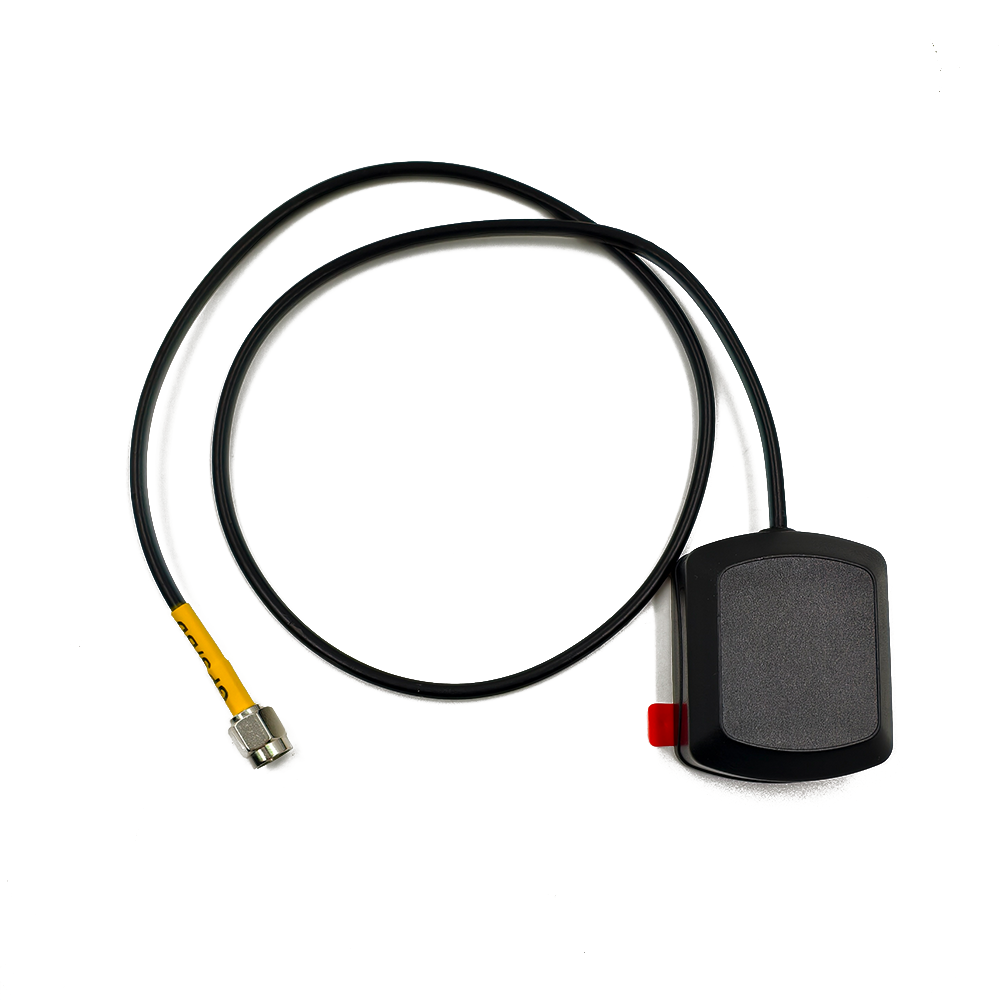
A tractor mount GNSS antenna is a professional satellite signal receiving device specially designed for off-road agricultural machinery working environments. Unlike ordinary consumer-grade GPS antennas, industrial-grade tractor-mounted GNSS antennas support multi-system, multi-band satellite signal reception, covering GPS, GLONASS, BeiDou, Galileo, and QZSS global navigation satellite systems. It is professionally mounted on the top, roof, or frame of agricultural tractors to capture high-precision satellite signals, transmit data to the tractor’s RTK (Real-Time Kinematic) positioning system, autosteering module, and farm management terminal, and finally realize accurate positioning, automatic driving, route planning, and intelligent operation of farm machinery.
Tractor mount GNSS antennas are divided into single-band and dual-band/multi-band models. Single-band (L1) antennas are suitable for basic meter-level positioning scenarios such as ordinary field walking and rough operation recording, while dual-band (L1+L2) and multi-band antennas can eliminate ionospheric interference, quickly resolve carrier phase ambiguity, and achieve sub-centimeter to centimeter-level positioning accuracy (1–3cm), which is the mainstream configuration for modern intelligent tractors supporting automatic planting, fertilizing, spraying, and harvesting.
Different from fixed GNSS antennas for surveying and mapping, tractor mount GNSS antennas focus on mobility, shock resistance, weather resistance, and anti-interference. They need to adapt to long-term vibration during tractor driving, extreme outdoor temperatures, rain, snow, dust, and complex farmland signal shielding environments, ensuring stable signal output throughout all agricultural operation cycles.
2. Core Working Principle of Tractor Mount GNSS Antennas
The working logic of a tractor-mounted GNSS antenna is based on global satellite navigation signal capture, filtering, amplification, and transmission. The complete positioning workflow can be divided into four core steps, which determine the final positioning accuracy and stability of the tractor:
First, multi-satellite signal capture. The high-gain antenna array inside the tractor mount GNSS antenna receives electromagnetic signals from multiple global navigation satellite systems in real time. The multi-band design ensures synchronous reception of L1, L2, and L5 frequency band signals, covering all mainstream civilian and professional navigation frequencies, avoiding signal loss caused by single-frequency signal failure or interference.
Second, signal filtering and anti-multipath processing. Farmland environments have complex signal reflection sources such as soil, crops, water surfaces, and metal tractor frames, which easily cause multipath signal interference and lead to positioning deviation. Professional tractor GNSS antennas are built with built-in anti-multipath circuits and choke ring structures, which can filter reflected clutter signals, retain pure satellite direct signals, and effectively improve positioning stability in complex field scenarios.
Third, low-noise signal amplification. The built-in low-noise amplifier (LNA) enhances weak satellite signals captured in occluded environments such as dense crop canopies and field depressions, ensuring sufficient signal strength for subsequent data resolution without introducing extra noise.
Fourth, real-time data transmission and positioning calculation. The processed high-quality satellite signals are transmitted to the tractor’s RTK receiver through high-frequency coaxial cables. Combined with base station differential data, the system completes real-time kinematic positioning calculation, outputs accurate position coordinates, heading angle, and speed data, and guides the tractor’s autosteering system to realize precise operation.
3. Key Features of High-Performance Tractor Mount GNSS Antennas
Qualified agricultural tractor mount GNSS antennas must meet strict industrial-grade standards, adapting to the harsh working conditions of agricultural machinery. The core differentiated features that distinguish professional products from ordinary antennas are as follows, which are also the key indicators for Google users to screen high-quality products:
3.1 Multi-System Multi-Band Compatibility
Premium tractor mount GNSS antennas support full constellation signal reception, including GPS L1/L2/L5, GLONASS G1/G2, BeiDou B1/B2/B3, Galileo E1/E5, and QZSS multi-frequency bands. Full-constellation coverage ensures that the tractor can capture enough satellite signals at any time and any farmland, effectively solving the problem of insufficient satellite resources and positioning failure in high-latitude areas, mountainous farmlands, and terrain-occluded fields. Multi-band technology also realizes fast fixed RTK ambiguity, with a fixed success rate of over 99.5% in open fields, ensuring continuous and stable centimeter-level positioning.
3.2 Industrial-Grade Environmental Adaptability
Agricultural tractors work outdoors all year round, facing extreme weather such as high temperature, low temperature, heavy rain, snow, strong wind, and intense ultraviolet radiation. High-quality tractor mount GNSS antennas adopt IP67/IP69K dustproof and waterproof ratings, fully complying with ISO 20653 off-road equipment protection standards. They can resist high-pressure water flushing during tractor daily maintenance, prevent dust and rainwater from penetrating the internal circuit, and adapt to working temperatures ranging from -40℃ to +85℃.
In terms of material durability, the antenna radome adopts UV-stable PC/PBT composite resin material, which avoids aging, yellowing, and cracking caused by long-term sunlight exposure. The internal sealing structure uses chemical-resistant rubber gaskets, which can resist corrosion from farm fertilizers, pesticides, diesel, and cleaning agents, ensuring a service life of more than 5 years in harsh farm environments.
3.3 Vibration and Shock Resistance for Off-Road Operation
Farmland roads are bumpy, and tractors will generate continuous vibration and occasional impact during plowing, sowing, and harvesting operations. Professional tractor mount GNSS antennas pass MIL-STD-810 military-grade vibration and shock tests. The internal circuit board adopts reinforced fixing technology, and the external mounting bracket is made of high-strength aluminum alloy, which can withstand long-term high-frequency vibration and accidental collision impact, avoiding signal interruption or equipment damage caused by mechanical loosening.
3.4 Excellent Anti-Interference and Anti-Multipath Performance
There are many interference sources in tractor working environments, including on-board high-current circuits, radio communication equipment, and metal structural parts. Tractor mount GNSS antennas are equipped with professional shielding layers and anti-RF interference circuits, which can effectively isolate electromagnetic interference from on-board electrical systems. At the same time, the built-in choke ring anti-multipath structure suppresses signal reflection interference from crop surfaces, water bodies, and metal car bodies, greatly reducing positioning jitter and drift, and ensuring stable positioning accuracy during low-speed operation and headland turning of tractors.
3.5 Easy Installation and Universal Mounting Design
Most tractor mount GNSS antennas adopt universal mounting structures, including magnetic suction, bolt fixing, and bracket clamping installation methods, compatible with all mainstream tractor brands such as John Deere, Case IH, New Holland, Kubota, and YTO. The compact and lightweight design does not occupy the operating space of the tractor roof, and the standardized SMA/TNC interface supports quick plug-and-play connection with mainstream RTK receivers and autosteer systems. The reserved adjustable angle structure allows users to fine-tune the antenna angle to ensure an optimal sky view.
4. Why Tractor Mount GNSS Antennas Matter for Precision Agriculture
The popularization of tractor-mounted GNSS positioning systems is the core foundation of modern precision agriculture transformation. Traditional agricultural operations rely on manual visual judgment and experience, with large operation errors, serious waste of seeds, fertilizers, and pesticides, and low operation efficiency. Equipping tractors with high-precision GNSS antennas can bring comprehensive economic and operational value to farmland management:
4.1 Improve Farm Operation Accuracy
Centimeter-level positioning realized by tractor mount GNSS antennas supports precise operations such as accurate sowing, variable-rate fertilization, targeted pesticide spraying, and consistent depth plowing. It effectively solves common problems in traditional operations such as repeated sowing, missed seeding, overlapping spraying, and uneven plowing depth. The operation error is controlled within 2–3cm, which greatly improves the standardization and refinement of farmland operations, and lays a foundation for high-yield and high-quality crop planting.
4.2 Reduce Agricultural Input Costs
Precision positioning and automatic driving guided by GNSS antennas can reduce the waste rate of seeds, fertilizers, and pesticides by 15%–30%. Accurate route planning avoids repeated operation paths, reduces tractor fuel consumption by 10%–20%, and lowers the loss of mechanical parts caused by invalid driving. For large-scale farms with hundreds or thousands of acres of planting area, the cost savings of agricultural materials and fuel every year are extremely considerable, significantly improving farm economic benefits.
4.3 Boost Agricultural Operation Efficiency
Tractor automatic driving based on GNSS positioning can realize 24-hour uninterrupted operation, breaking the limitation of manual operation time and physical strength. The system automatically plans the optimal operation route, avoids path confusion and repeated travel caused by manual driving, and improves the overall operation efficiency of tractors by more than 40%. Especially in the busy farming season, it can effectively shorten the operation cycle, ensure that all farming links are completed on schedule, and avoid yield loss caused by delayed farming time.
4.4 Support Intelligent Farm Management
The real-time positioning data collected by tractor mount GNSS antennas can be uploaded to the cloud farm management platform, realizing real-time monitoring of tractor operation status, operation area, operation track, and working hours. Farm managers can remotely view field operation data, reasonably arrange mechanical scheduling and personnel work, realize digital and intelligent refined management of farmland, and solve the pain points of difficult supervision and inaccurate data statistics in traditional large-scale farm management.
4.5 Adapt to Complex Field Operation Scenarios
Traditional manual driving is prone to deviation in complex scenarios such as uneven farmland, sloped fields, and dense crop fields. High-performance tractor mount GNSS antennas maintain stable centimeter-level positioning in various complex environments, support normal operation of tractors in low-light, foggy, and slightly occluded environments, and greatly expand the adaptable scenarios of agricultural machinery operations.
5. Professional Tractor Mount GNSS Antenna Installation Guidelines
Even high-quality tractor mount GNSS antennas cannot exert optimal performance without standardized installation. Unreasonable installation position and fixing method will cause signal occlusion, multipath interference, and positioning deviation, seriously affecting the operation effect. The following are industry-standard installation specifications summarized according to agricultural machinery engineering and GNSS positioning technical requirements:
5.1 Optimal Mounting Position Selection
The antenna must be installed at the highest unobstructed position of the tractor, usually the center of the tractor roof or the top of the rear frame, to ensure a 360° full-sky view without occlusion. The antenna’s horizontal viewing angle should be kept above 5°–10° from the horizontal plane, avoiding occlusion by cab brackets, material bins, harvester headers, and other mechanical structures. It is strictly forbidden to install the antenna under metal components or in low-lying positions, so as not to block satellite signal reception.
For tractors supporting dual-antenna heading positioning, the two GNSS antennas need to be installed horizontally and symmetrically, with a fixed spacing (generally more than 1 meter), ensuring parallel installation and no height difference, to avoid heading angle calculation errors.
5.2 Installation Fixing Requirements
According to the tractor operation vibration characteristics, the antenna must be firmly fixed. For magnetic suction antennas, choose a smooth metal mounting surface to ensure tight adsorption, and stick anti-vibration gaskets to prevent sliding during vibration. For bolt-fixed antennas, tighten the fixing bolts in a diagonal order to ensure uniform stress, and install anti-loosening gaskets to prevent bolt loosening caused by long-term vibration. After installation, shake the antenna slightly to confirm no shaking or displacement.
5.3 Wiring and Interface Standardization
Use high-quality low-loss coaxial cables matched with the antenna to avoid signal attenuation caused by inferior cables. The cable layout should avoid winding, extrusion, and friction with sharp mechanical parts, and stay away from high-current lines, engine ignition systems, and other RF interference sources. The interface connection must be tight and sealed with waterproof glue to prevent water vapor and dust from entering and causing signal failure. Reserve a proper cable margin to adapt to the up and down vibration of the tractor during driving.
5.4 Post-Installation Debugging
After the installation is completed, power on the system for debugging. Check the satellite signal quantity, signal strength, and RTK fixed state through the tractor terminal. Ensure that the number of captured satellites is more than 20, the signal SNR value is stable, and the RTK fixed rate reaches 100% in an open field. Simulate low-speed driving and headland turning operations to verify no positioning drift or jitter, and complete the installation and debugging work after confirming stable data.
6. How to Choose the Right Tractor Mount GNSS Antenna (Complete Buying Guide)
There are various types of tractor mount GNSS antennas on the market with uneven quality. Many agricultural users face confusion in selection. Combining actual agricultural operation scenarios and Google high-frequency search demands, we summarize the core selection criteria to help users accurately match products:
6.1 Match Positioning Accuracy Requirements
For simple agricultural operations such as field patrol and rough land leveling with low accuracy requirements, a single-band L1 GNSS antenna with meter-level accuracy can meet the demand, with low cost and high cost performance. For refined operations such as precise sowing, variable fertilization, and automatic driving, it is necessary to select dual-band/multi-band RTK antennas with centimeter-level accuracy to ensure long-term stable high-precision positioning.
6.2 Prioritize Agricultural-Grade Environmental Resistance
Avoid choosing ordinary civilian GNSS antennas that are only suitable for indoor and static use. Focus on products with IP67/IP69K waterproof and dustproof ratings, wide temperature adaptation range, UV resistance, and chemical corrosion resistance. Verify whether the product has passed off-road vibration and shock resistance tests to ensure long-term stable work in farmland harsh environments.
6.3 Confirm System and Interface Compatibility
Before purchasing, confirm the matching degree between the antenna and the tractor’s existing RTK receiver, autosteer system, and brand model. Prioritize universal SMA/TNC interfaces and full-constellation compatible antennas to avoid equipment mismatch and signal incompatibility. For modified and upgraded old tractors, choose compact and easy-to-install antenna models to adapt to limited installation space.
6.4 Focus on Anti-Multipath and Anti-Interference Ability
Farmland complex environments have serious signal multipath interference. It is recommended to choose antennas with professional choke ring structure and multi-layer shielding design. Such products can effectively suppress signal reflection and electromagnetic interference, reduce positioning jitter, and are more suitable for long-term mobile operation of tractors than ordinary patch antennas.
6.5 Consider After-Sales Service and Durability
Choose regular manufacturers with complete qualification certificates and professional agricultural machinery supporting experience. Prioritize products with long warranty periods (more than 2 years) and perfect after-sales maintenance services. Avoid cheap inferior antennas with short service life and unstable signals, which cause frequent failure of agricultural machinery operations and affect farming progress.
7. Daily Maintenance & Troubleshooting of Tractor Mount GNSS Antennas
Scientific daily maintenance can effectively extend the service life of tractor mount GNSS antennas and maintain stable positioning performance. Regular inspection and maintenance are essential to avoid sudden equipment failure during busy farming seasons. The following are practical maintenance methods and common fault solutions:
7.1 Daily Maintenance Tips
First, regular cleaning. After each farm operation, clean the dust, crop residues, pesticide and fertilizer attachments on the antenna radome with clean water and a soft cloth. Do not use corrosive cleaning agents or hard brushes to avoid scratching the radome and damaging the UV-resistant coating. For long-term idle tractors, cover the antenna with a protective cover to prevent sun exposure and rain erosion.
Second, regular inspection. Before each farming season, check whether the antenna fixing bracket is loose, whether the cable interface is waterlogged or oxidized, and whether the cable is worn or broken. Tighten loose bolts and replace aging and damaged cables in time to ensure good signal transmission.
Third, avoid man-made damage. During tractor transportation, storage, and mechanical maintenance, avoid collision and extrusion of the antenna. Do not disassemble the antenna privately, so as not to damage the internal precision circuit and shielding structure and affect positioning accuracy.
7.2 Common Faults and Solutions
Fault 1: Weak satellite signal, small number of captured satellites
Cause: Antenna installation position is blocked, cable connection is loose, or the radome is covered with dirt.
Solution: Adjust the antenna to an unobstructed position, re-plug and fasten the cable interface, and thoroughly clean the surface dirt of the antenna.
Fault 2: RTK cannot be fixed, positioning accuracy drifts
Cause: Severe multipath interference, electromagnetic interference from on-board equipment, or antenna vibration displacement.
Solution: Check and eliminate surrounding signal interference sources, re-fix the antenna to ensure stability, and restart the positioning system for recalibration.
Fault 3: Intermittent signal interruption
Cause: Aging cable internal core wire, poor interface contact, or internal circuit failure caused by water ingress of the antenna.
Solution: Replace the aging coaxial cable, re-seal the waterproof interface, and send the antenna for professional maintenance if water ingress and circuit damage occur.
Fault 4: Normal signal in static state, positioning jitter during driving
Cause: Insufficient vibration resistance of the antenna, loose fixing structure.
Solution: Reinforce the antenna mounting bracket, add anti-vibration gaskets, and replace the industrial-grade anti-vibration antenna if necessary.
8. Application Scenarios of Tractor Mount GNSS Antennas in Modern Agriculture
With the continuous upgrading of intelligent agricultural technology, tractor mount GNSS antennas have been widely used in all links of precision agricultural production, covering various operation scenarios of large, medium and small farms:
Precision Sowing and Seedling Raising: GNSS high-precision positioning guides tractors to realize fixed-point, fixed-distance and fixed-depth sowing, ensuring uniform seed distribution and consistent sowing depth, improving seed germination rate and seedling uniformity, and laying a foundation for later field management.
Variable-Rate Fertilization and Pesticide Spraying: Combined with farmland soil data and crop growth data, the GNSS positioning system realizes variable-rate fertilization and targeted spraying, accurately supplementing soil nutrients and eliminating pests and diseases, reducing agricultural material waste, and avoiding environmental pollution caused by excessive fertilization and pesticide use.
Automatic Driving and Unmanned Operation: Centimeter-level positioning data supports tractors to realize full-automatic unmanned driving, intelligent route planning, and automatic headland turning, which is suitable for large-scale continuous farmland operations and solves the problem of shortage of agricultural labor force.
Farmland Land Leveling and Plowing: GNSS positioning assists tractors in precise land leveling and consistent-depth plowing, improving farmland flatness, facilitating later irrigation and drainage, and effectively improving land utilization rate and crop yield.
Agricultural Operation Data Statistics and Supervision: Real-time positioning track data provides accurate basis for farm operation area statistics, working hour recording, and mechanical scheduling management, realizing digital and refined farm management.
9. Frequently Asked Questions (FAQ) About Tractor Mount GNSS Antennas
Q1: What is the difference between single-band and dual-band tractor GNSS antennas?
A: Single-band (L1) antennas only receive single-frequency satellite signals, with meter-level positioning accuracy, low cost, suitable for low-precision daily operations. Dual-band (L1+L2) multi-band antennas can eliminate ionospheric interference, realize centimeter-level RTK high-precision positioning, with stronger signal stability and anti-interference ability, which is the mainstream choice for modern intelligent precision agriculture.
Q2: Can tractor mount GNSS antennas work in rainy and cloudy days?
A: Professional agricultural-grade GNSS antennas have strong environmental adaptability. Cloudy, rainy, and foggy weather will not affect satellite signal reception. Even in slightly occluded environments such as crop canopies, they can maintain stable positioning, ensuring normal operation of tractors in all weather.
Q3: Do I need to replace the antenna when upgrading the tractor autosteer system?
A: It depends on the original antenna performance. If the original antenna is a single-band low-precision model, it needs to be replaced with a multi-band RTK high-precision antenna to match the upgraded high-precision autosteer system. If it is a dual-band high-performance antenna, it can be continuously used after compatibility debugging.
Q4: How long is the service life of a tractor mount GNSS antenna?
A: Industrial-grade agricultural GNSS antennas have a design service life of more than 5 years. With standardized installation and regular maintenance, the service life can reach 6–8 years. Inferior civilian antennas are prone to aging and failure in 1–2 years, which is not suitable for long-term agricultural operation.
Q5: Why does tractor GNSS positioning drift during headland turning?
A: Most of the reasons are unreasonable antenna installation, insufficient sky view, or multipath signal interference. Re-adjusting the antenna installation position to ensure full sky occlusion-free and enhancing anti-interference measures can effectively solve the turning drift problem.
10. Future Development Trends of Tractor Mount GNSS Antennas
With the rapid development of agricultural intelligence, 5G communication, and Beidou high-precision positioning technology, tractor mount GNSS antennas are evolving towards higher precision, miniaturization, intelligence, and multi-functional integration. Future products will integrate inertial navigation, temperature and humidity sensing, and fault self-diagnosis functions, realizing seamless switching of satellite positioning and inertial navigation, and achieving uninterrupted high-precision positioning in fully occluded environments such as greenhouse farmland and dense forests.
At the same time, with the popularization of agricultural Internet of Things technology, tractor GNSS antennas will realize deeper data interconnection with farm cloud platforms, providing more accurate data support for intelligent decision-making such as crop growth monitoring, yield prediction, and fine agricultural management, and further promoting the comprehensive upgrade of modern precision agriculture.
Final Thoughts
A high-quality tractor mount GNSS antenna is the core guarantee for realizing tractor high-precision positioning and intelligent agricultural operations. It is not only a signal receiving device, but also a key equipment to improve agricultural operation efficiency, reduce production costs, and promote agricultural modernization. For agricultural practitioners, selecting a professional agricultural-grade multi-band GNSS antenna, standardizing installation and maintenance, can maximize the value of intelligent agricultural machinery, create higher economic benefits for farm production, and keep pace with the global precision agricultural development trend.
Lucy Yang | lucy.y@toxutech.com
Dotty Zhao | sales04@toxutech.com
Global Business Director / Sales Team / Global Operations


 En
En Cn
Cn Korean
 Home >