

-
Products -PCBA Manufacturing RF Connectors RF Cable Assemblys Embedded Antennas External Antennas GNSS Positioning Solutions
RF Connectors

RF Cable Assemblys
Embedded Antennas
External Antennas
GNSS Positioning Solutions































 Language


Language


Time:2026-10-15 Views:0
Rugged helical GNSS antennas have become the gold standard for industrial-grade satellite positioning, delivering consistent centimeter-level accuracy, superior signal stability, and extreme environmental durability for modern navigation and tracking applications. Unlike standard consumer-grade GNSS antennas that fail in harsh operating conditions, rugged helical GNSS models combine a specialized spiral helical structure with reinforced industrial housing, making them ideal for UAVs, robotic systems, marine vessels, agricultural machinery, mining equipment, and outdoor surveying operations. This comprehensive guide explores every aspect of rugged helical GNSS antennas, including their working principles, core benefits, key features, application scenarios, selection criteria, and maintenance tips, helping engineers, technicians, and industry buyers make informed purchasing and deployment decisions.
As global industries continue to adopt autonomous technology, high-precision GNSS positioning has transitioned from a luxury feature to a mandatory requirement. Traditional patch GNSS antennas struggle with signal loss, multipath interference, and physical damage in dynamic, high-vibration, or extreme weather environments. In contrast, the rugged helical GNSS antenna solves these pain points through its unique structural design and industrial ruggedization, ensuring uninterrupted satellite signal reception across GPS, GLONASS, BDS, Galileo, QZSS, and IRNSS global navigation constellations.
1. What Is a Rugged Helical GNSS Antenna?
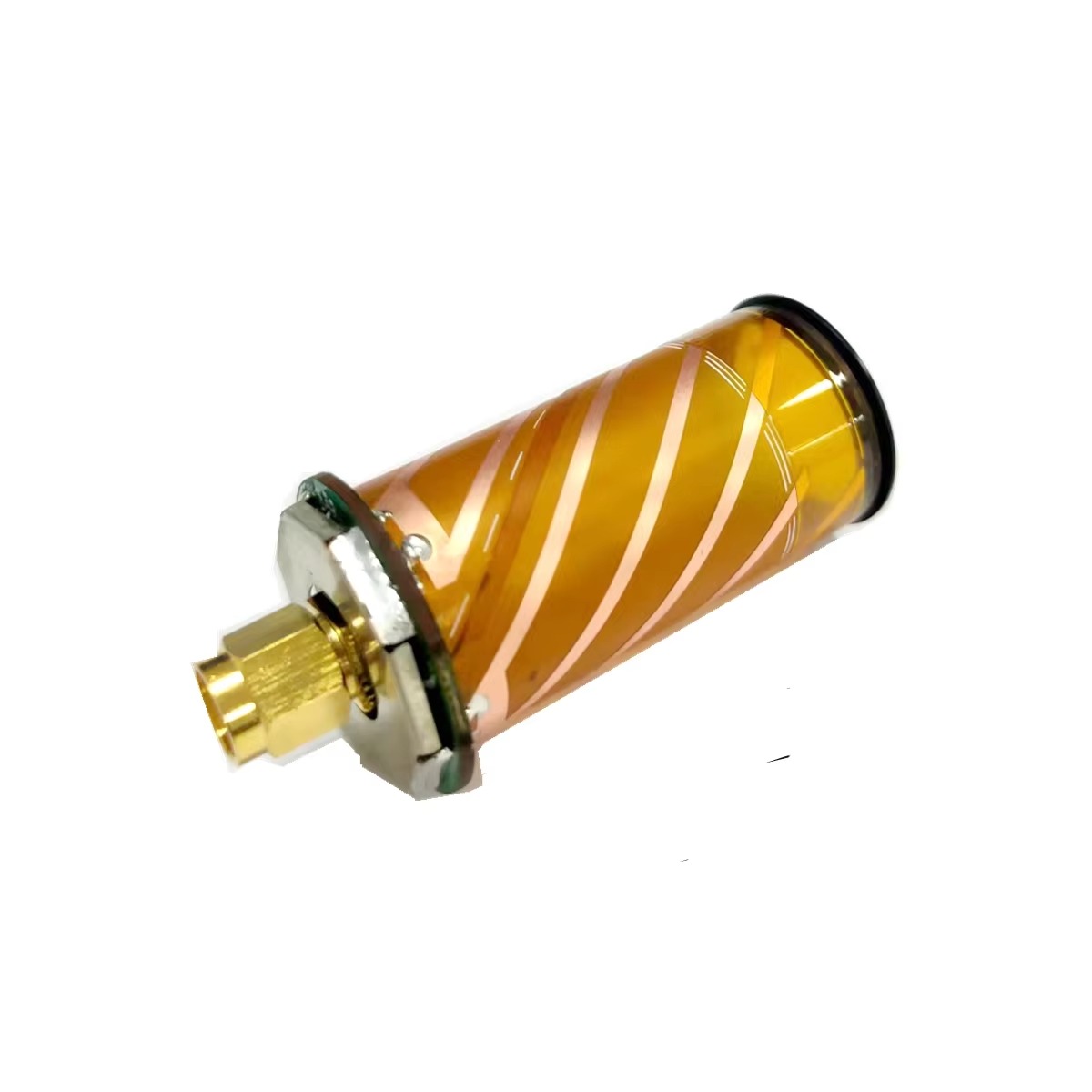
A rugged helical GNSS antenna is a high-performance, multi-frequency satellite navigation antenna engineered with a three-dimensional helical spiral radiator and heavy-duty, weatherproof packaging. It is a specialized variant of standard helical GNSS antennas, optimized specifically for harsh industrial and outdoor environments where vibration, moisture, extreme temperatures, dust, and physical impact are constant threats.
The core design differentiator lies in two key elements: the helical antenna geometry and the ruggedized industrial construction. The precision-calibrated helical spiral structure enables natural circular polarization, wide beamwidth coverage, and excellent low-elevation satellite signal reception. Meanwhile, the rugged build includes reinforced ABS or aluminum alloy housing, UV-resistant coatings, waterproof sealing, and vibration-resistant internal fixation, eliminating the fragility of conventional GNSS antennas.
Most rugged helical GNSS antennas are active multi-band devices, supporting full-spectrum GNSS frequency bands including GPS L1/L2/L5, GLONASS G1/G2/G3, BDS B1I/B2I/B1C/B2a, Galileo E1/E5a/E5b, and SBAS auxiliary positioning bands. This full-constellation support ensures maximum satellite visibility, faster signal locking, and higher positioning redundancy for mission-critical applications.
2. Working Principle of Helical GNSS Antenna Technology
To understand why rugged helical GNSS antennas outperform other antenna types, it is essential to break down their underlying working principles. Unlike flat patch antennas that rely on planar signal reception, helical GNSS antennas utilize a three-dimensional spiral conductor design with precisely calculated pitch angles, coil diameters, and ground plane specifications to optimize RF signal capture.
First, the helical structure generates stable right-hand circular polarization (RHCP), which perfectly matches the polarization of all commercial GNSS satellite signals. This matching drastically reduces signal attenuation and polarization mismatch loss, a common issue with linear-polarized antennas that struggle with tilted or dynamic device orientations. For dynamic equipment like rolling UAVs, moving agricultural robots, or swaying marine vessels, this feature ensures continuous signal lock without positioning dropout.
Second, the spiral geometry delivers an ultra-wide radiation beamwidth, covering low-elevation satellites that are typically ignored by narrow-beam patch antennas. Low-elevation satellite signals are critical for maintaining positioning accuracy in urban canyons, dense forests, and mountainous terrain where high-angle satellite visibility is limited. Rugged helical GNSS antennas capture these weak low-angle signals efficiently, extending effective positioning coverage in complex environments.
Third, the helical design provides inherent multipath interference rejection. Reflected satellite signals from buildings, ground surfaces, and vegetation are the primary cause of GNSS positioning errors. The spiral structure suppresses reflected left-hand circular polarization (LHCP) multipath signals while prioritizing direct RHCP satellite signals, significantly improving positioning precision and stability.
When combined with ruggedized hardware upgrades, this superior RF performance becomes fully adaptable to industrial conditions. Standard helical antennas may offer good signal performance but lack physical durability; rugged models reinforce every structural component to preserve RF precision under mechanical stress and environmental erosion.
3. Core Advantages of Rugged Helical GNSS Antennas Over Traditional Antennas
The growing industry preference for rugged helical GNSS antennas stems from their comprehensive advantages over conventional patch antennas, standard helical antennas, and rod GNSS antennas. Below are the key benefits that make them the top choice for high-precision industrial positioning:
3.1 Exceptional Environmental Ruggedness & Durability
The defining feature of rugged helical GNSS antennas is their industrial-grade environmental adaptability. These antennas undergo strict ruggedization testing, including waterproofing, dustproofing, UV resistance, temperature cycling, and mechanical vibration testing. Most premium models achieve IP67 or IP68 ingress protection ratings, meaning they are fully dust-tight and resistant to temporary or long-term water immersion, making them suitable for heavy rain, snow, fog, and marine splash environments.
They support an ultra-wide operating temperature range of -40°C to +85°C, maintaining stable electrical performance in freezing alpine regions and high-temperature desert industrial sites. Additionally, the reinforced metal or high-strength plastic housing resists physical impact, friction, and UV aging, preventing shell cracking, internal component displacement, and signal deviation during long-term outdoor operation. For mining, construction, and offshore applications with harsh corrosion and impact risks, many models also feature anti-corrosion coatings and shock-absorbing internal structures.
3.2 Superior Dynamic Signal Stability
Most standard GNSS antennas fail when devices tilt, rotate, or move rapidly, resulting in frequent signal loss and positioning drift. Rugged helical GNSS antennas, however, deliver consistent performance in dynamic working states thanks to their wide beamwidth and omnidirectional signal coverage. Whether UAVs perform rapid climbing, rolling, and turning, or agricultural machinery operates on uneven terrain, the helical structure maintains continuous satellite lock without blind spots.
Their excellent anti-vibration design further enhances dynamic stability. Internal antenna coils, amplifiers, and circuit boards are fixed with shockproof glue and structural brackets, avoiding loose component connections and signal interruption caused by long-term mechanical vibration from vehicle engines, drone propellers, and construction equipment.
3.3 High-Precision Multipath Rejection & Noise Suppression
Positioning accuracy is the core metric of GNSS antenna performance. Rugged helical GNSS antennas integrate professional low-noise amplifiers (LNAs) and optimized helical radiation structures to effectively filter environmental electromagnetic noise and multipath interference. Compared to patch antennas, they reduce multipath-caused positioning errors by 30%–50%, enabling stable centimeter-level RTK positioning even in complex scenarios such as urban high-rise clusters, dense woodland, and industrial plant areas.
Full-band signal reception capability allows the antenna to track multiple satellite constellations simultaneously, increasing the number of visible satellites and improving positioning redundancy. When individual satellite signals are blocked or interfered with, the system can quickly switch to alternative satellite sources, ensuring uninterrupted high-precision positioning.
3.4 Easy Integration & Low Maintenance Costs
Rugged helical GNSS antennas feature compact, lightweight structural designs with standardized mounting interfaces, including SMA, TNC, and N-type connectors, compatible with most industrial GNSS receivers, RTK modules, and autonomous control systems. They support multiple installation methods such as top mounting, side mounting, and magnetic adsorption, enabling flexible deployment on various devices and equipment.
Thanks to their high durability and environmental resistance, these antennas require almost no daily maintenance. Unlike fragile consumer antennas that need frequent replacement due to aging and damage, industrial rugged helical GNSS antennas support 5–8 years of long-term stable operation in outdoor environments, greatly reducing equipment replacement costs and downtime losses for industrial users.
4. Key Technical Features of Premium Rugged Helical GNSS Antennas
To help users identify high-quality rugged helical GNSS antennas, we summarize the standard core technical features of industry-leading products, covering frequency range, electrical performance, structural parameters, and environmental indicators:
Full Multi-Band Coverage: Supports all mainstream GNSS constellations and frequency bands, including GPS L1/L2/L5, GLONASS G1/G2, BDS B1/B2/B3, Galileo E1/E5, QZSS, and SBAS, meeting RTK high-precision positioning and standard navigation requirements.
Low Noise Figure: Equipped with high-gain low-noise amplifier (LNA) with a noise figure below 1.5dB, ensuring ultra-high signal sensitivity and weak signal capture capability.
High Gain Stability: Uniform gain distribution across the entire frequency band, with stable radiation performance and no signal attenuation in low-elevation directions.
Professional Rugged Certification: IP67/IP68 waterproof and dustproof grade, RoHS environmental certification, and anti-vibration compliance with industrial IEC standards.
Anti-Interference Design: Built-in filter circuit to suppress external electromagnetic interference from industrial equipment, radio signals, and power systems.
Wide Temperature Adaptation: Stable operation from -40°C to +85°C, suitable for global extreme climate environments.
Durable Connector Interface: Reinforced metal connectors with anti-loose design, preventing poor contact caused by vibration and frequent plugging and unplugging.
5. Main Application Scenarios of Rugged Helical GNSS Antennas
Thanks to their combination of high precision, dynamic stability, and environmental durability, rugged helical GNSS antennas are widely used in industrial, commercial, and military high-precision positioning fields. The following are the most mainstream application scenarios:
5.1 UAV Surveying & Industrial Drone Operations
UAVs represent the largest application market for rugged helical GNSS antennas. Industrial surveying drones, mapping drones, and agricultural plant protection drones face complex flight environments, including high-altitude strong winds, rapid attitude changes, and field dust and moisture interference. Patch antennas often lose lock during drone rolling and tilting, resulting in mapping data errors and flight deviation.
Rugged helical GNSS antennas provide ultra-wide-angle signal coverage and dynamic anti-interference capability, maintaining centimeter-level RTK positioning accuracy throughout drone flight. Their lightweight and compact design does not affect drone load and aerodynamic performance, while the rugged shell resists airborne dust, rain erosion, and minor collision damage, fully adapting to long-duration field flight operations.
5.2 Precision Agriculture & Autonomous Farm Machinery
Modern smart agriculture relies on autonomous tractors, seeding machines, pesticide sprayers, and harvesting robots to achieve unmanned operations. Farmland environments feature uneven terrain, long-term sun exposure, rain erosion, and mechanical vibration, which pose severe challenges to GNSS antenna stability.
Rugged helical GNSS antennas deliver stable high-precision positioning for agricultural machinery, ensuring accurate path planning, fixed-point operation, and automatic driving. Their excellent low-temperature and high-temperature resistance adapts to seasonal climate changes, and dustproof and waterproof performance prevents damage from farmland soil, rainwater, and crop debris, improving the intelligence and efficiency of agricultural production.
5.3 Marine Navigation & Offshore Engineering
Marine and offshore environments are one of the harshest operating conditions for electronic equipment, featuring high humidity, salt spray corrosion, wave vibration, and strong wind exposure. Ordinary GNSS antennas are prone to aging, corrosion, and signal failure in marine environments.
Rugged helical GNSS antennas adopt special salt-spray-resistant coatings and fully sealed waterproof structures, adapting to long-term offshore operation. They provide high-precision positioning for unmanned ships, engineering vessels, offshore surveying equipment, and marine monitoring buoys, ensuring safe navigation and accurate marine data collection even in fluctuating sea conditions and bad weather.
5.4 Mining, Construction & Heavy Machinery
Mining and construction sites are characterized by heavy dust, severe vibration, complex terrain, and variable temperatures. Engineering machinery such as excavators, loaders, mining trucks, and road construction equipment requires real-time high-precision positioning and trajectory monitoring.
The rugged structure of helical GNSS antennas resists mechanical impact, vibration, and dust erosion, while their strong anti-interference capability avoids signal interference from large mechanical equipment. They support intelligent construction functions such as automatic driving of engineering vehicles, precise construction positioning, and site operation monitoring, improving construction accuracy and safety management levels.
5.5 Outdoor Surveying, Mapping & Geographic Information Collection
Land surveying, topographic mapping, and geographic information collection require long-term field work in mountains, forests, wilderness, and urban complex environments. Surveying equipment must maintain high-precision positioning under signal shielding and multipath interference conditions.
Rugged helical GNSS antennas effectively solve the problem of weak satellite signals and large positioning errors in complex terrain. Their portable and rugged design facilitates field carrying and outdoor deployment, providing stable centimeter-level positioning data for surveying and mapping engineers and ensuring the accuracy and reliability of geographic information data.
5.6 Intelligent Transportation & Railway Monitoring
In the fields of intelligent vehicles, railway transportation, and road monitoring, rugged helical GNSS antennas provide real-time high-precision positioning and speed monitoring data. They adapt to long-term vehicle vibration, outdoor wind and sun exposure, and urban electromagnetic interference, supporting autonomous driving, vehicle trajectory tracking, and railway operation safety monitoring.
6. How to Choose the Right Rugged Helical GNSS Antenna (2026 Selection Guide)
With numerous rugged helical GNSS antenna products on the market, users need to select targeted models according to application scenarios and performance requirements. The following key selection criteria help avoid mismatched purchases and performance waste:
6.1 Confirm Frequency Band & Positioning Accuracy Requirements
For ordinary navigation and low-precision positioning scenarios, single-band L1 helical antennas can meet demand with lower costs. For RTK centimeter-level high-precision positioning used in surveying, mapping, and autonomous equipment, users must select multi-band (L1/L2/L5) rugged helical GNSS antennas that support full constellation reception to ensure positioning accuracy and stability.
6.2 Match Environmental Ruggedness Level
Ordinary outdoor scenarios such as urban drone operations only require IP67 protection grade. For extreme environments including marine salt spray, mining dust, and desert high temperatures, priority should be given to IP68 fully sealed models with salt-spray resistance and enhanced temperature adaptation capabilities.
6.3 Pay Attention to Dynamic Adaptability
For high-dynamic equipment such as UAVs and high-speed moving vehicles, select antennas with ultra-wide beamwidth and strong anti-vibration performance to ensure no signal loss during rapid attitude changes and high-speed movement. For static fixed-point monitoring equipment, conventional rugged models are sufficient.
6.4 Check Interface & Integration Compatibility
Confirm that the antenna connector type (SMA/TNC/N-type) matches the receiver or module interface. At the same time, select lightweight and compact models for limited installation space such as UAVs, and high-gain enhanced models for complex signal shielding environments.
7. Installation & Maintenance Best Practices for Rugged Helical GNSS Antennas
Although rugged helical GNSS antennas have extremely high durability, standardized installation and scientific maintenance can further extend their service life and ensure long-term stable positioning performance:
Professional Installation Guidelines: Install the antenna in an open area with no shelter from buildings, trees, or metal structures to avoid satellite signal shielding. Keep the antenna away from high-power electromagnetic equipment such as transmitters and power supplies to reduce interference. Fix the antenna firmly with matched mounting accessories to avoid loosening caused by long-term vibration. Ensure the waterproof interface is tightly connected during installation to prevent water ingress.
Daily Maintenance Tips: Regularly clean the antenna surface of dust, sediment, and attachments to avoid affecting signal reception. Check the connector status quarterly to ensure no corrosion, loosening, or poor contact. Inspect the shell for cracks and aging, and replace damaged accessories in a timely manner. Avoid long-term exposure to strong corrosive environments without protective measures. Regularly test positioning accuracy to ensure stable antenna performance.
8. Frequently Asked Questions (FAQs) About Rugged Helical GNSS Antennas
Q1: What is the difference between a rugged helical GNSS antenna and a standard helical GNSS antenna?
A: The core difference lies in environmental adaptability and structural durability. Standard helical antennas focus only on RF signal performance and are suitable for indoor or mild outdoor environments. Rugged helical GNSS antennas undergo industrial ruggedization upgrades, with waterproof, dustproof, anti-vibration, anti-corrosion, and high-low temperature resistance capabilities, adapting to all harsh industrial scenarios while retaining excellent signal reception performance.
Q2: Can rugged helical GNSS antennas achieve centimeter-level RTK positioning?
A: Yes. Premium multi-band rugged helical GNSS antennas support full GNSS constellation reception and have excellent multipath rejection capability. When matched with an RTK high-precision receiver, they can achieve stable centimeter-level and even sub-centimeter positioning accuracy, meeting the requirements of surveying, mapping, autonomous driving, and precision engineering.
Q3: Are rugged helical GNSS antennas suitable for marine use?
A: Professional marine-grade rugged helical GNSS antennas are fully applicable to marine scenarios. They feature IP68 waterproofing, salt-spray corrosion resistance, and wave vibration resistance, solving the problems of easy aging and signal failure of ordinary antennas in high-humidity and salt-fog marine environments.
Q4: Do rugged helical GNSS antennas require frequent maintenance?
A: No. Industrial rugged helical GNSS antennas have ultra-high stability and durability. Under normal operating conditions, they can operate stably for 5–8 years with only simple regular cleaning and interface inspection, requiring almost no complex maintenance.
9. Conclusion
In the era of intelligent industrialization and autonomous technology, high-precision, stable, and durable GNSS positioning equipment has become indispensable core hardware. As a top-tier industrial positioning antenna, therugged helical GNSS antenna perfectly solves the pain points of easy signal loss, poor environmental adaptability, and low precision of traditional GNSS antennas. Its unique helical RF structure delivers superior signal reception and anti-interference performance, while industrial ruggedization enables stable operation in extreme environments such as high vibration, high humidity, extreme temperature, and complex electromagnetic interference.
From UAV surveying and smart agriculture to marine navigation, mining engineering, and intelligent transportation, rugged helical GNSS antennas provide reliable centimeter-level positioning support for various high-precision industrial scenarios. For enterprises and engineers pursuing high stability, high precision, and low maintenance costs, choosing a professional rugged helical GNSS antenna is the key to improving the reliability and accuracy of satellite positioning systems.
Drone Four-Arm GNSS Antenna: The Complete Guide to Quadrifilar Helix Technology for UAV Positioning
In the rapidly evolving world of unmanned aerial vehicles (UAVs), precise positioning is not a luxury—it is a fundamental requirement. Whether a drone is conducting aerial surveying, precision agriculture, infrastructure inspection, or autonomous delivery, its ability to know exactly where it is at any given moment determines mission success or failure. At the heart of this positioning capability lies a critical component that often goes unnoticed: the GNSS antenna. Among the various antenna designs available for drone applications, the four-arm GNSS antenna—technically known as the quadrifilar helix antenna (QHA)—has emerged as a preferred solution for demanding UAV operations.
This comprehensive guide explores every aspect of drone four-arm GNSS antennas, from their underlying physics and design principles to their practical applications, performance characteristics, and selection criteria. Whether you are a drone manufacturer, systems integrator, or professional operator, understanding this technology will help you make informed decisions about your UAV's positioning subsystem.
Lucy Yang | lucy.y@toxutech.com
Dotty Zhao | sales04@toxutech.com
Global Business Director / Sales Team / Global Operations


 En
En Cn
Cn Korean
 Home >