

-
Products -PCBA Manufacturing RF Connectors RF Cable Assemblys Embedded Antennas External Antennas GNSS Positioning Solutions
RF Connectors

RF Cable Assemblys
Embedded Antennas
External Antennas
GNSS Positioning Solutions































 Language


Language


Time:2026-10-16 Views:0
RF pigtail cable assemblies are essential passive components in modern radio frequency communication systems, serving as critical short-distance interconnect solutions for RF modules, antennas, wireless devices, and testing equipment. Widely known for their flexible structure, customized length, and diverse connector combinations, RF pigtail cables bridge internal circuit boards and external antenna ports, ensuring stable signal transmission, low signal loss, and reliable electromagnetic shielding across commercial, industrial, and aerospace wireless applications. Whether you are sourcing standard RF pigtail assemblies for Wi-Fi routers, designing custom pigtail cables for 5G IoT devices, or selecting high-precision assemblies for RF testing systems, this comprehensive guide covers every core detail to help you make optimal purchasing and design decisions.
In the RF industry, a pigtail cable assembly is uniquely distinguished from regular RF jumper cables by its asymmetric structure: one end is pre-terminated with a standard RF connector, while the other end features a stripped, tinned, or open wire terminal for direct soldering, PCB mounting, or internal device integration. This structural advantage makes RF pigtail assemblies irreplaceable for compact electronic devices with limited internal space and customized wiring requirements. This guide will elaborate on definitions, core structures, common types, key technical parameters, application scenarios, selection criteria, installation specifications, maintenance tips, and industry trends of RF pigtail cable assemblies to meet the SEO search demands of global engineers, procurement specialists, and wireless system designers.
1. What Is an RF Pigtail Cable Assembly? (Core Definition)
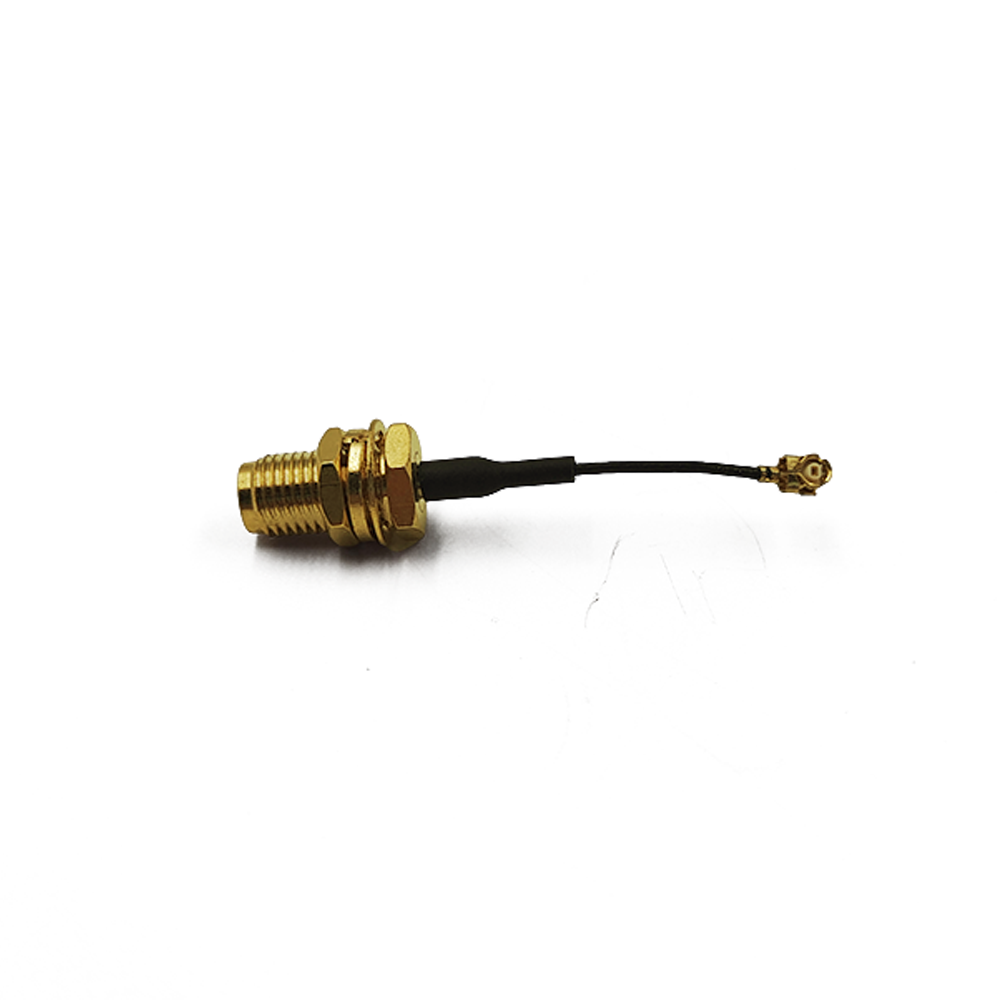
An RF pigtail cable assembly is a short-length flexible coaxial cable component professionally terminated with a single RF connector on one end and an open stripped conductor end on the other. Unlike dual-connector RF jumper cables used for equipment-to-equipment connection, RF pigtail cables are designed specifically for internal device wiring and embedded integration. The open end can be tinned for manual soldering, stripped for automated PCB welding, or customized with bare copper conductors to fit various internal assembly processes.
The core design purpose of RF pigtail cable assemblies is to solve the wiring challenges of compact wireless devices: limited internal space, fixed PCB pad positions, and customized antenna connection requirements. By converting standard external RF connector ports to flexible internal wire terminals, pigtail cables realize seamless signal transmission between external antennas and internal RF transceiver modules, effectively avoiding signal attenuation and electromagnetic interference caused by rigid wiring or mismatched interfaces.
Standard RF pigtail cable assemblies typically range from 50mm to 500mm in length, while ultra-short customized versions (20mm) and extended versions (1000mm) are widely available for special industrial and testing scenarios. All qualified pigtail assemblies strictly follow 50Ω or 75Ω impedance matching standards, consistent with mainstream RF communication system specifications, to ensure zero impedance mismatch and minimal signal reflection.
2. Core Structure of RF Pigtail Cable Assembly
A high-performance RF pigtail cable assembly adopts a multi-layer coaxial shielding structure, which determines its electrical performance, anti-interference ability, and service life. Each structural layer has independent functional attributes, and the precision of material selection and processing technology directly affects the overall RF signal transmission quality. The complete structure is divided into four core parts: center conductor, dielectric insulation layer, shielding layer, and outer jacket, plus a customized terminal processing section.
2.1 Center Conductor
The center conductor is the core carrier of RF signal transmission, usually made of high-purity tinned copper, silver-plated copper, or solid copper. Silver-plated copper conductors are preferred for high-frequency (above 6GHz) applications due to their excellent conductivity and low high-frequency loss, which effectively reduces signal attenuation during transmission. For low-frequency civil wireless devices (2.4GHz Wi-Fi, Bluetooth), tinned copper conductors are adopted to balance cost and performance. Ultra-fine stranded conductors are used for flexible pigtail cables to improve bending resistance and adapt to frequent bending in narrow device spaces.
2.2 Dielectric Insulation Layer
The dielectric layer wraps the center conductor and plays a role in insulation and impedance stabilization. The mainstream material is FEP (fluorinated ethylene propylene) and PE (polyethylene). FEP materials feature high temperature resistance (-60℃ to +200℃), low dielectric constant, and stable high-frequency performance, suitable for industrial, automotive, and high-precision RF equipment. PE materials are cost-effective and widely used in civil consumer electronics such as wireless routers, smart home devices, and IoT modules. The thickness of the dielectric layer is strictly calibrated according to impedance standards to ensure 50Ω/75Ω precise matching.
2.3 Shielding Layer
The shielding layer is the key to anti-electromagnetic interference of RF pigtail cable assemblies. High-quality products adopt double-layer or triple-layer shielding structures: the inner layer is a dense copper braided mesh, and the outer layer is an aluminum foil wrapping layer. This composite shielding structure can block internal RF signal leakage and external electromagnetic wave interference, ensuring stable signal transmission in complex electromagnetic environments. Military and aerospace-grade pigtail assemblies adopt full coverage silver-plated shielding layers with a shielding efficiency of over 95%, meeting high-standard anti-interference requirements.
2.4 Outer Protective Jacket
The outer jacket is the outermost protective layer of the pigtail cable, made of PVC, FEP, or LSZH (low smoke zero halogen) materials. PVC jackets are flexible and cost-effective for indoor civil equipment; FEP jackets are wear-resistant, high-temperature resistant, and corrosion-resistant, suitable for outdoor and industrial environments; LSZH jackets are flame-retardant and non-toxic, compliant with environmental protection standards, and widely used in indoor communication base stations, subway communication equipment, and public facility wireless systems.
2.5 Connector Terminal & Open Wire End
One end of the RF pigtail assembly is precisely crimped and soldered with standard RF connectors (SMA, RP-SMA, U.FL, MMCX, N-type), with strict torque and sealing treatment to ensure stable connection and low VSWR. The other end is professionally stripped and tinned, with uniform wire stripping length and smooth tin coating, avoiding virtual soldering, short circuit, and poor contact during PCB mounting. Customized terminal processing such as gold-plated bare wires and insulated wire splitting is available for special assembly processes.
3. Common Types of RF Pigtail Cable Assemblies (By Cable & Connector)
RF pigtail cable assemblies are classified by cable model, connector type, impedance, and flexibility, covering almost all mainstream wireless communication frequency bands and equipment interfaces. Choosing the correct pigtail type is the key to ensuring system stability and reducing signal loss. Below are the most widely used types in the global market.
3.1 Classification by Coaxial Cable Model
RG316 RF Pigtail Assembly: As the most popular universal pigtail cable, RG316 features ultra-flexibility, high temperature resistance, and low high-frequency loss. It supports frequency bands up to 18GHz, suitable for 2.4G/5G Wi-Fi, Bluetooth, 4G/5G IoT modules, and small RF testing equipment. Its ultra-thin body adapts to extremely narrow internal device spaces, making it the first choice for consumer electronics and small industrial wireless devices.
RG178 RF Pigtail Assembly: Ultra-fine lightweight pigtail cable with smaller outer diameter than RG316, more flexible, and suitable for ultra-compact devices such as wearable wireless equipment, mini IoT sensors, and drone communication modules. It is mainly used for low-power short-distance signal transmission with a maximum supporting frequency of 12GHz.
LMR100/LMR195 RF Pigtail Assembly: High-performance low-loss pigtail cable, with far lower signal attenuation than RG series cables at high frequencies. LMR100 is suitable for medium-length internal wiring (200-500mm), while LMR195 is used for slightly long-distance transmission scenarios, widely applied in 5G base station micro-modules, industrial wireless gateways, and high-precision RF testing systems.
RF0.81/RF1.13 Ultra-Micro Coax Pigtail: Super-thin micro-coaxial pigtail assemblies, specially designed for ultra-miniature devices such as notebook wireless network cards, tablet Wi-Fi modules, and M.2 interface wireless modules. They are the thinnest RF pigtail products in the industry, perfectly adapting to ultra-narrow board space design.
3.2 Classification by Connector Type
SMA/RP-SMA Pigtail Assembly: The most mainstream connector type for civil and industrial wireless equipment. SMA connectors are used for device internal wiring, while RP-SMA (reverse polarity) is specially designed for wireless router antenna interfaces to prevent unauthorized plugging. This type of pigtail is widely matched with Wi-Fi routers, wireless APs, 4G/5G CPE equipment, and industrial wireless gateways.
U.FL/IPEX Pigtail Assembly: Ultra-miniature board-end connector pigtail, with tiny size, suitable for mini PCB modules such as wireless network cards, Bluetooth modules, and IoT sensor modules. It is the standard pigtail for embedded wireless devices due to its space-saving and high integration advantages.
MMCX Pigtail Assembly: Snap-on ultra-flexible connector pigtail, supporting 360° rotation, convenient for flexible wiring and assembly. It is widely used in mobile communication equipment, vehicle wireless modules, and portable testing instruments.
N-Type Pigtail Assembly: High-power high-frequency connector pigtail, with strong structural stability and high power handling capacity, suitable for outdoor base station equipment, high-power industrial wireless transmitters, and long-distance communication systems, supporting frequency bands up to 11GHz.
3.3 Classification by Impedance & Flexibility
According to impedance specifications, RF pigtail assemblies are divided into 50Ω and 75Ω. 50Ω pigtails dominate wireless communication fields (Wi-Fi, 4G/5G, Bluetooth, IoT), while 75Ω pigtails are mainly used in video transmission, cable TV communication, and radio and television signal systems. According to flexibility, they are divided into flexible ultra-bendable type and semi-rigid type; flexible types are used for internal device wiring, and semi-rigid types are used for fixed wiring of high-precision testing equipment.
4. Key Technical Parameters of RF Pigtail Cable Assemblies
To select a qualified RF pigtail cable assembly, engineers and buyers must focus on core technical parameters that determine signal performance and service reliability. Inferior products with unqualified parameters will cause signal attenuation, signal interference, system disconnection, and even equipment damage. The key parameters are summarized as follows:
4.1 Working Frequency Range
The working frequency is the core basis for pigtail selection. Different cable models adapt to different frequency bands: RG178 supports DC-12GHz, RG316 supports DC-18GHz, LMR series supports DC-20GHz and above. Civil wireless devices (2.4G/5G Wi-Fi, Bluetooth) only need low-frequency pigtails, while 5G millimeter wave equipment, high-precision RF testing instruments need high-frequency low-loss pigtail assemblies.
4.2 VSWR (Voltage Standing Wave Ratio)
VSWR reflects the impedance matching degree of the pigtail assembly. The smaller the VSWR value, the lower the signal reflection and the higher the transmission efficiency. Qualified civil-grade pigtails have VSWR ≤ 1.3:1, industrial-grade high-precision products have VSWR ≤ 1.15:1. Excessively high VSWR will cause serious signal loss, reduce wireless transmission distance, and lead to unstable equipment signal.
Insertion loss refers to the signal attenuation degree during transmission, usually measured in dB/m. Low-loss pigtail cables can effectively reduce signal energy loss. For short-distance internal wiring (within 500mm), the insertion loss of qualified pigtails is negligible; for medium and long-distance wiring, LMR low-loss series must be selected to ensure link budget balance.
4.4 Shielding Efficiency
Shielding efficiency determines the anti-interference ability of the pigtail. Double-layer shielding products have a shielding efficiency of over 90%, and triple-layer shielding industrial-grade products reach over 95%. Excellent shielding performance can avoid crosstalk between internal signals and external electromagnetic signals, ensuring stable operation of wireless equipment in complex industrial environments.
4.5 Bending Radius & Flexibility
The minimum bending radius defines the safe bending range of the pigtail. Excessive bending will damage the internal dielectric layer and shielding structure, causing impedance mutation and signal distortion. Ultra-flexible pigtails have a minimum bending radius of less than 5mm, suitable for narrow space wiring; semi-rigid pigtails have a larger bending radius, suitable for fixed wiring scenarios.
4.6 Temperature Resistance & Environmental Adaptability
Standard PVC pigtails adapt to 0℃~+85℃ indoor environment; FEP high-temperature resistant pigtails support -60℃~+200℃ wide temperature range, suitable for high-temperature industrial workshops, vehicle equipment, and outdoor exposed environments. LSZH flame-retardant pigtails have excellent fire resistance, suitable for high-safety requirement scenarios such as communication machine rooms and subway equipment.
5. Main Application Scenarios of RF Pigtail Cable Assemblies
RF pigtail cable assemblies are widely used in almost all fields involving wireless RF signal transmission, with strong scene adaptability. From civil consumer electronics to industrial intelligent equipment, from communication base stations to aerospace testing, customized and standard pigtail assemblies are indispensable core components.
5.1 Consumer Wireless Electronics
This is the largest application market for RF pigtail assemblies. Including Wi-Fi routers, wireless APs, Bluetooth speakers, smart home sensors, notebook network cards, tablet wireless modules, and wearable devices. U.FL and RG316 SMA pigtails are mainly used to connect internal wireless modules and external antennas, realizing stable wireless signal transmission and ensuring equipment wireless coverage and sensitivity.
5.2 IoT & Industrial Wireless Equipment
With the rapid development of industrial Internet of Things, RF pigtail assemblies are widely used in 4G/5G IoT gateways, industrial wireless sensors, smart monitoring equipment, and automated control terminals. Industrial-grade high-temperature resistant, high-shielding pigtails adapt to harsh industrial environments such as high temperature, high humidity, and strong electromagnetic interference, ensuring long-term stable operation of IoT equipment.
5.3 Mobile Communication Base Station Equipment
In 5G micro base stations, distributed antenna systems, and communication room equipment, low-loss LMR series pigtail assemblies are used for internal module connection and antenna feeder wiring. High-precision low VSWR pigtails reduce base station signal loss, improve signal coverage quality, and ensure the stability and fluency of 5G signal transmission.
5.4 RF Testing & Measurement Instruments
High-precision customized RF pigtail assemblies are core accessories of vector network analyzers, signal generators, spectrum analyzers, and other testing instruments. Ultra-low loss, ultra-low VSWR pigtails ensure the accuracy of test data, eliminate test errors caused by cable performance, and meet high-standard RF parameter calibration and testing requirements.
5.5 Vehicle & Aerospace Communication
Vehicle wireless modules, drone communication systems, and aerospace electronic equipment adopt high-reliability FEP pigtail assemblies. These products have excellent vibration resistance, high and low temperature resistance, and anti-interference ability, adapting to complex vehicle and aerospace working environments, ensuring stable transmission of navigation, communication, and remote control signals.
6. How to Choose the Right RF Pigtail Cable Assembly? (Complete Selection Guide)
Improper selection of RF pigtail assemblies will lead to signal instability, increased failure rate, and increased cost. The following step-by-step selection method helps engineers and buyers quickly match the most suitable product:
Step 1: Confirm working frequency band. Determine the equipment operating frequency, select RG178 for below 12GHz, RG316 for 12-18GHz, and LMR low-loss series for above 18GHz high-frequency scenarios.
Step 2: Match connector type and polarity. Confirm the device interface model (SMA/RP-SMA/U.FL/MMCX) and connector gender (male/female), strictly distinguish reverse polarity interfaces to avoid assembly failure.
Step 3: Determine cable length and flexibility. Select the shortest applicable length according to internal wiring space to reduce insertion loss; choose ultra-flexible type for narrow space and frequent bending, and semi-rigid type for fixed wiring.
Step 4: Select environmental grade. Choose ordinary PVC indoor type for indoor civil equipment; choose FEP high-temperature resistant and waterproof type for outdoor and industrial high-temperature environments; choose LSZH flame-retardant type for public safety equipment.
Step 5: Verify electrical performance parameters. Prioritize products with VSWR ≤1.3:1 and low insertion loss for communication equipment; select high-shielding products for strong electromagnetic interference environments.
7. Standard Installation, Wiring & Maintenance Guidelines
Even high-quality RF pigtail cable assemblies will have performance degradation or failure due to irregular installation and wiring. Following industry-standard operation specifications can effectively extend service life and ensure stable signal performance.
7.1 Installation Do’s
Torque threaded connectors according to manufacturer specifications (standard SMA torque is 0.6Nm) to ensure tight connection without damaging internal contacts; maintain the minimum bending radius during wiring to avoid sharp bends near connectors; reserve a small service loop for internal wiring to prevent cable tension; seal outdoor pigtail connectors with waterproof glue and add drip loops to prevent water ingress; prefer factory-tested finished assemblies for key signal links to ensure performance consistency.
7.2 Installation Don’ts
Do not over-tighten connectors to avoid crushing center conductors and damaging insulation layers; do not drag or twist the cable violently during installation to prevent shielding layer breakage and conductor fracture; do not arrange pigtails close to high-power power lines to avoid electromagnetic crosstalk; do not use unqualified stripped pigtails with burrs to prevent short circuit and poor contact.
7.3 Daily Maintenance & Inspection
Regularly check the pigtail cable surface for wear, aging, and cracking; inspect connector joints for looseness and oxidation; test VSWR and signal loss regularly for key equipment links; replace aging and failed pigtails in time to avoid sudden signal interruption; store spare pigtail assemblies in a dry and dustproof environment to prevent connector oxidation and cable corrosion.
8. Common Failure Problems & Solutions of RF Pigtail Assemblies
In actual use, RF pigtail cable assemblies often have typical failure problems. Summarizing fault phenomena and solutions can quickly solve on-site equipment problems:
Problem 1: Weak wireless signal and short transmission distance. Causes: excessive insertion loss of pigtail, impedance mismatch, or connector loose contact. Solution: replace low-loss high-matching pigtail, re-tighten connectors, and check wiring bending status.
Problem 2: Unstable signal and intermittent disconnection. Causes: internal conductor virtual soldering, shielding layer damage, or cable aging. Solution: inspect pigtail integrity, re-solder open wire ends, and replace damaged assemblies.
Problem 3: Serious signal interference. Causes: insufficient shielding performance or unreasonable wiring crossing power lines. Solution: replace double-layer shielding pigtail, re-route wiring to avoid electromagnetic interference sources.
Problem 4: Connector oxidation and poor contact. Causes: long-term exposure to humid environment. Solution: clean connector contacts with alcohol, apply anti-oxidation grease, and use waterproof and dustproof measures.
9. Custom RF Pigtail Cable Assembly Service
Most industrial and special equipment cannot be fully adapted by standard pigtail products, so professional customized services are required. Reliable RF pigtail manufacturers support one-stop customized solutions, including customized cable length, special connector combination, special terminal processing (gold-plated wire, multi-strand wire splitting), high-temperature and waterproof customization, and ultra-low loss performance customization. All customized products will pass strict VNA testing, VSWR testing, and environmental aging testing to ensure compliance with customer's equipment design standards.
10. 2026 Industry Development Trends of RF Pigtail Cable Assemblies
With the rapid iteration of 5G communication, IoT intelligence, and millimeter-wave technology, the RF pigtail cable assembly industry is developing towards ultra-miniaturization, ultra-low loss, high environmental adaptability, and high customization. Ultra-thin micro-coax pigtails will be widely popularized with the miniaturization of wireless equipment; low-loss high-frequency pigtails will become the mainstream of 5G millimeter-wave equipment; flame-retardant, waterproof, and high-temperature resistant environmentally friendly pigtails will replace traditional ordinary products; intelligent customized production will realize fast delivery of personalized pigtail solutions, meeting the diversified design needs of global wireless equipment manufacturers.
RF pigtail cable assemblies are small but core passive components in wireless RF systems. Their performance directly determines the signal stability, transmission efficiency, and service life of the entire wireless equipment. Understanding the structural characteristics, product types, technical parameters, selection skills, and installation maintenance specifications of RF pigtail assemblies is essential for every wireless system designer and procurement engineer. Whether for standard civil wireless equipment or high-precision industrial communication and testing equipment, selecting high-quality matched RF pigtail cable assemblies can effectively optimize system signal performance, reduce failure rates, and save long-term operation and maintenance costs. With the continuous development of wireless communication technology, RF pigtail cable assemblies will continue to iterate and upgrade, providing more stable, efficient, and customized connection solutions for global wireless intelligent equipment.
Lucy Yang | lucy.y@toxutech.com
Dotty Zhao | sales04@toxutech.com
Global Business Director / Sales Team / Global Operations


 En
En Cn
Cn Korean
 Home >