

-
Products -PCBA Manufacturing RF Connectors RF Cable Assemblys Embedded Antennas External Antennas GNSS Positioning Solutions
RF Connectors

RF Cable Assemblys
Embedded Antennas
External Antennas
GNSS Positioning Solutions































 Language


Language


Time:2026-10-15 Views:0
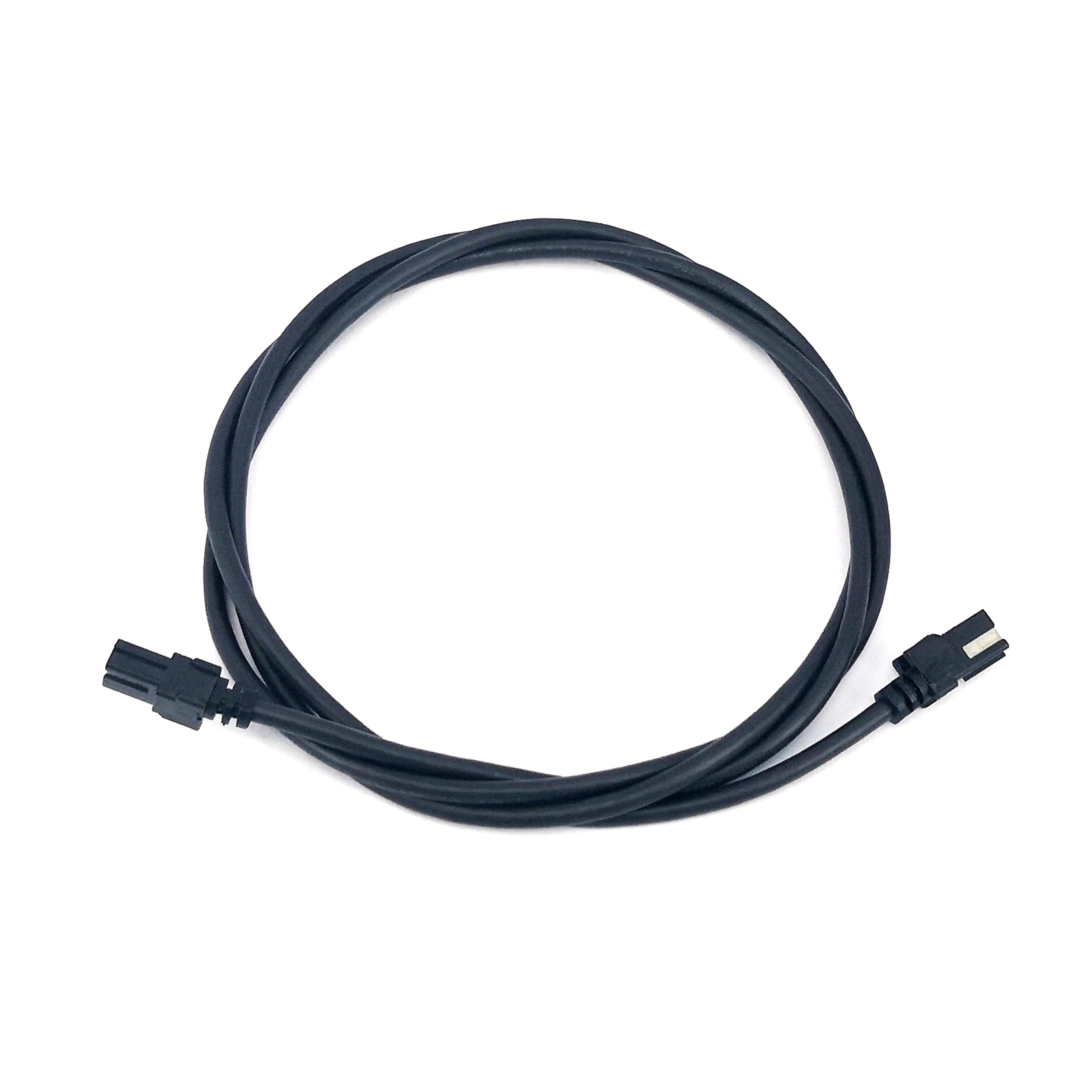
RF custom cable harness assembly is a tailored highfrequency wiring solution designed to transmit radio frequency signals accurately, stably, and efficiently across industrial, commercial, and aerospace electronic systems. Unlike standard offtheshelf RF cables, custom RF cable harnesses are engineered to meet unique mechanical dimensions, frequency parameters, environmental resistance, and system integration requirements. They serve as the critical signal transmission backbone for modern wireless communication, radar testing, aerospace navigation, IoT devices, and precision testing equipment, ensuring zero signal distortion, low loss, and longterm operational stability in complex working conditions.
In the highfrequency electronics industry, standardized RF cable assemblies often fail to adapt to specialized equipment layouts, extreme operating environments, and highprecision signal transmission demands. Custom RF cable harness assembly services solve this pain point by providing fully customized solutions covering cable selection, connector matching, length calibration, shielding optimization, and structural integration. This comprehensive guide explores everything you need to know about custom RF cable harness assemblies, including core definitions, key benefits, technical specifications, manufacturing processes, application scenarios, selection criteria, and quality testing standards, helping engineers, procurement specialists, and OEM manufacturers make informed decisions for their RF system projects.
1. What Is RF Custom Cable Harness Assembly?
AnRF custom cable harness assembly refers to a customized integrated wiring component composed of customlength coaxial RF cables, precision RF connectors, shielding structures, insulating jackets, and auxiliary fixing accessories. It is professionally terminated, assembled, and tested to form a complete signal transmission unit tailored to specific electronic system requirements. The term “harness” distinguishes it from singlepiece RF cables, as it can integrate multiple RF cables, different connector types, and customized routing layouts to meet multichannel signal transmission and centralized wiring needs.
Core characteristics that differentiate custom RF cable harnesses from standard RF assemblies include personalized dimensional customization, targeted electrical performance optimization, adaptive environmental protection design, and systemspecific structural integration. Every detail, from cable impedance and shielding grade to connector torque specifications and bend radius, is adjusted according to the client’s project parameters, rather than following universal industrial standards.
Common alternative search terms for SEO optimization include custom RF coaxial cable harness, custom RF wiring assembly, highfrequency custom cable harness, and OEM RF cable harness assembly, all of which describe the same customized highfrequency signal transmission solution widely used in global electronic manufacturing industries.
2. Core Advantages of Custom RF Cable Harness Assembly
Enterprises and engineering teams increasingly choose custom RF cable harness assemblies over standard products due to their unparalleled adaptability, performance stability, and costeffectiveness in longterm project operation. The key advantages are summarized as follows:
2.1 Perfect System Adaptability
Standard RF cables have fixed lengths, connector models, and structural designs, which often lead to installation incompatibility, redundant wiring, or insufficient layout space in specialized equipment. Custom RF cable harnesses are designed onetoone according to equipment internal structure, signal port distribution, and wiring space constraints. Engineers can customize cable length from millimeters to hundreds of meters, match diverse connector combinations (SMA, SMB, Ntype, BNC, TNC), and adjust cable bending angles and routing paths. This precise customization eliminates installation conflicts, optimizes internal equipment wiring, and improves the overall integration degree of RF systems.
2.2 Superior HighFrequency Signal Performance
Highfrequency RF signal transmission is extremely sensitive to impedance mismatch, signal loss, electromagnetic interference, and standing wave ratio. Custom RF cable harness assemblies undergo professional electrical performance optimization during design and production. Manufacturers strictly match 50Ω or 75Ω system impedance according to application scenarios, minimize insertion loss and return loss, and control VSWR (Voltage Standing Wave Ratio) within ultralow ranges. Meanwhile, multilayer shielding structures (singlelayer braided shielding, doublelayer shielding, foilbraid composite shielding) can be customized to resist external electromagnetic interference (EMI) and radio frequency interference (RFI), ensuring zero signal attenuation and phase stability in highfrequency, highprecision transmission scenarios.
2.3 Strong Environmental and Mechanical Durability
Different application scenarios pose varying challenges such as high temperature, low temperature, humidity, corrosion, vibration, and frequent bending. Custom RF cable harnesses support personalized selection of jacket materials (PVC, PE, FEP, PTFE, LSZH), insulating materials, and shielding structures. They can be engineered to resist high temperatures up to 200°C, ultralow temperatures down to 60°C, waterproof, dustproof, oilresistant, and corrosionresistant. For mobile equipment and automated devices, harnesses can be customized with ultraflexible structures to meet millions of bending cycles, effectively avoiding cable breakage and signal failure caused by frequent movement and vibration.
2.4 Centralized Wiring and Easy Maintenance
The harness integration design integrates multiple RF signal cables into a single unified assembly with customized fixing brackets, cable ties, and marking labels. This centralized wiring structure simplifies equipment internal layout, reduces wiring disorder, and improves the tidiness of electronic systems. Meanwhile, standardized labeling and integrated assembly greatly facilitate later equipment maintenance, fault detection, and cable replacement, reducing aftersales maintenance time and labor costs for enterprises.
2.5 Custom OEM and Branding Support
Professional RF custom cable harness manufacturers provide full OEM/ODM services, including custom logo printing, cable marking, color customization, and packaging design. Enterprises can customize exclusive identification information for their products to improve brand recognition and product standardization, which is particularly suitable for mass production of commercial equipment and customized supporting projects for large clients.
3. Key Technical Specifications of Custom RF Cable Harness Assembly
The performance of RF custom cable harness assemblies depends on precise control of core technical parameters. When customizing products, engineers and procurement personnel need to clarify the following key specifications to ensure the harness matches the system’s operating requirements perfectly:
3.1 Impedance Matching
Impedance is the most fundamental parameter for RF signal transmission. Industrial RF systems mainly adopt two standard impedances: 50Ω and 75Ω. 50Ω RF cable harnesses are widely used in wireless communication, radar, test instrumentation, and aerospace equipment, while 75Ω harnesses are mainly applied in television signal transmission, video monitoring, and broadband communication systems. Custom harnesses achieve full impedance matching through precise matching of cable core diameter, dielectric thickness, and connector internal structure, avoiding signal reflection and transmission failure caused by impedance mismatch.
3.2 Frequency Range
Different custom RF cable harnesses adapt to different frequency bands, ranging from lowfrequency RF signals to microwave and millimeterwave signals. Conventional custom harnesses support 06GHz frequency transmission, while highprecision customized products can cover 018GHz, 040GHz, or even higher frequency bands. The frequency range directly determines the cable dielectric material, shielding structure, and connector precision grade, and must be confirmed first in custom design.
3.3 Electrical Performance Indicators
Core electrical indicators include insertion loss, return loss, VSWR, and phase stability. Insertion loss refers to signal attenuation during transmission, which needs to be minimized in highprecision systems; return loss reflects signal reflection degree, with higher values indicating better performance; VSWR is usually required to be less than 1.2:1 for highfrequency precision scenarios to ensure stable signal transmission. Custom RF harnesses can adjust these indicators according to client test standards to meet strict industrial testing requirements.
3.4 Mechanical and Environmental Parameters
Mechanical parameters include cable outer diameter, minimum bend radius, tensile strength, and bending life. Environmental parameters cover operating temperature range, waterproof grade (IP rating), corrosion resistance, and aging resistance. For outdoor equipment, vehiclemounted devices, and industrial automation equipment, custom harnesses can be upgraded to IP67/IP68 waterproof and dustproof grades, with antiaging and antiultraviolet designs to adapt to harsh outdoor environments.
3.5 Connector Configuration
Custom RF cable harnesses support free matching of various mainstream RF connectors, including SMA, SMB, SMC, Ntype, BNC, TNC, UFL, and MCX. Clients can customize male/female connectors, straight/rightangle connectors, and single/doubleended connector combinations. Professional manufacturers also provide connector clocking and alignment customization to meet special equipment docking requirements.
4. Professional Manufacturing Process of RF Custom Cable Harness Assembly
Highquality custom RF cable harness assemblies rely on standardized, refined manufacturing processes and strict quality control. The complete production workflow from customization consultation to finished product delivery is as follows:
4.1 Technical Communication and Scheme Design
The first step is oneonone technical communication with clients to confirm core requirements, including application scenario, frequency range, impedance parameters, cable length, connector type, environmental resistance requirements, and quantity demand. Professional RF engineers conduct system simulation and structural design according to client parameters, draw customized harness drawings, confirm material selection schemes, and issue formal technical quotation and production plans.
4.2 Raw Material Selection and Inspection
Select highquality raw materials matching the custom scheme, including highpurity copper conductors, lowloss dielectric materials, highshielding braided nets, and precision RF connectors. All raw materials undergo incoming quality inspection to detect conductor conductivity, dielectric loss, connector precision, and jacket environmental resistance, eliminating unqualified materials to lay a foundation for finished product performance.
4.3 Precision Cutting and Stripping
Adopt automatic precision cutting equipment to cut cables according to customized length parameters, ensuring length error within ±0.5mm. Use professional cable stripping equipment to strip outer jackets, shielding layers, and dielectric layers layer by layer, with precise stripping dimensions to avoid damage to inner conductors and ensure subsequent welding and termination accuracy.
4.4 Connector Termination and Welding
Adopt two mature processes: crimping and soldering. For highfrequency precision harnesses, professional tin soldering technology is used to ensure full contact between connectors and cable conductors, reduce contact resistance, and avoid signal attenuation. All termination processes comply with international RF industry standards, and workers operate in a dustfree workshop to prevent dust and impurities from affecting signal transmission performance.
4.5 Shielding Treatment and Structural Assembly
Carry out multilayer shielding reinforcement for harnesses according to customization requirements, optimize shielding layer grounding and termination methods to enhance antiinterference ability. Complete cable sorting, fixing, bundling, and label pasting, assemble customized fixing accessories and protective sleeves, and form integrated RF cable harness finished products.
4.6 Strict Performance Testing
All finished custom RF harnesses undergo comprehensive performance testing before delivery, including VNA (Vector Network Analyzer) highfrequency testing, VSWR testing, insertion loss and return loss testing, continuity testing, and insulation resistance testing. For products used in aerospace and military industries, additional environmental tests (high and low temperature cycling, vibration testing, waterproof testing) are conducted to ensure stability in extreme environments.
4.7 Packaging and Delivery
Qualified products are cleaned, dustproof packaged, and labeled with customized product information, specifications, and test reports. Adopt shockproof and compressionresistant packaging to avoid damage during transportation, and provide complete aftersales technical support and product certification documents.
5. Main Application Scenarios of RF Custom Cable Harness Assembly
RF custom cable harness assemblies have wide coverage in hightech industries, becoming indispensable core components for highfrequency signal transmission systems. The main application fields include:
5.1 Wireless Communication Industry
In 5G/4G base stations, wireless routers, signal repeaters, and communication terminal equipment, custom RF cable harnesses complete signal transmission between antennas, radio frequency modules, and baseband boards. Customized lowloss and highshielding designs ensure stable transmission of highfrequency communication signals and avoid network delay and signal interruption caused by interference.
5.2 Aerospace and Military Industry
Aerospace equipment, military radar, navigation systems, and satellite communication equipment put forward extremely high requirements for RF harness performance and reliability. Ultrahigh temperature resistant, vibrationresistant, lowphaseshift custom RF cable harnesses are customized to adapt to extreme flight and combat environments, ensuring accurate transmission of radar detection and navigation positioning signals.
5.3 Precision Testing and Instrumentation
Laboratory testing instruments, spectrum analyzers, signal generators, and industrial detection equipment require highprecision custom RF harnesses to ensure zero distortion of test signals. Ultralow VSWR and low insertion loss customization effectively improves test accuracy and data stability, meeting strict experimental and industrial detection standards.
5.4 IoT and Smart Electronic Equipment
Smart home devices, wearable electronics, industrial IoT sensors, and wireless monitoring equipment adopt miniaturized custom RF cable harnesses. Ultrathin, flexible, and smallsize customized designs adapt to compact equipment structures, realizing stable wireless signal transmission for smart devices.
5.5 Vehicle and Industrial Automation
Vehiclemounted navigation, car wireless communication, automated production equipment, and industrial wireless control systems use antivibration, antiinterference, and hightemperature resistant custom RF harnesses, adapting to complex industrial and vehicle operating environments and ensuring longterm stable operation of equipment.
6. How to Choose a Reliable RF Custom Cable Harness Assembly Manufacturer
Choosing a professional and reliable manufacturer is the key to ensuring the quality and performance of custom RF cable harnesses. When selecting a supplier, enterprises and engineers need to focus on the following core factors:
6.1 Professional Customization Capability
Excellent manufacturers have independent R&D and design teams, supporting fullcustom solutions from parameter design, structural optimization to special process customization. They can meet personalized requirements of different industries, including highfrequency highprecision, special environmental resistance, and multichannel integrated harness customization, rather than only providing simple size cutting services.
6.2 Advanced Production and Testing Equipment
Reliable suppliers are equipped with automatic cutting and stripping equipment, precision welding equipment, and professional testing instruments such as vector network analyzers, high and low temperature test chambers, and vibration test benches. Advanced production and testing equipment ensures consistent product quality and accurate performance parameters, avoiding unqualified products caused by backward processes.
6.3 Industry Certification and Qualification
Formal manufacturers have passed ISO9001 quality management system certification, RoHS environmental certification, and relevant industrial standard certifications. For aerospace and militarygrade products, they need to have corresponding military standard qualification certification. Complete qualifications ensure that products comply with international industrial standards and can meet the procurement requirements of large enterprises and highend projects.
6.4 Rich Industry Experience
Manufacturers with years of RF harness customization experience can accurately judge project requirements, optimize design schemes, and avoid technical risks. They have mature solutions for various complex scenarios such as highfrequency microwave transmission, extreme environmental adaptation, and multichannel integrated wiring, ensuring project progress and product stability.
6.5 AfterSales Service and Delivery Capacity
Excellent suppliers provide fast quotation, short lead time, and perfect aftersales technical support. They can respond to customization demands quickly, support smallbatch trial production and largebatch mass production, and provide professional technical guidance and aftersales maintenance services to solve customer problems in a timely manner.
7. Common FAQs About RF Custom Cable Harness Assembly
7.1 What is the difference between custom RF cable harness and standard RF cable assembly?
Standard RF cable assemblies are massproduced with fixed length, connectors, and performance parameters, suitable for universal conventional scenarios. Custom RF cable harness assemblies are tailormade according to customer project requirements, with customizable length, connector combination, shielding grade, environmental resistance, and structural integration. They have higher precision, better adaptability, and more stable performance, suitable for specialized and highprecision industrial scenarios.
7.2 What parameters need to be provided for RF cable harness customization?
Customers need to provide core parameters including application scenario, operating frequency range, system impedance, required cable length, connector type (male/female, straight/rightangle), environmental resistance requirements (temperature, waterproof, vibration resistance), and quantity demand. Professional manufacturers will provide targeted optimization suggestions based on these parameters.
7.3 Can custom RF cable harnesses support highfrequency microwave signals?
Yes. Professional manufacturers can customize highfrequency RF cable harnesses covering 040GHz or higher frequency bands by adopting lowloss dielectric materials and highprecision termination processes, which are widely used in microwave testing, millimeterwave communication, and radar detection equipment.
7.4 Are custom RF cable harnesses more expensive than standard products?
The unit price of single custom products is slightly higher than standard offtheshelf cables, but custom harnesses can avoid equipment modification, installation adaptation, and later maintenance costs caused by mismatched standard products. In longterm project operation, custom RF cable harnesses have higher costeffectiveness and lower failure rate, bringing greater value to enterprises.
RF custom cable harness assembly is an indispensable customized solution for modern highfrequency signal transmission systems. With its precise personalized customization, superior electrical performance, strong environmental adaptability, and efficient system integration advantages, it solves the performance and adaptation bottlenecks of standard RF cables in complex industrial and highprecision scenarios. From wireless communication and precision testing to aerospace and vehicle electronics, custom RF cable harnesses provide stable and reliable signal transmission support for various hightech equipment.
With the continuous upgrading of 5G communication, IoT, and intelligent manufacturing industries, the demand for highprecision, highreliability, and scenariobased RF custom cable harness solutions will continue to grow. Choosing a professional, experienced, and qualified custom RF harness manufacturer can effectively improve the stability and service life of RF systems, reduce project costs, and enhance the overall competitiveness of electronic equipment products. For any customized RF cable harness demands, professional onestop design, production, and testing services can always meet your personalized project requirements.
Lucy Yang | lucy.y@toxutech.com
Dotty Zhao | sales04@toxutech.com
Global Business Director / Sales Team / Global Operations


 En
En Cn
Cn Korean
 Home >