

-
Products -PCBA Manufacturing RF Connectors RF Cable Assemblys Embedded Antennas External Antennas GNSS Positioning Solutions
RF Connectors

RF Cable Assemblys
Embedded Antennas
External Antennas
GNSS Positioning Solutions































 Language


Language


Time:2026-10-16 Views:0
Why Multi-Band Shark Fin Antennas Matter
The humble shark fin antenna has undergone a remarkable transformation. What began as a stylized replacement for the traditional whip antenna has evolved into one of the most sophisticated communication components in modern vehicles. Today's multi-band shark fin antenna is not merely a radio receiver—it is a centralized connectivity hub that integrates cellular, Wi-Fi, GNSS, and broadcast services into a single, aerodynamically efficient housing mounted on the vehicle roof.
As vehicles become increasingly connected, the demand for antennas capable of supporting multiple frequency bands simultaneously has surged. From 5G cellular communication and vehicle-to-everything (V2X) systems to high-precision GNSS positioning and in-vehicle Wi-Fi hotspots, the multi-band shark fin antenna serves as the critical link between the vehicle and the outside world. This guide explores every aspect of these remarkable devices, from their technical architecture and frequency band coverage to market trends, installation best practices, and future developments.
What Is a Multi-Band Shark Fin Antenna?
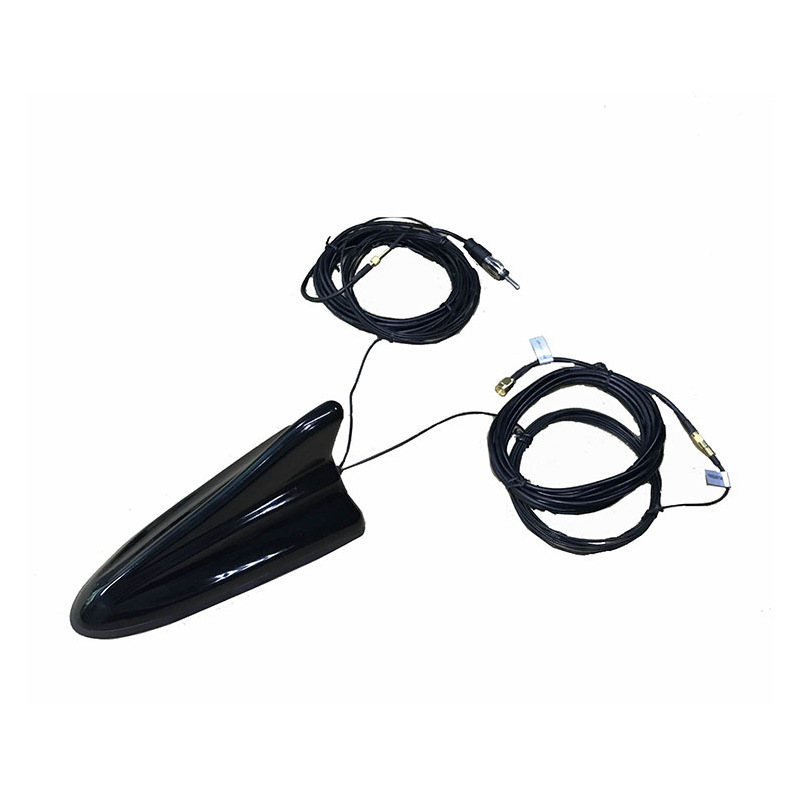
A multi-band shark fin antenna is a compact, roof-mounted vehicular antenna system designed to transmit and receive signals across multiple wireless communication standards within a single aerodynamic housing. Named for its resemblance to a shark's dorsal fin, this antenna type integrates several individual antenna elements—each optimized for specific frequency ranges—into one modular unit.
Unlike traditional single-function antennas that handle only AM/FM radio or cellular signals, a multi-band shark fin antenna can simultaneously support:
Cellular bands covering 2G, 3G, 4G LTE, and 5G NR (600 MHz to 6,000 MHz)
Wi-Fi bands including 2.4 GHz and 5 GHz/6 GHz for Wi-Fi 6E and Wi-Fi 7
GNSS bands covering GPS, GLONASS, Galileo, and BeiDou constellations
Broadcast bands such as AM/FM radio, DAB/DAB+, and satellite radio (SiriusXM)
V2X bands for vehicle-to-vehicle and vehicle-to-infrastructure communication
The modular architecture of these antennas allows manufacturers to customize configurations based on specific vehicle requirements, ranging from simple 3-in-1 designs to advanced 8-in-1 or even higher combinations.
Technical Architecture: How Multi-Band Shark Fin Antennas Work
Internal Component Structure
Inside the weather-resistant outer housing, a multi-band shark fin antenna contains several critical subsystems:
Radiating elements form the core of the antenna. These may include planar inverted-F antennas (PIFAs) for wideband cellular operation, meandered-line configurations for FM and TETRA elements, and dedicated patches for GNSS reception. Multiple-input multiple-output (MIMO) configurations are standard in modern designs, with 2×2 or 4×4 MIMO arrangements providing enhanced data throughput and signal reliability.
Low-noise amplifiers (LNAs) boost weak incoming signals, particularly for GNSS reception where signal levels are extremely low. Active GNSS antennas typically include a 26 dB gain LNA with advanced filtering to prevent interference from adjacent cellular bands.
Coaxial cable assemblies carry the RF signals from the antenna elements to the vehicle's communication modules. FAKRA and Mini-FAKRA connectors are commonly used for their robust performance and standardized compatibility.
Ground plane structures provide the necessary reference for proper antenna operation. The vehicle's metal roof often serves this function, though some designs include integrated ground plane elements to maintain performance on non-metallic surfaces.
Frequency Band Coverage
Modern multi-band shark fin antennas support an extensive frequency range. A typical high-end model covers from 600 MHz to 6,000 MHz for cellular and Wi-Fi services, supplemented by dedicated bands for GNSS and broadcast reception. Key frequency allocations include:
| Service | Frequency Range |
|---|---|
| LTE/5G Low Band | 617–960 MHz |
| LTE/5G Mid Band | 1,710–2,700 MHz |
| LTE/5G High Band | 3,300–5,925 MHz |
| Wi‑Fi 6E/7 | 2,400–2,500 MHz and 5,150–7,125 MHz |
| GNSS (L1/L2/L5) | 1,559–1,612 MHz |
| AM/FM | 530–1,710 kHz / 88–108 MHz |
| DAB/DAB+ | 174–240 MHz |
This comprehensive coverage ensures that a single multi-band shark fin antenna can replace multiple individual antennas, reducing weight, aerodynamic drag, and installation complexity.
The Evolution of Shark Fin Antenna Technology
From Aesthetic Accessory to Connectivity Hub
The shark fin antenna was initially developed as a design-focused alternative to conventional rod-type antennas. Its aerodynamic shape reduced wind noise and drag while providing a more integrated appearance with the vehicle body. Early models were primarily AM/FM receivers with limited additional functionality.
The transition to multi-band capability began with the integration of GPS and cellular elements in the early 2010s. As vehicles added telematics, navigation, and infotainment systems, the number of required antennas grew dramatically. The shark fin housing emerged as the ideal platform for consolidating these functions without adding external protrusions.
The 5G Revolution and Beyond
The deployment of 5G networks has accelerated the evolution of multi-band shark fin antennas. 5G communication requires multiple antennas to ensure sufficient performance, but a standard shark fin housing is physically constrained in how many elements it can accommodate. Manufacturers have responded with innovative approaches:
Wideband MIMO designs that cover multiple frequency ranges with fewer elements
Decoupling circuits that allow closely spaced antennas to operate without interference
Advanced materials including ceramic and 3D tin sheet radiators that reduce volume requirements
Modular architectures that allow configurations to be scaled from 4-in-1 to 8-in-1 or higher
Research has demonstrated compact multiband designs fitting five radiating elements within a 90×15×30mm³ footprint, simultaneously supporting FM (88–108 MHz), TETRA (380–470 MHz), wideband cellular (0.68–6.05 GHz), and dual-band Wi-Fi services.
Key Applications of Multi-Band Shark Fin Antennas
Automotive OEM and Aftermarket
The primary application for multi-band shark fin antennas remains passenger and commercial vehicles. Original equipment manufacturers integrate these antennas during vehicle assembly, designing them to match specific body contours, roof curvature, and color schemes. Aftermarket versions offer upgrades for older vehicles or replacements for damaged units.
Pulse Electronics' Sharkfin SKF series exemplifies the range available, with options including LMR, LTE, Wi-Fi, GNSS, and multiband versions. Their multiband LTE/Wi-Fi/GNSS models feature 2 to 4 LTE elements covering 617–960 MHz and 1,710–5,925 MHz, 3 to 8 Wi-Fi elements for Wi-Fi 6E/7, and L1/L2/L5 GNSS bands.
Fleet and Public Safety
Fleet operators and public safety agencies rely on multi-band shark fin antennas for mission-critical communications. Taoglas' Supercombo series, for instance, integrates up to eight antennas—2×GNSS, 2×5G/4G MIMO, 2×Wi-Fi MIMO, AM/FM/WB, and DAB—in an IP67-rated enclosure suitable for emergency vehicles and connected transport platforms. These antennas enable reliable communication across multiple networks, essential for first responders and logistics operations.
Telematics and IoT
The Internet of Things (IoT) ecosystem extends to vehicular telematics, where multi-band shark fin antennas provide the connectivity backbone for fleet management, remote diagnostics, over-the-air updates, and asset tracking. Telemetry and IoT applications benefit from the combination of cellular MIMO, GNSS positioning, and Wi-Fi connectivity in a single compact unit.
Autonomous Driving and V2X
Vehicle-to-everything communication is a cornerstone of autonomous driving development. Multi-band shark fin antennas supporting V2X bands (typically 5.9 GHz) alongside cellular and GNSS services are essential for vehicles that need to communicate with infrastructure, other vehicles, and pedestrians. Research into integrated V2X platforms continues to push the boundaries of what can be packaged within a shark fin form factor.
Market Overview and Growth Trends
Market Size and Projections
The global shark fin antenna market is experiencing robust growth. According to market research, the market was valued at approximately US$649 million in 2025 and is projected to reach US$893 million by 2032, representing a compound annual growth rate (CAGR) of 4.8%. Other analyses place the market size at US$1,060 million in 2025, growing to US$1,749 million by 2031 at a CAGR of 8.7%.
In 2025, global shark fin antenna production reached approximately 65 million units, with an average market price of US$10 per unit. Asia-Pacific—particularly China, Japan, and South Korea—dominates both production and consumption, driven by the booming electric vehicle and smart car segments.
Key Market Drivers
Several factors are driving market expansion:
Increasing vehicle connectivity requirements demand more antennas per vehicle, favoring integrated multi-band solutions that can accommodate multiple functions in a single housing.
5G network deployment worldwide necessitates antennas capable of supporting higher frequency bands and MIMO configurations.
Growth of ADAS and autonomous driving systems requires reliable, high-performance antennas for sensor data transmission and V2X communication.
Electrification of vehicles creates new antenna requirements, as electric powertrains produce different electromagnetic interference profiles than internal combustion engines.
Stricter safety and communication regulations in North America and Europe are mandating enhanced vehicle connectivity features, driving demand for high-bandwidth antennas.
Competitive Landscape
The multi-band shark fin antenna market features a mix of established automotive suppliers and specialized antenna manufacturers. Key players include:
Ezurio, Harada, Yokowa, Kathrein, and Amphenol Group lead the composite shark fin antenna segment
Continental, Denso, TE Connectivity, Hella, and Laird are prominent in automotive smart antenna solutions
Taoglas and Panorama Antennas specialize in high-performance multi-band solutions for fleet and public safety applications
Pulse Electronics offers a comprehensive range of Sharkfin SKF antennas for diverse applications
Selecting the Right Multi-Band Shark Fin Antenna
Defining Your Requirements
Choosing the appropriate multi-band shark fin antenna begins with a clear understanding of connectivity needs:
Frequency band requirements: Identify which services the antenna must support—cellular (which generations and bands), Wi-Fi (which frequencies), GNSS (which constellations), and broadcast (AM/FM, DAB, satellite radio).
MIMO configuration: Determine how many MIMO layers are needed for each service. 2×2 MIMO is standard for most applications, while 4×4 MIMO may be required for high-throughput 5G or mission-critical communications.
Environmental specifications: Consider the operating environment. IP67 or IP69K ratings ensure protection against dust and water ingress. Operating temperature ranges of -40°C to +85°C are typical for automotive applications.
Mounting requirements: Evaluate roof curvature, panel material, and available space. Single-hole mounting designs simplify installation and reduce vehicle damage.
Key Performance Specifications
When comparing multi-band shark fin antennas, pay attention to:
Gain: Measured in dBi, gain indicates how well the antenna converts received signals. Cellular gains typically range from 2.3 to 5.7 dBi, while GNSS active gain can reach 26 dB.
VSWR (Voltage Standing Wave Ratio): Lower values indicate better impedance matching. VSWR below 2.5:1 in the transmit band is generally acceptable.
Isolation: The degree of isolation between antenna elements affects multi-radio coexistence. Inter-element isolation better than -15 dB is desirable.
Efficiency: Expressed as a percentage, efficiency indicates how much signal power is radiated versus lost. Efficiencies up to 80% are achievable in high-performance designs.
Certification and Compliance
Ensure the antenna carries relevant certifications:
IATF 16949: The automotive quality management standard, indicating the antenna meets rigorous manufacturing and quality requirements.
IP67/IP69K: Ingress protection ratings confirming resistance to dust and water immersion.
RoHS/REACH: Compliance with hazardous substance restrictions.
ECE R118.02: European regulation for cable fire resistance.
Installation Best Practices
Mounting Location Selection
Proper installation is critical to multi-band shark fin antenna performance. The antenna should be mounted on a conductive (metal) panel whenever possible, as the vehicle roof serves as the ground plane. For optimal performance, the ground plane should have a minimum diameter of half a wavelength at the lowest operating frequency. For example, at 150 MHz, this requires approximately 100 cm, while at 900 MHz, 16 cm suffices.
If mounting on a non-metallic panel is necessary, a ground plane plate of suitable size should be fabricated and installed beneath the mounting surface. The securing washer and nut must make low-resistance electrical contact with this plate (less than 0.2Ω).
Installation Procedure
The installation process for a typical multi-band shark fin antenna involves:
1. Preparation: Mask the panel area around the mounting position to protect paintwork. Drill a pilot hole, then enlarge to the required diameter (typically 19mm). Clean the area thoroughly, removing all swarf and ensuring adequate earth contact by removing paint from the underside surface.
2. Positioning: Remove the protective backing from the antenna underside, feed coaxial cables through the panel hole, and position the antenna over the hole with correct orientation. Apply firm, even downward pressure to compress the sealing boot against the mounting panel.
3. Securing: Assemble the nut from beneath the panel and tighten to the recommended torque (typically 5Nm). The nut should fit freely by hand before final tightening with a spanner.
4. Cable routing: Route coaxial cables to the communication equipment, avoiding proximity to existing vehicle wiring and any moving components. Cables must not be routed in front of airbag devices.
5. Verification: Check earth continuity (connector body to vehicle ground should measure less than 0.2Ω) and carry out a VSWR check, which should measure less than 2.5:1 in the transmit band.
Common Installation Pitfalls
Avoid these common mistakes:
Insufficient ground plane: Mounting on non-metallic surfaces without a proper ground plane significantly degrades performance.
Poor sealing: Inadequate sealing around the mounting hole can lead to water ingress and corrosion.
Cable damage: Sharp bends or routing near heat sources can damage coaxial cables and degrade signal quality.
Incorrect connector assembly: Improperly fitted connectors can introduce signal loss and impedance mismatches.
Future Trends in Multi-Band Shark Fin Antenna Technology
Integration of Millimeter-Wave Antennas
As 5G millimeter-wave (mmWave) deployment expands, future shark fin antennas may incorporate mmWave modules alongside sub-6 GHz elements. This integration presents significant challenges due to the higher path loss and different propagation characteristics of mmWave signals, but represents a natural evolution of the multi-band concept.
Transparent and Hidden Antenna Solutions
Some manufacturers are exploring alternatives to visible shark fin antennas. LG Electronics has partnered with Saint-Gobain Sekurit to develop transparent film-type antennas that can be applied to glass surfaces or embedded within glass, eliminating the need for external roof-mounted units. While these solutions offer aesthetic advantages, shark fin designs remain preferred for their ability to accommodate larger antenna arrays and provide better ground plane characteristics.
Antenna as a Centralized Communication Node
The future shark fin antenna is poised to become a centralized communication and perception node on the vehicle. As platform-based automotive architectures become standard, OEMs are seeking flexible, customizable antenna solutions that can be seamlessly integrated into vehicle design. Future antennas may combine communication functions with sensing capabilities, including radar and LiDAR elements, creating true multi-function modules.
Advanced Materials and Manufacturing
Ongoing research focuses on new materials and manufacturing techniques to improve performance while reducing size and cost. Low-cost 3D tin sheet multiband designs, ceramic-loaded radiators, and advanced composite housings are among the innovations that will shape the next generation of shark fin antennas.
The multi-band shark fin antenna represents a remarkable convergence of form and function in automotive engineering. By integrating cellular, Wi-Fi, GNSS, and broadcast capabilities into a single aerodynamic housing, these antennas enable the connectivity that modern vehicles demand while maintaining the aesthetic and aerodynamic benefits that made the shark fin design popular in the first place.
As vehicles continue their evolution toward full connectivity and autonomous operation, the multi-band shark fin antenna will remain a critical enabling technology. Whether for passenger vehicles, commercial fleets, public safety operations, or IoT telematics, selecting the right multi-band antenna—and installing it correctly—ensures reliable, high-performance connectivity across all operating conditions.
For vehicle manufacturers, fleet operators, and aftermarket installers, understanding the technical specifications, market trends, and installation best practices outlined in this guide provides the foundation for making informed decisions about multi-band shark fin antenna deployment. As the technology continues to advance, these compact yet powerful devices will play an increasingly central role in the connected vehicle ecosystem.
Lucy Yang | lucy.y@toxutech.com
Dotty Zhao | sales04@toxutech.com
Global Business Director / Sales Team / Global Operations


 En
En Cn
Cn Korean
 Home >