

-
Products -PCBA Manufacturing RF Connectors RF Cable Assemblys Embedded Antennas External Antennas GNSS Positioning Solutions
RF Connectors

RF Cable Assemblys
Embedded Antennas
External Antennas
GNSS Positioning Solutions































 Language


Language


Time:2026-10-15 Views:0
The MHF4 SMA antenna cable is one of the most widely used miniature RF coaxial pigtails in modern wireless electronics, serving as a critical bridge between compact embedded wireless modules and external highgain antennas. Also known as IPEX 4 to SMA adapter cable, this highfrequency 50ohm coaxial solution is engineered for spaceconstrained devices that demand stable signal transmission, low signal loss, and reliable longterm connectivity. Whether you are building WiFi 6/6E routers, 4G LTE/5G industrial gateways, GPS tracking devices, Bluetooth IoT sensors, or drone wireless systems, understanding the technical parameters, application scenarios, selection criteria, and installation best practices of MHF4 SMA antenna cables is essential to optimize your device’s wireless performance. This comprehensive guide covers every key detail of MHF4 SMA antenna cables to help engineers, buyers, and tech enthusiasts make informed purchasing and deployment decisions.
1. What Is an MHF4 SMA Antenna Cable?
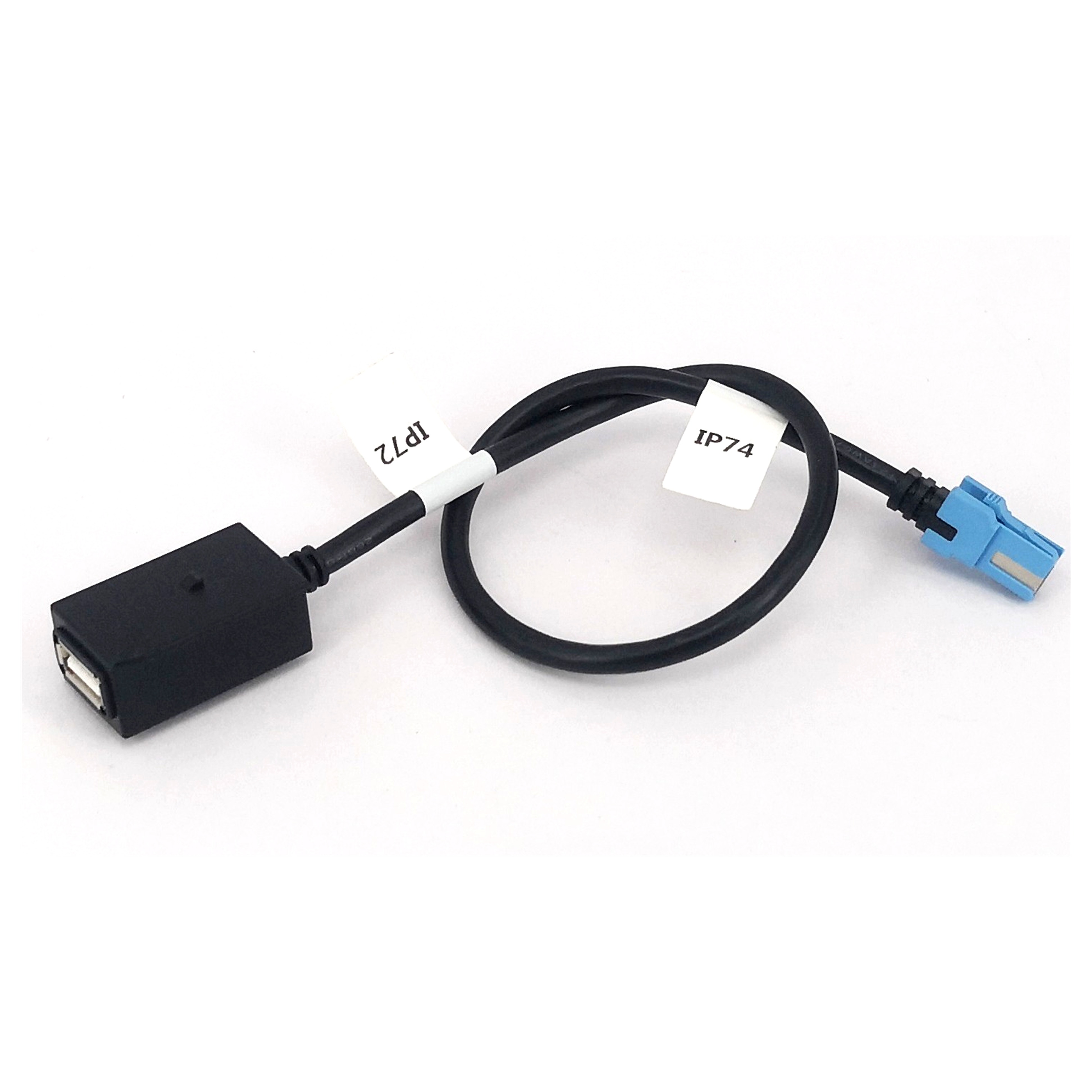
An MHF4 SMA antenna cable is a custom coaxial assembly with two different RF connectors on opposite ends: a miniature MHF4 (IPEX 4) male/female plug on one side and a standard SMA/RPSMA male/female connector on the other side. As a fourthgeneration ultraminiature IPEX connector solution, MHF4 is upgraded from traditional MHF1/U.FL connectors, featuring a smaller footprint, lower profile, and more stable mechanical locking structure, making it the mainstream connector for newgeneration compact wireless modules.
Unlike bulky standard RF cables, the MHF4 SMA antenna cable uses ultrathin microcoax wire (1.13mm mainstream diameter) with a 50Ω impedance matching design, which perfectly matches the impedance requirements of most wireless communication devices. Its core function is to convert the tiny onboard MHF4 interface of wireless modules to the universal SMA external antenna interface, allowing users to replace and upgrade external antennas freely without replacing the entire wireless module. This flexible conversion capability greatly improves the scalability and maintainability of wireless devices.
It is critical to distinguish core concepts here: MHF4 is exclusively a boardlevel miniature connector for internal device connections, while SMA is a standard external threaded connector for antenna external installation. The combination of the two achieves the perfect transition from internal miniaturization to external standardization, which is why MHF4 SMA cables have become the preferred RF adapter for consumer and industrial wireless equipment.
2. Core Structural & Technical Specifications of MHF4 SMA Cable
The performance of an MHF4 SMA antenna cable directly determines the signal stability and transmission efficiency of wireless devices. Its internal structure and technical parameters are highly standardized, and professional specifications are the core basis for product selection. Below are the detailed structural composition and key technical parameters of mainstream MHF4 SMA antenna cables.
2.1 Internal Cable Structure
The MHF4 SMA coaxial cable adopts a multilayer shielding coaxial structure, which effectively isolates external electromagnetic interference and reduces internal signal attenuation. The complete structure from inside to outside is as follows:
Center Conductor: Made of silverplated annealed copper, which has excellent electrical conductivity and oxidation resistance. Silver plating effectively reduces highfrequency signal resistance and ensures lowloss transmission of highfrequency signals such as 5G and WiFi 6.
Insulation Dielectric Layer: Highdensity lowloss polymer dielectric material, with stable dielectric constant, effectively avoiding signal distortion and phase deviation during highfrequency transmission, and supporting widefrequency signal transmission.
Shielding Layer: Copper polyester tape + braided copper wire doublelayer shielding structure. The tight shielding layer can block external EMI electromagnetic interference, prevent signal leakage, and improve the antiinterference ability of the device in complex industrial environments.
Outer Protective Jacket: Flexible PVC or LSZH flameretardant material, which is wearresistant, bendingresistant, corrosionresistant, and flameretardant. It adapts to various indoor and outdoor installation environments and extends the service life of the cable.
2.2 Key Technical Parameters
All qualified MHF4 SMA antenna cables follow unified industry standards, and the core parameters determine their applicable scenarios and performance limits:
Nominal Impedance: 50Ω (standard for wireless communication RF equipment, matching WiFi, LTE, 5G, GPS frequency bands)
Cable Outer Diameter: Mainstream 1.13mm, individual ultrathin 0.81mm models for ultracompact equipment
Working Frequency Range: 0GHz–6GHz, fully covering 2.4GHz WiFi, 5GHz WiFi 6, 5.8GHz industrial frequency band, 4G LTE, 5G sub6G, and GPS L1/L2 frequency bands
VSWR (Voltage Standing Wave Ratio): ≤1.2 (low standing wave, minimal signal reflection, high transmission efficiency)
Insertion Loss: ≤0.5dB@2.4GHz, ≤1.2dB@5.8GHz (ultralow signal loss, ensuring longdistance stable transmission)
Bending Radius: Minimum 5mm, supporting flexible wiring in narrow device interiors
Working Temperature: 40℃ to +85℃, adapting to industrial high and low temperature harsh environments
Durability: More than 500 plugandplay cycles, stable mechanical connection
2.3 Connector Classification: Standard SMA vs RPSMA
A common selection mistake for MHF4 SMA cables is confusing standard SMA and RPSMA (Reverse Polarity SMA), which are not interchangeable mechanically despite identical appearance and electrical performance:
Standard SMA: Male connector with center pin, female connector with center socket. Mainly used in industrial testing equipment, professional RF instruments, and base station communication equipment.
RPSMA: Reverse polarity design, male connector with center socket, female connector with center pin. It is the mainstream interface for consumer wireless devices such as routers, wireless network cards, and IoT modules, and is the most widely used type of MHF4 SMA cable.
Before purchasing, users must confirm the antenna and device interface type to avoid mismatched assembly and unusable equipment.
3. MHF4 vs MHF1/U.FL: Why MHF4 SMA Cable Is Better for Modern Devices
Many users confuse MHF4 with traditional U.FL (MHF1) connectors, but with the upgrading of wireless equipment, MHF4 has gradually replaced MHF1 and become the mainstream miniature RF connector. The core advantages of MHF4 SMA antenna cables over traditional U.FL SMA cables are reflected in size, performance, and compatibility:
Smaller Footprint: The MHF4 connector has a smaller pad size and lower height than MHF1, saving more PCB space, which is more suitable for ultrathin, miniaturized smart devices such as wearable devices, mini routers, and compact IoT sensors.
Higher Frequency Adaptability: MHF1 is only stable below 3GHz, while MHF4 supports up to 6GHz highfrequency transmission, perfectly adapting to WiFi 6E, 5G sub6G and other new highfrequency wireless technologies, with no signal attenuation or distortion in highfrequency bands.
More Stable Locking Structure: MHF4 adopts an optimized snapon locking design, with tighter connection and stronger antivibration ability. It is not easy to loose or fall off during device vibration and movement, which greatly improves the stability of mobile and industrial equipment.
Strict Cable Matching: MHF4 only supports professional 1.13mm/0.81mm ultrathin coaxial cables, with more precise impedance control and lower highfrequency loss; MHF1 can be matched with various thick cables such as RG174, which has poor highfrequency performance consistency.
At present, almost all newgeneration M.2 wireless network cards, 5G modules, and highprecision GPS modules on the market adopt MHF4 interfaces, so MHF4 SMA cables have become the mandatory matching accessories for modern highperformance wireless devices.
4. Main Applications of MHF4 SMA Antenna Cable
Thanks to its miniaturized size, wide frequency compatibility, low signal loss, and high stability, MHF4 SMA antenna cables are widely used in consumer electronics, industrial Internet of Things, smart transportation, wireless communication and other fields. The main application scenarios are as follows:
4.1 Consumer Wireless Electronic Equipment
This is the most common application scenario of MHF4 SMA cables. It is used for external antenna expansion of various household and office wireless devices, including M.2 WiFi 6/6E network cards for desktop and notebook computers, portable wireless routers, mobile WiFi hotspots, Bluetooth audio equipment, and smart home wireless sensors. By using MHF4 SMA cables to connect highgain external antennas, users can effectively solve the problems of weak signal, short transmission distance, and unstable network connection of builtin miniature antennas of devices, and significantly improve wireless coverage and signal strength.
4.2 Industrial IoT & Smart Communication Devices
In the industrial field, MHF4 SMA antenna cables are widely used in 4G LTE/5G industrial gateways, industrial wireless DTUs, IoT data transmission modules, and smart monitoring equipment. Industrial scenarios are accompanied by complex electromagnetic interference and harsh environmental conditions such as high temperature and vibration. The doublelayer shielding structure and high temperature resistance of MHF4 SMA cables can ensure stable signal transmission in harsh environments, reduce data packet loss and transmission delay, and guarantee the normal operation of industrial data collection and remote transmission systems.
4.3 GPS & Positioning Navigation Equipment
Highprecision GPS, Beidou, and GNSS positioning modules all use MHF4 interfaces. The MHF4 SMA antenna cable is used to connect the positioning module and the external highgain GPS antenna, which enhances satellite signal reception sensitivity. It effectively solves the problem of weak satellite signals in indoor, vehiclemounted, and shielded environments, improves positioning accuracy and positioning speed, and is widely used in vehicle navigation, drone positioning, smart vehicle terminals, and outdoor positioning equipment.
4.4 Smart Transportation & Wireless Mobile Devices
In drones, smart vehicles, wearable devices, and mobile wireless terminals, the miniaturized and bendingresistant characteristics of MHF4 SMA cables meet the narrow internal wiring space requirements of mobile devices. At the same time, the stable antivibration connection structure avoids signal interruption caused by equipment movement and vibration, ensuring stable wireless communication and data transmission of mobile devices.
5. How to Choose the Right MHF4 SMA Antenna Cable? (Professional Selection Guide)
There are many specifications of MHF4 SMA antenna cables on the market. Improper selection will lead to increased signal loss, poor compatibility, unstable connection, and even equipment damage. The following 5 core selection principles can help you quickly select the most suitable product:
5.1 Confirm Connector Polarity & Gender
First, confirm the interface type of your device module and external antenna: distinguish SMA/RPSMA, and confirm the male/female gender of MHF4 and SMA ends. For most consumer WiFi/ Bluetooth devices, MHF4 to RPSMA female is the mainstream configuration; industrial testing equipment mostly uses standard SMA interfaces. Never mix standard SMA and RPSMA, as they cannot be physically mated.
5.2 Select Appropriate Cable Length
Signal loss of coaxial cables increases with length. For daily use, it is recommended to choose the shortest cable that meets the wiring distance. Common mainstream lengths include 5cm, 10cm, 15cm, 20cm, 30cm. For highfrequency 5G/WiFi 6E devices, the cable length should not exceed 30cm as much as possible to avoid excessive insertion loss affecting highfrequency signal transmission. For longdistance wiring scenarios, highgain antennas need to be matched to compensate for signal loss.
5.3 Match Cable Wire Diameter
1.13mm diameter cable is the most versatile model, balancing flexibility and lowloss performance, suitable for most conventional devices; 0.81mm ultrathin cable is suitable for ultranarrow space wiring of ultrathin devices, but with slightly higher signal loss; thickened cables such as RG174 are not compatible with MHF4 interfaces and are prohibited from being used.
5.4 Focus on Material & Craftsmanship
Highquality MHF4 SMA cables adopt silverplated copper conductors and doublelayer shielding, with low loss and strong antiinterference ability; inferior products use tinned copper conductors and singlelayer shielding, which have large highfrequency loss and are prone to signal interference and attenuation. For industrial and highprecision equipment, priority should be given to LSZH flameretardant and hightemperature resistant models to improve environmental adaptability.
5.5 Check Frequency Band Adaptability
If it is used for 2.4G/5G dualband WiFi equipment, conventional fullfrequency cables can meet the demand; if it is used for WiFi 6E (6GHz) or 5G sub6G highfrequency equipment, it is necessary to select highfrequency optimized MHF4 SMA cables with low loss at 6GHz to ensure no attenuation of highfrequency signal performance.
6. Installation & Wiring Best Practices for MHF4 SMA Cables
Correct installation and wiring can maximize the performance of MHF4 SMA antenna cables and avoid signal failure caused by improper operation. The key installation specifications are as follows:
Gentle Plugging Operation: The MHF4 miniature connector is precise and fragile. Do not pull or bend it violently during plugging. Align the connector vertically with the module interface and press it gently until you hear a "click" locking sound to ensure complete fitting. Violent pulling will easily cause the MHF4 solder joint to fall off and damage the module.
Avoid Excessive Bending & Twisting: The minimum bending radius of the cable is 5mm. Do not fold or twist the cable sharply, otherwise the internal shielding layer and conductor will be damaged, resulting in increased signal loss and short circuit risk.
Reasonable Wiring Layout: Keep the cable away from power lines, highpower electronic components, and metal shielding parts to avoid electromagnetic interference and signal shielding. Try to keep the wiring flat and fixed to prevent longterm vibration from causing interface looseness.
Strict Interface Locking: After connecting the SMA end with the antenna, tighten the threaded nut completely to ensure close contact. Loose SMA interface is the main cause of signal instability and network disconnection.
Environmental Protection: For outdoor and industrial installation, use waterproof and dustproof sleeves to protect the SMA interface to prevent oxidation, rust, and dust accumulation from affecting electrical conductivity.
Lucy Yang | lucy.y@toxutech.com
Dotty Zhao | sales04@toxutech.com
Global Business Director / Sales Team / Global Operations


 En
En Cn
Cn Korean
 Home >