

-
Products -PCBA Manufacturing RF Connectors RF Cable Assemblys Embedded Antennas External Antennas GNSS Positioning Solutions
RF Connectors

RF Cable Assemblys
Embedded Antennas
External Antennas
GNSS Positioning Solutions































 Language


Language


Time:2026-10-16 Views:0
Low profile combination antenna has become the core connectivity component for modern wireless communication systems, industrial IoT devices, smart vehicles, and outdoor smart equipment. Unlike traditional single-band bulky antennas, this integrated antenna solution merges multiple functional antenna elements into a single compact, low-height housing, supporting simultaneous reception and transmission of 5G/4G LTE, WiFi 6/6E, GNSS/GPS, Bluetooth, and IoT frequency signals. With the global acceleration of smart infrastructure construction and wireless communication upgrading, low profile combination antennas are widely favored for their discreet installation, stable signal performance, multi-band compatibility, and strong environmental adaptability. This comprehensive guide covers working principles, core advantages, key specifications, application scenarios, selection criteria, and installation tips of low profile combination antennas, helping businesses, engineers, and purchasers fully understand and apply this mainstream wireless antenna product.
1. What Is a Low Profile Combination Antenna?
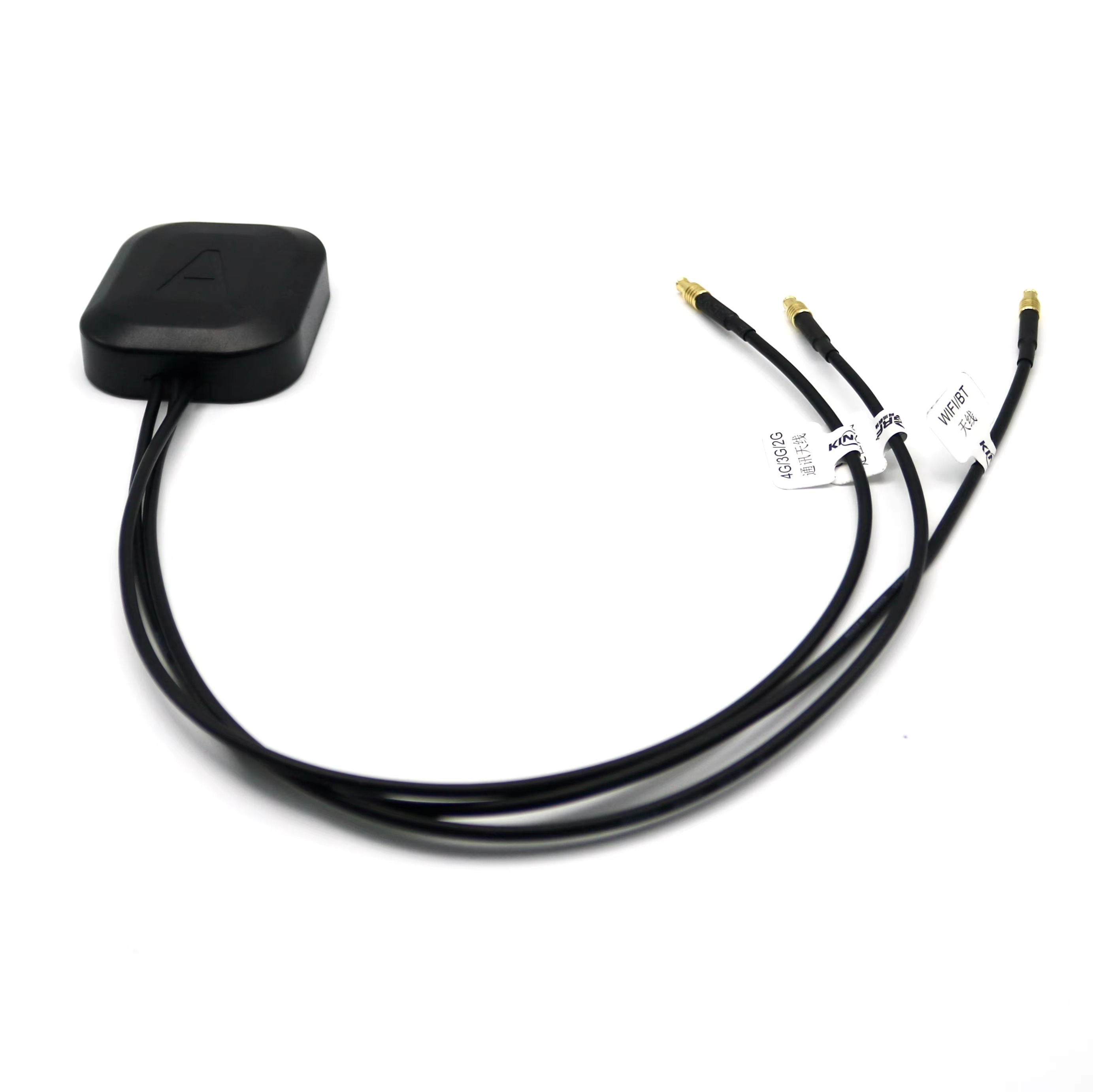
A low profile combination antenna is a multi-functional integrated wireless antenna designed with a ultra-flat, low-height structural design, which integrates two or more independent antenna units in one compact radome. It abandons the traditional design of multiple independent whip antennas or bulky panel antennas, realizing multi-frequency, multi-standard wireless signal coverage in a minimal footprint. The typical height of low profile combination antennas is controlled within 30mm–80mm, far lower than conventional communication antennas, achieving a completely discreet and streamlined installation effect.
This type of antenna mainly integrates common communication modules including cellular network antennas (5G NR, 4G LTE, 3G, GSM), wireless local area network antennas (WiFi 2.4GHz/5GHz/6GHz), satellite positioning antennas (GPS, GLONASS, Galileo, Beidou), and short-range communication antennas (Bluetooth, LoRa). Each built-in antenna unit works independently without mutual interference, ensuring stable transmission and reception of different frequency signals. Most low profile combination antennas adopt waterproof, dustproof, and corrosion-resistant shell materials such as high-strength ABS and PC, supporting long-term outdoor and industrial environment operation.
Different from ordinary single-band low-profile antennas, the combination model solves the pain points of messy wiring, large installation space occupation, high equipment cost, and signal crosstalk caused by installing multiple antennas separately. It is a standardized, high-efficiency, and cost-effective wireless connectivity solution for integrated communication equipment.
2. Core Working Principle of Low Profile Combination Antennas
The excellent performance of low profile combination antennas stems from optimized structural design, independent signal isolation technology, and professional radio frequency matching design. Its working principle can be divided into three core modules: multi-element integration design, anti-interference isolation technology, and impedance matching optimization.
2.1 Multi-Element Compact Integration
Engineers adopt miniaturized antenna unit design technology to miniaturize high-frequency WiFi, low-frequency cellular, and satellite positioning antenna elements respectively, and arrange them reasonably in a flat shell through spatial layout optimization. Each antenna element corresponds to an independent frequency band and function, covering mainstream communication frequency ranges from 600MHz to 6000MHz. The layered and offset layout effectively saves space while ensuring the radiation range of each signal is not blocked, realizing ultra-low profile integration.
2.2 High-Isolation Anti-Interference Technology
Signal interference is the biggest challenge of multi-band integrated antennas. Low profile combination antennas adopt professional isolation structures, including metal isolation partitions, frequency filtering circuits, and shielding coating technology, to isolate different antenna units physically and electrically. The isolation degree between each channel is greater than 20dB, which effectively suppresses mutual crosstalk between high-frequency and low-frequency signals, ensures no attenuation or distortion of each independent signal, and maintains stable communication quality.
2.3 Precise RF Impedance Matching
All low profile combination antennas adopt standard 50Ω impedance matching design, which perfectly matches the RF interfaces of industrial routers, IoT gateways, vehicle terminals, and smart devices. The built-in high-precision matching circuit reduces signal reflection and loss, improves antenna radiation efficiency, and ensures stable gain performance in full frequency bands. At the same time, the optimized VSWR (Voltage Standing Wave Ratio) is controlled below 1.8, avoiding signal attenuation and equipment damage caused by standing wave overload.
3. Key Advantages of Low Profile Combination Antennas
Low profile combination antennas have become the preferred antenna solution for commercial, industrial, and vehicle wireless communication scenarios, with irreplaceable advantages compared with traditional single antennas and ordinary combination antennas. The core advantages are summarized as follows:
3.1 Ultra-Low Profile & Discreet Installation
The most prominent feature of this antenna is its ultra-flat structure. The overall height is far lower than traditional whip antennas and shark fin antennas, with a sleek and minimalist appearance. It will not affect the overall aesthetics of equipment and vehicles, and can be perfectly integrated with the surface of smart devices, vehicle roofs, and outdoor equipment shells. It avoids the problems of protruding antennas being easily damaged by external forces, wind resistance, and dust accumulation, and is suitable for scenarios with high requirements on equipment appearance and wind resistance.
3.2 Multi-Band Integrated & High Cost-Performance
A single low profile combination antenna can replace 3–6 single-function antennas, covering 5G/4G cellular communication, dual-band/tri-band WiFi, full-system satellite positioning, and Bluetooth communication. It greatly reduces the procurement cost, wiring cost, and installation labor cost of antennas. At the same time, integrated design simplifies equipment structure, reduces the failure rate of wiring interfaces, and lowers subsequent operation and maintenance costs, bringing higher comprehensive cost performance for users.
3.3 Stable Signal Performance & High Radiation Efficiency
Through professional RF optimization and isolation design, low profile combination antennas maintain high gain and low loss in full frequency bands. The cellular antenna gain reaches 2–5dBi, WiFi antenna gain reaches 3–6dBi, and GNSS antenna has high sensitivity, which can quickly capture satellite signals and realize high-precision positioning. Even in complex environments such as urban high-rise shielding, suburban weak signal areas, and industrial electromagnetic interference environments, it can maintain stable signal transmission and reception, ensuring uninterrupted wireless communication.
3.4 Strong Environmental Adaptability & Durability
Most high-quality low profile combination antennas adopt IP67/IP68 waterproof and dustproof grade design, with high-strength ABS or UV-resistant PC shell. They have excellent performances of rainproof, snowproof, sun protection, corrosion resistance, and impact resistance, adapting to harsh outdoor environments such as high temperature, low temperature, high humidity, and strong wind. The internal antenna elements adopt anti-aging and anti-oxidation materials, with a service life of more than 5 years, meeting the long-term stable operation requirements of industrial and outdoor equipment.
3.5 Flexible Installation & Strong Compatibility
The antenna supports multiple installation methods, including screw fixed installation, adhesive installation, and magnetic adsorption installation, which can adapt to different installation surfaces such as metal, plastic, and glass. It is equipped with mainstream interfaces such as SMA, RP-SMA, and N-type, which is compatible with all mainstream industrial routers, 5G gateways, vehicle T-BOX, IoT terminals, and smart monitoring devices on the market. The standardized cable length and interface design realize plug-and-play, greatly improving installation efficiency.
4. Main Types & Core Technical Specifications
According to functional configuration, installation method, and application scenario, low profile combination antennas can be divided into multiple types. The mainstream products on the market are 3-in-1, 4-in-1, 5-in-1, and 7-in-1 multi-band combination antennas. The core technical parameters determine the antenna’s application effect, and the key specifications of mainstream products are as follows:
4.1 Common Product Types
3-in-1 Low Profile Combination Antenna: Integrates 4G/5G cellular + WiFi 2.4G + GPS positioning, the most cost-effective basic model, suitable for ordinary IoT devices and small smart terminals.
4-in-1 Low Profile Combination Antenna: Adds 5G MIMO or Bluetooth function on the basis of 3-in-1, meeting the dual-channel signal transmission requirement of high-speed communication.
5-in-1/7-in-1 High-End Combination Antenna: Supports 4×4 MIMO 5G/4G cellular + dual-band WiFi 6 + full-band GNSS + Bluetooth, suitable for high-speed industrial gateways, vehicle intelligent terminals, and smart base stations.
4.2 Core Technical Parameters
Frequency Range: Cellular (600MHz–6000MHz, compatible with 5G NR, 4G LTE, 3G, GSM); WiFi (2.4GHz, 5GHz, 6GHz); GNSS (1550MHz–1610MHz, compatible with GPS, Beidou, Galileo, GLONASS)
Antenna Gain: Cellular 2–5dBi; WiFi 3–6dBi; GNSS 25–30dBi (high gain for precise positioning)
VSWR: ≤1.8 (full frequency band, low standing wave, low signal loss)
Impedance: Standard 50Ω
Isolation Between Channels: ≥20dB (effective anti-interference)
Protection Grade: IP67/IP68 waterproof and dustproof
Working Temperature: -40℃ ~ +85℃ (adapt to extreme temperature environments)
Installation Method: Screw mounting, adhesive mounting, magnetic mounting
Interface Type: SMA Male, RP-SMA, N-Type, customized interface optional
5. Wide Application Scenarios of Low Profile Combination Antennas
With the continuous upgrading of wireless communication technology, low profile combination antennas have penetrated into all fields of smart communication. Their compact structure, multi-function integration, and stable performance make them the preferred antenna solution for vehicle intelligence, industrial IoT, smart city, and outdoor communication equipment.
5.1 Intelligent Vehicle & Transportation Industry
The vehicle field is the largest application scenario of low profile combination antennas. Traditional vehicle shark fin antennas have large wind resistance and single function, while low profile combination antennas are perfectly suitable for smart vehicles, new energy vehicles, engineering vehicles, and logistics vehicles. They can be installed on vehicle roofs to provide 5G/4G vehicle networking communication, high-precision Beidou/GPS positioning, vehicle WiFi hotspot, and Bluetooth connection functions. The ultra-low profile design reduces driving wind resistance, saves vehicle energy consumption, and will not affect vehicle aerodynamic performance. At the same time, the IP67 waterproof grade adapts to outdoor driving environments such as rain, snow, and dust, ensuring stable operation of vehicle networking systems, automatic driving auxiliary systems, and vehicle monitoring systems.
5.2 Industrial IoT & Smart Equipment
In industrial intelligent transformation, a large number of industrial gateways, IoT collection terminals, smart sensors, and industrial monitoring equipment need multi-band wireless communication functions. Low profile combination antennas integrate multiple communication functions, solving the problem of difficult installation and messy wiring of multiple antennas in industrial equipment. They are widely used in industrial intelligent monitoring, equipment remote operation and maintenance, factory wireless coverage, and smart meter data transmission. The anti-electromagnetic interference design can resist complex electromagnetic interference in industrial workshops, ensuring stable and reliable data transmission of industrial IoT systems.
5.3 Smart City & Outdoor Smart Infrastructure
Smart street lamps, outdoor monitoring cameras, smart traffic signs, environmental monitoring stations, and smart parking equipment in smart cities all need long-term outdoor wireless communication. Low profile combination antennas have ultra-low profile and beautiful appearance, which will not damage the overall landscape of the city. Their waterproof, dustproof, and anti-aging performance adapts to long-term outdoor exposure. They can provide 5G high-speed data transmission, equipment positioning, and wireless network coverage for outdoor smart equipment, supporting the stable operation of smart city perception systems and data transmission systems.
5.4 Mobile Communication & Portable Smart Terminals
For mobile communication equipment such as portable 5G routers, mobile base stations, and emergency communication terminals, the compact and portable characteristics of low profile combination antennas are very suitable. They reduce the overall volume and weight of the equipment while ensuring multi-band communication coverage, facilitating equipment carrying and mobile deployment. They are widely used in outdoor emergency communication, field operation communication, and temporary network coverage scenarios.
5.5 Smart Home & Commercial Wireless Coverage
In commercial buildings, office spaces, and high-end smart home scenarios, low profile combination antennas are used for embedded wireless coverage equipment. The flat and discreet design is perfectly integrated with ceilings and equipment shells, realizing hidden WiFi and cellular signal coverage, avoiding the messy visual effect of traditional exposed antennas, and improving the overall decoration grade while ensuring full coverage of indoor wireless signals.
6. How to Choose the Right Low Profile Combination Antenna? (Professional Selection Guide)
There are many types of low profile combination antennas on the market with uneven quality. To select a high-performance, suitable, and durable antenna product, users need to comprehensively consider application scenarios, functional requirements, technical parameters, and installation conditions. The professional selection criteria are as follows:
6.1 Confirm Functional & Band Requirements
First, clarify the required communication functions and frequency bands. For basic vehicle networking and IoT equipment, a 3-in-1 antenna with 4G+WiFi+GPS is sufficient; for high-speed 5G communication and high-precision positioning scenarios, it is necessary to select a 5-in-1 or 7-in-1 antenna supporting 5G MIMO and dual-band GNSS; for scenarios requiring short-range Bluetooth communication, prioritize products with integrated Bluetooth antenna. Ensure that the antenna frequency band covers the local operator’s communication frequency to avoid signal incompatibility.
6.2 Check Core Technical Parameters
Prioritize products with low VSWR (≤1.8), high channel isolation (≥20dB), and stable gain. Too high VSWR will lead to serious signal loss and even damage communication equipment; insufficient isolation will cause mutual interference of multi-band signals and poor communication quality. For outdoor and industrial scenarios, must select IP67 and above waterproof and dustproof grade products to ensure environmental adaptability.
6.3 Match Installation Method & Interface
Select the installation method according to the equipment installation environment: screw fixing is suitable for permanent installation of vehicle roofs and outdoor equipment; adhesive installation is suitable for equipment surfaces without drilling; magnetic adsorption is suitable for temporary mobile equipment. At the same time, confirm that the antenna interface matches the equipment RF interface to avoid adapter replacement affecting signal stability.
6.4 Focus on Material Quality & Certification
High-quality low profile combination antennas adopt UV-resistant and anti-aging ABS/PC shells, which will not yellow or crack after long-term outdoor use. It is recommended to select products with CE, FCC, and RoHS certifications, which meet international communication standards and have stable and reliable quality, avoiding unqualified products with unstable signals and short service life.
7. Installation & Maintenance Tips for Low Profile Combination Antennas
Correct installation and daily maintenance can maximize the service life and signal performance of low profile combination antennas. The key operation specifications are as follows:
7.1 Standard Installation Steps
First, clean and dry the installation surface to ensure no dust, oil, and uneven protrusions, so that the antenna is closely attached to the installation surface. For screw installation, fix the base firmly to avoid looseness caused by vibration; for adhesive installation, press the antenna tightly for 3–5 minutes after pasting, and use it after standing for 24 hours to ensure firm adhesion. After installation, arrange the RF cables neatly, avoid excessive bending and extrusion, and ensure smooth signal transmission.
7.2 Installation Position Requirements
Install the antenna in an open and unobstructed position as much as possible, avoid metal shielding coverage, and keep a certain distance from equipment power supply and circuit boards to reduce electromagnetic interference. Vehicle antennas should be installed on the top of the car with the best signal reception; industrial equipment antennas should be installed on the outer shell of the equipment to avoid internal signal shielding.
7.3 Daily Maintenance & Fault Troubleshooting
Regularly clean the antenna surface dust and stains to avoid affecting signal radiation. Check whether the cable interface is loose or oxidized, and tighten and replace it in time if abnormal. If the signal is weak or unstable, first check whether the antenna installation is loose and blocked, then detect whether the cable is damaged, and finally confirm whether the antenna parameters match the equipment. Avoid disassembling the antenna privately to prevent damage to the internal isolation structure and antenna elements.
8. Market Development Trend of Low Profile Combination Antennas
With the comprehensive popularization of 5G technology, the rapid development of IoT and smart vehicle industry, the low profile combination antenna market presents three major development trends. First, higher integration and miniaturization, with the continuous innovation of antenna miniaturization technology, more functional modules will be integrated into ultra-low profile shells to adapt to thinner and more compact smart equipment. Second, 5G MIMO high-speed iteration, multi-channel MIMO antenna technology will be fully popularized to meet the demand of ultra-high-speed wireless data transmission for smart devices. Third, intelligent and high-precision positioning, GNSS multi-system high-precision positioning antennas will be upgraded iteratively, supporting centimeter-level positioning, which is widely used in automatic driving, smart navigation, and industrial precise positioning scenarios. In addition, environmental protection, low power consumption, and ultra-durability will become the standard configuration of new-generation combination antennas.
9. Frequently Asked Questions (FAQ)
Q1: Will the multi-band integrated design of low profile combination antennas cause signal interference?
A: High-quality low profile combination antennas adopt professional physical isolation and circuit filtering technology, with channel isolation greater than 20dB, which can completely avoid mutual interference between different frequency signals. Each antenna unit works independently, and the signal stability is no different from that of single-band antennas.
Q2: Are low profile combination antennas suitable for all 5G devices?
A: Most mainstream low profile combination antennas support full-band 5G NR frequency bands, compatible with global 5G/4G operators’ networks. It can match all 5G routers, gateways, and vehicle terminals with standard RF interfaces, with strong universal compatibility.
Q3: What is the service life of outdoor low profile combination antennas?
A: Products with IP67/IP68 waterproof grade and UV-resistant shell materials have a service life of more than 5 years in outdoor harsh environments, and can maintain stable performance in high temperature, low temperature, rain, and snow environments for a long time.
Q4: Can low profile combination antennas realize high-precision positioning?
A: High-end models support L1/L5 dual-band GNSS positioning, compatible with multiple global satellite systems, with high sensitivity and fast positioning speed, which can realize meter-level or even centimeter-level high-precision positioning, meeting the needs of navigation and precise positioning scenarios.
As an indispensable core component of modern wireless communication systems, low profile combination antenna breaks through the limitations of traditional single antennas and bulky combination antennas. It perfectly balances ultra-compact low-profile appearance, multi-band integrated function, stable signal performance, and strong environmental adaptability, providing efficient, economical, and reliable wireless connection solutions for smart vehicles, industrial IoT, smart cities, and commercial wireless coverage. With the continuous upgrading of 5G communication and intelligent equipment technology, low profile combination antennas will usher in broader market application prospects, and become the mainstream antenna choice for global wireless intelligent equipment. For enterprises and engineers who pursue high efficiency, low cost, and stable performance, choosing a high-quality low profile combination antenna is the key to ensuring long-term stable operation of wireless communication systems.
Lucy Yang | lucy.y@toxutech.com
Dotty Zhao | sales04@toxutech.com
Global Business Director / Sales Team / Global Operations


 En
En Cn
Cn Korean
 Home >