

-
Products -PCBA Manufacturing RF Connectors RF Cable Assemblys Embedded Antennas External Antennas GNSS Positioning Solutions
RF Connectors

RF Cable Assemblys
Embedded Antennas
External Antennas
GNSS Positioning Solutions































 Language


Language


Time:2026-10-15 Views:0
Low profile aviation GNSS antenna is a core navigation component specially optimized for aerial vehicle scenarios, including manned aircraft, commercial UAVs, industrial drones, general aviation aircraft, and autonomous flying platforms. Different from traditional bulky GNSS antennas, this low-profile design features ultra-thin structure, low wind resistance, lightweight body, and high environmental adaptability, perfectly matching the strict installation and operating requirements of aviation equipment. With the rapid development of global aerial intelligence, autonomous flight, and precision aviation navigation, high-performance low profile aviation GNSS antennas have become an indispensable part of modern aviation positioning systems, providing stable, high-precision, and anti-interference satellite signal reception for various flying devices.
In aviation navigation scenarios, antenna performance directly determines the accuracy, stability, and safety of GNSS positioning. Traditional aviation GNSS antennas often have protruding structures, large wind resistance, heavy weight, and poor adaptability to high-dynamic flight environments, which easily cause signal loss, positioning deviation, and increased flight energy consumption. In contrast, the low profile aviation GNSS antenna abandons the conventional high-radiator design, adopts ultra-flat conformal structural optimization, and integrates high-gain signal reception, low-noise amplification, and multi-constellation compatibility technologies. It not only realizes miniaturized and lightweight installation but also maintains excellent satellite tracking capability in high-speed flight, strong vibration, and complex electromagnetic interference environments, making it the preferred navigation antenna solution for modern aviation and UAV industries.
1. What Is a Low Profile Aviation GNSS Antenna?
A low profile aviation GNSS antenna is a professional active satellite navigation antenna tailored for aviation application standards, characterized by ultra-thin low-height outline, low aerodynamic drag, lightweight design, and aviation-grade reliability. It supports full-band reception of mainstream global satellite navigation systems, including GPS, BDS, GLONASS, Galileo, QZSS, and SBAS, and can realize high-precision positioning, velocity measurement, and timing functions for aviation carriers.
Different from civilian consumer-grade GNSS antennas, aviation-grade low-profile antennas strictly comply with aviation industry specifications such as ARINC and aviation environmental reliability standards. They adopt high-stability ceramic patch radiation elements, multi-point symmetric feeding technology, and built-in high-performance LNA (Low Noise Amplifier) modules, which effectively reduce signal noise and improve reception sensitivity. The ultra-flat low-profile structure greatly reduces the protruding height of the antenna on the aircraft surface, minimizing wind resistance and aerodynamic impact during flight, while ensuring seamless conformal installation on aircraft fuselages, UAV bodies, and aviation equipment shells.
Core definition features of low profile aviation GNSS antenna: ultra-low height profile (usually less than 12mm), lightweight design (single antenna weight ≤50g), low wind resistance aerodynamic structure, aviation-grade anti-vibration and anti-shock performance, multi-constellation full-frequency signal reception, and stable phase center characteristics. These features make it uniquely suitable for various aviation scenarios with strict requirements on installation space, load weight, and flight aerodynamic performance.
2. Core Advantages of Low Profile Aviation GNSS Antenna
The widespread popularity of low profile aviation GNSS antennas in the aviation industry stems from their comprehensive advantages in structural design, signal performance, environmental adaptability, and application compatibility. Compared with traditional aviation GNSS antennas and ordinary civilian GNSS antennas, its core strengths are reflected in the following six dimensions, which fully meet the high-standard requirements of aviation navigation.
2.1 Ultra-Low Profile & Low Wind Resistance Design
The most prominent feature of aviation low-profile GNSS antennas is the ultra-thin flat structure design. By optimizing the internal radiation structure and external shell outline, the antenna realizes an ultra-low mounting height, completely changing the bulky and protruding shape of traditional aviation antennas. This design effectively reduces the windward area of the antenna during flight, greatly lowers aerodynamic drag, and avoids flight attitude deviation and increased power consumption caused by excessive wind resistance. For small UAVs and lightweight aviation platforms with limited power budget, low wind resistance design can significantly extend flight endurance and improve flight stability. For manned general aviation aircraft, the flat conformal design does not damage the overall aerodynamic layout of the fuselage, ensuring safe and stable flight performance.
2.2 Lightweight & Easy Integration
Low profile aviation GNSS antennas adopt high-strength lightweight composite materials and miniaturized circuit design, with overall weight controlled within 30–50g, far lighter than traditional aviation navigation antennas. The lightweight feature effectively reduces the overall load of aviation equipment, which is crucial for small UAVs, portable aviation devices, and micro aerial vehicles with strict load limits. Meanwhile, the compact and regular flat structure supports diversified installation methods such as flange fixing, screw mounting, and magnetic adsorption, realizing seamless integration with aircraft fuselages, equipment cabins, and navigation modules. It simplifies the system integration process, saves installation space, and reduces the overall assembly difficulty of aviation navigation systems.
2.3 High-Precision Stable Phase Center Performance
Aviation precision navigation puts forward extremely high requirements on antenna phase center stability, which directly determines the centimeter-level RTK positioning accuracy. Low profile aviation GNSS antennas adopt advanced multi-point symmetric feeding technology and optimized ceramic patch radiation structure, which effectively suppress phase center variation caused by flight attitude changes, signal incidence angle differences, and environmental interference. The stable phase center ensures consistent signal reception accuracy in all flight attitudes such as horizontal flight, climbing, diving, and rolling, realizing continuous and reliable high-precision positioning. This performance is irreplaceable for surveying and mapping UAVs, inspection drones, and professional aviation equipment that require centimeter-level RTK navigation.
2.4 Excellent Anti-Interference & Anti-Multipath Capability
Aviation flight environments are complex and changeable, with various electromagnetic interference sources such as airborne electronic equipment, ground base stations, and atmospheric electromagnetic radiation, as well as multipath signal interference caused by fuselage reflection and ground reflection. Low profile aviation GNSS antennas are equipped with built-in high-performance band-pass filtering modules and high-gain low-noise amplifiers, which can effectively suppress out-of-band electromagnetic interference and filter multipath reflected signals. The professional shielding structure design isolates internal and external electromagnetic signals, ensuring pure and stable satellite signal reception. Even in complex electromagnetic environments such as urban low-altitude flight, mountainous area navigation, and cluster UAV operation, the antenna can maintain stable signal tracking without signal loss or positioning drift.
2.5 Aviation-Grade Environmental Adaptability
All low profile aviation GNSS antennas undergo strict aviation environmental reliability tests, with industrial-grade waterproof, dustproof, shockproof, and temperature resistance capabilities. Most products reach IP67 waterproof and dustproof rating, which can effectively resist rain, snow, fog, dust, and airborne moisture erosion. They support a wide working temperature range of -40℃ to +85℃, adapting to extreme temperature changes in high-altitude low-temperature environments and low-altitude high-temperature environments. In addition, the antenna structure is specially reinforced to resist strong vibration and impact during aircraft takeoff, landing, and high-speed flight, avoiding structural damage or performance attenuation caused by flight vibration. It can operate stably in harsh aviation environments for a long time with ultra-high durability.
2.6 Multi-Constellation & Multi-Band Full Coverage
Modern aviation navigation requires multi-system satellite signal fusion positioning to improve positioning redundancy and reliability. Low profile aviation GNSS antennas support full-band reception of all mainstream global navigation satellite systems, including GPS L1/L2/L5, BDS B1/B2/B3, GLONASS G1/G2, Galileo E1/E5/E6, QZSS, and SBAS satellite signals. The multi-band and multi-constellation coverage enables the antenna to receive more satellite signals in complex occlusion environments, solve the problem of insufficient satellite quantity in single-system positioning, and greatly improve positioning continuity and reliability. It can meet the positioning requirements of ordinary navigation, high-precision RTK positioning, and safety monitoring of aviation equipment.
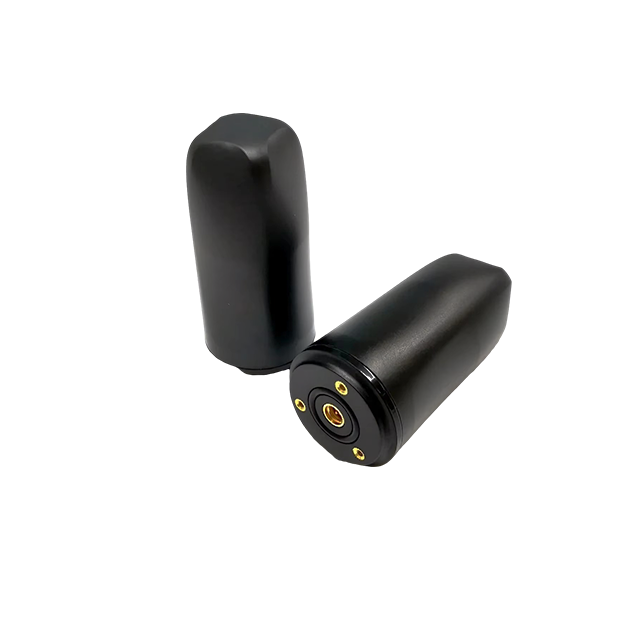
3. Key Technical Parameters of Low Profile Aviation GNSS Antenna
Professional aviation-grade low profile GNSS antennas have standardized and superior technical parameters, which are the core basis for ensuring aviation navigation performance. The mainstream product parameter specifications in the industry are summarized as follows, covering electrical performance, structural parameters, environmental performance, and interface specifications, providing accurate reference for user selection and system matching.
3.1 Electrical Performance Parameters
Frequency Band Coverage: Full-band GNSS coverage, supporting GPS L1(1575.42MHz)/L2(1227.60MHz)/L5(1176.45MHz), BDS B1(1561.098MHz)/B2(1207.14MHz)/B3(1268.52MHz), GLONASS G1/G2, Galileo E1/E5/E6, SBAS and QZSS, realizing global full-constellation signal reception.
Antenna Gain: 25–35dB high stable gain, ensuring strong signal reception capability for low-elevation satellites, adapting to high-dynamic flight attitude changes, and maintaining continuous satellite tracking.
Noise Figure: ≤1.5dB ultra-low noise figure, effectively reducing signal noise interference and improving signal-to-noise ratio, ensuring high-sensitivity signal reception.
VSWR: ≤1.5 ultra-low voltage standing wave ratio, realizing efficient signal transmission, reducing signal reflection and loss, and improving antenna radiation efficiency.
Phase Center Stability: Sub-millimeter level phase center variation, meeting centimeter-level RTK high-precision positioning requirements, ensuring positioning accuracy consistency in complex flight states.
3.2 Structural & Mechanical Parameters
Outline Size: Ultra-low profile design, conventional size φ56×10.6mm or 52×39×10.5mm, ultra-thin height, no protruding structure, suitable for various narrow installation spaces of aviation equipment.
Weight: 30–50g lightweight design, effectively reducing aviation equipment load, optimizing flight power consumption and endurance performance.
Polarization Mode: RHCP (Right-Hand Circular Polarization), matching the polarization mode of satellite navigation signals, maximizing signal reception efficiency and resisting polarization fading interference.
Installation Method: Support flange fixed installation, screw locking installation, and magnetic adsorption installation, flexible and diverse installation forms, suitable for different aviation carrier structures.
3.3 Environmental Adaptability Parameters
Waterproof & Dustproof Grade: IP67 industrial aviation grade, fully sealed structure, completely preventing dust intrusion and rainwater immersion, suitable for all-weather flight operation.
Working Temperature: -40℃~+85℃ wide temperature range, adapting to high-altitude low-temperature severe environment and low-altitude high-temperature working environment, no performance attenuation in extreme temperature.
Vibration & Shock Resistance: Comply with aviation-level vibration and impact standards, resist frequent vibration during aircraft takeoff and landing and high-intensity impact during flight, stable structural performance.
Anti-Corrosion Performance: Shell adopts high-strength anti-corrosion composite material, resisting salt spray, oxidation and chemical corrosion, suitable for marine aviation and complex atmospheric environment operation.
3.4 Interface & Power Parameters
Interface Type: Standard aviation-grade SMA-K or TNC waterproof interface, reliable connection, good sealing performance, avoiding signal interruption caused by loose interface during flight vibration.
Working Voltage: 3.3V~5V wide voltage input, compatible with mainstream aviation navigation module power supply standards, strong system compatibility.
Working Current: ≤30mA low power consumption, reducing aviation equipment power load, saving battery energy, and extending flight time.
4. Main Application Scenarios of Low Profile Aviation GNSS Antenna
With its unique low-profile structure, high precision, high reliability and strong adaptability, low profile aviation GNSS antennas are widely used in all fields of modern aviation navigation, covering civil aviation, general aviation, industrial UAVs, military aviation equipment, and intelligent aerial systems. The main application scenarios are as follows:
4.1 Industrial & Commercial UAVs
Industrial UAVs have strict requirements on equipment weight, wind resistance and positioning accuracy, which is the largest application market of low profile aviation GNSS antennas. Surveying and mapping UAVs, aerial survey UAVs, inspection UAVs (power inspection, pipeline inspection, forest inspection), and agricultural plant protection UAVs all need high-precision RTK positioning support. The low-profile and lightweight design avoids affecting the UAV's flight attitude and endurance, while high anti-interference performance ensures stable positioning in complex working environments such as urban buildings, mountainous areas, and farmlands. Ultra-wide beam coverage can track satellite signals in real time during UAV rolling, pitching and high-speed flight, ensuring continuous and accurate operation of autonomous flight, fixed-point cruise, and automatic operation functions.
4.2 General Aviation Aircraft
General aviation equipment such as small private aircraft, training aircraft, helicopters, and light sport aircraft has high requirements for navigation safety and equipment integration. Low profile aviation GNSS antennas adopt conformal flat design, which does not damage the aircraft's aerodynamic layout, and can be seamlessly installed on the fuselage surface. Aviation-grade reliability and anti-interference performance ensure stable navigation signal output during long-distance flight and complex meteorological flight, providing accurate positioning and heading reference for aircraft flight, takeoff and landing. Multi-constellation signal reception improves navigation redundancy and avoids flight safety risks caused by single signal failure.
4.3 Unmanned Aerial Vehicle Swarms & Autonomous Flight Platforms
With the development of intelligent aviation technology, UAV swarm operation and fully autonomous flight platforms have been widely used in military reconnaissance, aerial performance, and intelligent detection scenarios. Low profile aviation GNSS antennas feature consistent batch performance, low power consumption, and easy integration, which can meet the unified navigation configuration requirements of UAV swarms. High-precision positioning and stable signal performance ensure precise formation flight and collaborative operation of multiple UAVs, and support real-time data interaction and position synchronization of autonomous flight systems.
4.4 Special Aviation Equipment
Including high-altitude reconnaissance equipment, aerial monitoring equipment, unmanned cargo aircraft, and aviation emergency rescue equipment. These devices usually work in harsh environments such as high altitude, low temperature, and strong electromagnetic interference. The aviation-grade low-profile GNSS antenna's wide temperature resistance, anti-vibration, anti-interference, and waterproof and dustproof performance can adapt to extreme working conditions, providing reliable long-term navigation guarantee for special aviation equipment. At the same time, the low wind resistance design ensures the stability of high-altitude high-speed flight.
4.5 Aviation Navigation Auxiliary System
It can be used as a core signal receiving component of aviation GNSS navigation receivers, flight data recording systems, and aircraft attitude monitoring systems. The high-sensitivity signal reception and stable phase center performance improve the overall positioning accuracy and data reliability of the aviation navigation system, assist the flight control system to realize precise attitude adjustment and route planning, and improve the overall intelligence and safety level of aviation equipment.
5. How to Choose a Qualified Low Profile Aviation GNSS Antenna?
There are many types of low profile aviation GNSS antennas on the market with uneven performance. To select a high-quality and suitable product, users need to comprehensively evaluate from the aspects of application scenario matching, performance parameters, aviation certification, structural reliability, and after-sales service, avoiding the problems of insufficient positioning accuracy, poor stability, and short service life caused by improper selection. The core selection guidelines are as follows:
5.1 Confirm Scenario Matching Requirements
First, clarify the specific application carrier and working environment. For lightweight micro-UAVs, priority should be given to ultra-light and ultra-thin low-power antennas to reduce load and power consumption; for high-precision surveying and mapping UAVs and professional aviation equipment, select RTK-level high-stability phase center multi-band antennas; for high-altitude and harsh environment operation equipment, focus on products with wide temperature resistance, high vibration resistance, and IP67 high-level protection.
5.2 Focus on Core Performance Parameters
Key parameters such as frequency band coverage, gain, noise figure, and phase center stability directly determine navigation performance. It is recommended to select full-constellation full-band antennas to ensure signal redundancy; choose products with gain above 25dB and noise figure below 1.5dB to guarantee signal reception sensitivity; for high-precision positioning scenarios, sub-millimeter phase center stability must be met to avoid positioning drift.
5.3 Verify Aviation-Grade Certification & Quality Standards
Qualified aviation GNSS antennas must comply with international aviation industry standards and pass professional environmental reliability tests. Prioritize products that meet ARINC aviation specifications, aviation vibration and shock resistance standards, and IP67 protection certification. Avoid civilian modified antennas that lack aviation certification, which are prone to performance failure in high-dynamic flight and harsh environments and cannot meet aviation safety requirements.
5.4 Evaluate Structural Design & Installation Compatibility
Select antenna outline size and installation methods according to the installation space of aviation equipment. Ensure that the low-profile size matches the equipment shell, and the interface type is compatible with the navigation receiver module. At the same time, check the shell material and structural reinforcement design to ensure that it has sufficient mechanical strength to resist flight vibration and impact and avoid structural damage.
5.7 Check Manufacturer Strength & After-Sales Service
Choose professional manufacturers with long-term aviation antenna R&D and production experience, which have stable product quality and mature technical solutions. Prefer brands that provide professional technical matching services, customized design support, and perfect after-sales warranty services, to solve the problems of product adaptation, installation debugging and later maintenance.
6. Frequently Asked Questions About Low Profile Aviation GNSS Antenna
In the process of selection and use of low profile aviation GNSS antennas, users often encounter various technical and application problems. The following sorts out the most common FAQs in the industry to help users quickly solve practical problems:
Q1: What is the difference between aviation low profile GNSS antenna and ordinary civilian GNSS antenna?
Civilian GNSS antennas are only suitable for low-speed static or low-dynamic scenarios such as vehicle navigation and handheld devices, with low phase center stability, poor anti-vibration and anti-interference performance, and no aviation environmental certification. Low profile aviation GNSS antennas are specially optimized for high-dynamic flight scenarios, with ultra-low wind resistance lightweight structure, aviation-grade vibration and temperature resistance, stable phase center, strong anti-multipath and anti-interference ability, which can maintain stable high-precision operation in high-speed flight and harsh aviation environments, fully meeting aviation safety standards.
Q2: Can low profile aviation GNSS antenna realize centimeter-level RTK positioning?
Yes. Professional low profile aviation GNSS antennas adopt multi-point feeding optimization and high-stability phase center design, support multi-band fusion positioning of GPS L1/L2/L5, BDS B1/B2/B3 and other frequency bands, and cooperate with RTK navigation modules to realize centimeter-level high-precision positioning. It is widely used in high-precision scenarios such as UAV surveying and mapping, aerial mapping, and precision aviation operation.
Q3: Is the low-profile design of the antenna will affect signal reception performance?
Qualified aviation low-profile GNSS antennas will not have signal attenuation problems. Manufacturers optimize the internal radiation structure, LNA amplification circuit and beam coverage while reducing the antenna height. The ultra-wide beam design ensures full-angle satellite signal reception, and the built-in high-gain amplifier compensates for the signal loss caused by structural thinning. Its signal reception sensitivity and tracking ability are far better than ordinary high-profile civilian antennas.
Q4: What installation methods are available for low profile aviation GNSS antennas?
It supports a variety of flexible installation methods, including flange fixing installation suitable for aircraft fuselages, screw locking installation for equipment cabins, and magnetic adsorption installation for temporary navigation equipment. All installation methods can realize flat conformal fitting, ensuring no protruding structure and low wind resistance, adapting to different aviation carrier installation requirements.
Q5: What working environments can aviation low profile GNSS antennas adapt to?
It can adapt to all-weather and multi-scene aviation working environments, including high-altitude low-temperature environment (-40℃), low-altitude high-temperature environment (+85℃), rainy and snowy humid environment, dusty complex environment, and strong electromagnetic interference environment. With IP67 waterproof and dustproof performance and aviation-grade vibration resistance, it can work stably for a long time in various harsh aviation scenarios.
7. Development Trends of Low Profile Aviation GNSS Antenna Technology
With the continuous upgrading of global aviation intelligence, autonomous flight technology and high-precision navigation requirements, low profile aviation GNSS antennas are developing towards ultra-miniaturization, multi-functional integration, intelligent anti-interference, and high-precision fusion. The future technical development trends are mainly reflected in the following aspects:
First, ultra-thin and ultra-light integration. With the increasing demand for lightweight aviation equipment, antennas will be further optimized in structure and materials, realizing thinner thickness and lighter weight while maintaining performance, and promoting seamless integration with aviation equipment shells.
Second, intelligent anti-interference technology. Aiming at the increasingly complex aviation electromagnetic environment, future antennas will integrate intelligent filtering and adaptive anti-interference modules, which can automatically identify and suppress interference signals, further improve the stability of signal reception in complex environments.
Third, multi-sensor fusion navigation. Low profile aviation GNSS antennas will be combined with inertial navigation, barometric altitude measurement and other sensors to realize multi-source navigation data fusion, solve the problem of signal occlusion and loss in complex scenarios, and improve the reliability and continuity of aviation navigation.
Fourth, customized modular design. According to the differentiated needs of different aviation carriers such as large aircraft, small UAVs and special aviation equipment, modular and customized low-profile antenna solutions will be realized to improve scenario adaptation and product versatility.
As a key core component of modern aviation precision navigation systems, low profile aviation GNSS antenna breaks through the structural and performance limitations of traditional aviation antennas, and realizes the perfect balance of low wind resistance, lightweight, high precision, high reliability and strong environmental adaptability. It provides stable and accurate satellite navigation support for various aviation equipment such as UAVs, general aviation aircraft and intelligent flight platforms, and effectively guarantees the safety, efficiency and precision of aviation flight operations.
With the continuous development of the global aviation industry and the continuous expansion of autonomous flight application scenarios, low profile aviation GNSS antennas will play a more important role in civil aviation, industrial aviation and special aviation fields. Choosing professional, aviation-grade, high-performance low profile GNSS antennas is the key to improving the overall navigation performance and operational safety of aviation equipment.
Lucy Yang | lucy.y@toxutech.com
Dotty Zhao | sales04@toxutech.com
Global Business Director / Sales Team / Global Operations


 En
En Cn
Cn Korean
 Home >