

-
Products -PCBA Manufacturing RF Connectors RF Cable Assemblys Embedded Antennas External Antennas GNSS Positioning Solutions
RF Connectors

RF Cable Assemblys
Embedded Antennas
External Antennas
GNSS Positioning Solutions































 Language


Language


Time:2026-10-16 Views:0
Low power IoT combo antennas have become the backbone of modern wireless IoT ecosystems, enabling compact, energy-efficient, and multi-band connectivity for billions of smart devices worldwide. As the Internet of Things evolves toward ultra-low-power operation, miniaturized hardware, and seamless multi-protocol communication, traditional single-band antennas can no longer meet the demands of complex IoT deployments. A low power IoT combo antenna integrates multiple antenna elements into a single compact housing, supporting dual or multi-band wireless communication, positioning, and data transmission while maintaining minimal power consumption. This comprehensive guide explores everything you need to know about low power IoT combo antennas, including core definitions, key benefits, technical specifications, application scenarios, selection criteria, and industry trends, optimized for Google SEO and industrial IoT practitioner reference.
1. What Is a Low Power IoT Combo Antenna?
A low power IoT combo antenna is a multi-functional integrated wireless antenna designed specifically for IoT devices that require ultra-low power consumption, small form factors, and simultaneous multi-band connectivity. Unlike conventional single-function antennas that only support one frequency band or communication protocol, a combo antenna merges two or more independent antenna systems—such as cellular LPWAN (NB-IoT, LTE-M), GNSS positioning (GPS, GLONASS, Galileo, Beidou), Wi-Fi, Bluetooth, and Zigbee—into a single unified structural unit .
The “low power” attribute differentiates it from standard commercial combo antennas by optimizing RF circuit design, impedance matching, and signal radiation efficiency to minimize static and dynamic power consumption. This specialized design drastically reduces the energy overhead of wireless communication, making it ideal for battery-powered IoT devices that require long-term standby operation, typically ranging from several months to multiple years without battery replacement.
Most low power IoT combo antennas adopt passive or semi-passive structural designs, eliminating the need for active power amplification circuits that consume extra energy. With precision impedance matching (50Ω standard IoT RF impedance) and low VSWR (Voltage Standing Wave Ratio), these antennas minimize signal reflection loss and power waste during data transmission, achieving a perfect balance between stable signal performance and ultra-low power operation .
2. Core Working Principle of Low Power IoT Combo Antennas
The operational logic of low power IoT combo antennas centers on multi-band integration, low-loss signal transmission, and energy-saving RF optimization. The core structure consists of multiple independent radiation units, a shared miniaturized housing, isolation shielding layers, and precision impedance matching circuits. Each antenna unit corresponds to an independent frequency band and communication function, while the isolation design effectively avoids signal crosstalk between different frequency bands.
First, the internal isolation shielding layer separates high-frequency signal units (such as Wi-Fi/Bluetooth 2.4GHz) and low-frequency LPWAN units (such as NB-IoT 700MHz–900MHz), preventing mutual interference that could cause signal attenuation and increased power consumption. Second, the optimized microstrip radiation structure enhances radiation efficiency, ensuring that most electrical energy is converted into wireless signal radiation rather than heat loss, which significantly reduces invalid power consumption .
In low-power sleep mode of IoT devices, the combo antenna maintains ultra-low static power consumption by closing partial RF circuit channels, only retaining weak signal induction capabilities. When the device wakes up for data transmission or positioning, the antenna quickly activates the corresponding frequency band unit with fast response speed, completing data interaction in a short time and returning to low-power standby mode. This intermittent high-efficiency operation mode is the key to extending the battery life of IoT terminal devices.
3. Key Advantages of Low Power IoT Combo Antennas for IoT Deployments
Low power IoT combo antennas have gradually replaced single-band antennas in mainstream IoT applications due to their unique structural and performance advantages. Their core value lies in solving three major pain points of traditional IoT antenna solutions: large hardware footprint, high power consumption, and poor multi-protocol compatibility.
3.1 Ultra-Low Power Consumption for Long Battery Life
Power optimization is the most prominent feature of low power IoT combo antennas. Compared with ordinary combo antennas, they reduce static power consumption by up to 12% and dynamic transmission power loss by 15–20% through optimized circuit matching and low-loss material selection . For battery-powered IoT terminals such as smart meters, asset trackers, and environmental sensors, this optimization directly extends battery service life by 30–50%. Passive low-power designs avoid continuous energy consumption of active components, enabling devices to work stably for 3–10 years with lithium batteries, fully meeting the long-term unattended operation requirements of industrial IoT scenarios.
3.2 Miniaturized Integrated Design to Save Hardware Space
Traditional multi-function IoT devices need to be equipped with multiple independent antennas for communication and positioning, resulting in large PCB occupation, complex wiring, and high assembly costs. Low power IoT combo antennas integrate 2–4 functional antenna units into a single ultra-compact housing, reducing the overall antenna footprint by more than 40% . Common forms include FPC flexible antennas, ceramic patch antennas, and adhesive whip antennas, which support flexible installation in narrow device enclosures. This miniaturized design is particularly suitable for portable and miniature IoT devices such as wearable smart sensors, shared device terminals, and micro environmental monitoring equipment.
3.3 Multi-Band & Multi-Protocol Compatibility
A single low power IoT combo antenna can cover mainstream IoT communication and positioning frequency bands, including NB-IoT, LTE-M, 4G GSM, LoRa, Zigbee, Bluetooth 2.4G, Wi-Fi, and full-band GNSS positioning (GPS/Beidou/Galileo/GLONASS) . It supports seamless switching between multiple communication protocols, enabling IoT devices to simultaneously implement wireless data transmission, high-precision positioning, and short-range local communication. This all-in-one compatibility eliminates the need for repeated antenna design and debugging for multi-functional IoT devices, greatly shortening product development cycles.
3.4 Stable Signal Performance & Low Interference
Equipped with professional electromagnetic isolation and shielding structure, low power IoT combo antennas effectively suppress crosstalk between high and low frequency bands, ensuring independent and stable operation of each functional unit. The optimized VSWR is stably controlled below 1.6, which eliminates most signal reflection losses and ensures low packet loss rates in complex wireless environments . In indoor occlusion, urban high-rise shielding, and outdoor remote scenarios, the antenna maintains stable signal reception and transmission capabilities, with indoor short-range packet loss reduced to below 2%, far exceeding the signal stability of ordinary multi-antenna combinations.
3.5 Low Cost & Easy Installation
Integrated combo antenna design reduces material costs, assembly labor costs, and PCB layout costs caused by multiple antennas. Most low power IoT combo antennas adopt plug-and-play or adhesive mounting methods, with standardized interfaces (SMA, IPEX, U.FL) that are compatible with mainstream IoT modules and development boards . The simple installation process reduces on-site deployment difficulty and later maintenance costs, making it suitable for large-scale batch deployment of IoT terminals.
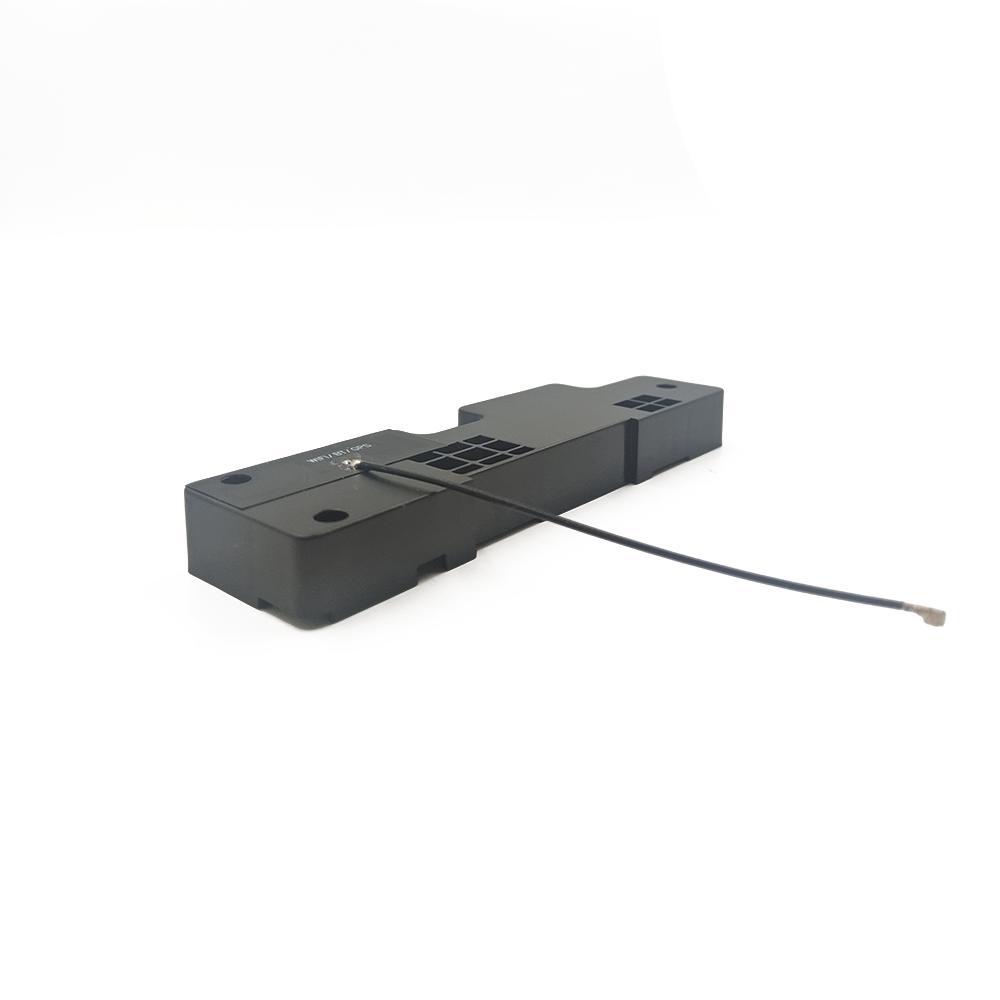
4. Common Types of Low Power IoT Combo Antennas (2026 Updated)
According to functional combination, structural form, and application scenarios, low power IoT combo antennas are mainly divided into four mainstream types, covering almost all low-power IoT terminal deployment needs.
4.1 NB-IoT/LTE-M + GNSS Combo Antenna
This is the most widely used low power IoT combo antenna in industrial IoT. It integrates low-band LPWAN cellular communication and full-band satellite positioning functions, supporting NB-IoT and LTE-M ultra-long-distance low-power data transmission, as well as high-precision GNSS positioning . The antenna features ultra-low standby power consumption, strong signal penetration, and wide coverage, making it the core antenna solution for positioning-enabled IoT devices. It is widely used in smart water/electric meters, logistics asset trackers, shared bicycles, and outdoor monitoring terminals. The cellular band gain reaches 5dBi, and the GNSS positioning band gain is up to 28dBi, ensuring stable positioning and communication in weak signal environments .
4.2 2.4G Wi-Fi + Bluetooth + Zigbee Combo Antenna
Designed for short-range low-power IoT communication scenarios, this combo antenna integrates three mainstream 2.4G wireless protocols. It adopts a high-integration FPC flexible structure with ultra-small size and ultra-low power consumption, suitable for smart home devices, indoor sensors, and wearable IoT terminals. The unified 2.4G band design avoids frequency band conflict and crosstalk, and the power-saving circuit design ensures long-term standby of indoor low-power devices. It supports low-rate intermittent data transmission, perfectly adapting to the working characteristics of smart door locks, temperature and humidity sensors, and smart lighting systems.
4.3 4G/5G Low-Power Cellular + GNSS + Wi-Fi Triple Combo Antenna
This high-performance multi-functional combo antenna is oriented to medium and high-end IoT terminals, integrating 4G/5G low-power cellular communication, satellite positioning, and short-range Wi-Fi communication . It adopts a multi-layer isolation structure to solve multi-band signal interference problems, and optimizes power consumption for 5G low-rate IoT scenarios, ensuring high-speed data transmission while maintaining low energy consumption. It is mainly used in smart vehicle terminals, intelligent robot equipment, and industrial gateway IoT devices that require simultaneous high-speed networking, positioning, and local wireless linkage.
4.4 LoRa + GNSS Low-Power Long-Distance Combo Antenna
A professional long-distance low-power combo antenna for industrial remote IoT monitoring. It integrates LoRa ultra-long-distance low-power communication and GNSS positioning functions, supporting ultra-long-distance signal transmission of 3–10 kilometers in open environments. With ultra-low emission power consumption and strong anti-interference ability, it is suitable for field environmental monitoring, agricultural IoT, forest fire prevention, and remote industrial equipment monitoring. It can work stably in harsh outdoor environments, with IP67 waterproof and dustproof optional protection levels .
5. Core Technical Specifications of Low Power IoT Combo Antennas
To help developers and engineers select suitable antennas, we sort out the industry-standard core technical parameters of low power IoT combo antennas, covering electrical performance, structural indicators, and environmental adaptability.
5.1 Electrical Performance Parameters
Frequency Band Coverage: Covers mainstream IoT frequency bands, including 700–960MHz (NB-IoT/LTE-M), 1550–1610MHz (GNSS), 2.4GHz (Wi-Fi/Bluetooth/Zigbee), and 433/868/915MHz (LoRa ISM bands).
VSWR: ≤1.6 (full band), ensuring low signal reflection loss and high energy utilization efficiency, avoiding invalid power consumption caused by signal mismatch .
Antenna Gain: 2–5dBi for cellular/ISM bands, 25–28dBi for GNSS bands, balancing signal transmission distance and power consumption.
Impedance: Standard 50Ω, matching all mainstream IoT RF modules and circuit designs.
Power Consumption: Static standby power ≤10μA, dynamic working power optimized 12–20% lower than ordinary combo antennas.
5.2 Structural & Installation Parameters
Form Factor: FPC flexible, ceramic patch, adhesive whip, magnetic suction, etc., ultra-miniaturized size, customizable dimensions.
Interface Type: IPEX/U.FL, SMA, SMB, compatible with mainstream IoT modules and gateways.
Mounting Method: Adhesive sticker, welding, magnetic suction, screw fixation, suitable for various device enclosures.
5.3 Environmental Adaptability
Protection Grade: Optional IP65/IP67 waterproof and dustproof, suitable for indoor and outdoor scenarios .
Working Temperature: -40℃ to +85℃, adapting to harsh industrial and outdoor environmental temperatures.
Anti-Interference Performance: Built-in electromagnetic isolation layer, effectively resisting external RF signal interference and internal multi-band crosstalk.
6. Main Application Scenarios of Low Power IoT Combo Antennas
With the dual advantages of low power consumption and multi-function integration, low power IoT combo antennas have been widely deployed in smart home, industrial IoT, smart city, agricultural IoT, and asset management fields, becoming the key wireless connection carrier for low-power IoT terminals.
6.1 Smart City & Public IoT Terminals
Smart city scenarios require a large number of unattended low-power IoT devices, including smart water meters, electric meters, gas meters, street lamp monitoring terminals, and environmental quality sensors. These devices need long-term battery operation, remote data transmission, and equipment positioning management. Low power NB-IoT+GNSS combo antennas meet the needs of low-power long standby and remote networking, realizing centralized management and data monitoring of urban public equipment, reducing manual maintenance costs, and improving urban intelligent operation efficiency .
6.2 Smart Home & Indoor IoT Systems
Smart home devices such as smart sensors, wireless switches, smart lighting, and wearable home terminals are extremely sensitive to power consumption and volume. 2.4G multi-protocol low power combo antennas realize integrated wireless connection of Wi-Fi, Bluetooth, and Zigbee, with ultra-small size that does not occupy device space and ultra-low power consumption that ensures long-term standby of home devices. It supports local intelligent linkage and cloud remote control, building a low-energy-consumption and high-stability smart home wireless network.
6.3 Logistics Asset Tracking & Supply Chain Management
Cold chain logistics, container transportation, and valuable asset monitoring require real-time positioning and state data transmission of terminals. Low power IoT combo antennas integrate cellular communication and satellite positioning functions, enabling real-time tracking of asset positions and intermittent uploading of temperature, humidity, and vibration data. The ultra-low power design ensures that the tracking terminal can work continuously for several years without battery replacement, solving the problem of short battery life of traditional logistics tracking equipment .
6.4 Agricultural & Environmental IoT Monitoring
Field agricultural monitoring, forest environmental monitoring, and water quality monitoring are carried out in remote and unattended scenarios, putting forward high requirements for antenna power consumption, signal coverage, and environmental adaptability. LoRa+GNSS and NB-IoT+GNSS low power combo antennas support ultra-long-distance low-power data transmission and accurate positioning of monitoring points. With high and low temperature resistance and waterproof and dustproof characteristics, they adapt to complex outdoor environments, providing stable wireless connection support for precision agriculture and ecological environment monitoring systems.
6.5 Industrial IoT & Intelligent Equipment
Industrial sensors, intelligent robots, and industrial wireless gateways need multi-protocol wireless communication and accurate position information. Low power triple combo antennas meet the multi-band networking needs of industrial equipment, while low power consumption reduces the energy load of industrial terminal equipment. The strong anti-interference design adapts to complex industrial electromagnetic environments, ensuring stable and reliable data transmission of industrial IoT systems .
7. How to Select the Right Low Power IoT Combo Antenna (Professional Selection Guide)
Selecting a suitable low power IoT combo antenna is crucial to the stability and power consumption performance of IoT devices. Most engineering failures of low-power IoT terminals are caused by mismatched antenna parameters and improper model selection. The following are core selection criteria for engineers and purchasers.
7.1 Match Frequency Band & Protocol Requirements
First, confirm the core functions of the IoT device: devices that only need remote cellular networking and positioning should choose NB-IoT/LTE-M+GNSS combo antennas; indoor short-range smart devices are suitable for 2.4G multi-protocol combo antennas; outdoor long-distance monitoring priority LoRa+GNSS models; and multi-functional industrial terminals need triple-band integrated combo antennas. Ensure that the antenna frequency band completely covers the working frequency of the device module to avoid signal blind spots and power consumption increase caused by frequency mismatch.
7.2 Prioritize Low Power Consumption & High Efficiency Indicators
For battery-powered IoT devices, focus on static standby power consumption and radiation efficiency. It is recommended to select antennas with static power ≤10μA and full-band VSWR ≤1.6. Avoid high-gain high-power antennas blindly, as excessive gain will increase dynamic power consumption. Choose low-power optimized passive antennas to maximize battery life .
7.3 Consider Installation Environment & Structural Size
Miniature devices with narrow internal space are suitable for FPC flexible ultra-thin combo antennas; outdoor devices need IP67 waterproof and dustproof whip antennas; mobile tracking terminals can choose magnetic suction combo antennas for easy installation and fixation. Ensure that the antenna size matches the device shell space, and avoid signal shielding caused by metal shell and component occlusion.
7.4 Verify Anti-Interference & Stability Performance
For multi-band working devices, must select combo antennas with independent isolation shielding structure to prevent internal frequency band crosstalk. In complex electromagnetic environments such as industry and urban high-rise buildings, prioritize antennas with low packet loss rate and strong penetration to ensure long-term stable operation of equipment.
7.5 Confirm Interface Compatibility & Customization Support
Check whether the antenna interface matches the IoT module and motherboard interface. For special-shaped equipment and customized frequency band requirements, select manufacturers that support personalized customization of low power combo antennas to meet differentiated product design needs.
8. Industry Trends of Low Power IoT Combo Antennas in 2026–2027
With the rapid popularization of ultra-low-power IoT, LPWAN, and edge intelligent terminals, the low power IoT combo antenna industry is developing toward miniaturization, ultra-low power, high integration, and intelligent optimization.
8.1 Further Miniaturization & Lightweight Integration
IoT terminals are increasingly developing toward miniaturization and portability, which drives combo antennas to achieve higher integration in smaller sizes. New microstrip ceramic antenna technology realizes multi-band integration in millimeter-level size, further reducing device hardware volume and assembly costs, suitable for micro wearable IoT and miniature sensor devices.
8.2 Ultra-Low Power & Adaptive Power-Saving Optimization
Future low power combo antennas will adopt intelligent adaptive power-saving technology, which can automatically adjust radiation power and circuit working status according to signal strength and device working mode. In strong signal environments, reduce transmission power to save energy; in weak signal environments, appropriately improve gain to ensure stability, realizing dynamic balance between power consumption and signal performance.
8.3 Multi-Standard Compatibility & Global Frequency Band Coverage
With the globalization of IoT deployment, combo antennas will support more global universal IoT frequency bands and protocols, compatible with global NB-IoT, LTE-M, LoRa, and GNSS systems, realizing one antenna suitable for global equipment deployment, reducing product iteration and regional adaptation costs for IoT enterprises.
8.4 High Anti-Interference & Harsh Environment Adaptation
Industrial and outdoor IoT scenarios have higher requirements for antenna environmental adaptability. New low power combo antennas will adopt enhanced electromagnetic shielding and high-temperature resistant materials, with wider temperature adaptation range and stronger anti-interference ability, stably adapting to extreme environments such as high temperature, low temperature, humidity, and strong electromagnetic interference.
9. Frequently Asked Questions (FAQ) About Low Power IoT Combo Antennas
Q1: What is the difference between a low power IoT combo antenna and an ordinary combo antenna?
The core difference lies in power optimization. Low power IoT combo antennas adopt low-loss circuit design and power-saving standby technology, with 12–20% lower power consumption than ordinary models. They are specially optimized for long-term battery-powered IoT devices, focusing on reducing standby and transmission power loss, while ordinary combo antennas focus more on signal gain and do not optimize energy consumption, which is not suitable for low-power long-standby IoT scenarios.
Q2: Can low power IoT combo antennas work for 5G IoT devices?
Yes. The new generation of low power triple combo antennas supports 5G low-rate IoT frequency bands, retaining ultra-low power consumption characteristics while adapting to 5G lightweight IoT communication, suitable for 5G smart sensors, 5G asset tracking and other scenarios, compatible with 4G/5G dual-mode IoT modules.
Q3: How to install a low power IoT combo antenna to avoid signal shielding?
It is recommended to install the antenna in a non-metal open area of the device shell, avoid metal components and battery shielding, keep a certain distance from the motherboard chip and power supply circuit to reduce electromagnetic interference. Adhesive and magnetic suction installation methods are the most convenient and can effectively avoid signal attenuation caused by structural occlusion.
Q4: Are low power IoT combo antennas suitable for indoor and outdoor use?
Yes. Conventional FPC flexible combo antennas are suitable for indoor smart home and indoor sensor scenarios; IP65/IP67 waterproof low power combo antennas can be used for outdoor industrial monitoring, smart city, and agricultural IoT scenarios, with strong environmental adaptability.
Low power IoT combo antennas are essential core components for the large-scale popularization of low-power IoT devices. With the unique advantages of ultra-low power consumption, multi-function integration, miniaturized size, and stable performance, they solve the core pain points of high power consumption, large volume, and complex deployment of traditional single-antenna solutions. From smart home indoor terminals to industrial outdoor monitoring equipment, from urban public IoT to agricultural environmental monitoring, low power IoT combo antennas provide reliable, energy-saving, and low-cost wireless connection support for all IoT scenarios .
In the future, with the continuous upgrading of IoT technology, low power IoT combo antennas will further realize ultra-low power intelligence, global multi-band compatibility, and extreme miniaturization, becoming an indispensable basic hardware for building low-carbon, efficient, and stable global IoT wireless networks. For IoT developers, engineers, and purchasers, selecting high-quality low power IoT combo antennas is the key to improving product stability, reducing energy consumption, and enhancing market competitiveness.
Lucy Yang | lucy.y@toxutech.com
Dotty Zhao | sales04@toxutech.com
Global Business Director / Sales Team / Global Operations


 En
En Cn
Cn Korean
 Home >