

-
Products -PCBA Manufacturing RF Connectors RF Cable Assemblys Embedded Antennas External Antennas GNSS Positioning Solutions
RF Connectors

RF Cable Assemblys
Embedded Antennas
External Antennas
GNSS Positioning Solutions































 Language


Language


Time:2026-10-16 Views:0
Low loss RF0.81 cable assemblies have become the gold standard for compact, high-frequency wireless communication systems, delivering exceptional signal stability, minimal signal attenuation, and ultra-flexible performance for modern IoT, 5G, Wi-Fi 6/6E, and precision RF testing devices. As miniature wireless electronics continue to shrink in size while upgrading frequency bandwidth requirements, traditional bulky RF coaxial cables can no longer meet the demands of narrow-space installation and high-precision signal transmission. The low-loss RF0.81 cable assembly, featuring a 0.81mm ultra-fine outer diameter, 50Ω standard impedance, and optimized low-attenuation structure, fills the market gap between micro-size installation and high-efficiency signal transmission. This comprehensive guide explores every detail of RF0.81 low-loss cable assemblies, including core specifications, structural design, key advantages, application scenarios, selection criteria, installation tips, and maintenance guidelines, helping engineers, procurement specialists, and system integrators make optimal product choices for RF system projects.
1. What Is a Low Loss RF0.81 Cable Assembly?
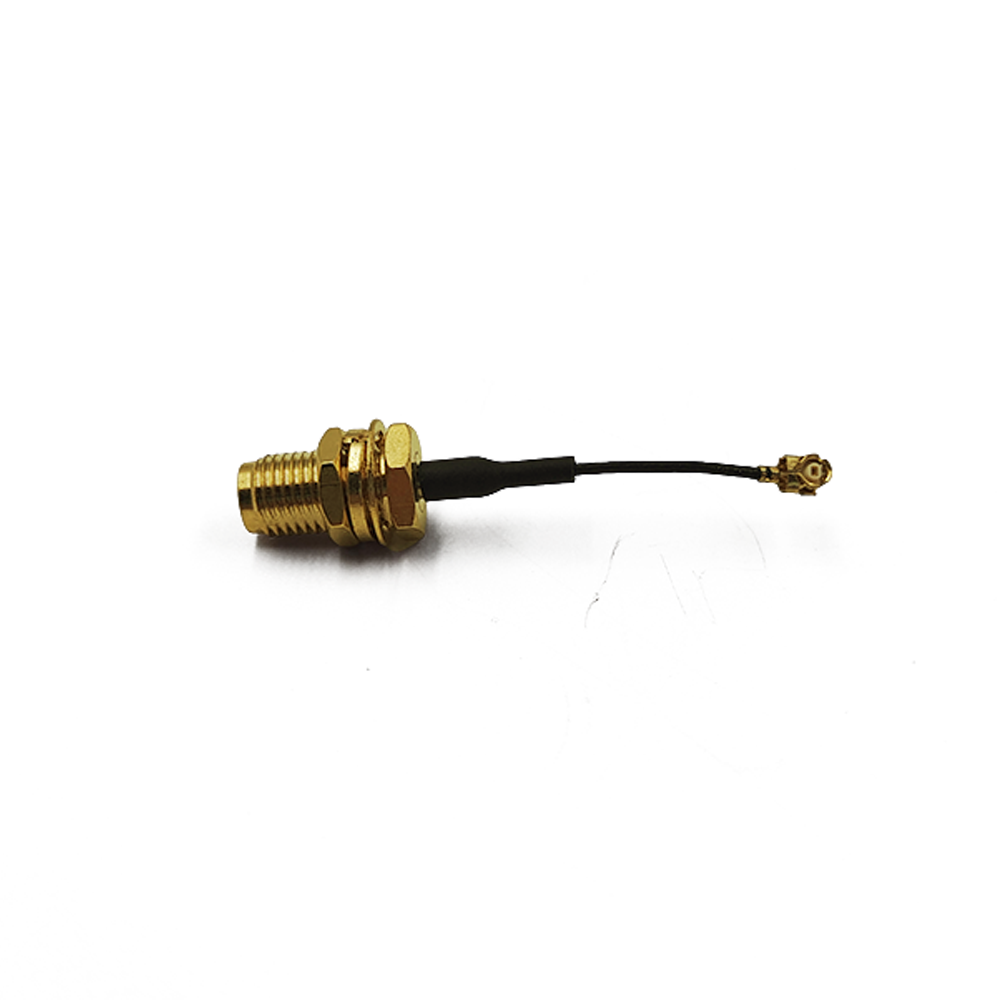
A low loss RF0.81 cable assembly is a customized micro coaxial cable component integrated with precision RF connectors, professionally engineered for low signal attenuation in high-frequency RF transmission environments. Unlike ordinary coaxial cables, the RF0.81 model adopts an upgraded low-loss dielectric material and high-conductivity shielding structure, effectively reducing signal power loss during high-frequency signal transmission while maintaining an ultra-compact 0.81mm outer diameter and superior bending flexibility.
Standard RF0.81 cable assemblies follow the universal 50Ω impedance matching specification, which is the mainstream impedance standard for commercial and industrial RF wireless devices. The complete assembly includes three core parts: high-purity inner conductor, low-loss insulating dielectric layer, multi-layer shielding structure, and customizable terminal connectors (such as U.FL, MHF3, SMA, RP-SMA, and IPEX connectors). All finished cable assemblies undergo strict factory testing for VSWR, insertion loss, shielding effectiveness, and mechanical stability to ensure consistent and reliable performance in long-term industrial and commercial applications.
The "low loss" feature distinguishes premium RF0.81 cable assemblies from ordinary micro coaxial cables. Ordinary thin coaxial cables suffer from severe signal attenuation at frequencies above 2.4GHz, leading to weak signal strength, reduced transmission distance, and unstable device operation. In contrast, low-loss RF0.81 cable assemblies optimize dielectric formula and conductor structure, drastically cutting high-frequency signal loss and supporting stable transmission from DC low frequency to 12GHz high frequency, fully covering mainstream wireless frequency bands such as 2.4GHz Wi-Fi, 5.8GHz dual-band Wi-Fi, 5G sub-6GHz, and Bluetooth 5.0+.
2. Core Technical Specifications of Low Loss RF0.81 Cable Assembly
Technical parameters are the core basis for evaluating the performance of low loss RF0.81 cable assemblies. All products comply with international RF industry standards, with stable and standardized electrical, mechanical, and environmental parameters, suitable for global commercial and industrial RF system deployment. The key specifications are summarized below, covering electrical performance, physical structure, environmental adaptability, and high-frequency loss data.
2.1 Electrical Performance Parameters
Characteristic Impedance: Standard 50Ω, precise impedance control ensures perfect matching with mainstream RF devices, eliminating signal reflection and standing wave interference caused by impedance mismatch
Frequency Range: DC ~ 12GHz, supporting full-band transmission of mainstream wireless communication protocols, including Wi-Fi 6E, 5G, Zigbee, LoRa, and precision RF testing
VSWR (Voltage Standing Wave Ratio): ≤1.3 (DC-3GHz), ≤1.5 (3GHz-6GHz), ≤1.8 (6GHz-12GHz). Ultra-low VSWR value ensures minimal signal reflection and maximum transmission efficiency
Insertion Loss: Ultra-low attenuation performance, only 1.2dB per 10cm at 2.4GHz and 1.9dB per 10cm at 5.8GHz, far lower than ordinary micro coaxial cables of the same size
Dielectric Withstanding Voltage: AC 200Vrms, with strong voltage resistance and stable insulation performance, avoiding breakdown and signal leakage
Insulation Resistance: ≥500MΩ, excellent insulation performance to prevent current leakage and signal crosstalk
Conductor Contact Resistance: Inner conductor ≤25mΩ, outer conductor ≤15mΩ, high conductivity ensures efficient signal transmission
2.2 Physical & Mechanical Parameters
Outer Diameter: 0.81mm ultra-fine design, ultra-thin and lightweight, suitable for ultra-compact device internal wiring
Minimum Bending Radius: 5.0mm, excellent flexibility, allowing arbitrary bending and wiring in narrow device spaces without damaging internal structure
Structure Composition: High-purity silver-plated copper inner conductor + low-loss PTFE/PE dielectric + double-layer foil + braided shielding + wear-resistant PVC outer jacket
Customizable Length: Support 5cm to 200cm fixed length and arbitrary customized length, meeting diverse wiring requirements of different devices
Connector Types: Compatible with U.FL, MHF3, MHF4, SMA, RP-SMA, IPEX, and board-end connectors, supporting male/female, straight/right-angle customization
2.3 Environmental Adaptability Parameters
Operating Temperature Range: -40℃ to +90℃, adapting to extreme low-temperature and high-temperature working environments of industrial equipment, outdoor monitoring, and vehicle-mounted devices
Shielding Effectiveness: ≥90dB, excellent anti-electromagnetic interference capability, effectively isolating external RF signal crosstalk and ensuring signal purity
Flexure Stability: Amplitude stability fluctuation ≤±0.1dB after repeated bending, phase stability ≤±5°, maintaining stable signal performance during long-term flexible use
Wear & Corrosion Resistance: The outer jacket adopts high-quality PVC/PE material, with anti-aging, wear-resistant, and anti-corrosion properties, suitable for long-term indoor and outdoor use
3. Structural Design & Manufacturing Technology of Low Loss RF0.81 Cable Assembly
The excellent low-loss performance and stability of RF0.81 cable assemblies stem from scientific layered structural design and precision manufacturing technology. Each layer of the cable is optimized for high-frequency signal transmission, abandoning the ordinary low-cost structure of traditional micro cables, and focusing on reducing signal loss and improving anti-interference ability.
3.1 Layered Structural Design
From the inside to the outside, the low loss RF0.81 cable assembly adopts a five-layer integrated structure, with each layer undertaking independent functional responsibilities to ensure low loss, high shielding, and high flexibility:
First Layer: High-Conductivity Inner Conductor. Made of silver-plated oxygen-free copper material, compared with ordinary bare copper conductors, silver-plated copper has higher conductivity and lower high-frequency resistance, which can effectively reduce skin effect loss during high-frequency signal transmission and improve signal transmission efficiency. The ultra-fine wire drawing process ensures the conductor diameter is uniform, avoiding signal distortion caused by uneven impedance.
Second Layer: Low-Loss Dielectric Insulation Layer. Adopts upgraded PTFE or high-density PE low-loss dielectric material, which has extremely low dielectric constant and dielectric loss tangent. This material greatly reduces the dielectric loss of high-frequency signals penetrating the insulation layer, which is the core key to realizing the "low loss" feature of RF0.81 cables. The dielectric layer is tightly wrapped and uniformly filled, ensuring stable 50Ω impedance of the whole cable and no signal dispersion.
Third & Fourth Layer: Double-Layer Shielding Structure. It consists of aluminum-plastic composite foil full coverage shielding + silver-plated copper braided mesh shielding. The double-layer shielding structure achieves 360° full coverage without dead angles, with shielding effectiveness up to 90dB+. It can effectively isolate external electromagnetic interference (EMI) and radio frequency interference (RFI), while preventing internal high-frequency signal leakage and avoiding signal attenuation and distortion caused by external interference.
Fifth Layer: Wear-Resistant Protective Outer Jacket. Made of environmentally friendly PVC or modified PE material, with excellent flexibility, anti-aging, wear-resistant, and tear-resistant properties. It can protect the internal conductor and shielding structure from mechanical damage, dust, moisture, and chemical corrosion, extending the service life of the cable assembly in complex working environments.
3.2 Precision Assembly Technology
Low loss RF0.81 cable assemblies adopt industrial-grade precision crimping and welding integration technology. All connectors are precisely matched with the cable core, with zero gap docking, ensuring stable impedance continuity at the connection. Professional terminal pressure welding technology avoids poor contact and signal attenuation caused by loose wiring. Each finished product undergoes multi-process testing including high-frequency impedance testing, VSWR testing, attenuation testing, and tensile bending testing to ensure 100% qualified rate of factory performance.
4. Key Advantages of Low Loss RF0.81 Cable Assembly
Compared with other mainstream micro RF coaxial cables (such as RF1.13, RF1.37, RG316) and ordinary low-cost 0.81mm cables, low loss RF0.81 cable assemblies have obvious comprehensive advantages in size, performance, flexibility, and applicability, making them the preferred choice for compact high-frequency RF systems.
4.1 Ultra-Low High-Frequency Signal Loss
The biggest core advantage of low loss RF0.81 cable assemblies is optimized high-frequency attenuation performance. Ordinary 0.81mm micro cables have severe signal loss above 5GHz, which cannot support stable operation of Wi-Fi 6/6E and 5G high-frequency bands. In contrast, the low-loss optimized RF0.81 cable maintains extremely low attenuation in the full frequency band of DC-12GHz. Under the same length condition, its signal transmission efficiency is 20%-30% higher than that of ordinary micro cables, effectively improving wireless signal strength, expanding transmission distance, and reducing packet loss rate of wireless devices.
4.2 Ultra-Compact Size & High Flexibility
With an ultra-fine 0.81mm outer diameter and a minimum bending radius of only 5mm, the RF0.81 cable assembly is far smaller and more flexible than RF1.13, RF1.37, and traditional RG series cables. It can adapt to ultra-narrow internal wiring spaces of miniature electronic devices such as IoT modules, wearable devices, mini routers, and drone control modules. It supports arbitrary bending, folding, and threading without affecting internal signal transmission performance, solving the wiring difficulty of compact RF devices.
4.3 High Anti-Interference & Stable Transmission
Equipped with a double-layer high-efficiency shielding structure, the low loss RF0.81 cable assembly has excellent EMI/RFI anti-interference ability. In complex electromagnetic environments such as industrial equipment, vehicle-mounted systems, and dense wireless signal scenarios, it can still maintain pure signal transmission without crosstalk, drift, or distortion. The stable impedance design and ultra-low VSWR value ensure no signal reflection during transmission, realizing high-precision and high-stability RF signal transmission.
4.4 Wide Environmental Adaptability & Long Service Life
The whole cable assembly adopts high-temperature resistant, low-temperature resistant, and anti-aging materials, which can work stably in the temperature range of -40℃ to +90℃ for a long time. It is not affected by extreme weather such as high temperature, low temperature, humidity, and dryness. The wear-resistant and corrosion-resistant outer jacket can resist daily mechanical friction and environmental erosion. After repeated bending and vibration tests, the electrical performance remains stable, with a service life far exceeding ordinary micro RF cables, reducing equipment maintenance and replacement costs.
4.5 High Compatibility & Customization
Low loss RF0.81 cable assemblies support full customization of length, connector type, and wiring angle. They are perfectly compatible with all mainstream 50Ω RF devices on the market, including wireless modules, antennas, routers, signal testers, and industrial sensors. Various connector combinations such as U.FL to SMA, IPEX to RP-SMA, and straight to right-angle conversion can be customized according to project requirements, meeting the diverse wiring needs of different equipment and scenarios.
5. Main Application Scenarios of Low Loss RF0.81 Cable Assembly
Relying on its ultra-compact size, low-loss high-frequency performance, and high stability, low loss RF0.81 cable assemblies are widely used in civil commercial electronics, industrial Internet of Things, smart wireless equipment, precision testing, and other fields, covering almost all miniature high-frequency RF signal transmission scenarios.
5.1 Smart IoT & Wireless Sensor Devices
With the rapid popularization of IoT technology, miniature wireless sensor devices are widely deployed in smart homes, smart factories, smart cities, and environmental monitoring systems. These devices have small internal space and high requirements for wireless signal stability. Low loss RF0.81 cable assemblies are used for internal antenna connection and signal transmission of IoT sensors, supporting stable transmission of Zigbee, LoRa, Bluetooth, and 2.4G/5G wireless signals. The ultra-low loss performance ensures that the sensor signal can be transmitted stably for a long distance, improving the coverage and stability of the IoT system.
5.2 Wi-Fi 6/6E & 5G Mini Wireless Devices
Mini routers, wireless network cards, 5G communication modules, and portable wireless terminals have extremely high requirements for cable size and high-frequency performance. Traditional thick cables cannot be installed in miniature devices, while ordinary thin cables have insufficient high-frequency loss performance and cannot support Wi-Fi 6E 6GHz high-frequency band transmission. Low loss RF0.81 cable assemblies perfectly solve this problem, supporting full-band Wi-Fi and 5G sub-6GHz signal transmission, improving network speed, reducing delay, and ensuring stable wireless connection of high-speed network equipment.
5.3 Wearable Electronics & Portable Smart Devices
Smart watches, smart bracelets, wireless earphones, and other wearable devices have ultra-strict requirements for internal wiring size and flexibility. The 0.81mm ultra-thin and highly flexible RF0.81 cable assembly can be bent arbitrarily with the device shell without damage, and the low-loss performance ensures stable Bluetooth and Wi-Fi signal transmission of wearable devices, avoiding signal disconnection and delay during user movement. It is the ideal internal RF connection component for portable smart devices.
5.4 Precision RF Testing & Measurement Equipment
In RF laboratory testing, signal analysis, and vector network analyzer (VNA) testing scenarios, signal transmission accuracy is the core index. Slight signal loss and distortion will lead to inaccurate test data. Low loss RF0.81 cable assemblies feature ultra-stable phase and amplitude performance, low attenuation, and low signal distortion, which can ensure the accuracy of high-frequency signal testing data. They are widely used in precision RF testing equipment, antenna testing, and wireless signal calibration systems.
5.5 Vehicle-Mounted & Industrial Wireless Equipment
Vehicle-mounted Bluetooth, vehicle Wi-Fi, industrial wireless control modules, and outdoor monitoring wireless equipment work in complex electromagnetic and temperature environments. The double-layer high-shielding structure and wide temperature resistance of low loss RF0.81 cable assemblies can resist vehicle vibration, high temperature in the car, industrial electromagnetic interference, and outdoor extreme weather, ensuring long-term stable operation of vehicle-mounted and industrial wireless systems.
5.6 Drone & Mini Wireless Communication Modules
Consumer and industrial drones have strict requirements for lightweight equipment and stable remote control signals. The ultra-light and thin RF0.81 cable assembly reduces the overall weight of the drone, while the low-loss high-stability performance ensures stable transmission of remote control signals and image transmission signals, avoiding signal interruption and flight failure caused by signal attenuation, improving the safety and stability of drone operation.
6. Low Loss RF0.81 Cable Assembly vs. Other Micro RF Cables
To help users select the most suitable cable product, we compare low loss RF0.81 cable assemblies with mainstream RF1.13, RF1.37, and ordinary RG series micro cables in terms of size, loss, flexibility, and applicability, highlighting the unique advantages of RF0.81 low-loss products.
Size Advantage: The 0.81mm outer diameter of RF0.81 is smaller than RF1.13 (1.13mm) and RF1.37 (1.37mm), making it the thinnest mainstream micro low-loss RF cable, more suitable for ultra-compact device wiring.
Loss Performance Advantage: Compared with ordinary non-low-loss 0.81mm cables, the optimized RF0.81 low-loss cable has 30%-40% lower attenuation at 5GHz-12GHz. Compared with RF1.13 cables, it has slightly higher loss but far smaller size, achieving a perfect balance between miniaturization and low loss.
Flexibility Advantage: The minimum bending radius of RF0.81 is only 5mm, which is more flexible than RF1.13 (8mm) and RF1.37 (10mm), adapting to more complex narrow-space wiring scenarios.
Applicability Difference: RF1.13 and RF1.37 are suitable for medium-sized wireless devices with loose space requirements, while low loss RF0.81 cable assemblies are specially designed for ultra-miniature devices and high-frequency signal transmission scenarios, being the optimal choice for high-precision compact RF systems.
7. How to Select the Right Low Loss RF0.81 Cable Assembly?
When purchasing and customizing low loss RF0.81 cable assemblies, users need to select parameters according to actual application scenarios, device interface types, frequency requirements, and installation environments to avoid performance mismatch and waste of resources. The core selection guidelines are as follows:
7.1 Confirm Working Frequency Band
For conventional 2.4GHz Bluetooth and Wi-Fi low-frequency scenarios, standard low loss RF0.81 cables can fully meet the requirements. For 5.8GHz dual-band Wi-Fi, 5G, and Wi-Fi 6E 6GHz-12GHz high-frequency scenarios, it is necessary to select high-precision low-loss enhanced RF0.81 cable assemblies to ensure ultra-low high-frequency attenuation and stable signal transmission.
7.2 Match Connector Type & Specification
Confirm the interface types of the device antenna end and motherboard end, and select matching connector combinations such as U.FL, MHF3, IPEX, SMA, and RP-SMA. At the same time, select straight or right-angle connectors according to the installation space to avoid wiring dead angles and poor contact caused by inappropriate connector angles.
7.3 Reasonable Cable Length Selection
On the premise of meeting installation wiring requirements, try to choose a shorter cable length. Since RF signal loss is positively correlated with cable length, properly shortening the cable can effectively reduce signal attenuation. For long-distance wiring scenarios, prioritize high-precision low-loss enhanced models to offset length-induced loss.
7.4 Select Environmental Grade According to Scenarios
For indoor ordinary consumer electronic devices, standard environmental-grade RF0.81 cable assemblies are sufficient. For outdoor, vehicle-mounted, industrial high-temperature, and humid environments, select high-temperature resistant, waterproof, and anti-aging enhanced cable models to ensure long-term stable operation.
8. Installation & Maintenance Tips for Low Loss RF0.81 Cable Assembly
Correct installation and daily maintenance can maximize the service life and transmission performance of low loss RF0.81 cable assemblies, avoiding signal failure caused by improper operation.
8.1 Standard Installation Guidelines
Avoid excessive bending and sharp folding during installation; the bending angle shall not be less than the minimum bending radius of 5mm to prevent damage to the internal dielectric and shielding structure
Keep the cable away from high-power power lines and electromagnetic interference sources to avoid external signal crosstalk affecting transmission stability
Ensure tight connector docking, avoid loose plugging and poor contact, and do not frequently plug and unplug the connector to prevent interface wear
Avoid excessive stretching of the cable during installation to prevent fracture of the internal conductor and shielding layer
8.2 Daily Maintenance & Fault Prevention
Regularly check the cable outer jacket for wear, aging, and damage, and replace the cable in time if there is exposure of the internal structure
Clean the connector interface regularly to remove dust and impurities and ensure good contact performance
For long-term vibrating equipment (drones, vehicle-mounted devices), fix the cable reasonably to avoid long-term vibration friction causing structural damage
Avoid using the cable in corrosive environments such as strong acid and alkali to prevent corrosion damage to the cable structure
9. Frequently Asked Questions (FAQ) About Low Loss RF0.81 Cable Assembly
Q1: What is the difference between ordinary 0.81 cable and low loss RF0.81 cable assembly?
Ordinary 0.81 micro cables adopt ordinary dielectric materials and single-layer shielding, with high high-frequency signal loss, poor anti-interference ability, and unstable performance above 3GHz. Low loss RF0.81 cable assemblies use upgraded low-loss dielectric materials and double-layer high-efficiency shielding, with 30%-40% lower high-frequency attenuation, lower VSWR, and more stable transmission performance, suitable for high-frequency high-precision RF scenarios.
Q2: Is RF0.81 cable assembly compatible with Wi-Fi 6E and 5G devices?
Yes. The low loss RF0.81 cable assembly supports a frequency range of DC-12GHz, fully covering 5G sub-6GHz frequency band and Wi-Fi 6E 6GHz high-frequency band, and can provide stable low-loss signal transmission for Wi-Fi 6E and 5G miniature devices.
Q3: Can RF0.81 cable be bent and folded arbitrarily?
The RF0.81 cable has excellent flexibility with a minimum bending radius of 5mm, which supports daily bending and wiring. However, sharp folding, excessive bending, and long-term fixed extreme bending should be avoided to prevent damage to the internal structure and increased signal loss.
Q4: What connectors can be customized for RF0.81 cable assembly?
It supports all mainstream RF connectors, including U.FL, MHF3, MHF4, IPEX, SMA, RP-SMA, TNC, and board-end connectors. It can realize arbitrary conversion between different interfaces and support straight/right-angle and male/female customization.
Q5: What is the service life of low loss RF0.81 cable assembly?
Under standard indoor use environment, the service life can reach more than 5 years. Under industrial and outdoor complex environments, with standard maintenance, it can work stably for 3-4 years, far longer than ordinary micro RF cables.
As a high-performance miniature RF transmission component, the low loss RF0.81 cable assembly perfectly integrates ultra-compact size, ultra-low high-frequency loss, high flexibility, and strong anti-interference ability, solving the core pain points of difficult wiring and unstable signal transmission of miniature high-frequency wireless devices. With the continuous upgrading of IoT, 5G, Wi-Fi 6E, and wearable electronic technology, miniature high-precision RF transmission requirements are becoming increasingly stringent, and low loss RF0.81 cable assemblies will become more widely used in commercial, industrial, and precision testing fields.
Whether you need standard off-the-shelf RF0.81 cable assemblies or customized products with special lengths, connectors, and environmental grades, high-quality low-loss RF0.81 cable solutions can bring stable and efficient signal transmission performance for your RF systems, improving the overall operating efficiency and stability of wireless equipment.
Lucy Yang | lucy.y@toxutech.com
Dotty Zhao | sales04@toxutech.com
Global Business Director / Sales Team / Global Operations


 En
En Cn
Cn Korean
 Home >