

-
Products -PCBA Manufacturing RF Connectors RF Cable Assemblys Embedded Antennas External Antennas GNSS Positioning Solutions
RF Connectors

RF Cable Assemblys
Embedded Antennas
External Antennas
GNSS Positioning Solutions































 Language


Language


Time:2026-10-15 Views:0
In modern positioning, navigation, and timing (PNT) systems, L1 L2 L5 GNSS antenna has become the core hardware for high-accuracy satellite signal reception, widely adopted in commercial, industrial, aerospace, and autonomous mobility fields. Unlike single-band GNSS antennas that only support the GPS L1 frequency, tri-band L1 L2 L5 GNSS antennas cover three core GPS frequency bands, paired with multi-constellation compatibility for Galileo, BeiDou, QZSS, and GLONASS signals. This comprehensive coverage delivers centimeter-level positioning accuracy, stronger anti-interference capability, and more stable signal tracking in complex environments.
As global demand for high-precision GNSS positioning surges in autonomous vehicles, drone navigation, precision agriculture, surveying and mapping, and smart infrastructure construction, understanding the working principles, technical advantages, key specifications, application scenarios, and selection criteria of L1 L2 L5 GNSS antennas is essential for engineers, procurement specialists, and industry practitioners. This in-depth SEO guide elaborates on all critical details of tri-band GNSS antennas, helping you grasp core product values and select the most suitable solution for your project.
1. What Is an L1 L2 L5 GNSS Antenna? Core Definition & Frequency Band Basics
An L1 L2 L5 GNSS antenna is a professional multi-band satellite navigation antenna designed to receive three primary civilian and high-precision frequency bands of the Global Positioning System (GPS), supporting concurrent signal reception and processing for L1, L2, and L5 bands. It is the upgraded version of traditional single-band (L1-only) and dual-band (L1+L2) GNSS antennas, solving the accuracy limitations and poor environmental adaptability of low-bandwidth antennas.
Each frequency band corresponds to independent satellite signal characteristics and functional positioning, forming a complementary high-precision positioning system. The standard center frequencies and core attributes of L1, L2, and L5 bands are internationally unified, as follows:
GPS L1 Band (1575.42 MHz): The most fundamental civilian GNSS frequency band, compatible with GPS, Galileo E1, BeiDou B1, and QZSS L1 signals. It features wide signal coverage, strong penetration, and universal compatibility with all mainstream GNSS receivers. As the primary positioning band for daily civilian navigation, L1 ensures basic positioning availability in most open and semi-open environments. However, single L1 positioning is susceptible to ionospheric delay errors and multipath interference, limiting positioning accuracy to meter level.
GPS L2 Band (1227.60 MHz): Originally designed for military GPS applications, now fully open for civilian high-precision use. The L2 band has a lower frequency and stronger diffraction capability than L1, enabling better signal reception in sheltered environments such as urban canyon areas, forested areas, and building peripheries. The core value of L2 lies inionospheric error correction: by calculating the signal delay difference between L1 and L2 bands, receivers can eliminate most ionospheric interference, significantly improving positioning stability.
GPS L5 Band (1176.45 MHz): Known as the Safety-of-Life (SoL) band, the latest high-power, high-bandwidth GPS frequency band optimized for high-reliability and high-precision scenarios. With a wider signal bandwidth, higher chipping rate, and double the signal power of the L1 band, L5 effectively suppresses code multipath interference and resists radio frequency noise. It is exclusively used for high-standard civilian scenarios including aviation navigation, autonomous driving, and precision surveying, and does not overlap with ground radar frequency bands, avoiding mutual interference.
A qualified L1 L2 L5 tri-band GNSS antenna can synchronously receive and filter signals from the three bands, realizing multi-frequency differential positioning, error correction, and signal fusion, ultimately achieving centimeter-level static and dynamic positioning accuracy.
2. Core Working Principle of L1 L2 L5 GNSS Antennas
The working logic of L1 L2 L5 GNSS antennas is based on satellite signal collection, filtering, amplification, and transmission, forming a complete high-precision signal reception loop. Different from ordinary communication antennas, GNSS antennas focus on low noise, high gain, wide bandwidth, and anti-multipath performance, ensuring weak satellite signals can be accurately captured without distortion.
The complete working process is divided into four core steps:
2.1 Multi-Band Signal Acquisition
The antenna radiation unit is designed with a wide-band resonant structure, covering the full frequency range of 1164–1606 MHz to fully cover L1, L2, L5, and extended GNSS bands. It can capture weak downstream satellite signals from multiple constellations (GPS, Galileo, BeiDou, QZSS, GLONASS) in all directions, realizing all-sky signal coverage without blind spots.
2.2 Low-Noise Signal Filtering
Built-in high-precision SAW (Surface Acoustic Wave) filters screen out out-of-band interference signals such as cellular base station signals, radar signals, and industrial radio frequency noise. This core design effectively avoids signal distortion caused by external interference, ensuring the purity of L1/L2/L5 satellite signals and laying the foundation for high-precision positioning.
2.3 Low-Noise Amplification
Equipped with a high-gain low-noise amplifier (LNA), the antenna amplifies ultra-weak satellite signals while controlling noise figure (NF) to an extremely low level. Low noise figure is a key parameter of tri-band GNSS antennas: lower NF means less self-generated noise, higher signal-to-noise ratio (SNR), and more accurate satellite signal parsing by the receiver.
2.4 Stable Signal Output & Transmission
The processed high-purity and high-strength GNSS signals are stably transmitted to the GNSS receiver through low-loss coaxial cables. The receiver performs multi-band data fusion, ionospheric error correction, multipath suppression, and differential calculation based on L1, L2, and L5 data, outputting high-precision positioning, speed, and time information.
3. Key Advantages of L1 L2 L5 Tri-Band GNSS Antennas (vs Single/Dual-Band Antennas)
Most entry-level GNSS devices on the market adopt single-band L1 antennas, which are low-cost but poor in accuracy and stability. Dual-band (L1+L2) antennas improve positioning performance but still lack the high anti-interference and multipath suppression capability of the L5 band. L1 L2 L5 tri-band GNSS antennas fill the performance gaps of low-bandwidth products, with unique core advantages in high-precision scenarios:
3.1 Centimeter-Level Ultra-High Positioning Accuracy
Single L1 positioning only supports meter-level accuracy and cannot eliminate ionospheric delay errors. L1+L2 dual-band antennas realize ionospheric correction but have limited multipath suppression. With the addition of the L5 high-precision band, tri-band antennas achieve three-dimensional error correction: L1 provides basic positioning data, L2 corrects ionospheric delay, and L5 suppresses multipath and noise interference. Combined with RTK (Real-Time Kinematic) differential technology, the positioning accuracy reaches 1–3 cm in dynamic scenarios and sub-centimeter level in static scenarios, fully meeting high-precision industrial and autonomous application requirements.
3.2 Strong Anti-Interference & Anti-Multipath Capability
The L5 band’s wide bandwidth and high chipping rate make it far more resistant to multipath reflection than L1 and L2 bands. In complex environments such as urban skyscraper clusters, dense forests, viaducts, and industrial parks, satellite signals are easily reflected and refracted, leading to positioning drift and failure. L1 L2 L5 GNSS antennas filter reflected interference signals through multi-band signal comparison and L5 high-precision discrimination, greatly improving positioning stability in harsh scenarios. Meanwhile, the L5 band does not overlap with ground radar and communication frequencies, effectively avoiding external radio frequency interference.
3.3 Higher Signal Availability & Coverage
Tri-band antennas support simultaneous tracking of more satellite signals from multiple constellations. When signals of a single band or single constellation are blocked, the system can quickly switch and fuse data from other bands and constellations, ensuring continuous positioning output. Compared with single-band antennas that are prone to positioning interruption in sheltered environments, L1 L2 L5 antennas maintain stable positioning in semi-occluded scenarios, improving overall system availability by more than 40%.
3.4 Superior Safety & Reliability
As a dedicated safety-of-life frequency band, L5 is designed for high-reliability scenarios with extremely strict positioning accuracy and stability requirements such as civil aviation, unmanned driving, and intelligent transportation. L1 L2 L5 tri-band positioning forms a redundant verification mechanism through three independent frequency bands, effectively avoiding positioning errors caused by single-band signal failure and ensuring the safety and stability of key equipment operation.
3.5 Full Multi-Constellation Compatibility
In addition to full GPS L1/L2/L5 band support, mainstream L1 L2 L5 GNSS antennas are compatible with global mainstream satellite navigation systems, including Galileo E1/E5a/E5b, BeiDou B1/B2a, QZSS L1/L5, and GLONASS G1/G2. Multi-constellation and multi-band fusion positioning further enriches satellite observation data and improves positioning accuracy and global coverage capability.
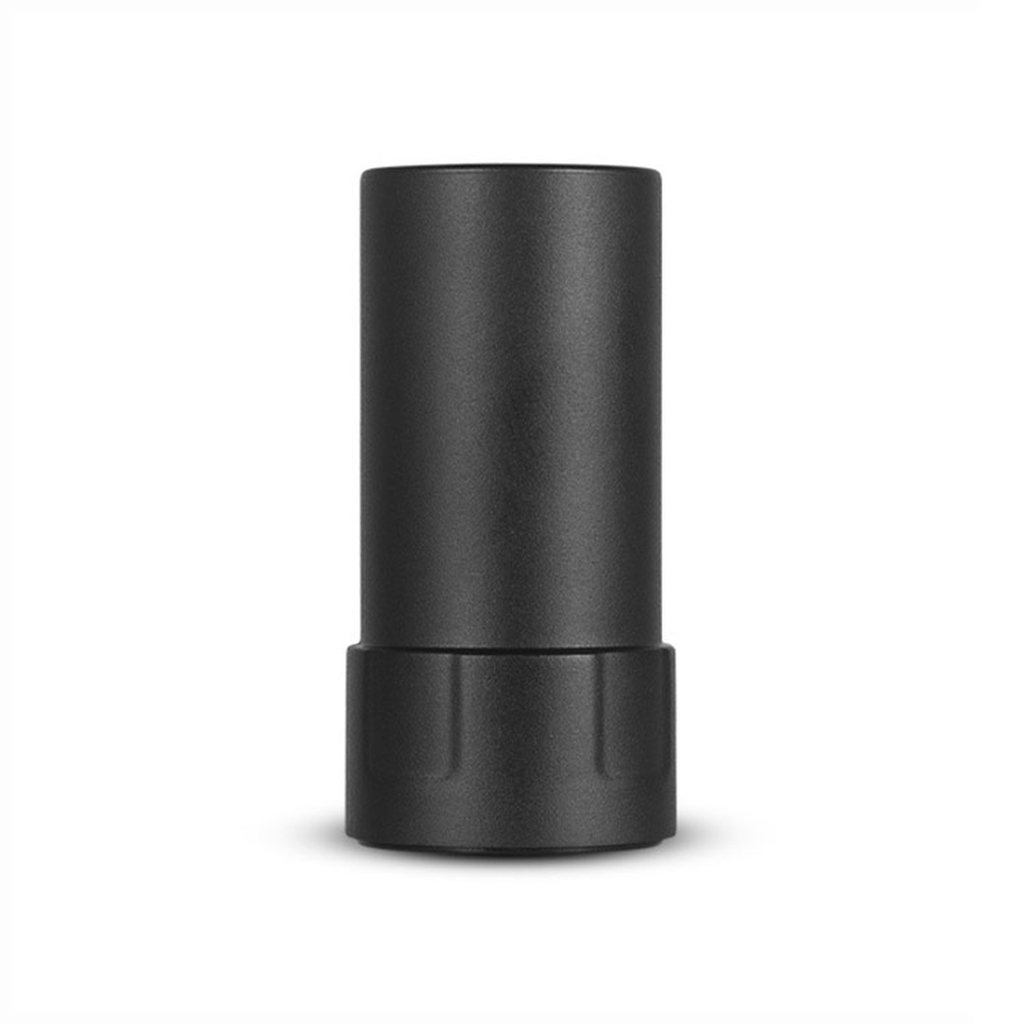
4. Core Technical Specifications of Premium L1 L2 L5 GNSS Antennas
To help users accurately screen high-quality tri-band GNSS antennas, we sort out the industry-standard core technical parameters of premium products, which are key indicators for evaluating antenna performance:
Frequency Range: 1164–1300 MHz (L2/L5) + 1525–1606 MHz (L1), fully covering GPS L1(1575.42MHz), L2(1227.60MHz), L5(1176.45MHz)
Noise Figure (NF): ≤1.5dB, ultra-low noise design to ensure high signal-to-noise ratio
Typical Gain: 25–30dB, high-gain signal amplification for weak satellite signal capture
VSWR (Voltage Standing Wave Ratio): ≤1.5:1, low standing wave ensures low signal loss and high transmission efficiency
Polarization Mode: Right-Hand Circular Polarization (RHCP), matching satellite signal polarization characteristics to reduce signal loss
Multipath Suppression: Built-in choke ring or anti-multipath housing, effectively suppressing ground and building reflected signals
Working Temperature: -40℃ ~ +85℃, adapting to extreme outdoor industrial and vehicle environments
Waterproof & Dustproof Grade: IP67/IP68, fully sealed design for long-term outdoor operation
Connector Type: SMA/BNC/TNC customizable, compatible with mainstream GNSS receivers and industrial equipment
5. Main Application Scenarios of L1 L2 L5 GNSS Antennas
Due to its high accuracy, high stability, and strong environmental adaptability, L1 L2 L5 GNSS antennas have replaced traditional single and dual-band antennas in high-precision fields, covering multiple high-growth industries:
5.1 Autonomous Driving & Intelligent Vehicles
Autonomous vehicles require real-time centimeter-level positioning to realize lane-level navigation, automatic parking, and intelligent driving decision-making. L1 L2 L5 GNSS antennas cooperate with RTK positioning systems to provide stable high-precision positioning data for vehicles in complex road environments such as urban roads, elevated highways, and tunnels, solving positioning drift problems of traditional GPS in urban canyon scenarios. They are core hardware for L2-L4 level autonomous driving vehicles and intelligent connected vehicles.
5.2 Precision Agriculture
Modern precision agriculture relies on high-precision positioning to realize automatic sowing, fertilization, pesticide spraying, and unmanned agricultural machinery operation. In farmland environments blocked by crops and terrain, L1 L2 L5 tri-band antennas maintain stable signal reception, provide centimeter-level positioning support for agricultural machinery navigation, effectively reduce resource waste, and improve agricultural production efficiency.
5.3 Surveying, Mapping & Geospatial Engineering
Land surveying, engineering mapping, terrain monitoring, and bridge deformation monitoring have extremely high requirements for positioning accuracy and stability. Professional L1 L2 L5 GNSS surveying antennas equipped with choke ring structures can eliminate multipath interference to the greatest extent, providing sub-centimeter static positioning accuracy, which is widely used in national geographic mapping, highway and railway engineering construction, and infrastructure deformation monitoring.
5.4 Drone Navigation & Aerial Survey
Industrial drones for aerial survey, mapping, inspection, and logistics transportation need stable high-precision positioning during high-speed flight and low-altitude operation. L1 L2 L5 GNSS antennas resist airframe-induced signal reflection and environmental interference, ensure real-time accurate positioning and fixed-point hovering of drones, and improve the accuracy and safety of aerial survey and inspection operations.
5.5 Civil Aviation & Aerospace
As a safety-of-life level positioning solution, L1 L2 L5 GNSS antennas are applied in aircraft navigation, airport ground monitoring, and aerospace equipment positioning. The L5 band’s high reliability and anti-interference capability ensure continuous and accurate positioning data output during aircraft takeoff, landing, and cruising, meeting civil aviation safety navigation standards.
5.6 Smart City & Intelligent Infrastructure
In smart street lamps, intelligent transportation monitoring, high-precision time synchronization systems, and urban deformation monitoring equipment, L1 L2 L5 GNSS antennas provide stable PNT services for smart city infrastructure, realizing precise time synchronization and spatial positioning of urban equipment, and supporting the intelligent operation of urban management systems.
6. How to Choose a High-Quality L1 L2 L5 GNSS Antenna? Complete Selection Guide
Many users encounter problems such as inaccurate positioning, unstable signals, and poor durability after purchasing tri-band GNSS antennas, mostly due to unreasonable selection. The following core selection principles help you select the most cost-effective L1 L2 L5 GNSS antenna:
6.1 Confirm Band Full-Coverage Performance
Some low-cost antennas claim to support L1/L2/L5 but only have partial band coverage with poor signal gain in individual bands. It is necessary to confirm that the antenna fully covers the three standard GPS frequency bands and supports multi-constellation signals such as Galileo and BeiDou to ensure multi-band fusion positioning capability.
6.2 Focus on Noise Figure & Gain Parameters
Noise figure determines signal purity, and gain determines weak signal capture capability. For outdoor complex scenarios, select antennas with NF ≤1.5dB and gain ≥25dB; for high-precision surveying and mapping scenarios, prioritize products with lower noise figure and higher stability.
6.3 Match Environmental Adaptability
Vehicle-mounted and outdoor industrial scenarios require IP67/IP68 waterproof and dustproof grades and wide temperature resistance (-40℃~+85℃) to adapt to extreme weather such as high temperature, low temperature, rain, and snow. For urban high-interference scenarios, select antennas with built-in anti-multipath choke rings and high-performance filters.
6.4 Select Appropriate Structure & Interface
Flat omnidirectional antennas are suitable for vehicle-mounted and drone scenarios; choke ring antennas are suitable for professional surveying and mapping and static monitoring scenarios. For interfaces, select SMA/BNC/TNC interfaces matching the receiver to avoid signal loss caused by interface mismatch.
7. Common FAQs About L1 L2 L5 GNSS Antennas
Q1: What is the difference between L1 L2 L5 and L1 L2 GNSS antennas?
The core difference lies in the L5 safety-of-life band. L1 L2 dual-band antennas only realize ionospheric error correction and cannot effectively suppress multipath interference, with limited positioning accuracy and stability in complex environments. L1 L2 L5 tri-band antennas add the high-bandwidth, high-power L5 band, realizing multipath suppression, noise resistance, and higher-precision differential positioning, suitable for high-standard industrial and safety-critical scenarios.
Q2: Can L5 band completely eliminate multipath interference?
No. The L5 band can significantly reduce code multipath interference thanks to its wide bandwidth and high chipping rate, but it cannot completely eliminate carrier-phase multipath and airframe-reflected signals. Complete multipath suppression requires the cooperation of professional antenna structures such as choke rings and standardized installation with a ground plane.
Q3: Are L1 L2 L5 GNSS antennas compatible with old GNSS receivers?
Yes. Tri-band antennas are backward compatible with all single-band and dual-band receivers. Even if the receiver does not support L5 band parsing, the antenna can normally output L1 and L2 band signals, ensuring device compatibility and future upgrade scalability.
Q4: Do tri-band antennas require professional installation?
For ordinary vehicle-mounted and industrial scenarios, conventional horizontal open installation is sufficient. For high-precision surveying and mapping and static monitoring scenarios, it is necessary to install the antenna on a horizontal ground plane, avoid shelter and interference sources, and ensure all-sky signal reception to maximize positioning accuracy.
Why L1 L2 L5 GNSS Antennas Are the Future of High-Precision Positioning
With the continuous upgrading of global satellite navigation systems and the rapid development of high-precision positioning industries such as autonomous driving, precision agriculture, and smart infrastructure, low-precision single and dual-band GNSS antennas can no longer meet industrial-level application demands. L1 L2 L5 GNSS antennas have become the mainstream choice for modern high-precision PNT systems by virtue of centimeter-level positioning accuracy, strong anti-interference and anti-multipath capability, multi-constellation full compatibility, and high safety and reliability.
Whether for industrial engineering, commercial intelligent equipment, or professional surveying and mapping scenarios, choosing a high-quality L1 L2 L5 tri-band GNSS antenna is the key to ensuring stable and efficient operation of the positioning system. In the future, with the further popularization of L5 band applications and the iteration of GNSS technology, tri-band high-precision antennas will be widely applied in more emerging fields, leading the upgrading of the global high-precision positioning industry.
Lucy Yang | lucy.y@toxutech.com
Dotty Zhao | sales04@toxutech.com
Global Business Director / Sales Team / Global Operations


 En
En Cn
Cn Korean
 Home >