

-
Products -PCBA Manufacturing RF Connectors RF Cable Assemblys Embedded Antennas External Antennas GNSS Positioning Solutions
RF Connectors

RF Cable Assemblys
Embedded Antennas
External Antennas
GNSS Positioning Solutions































 Language


Language


Time:2026-10-16 Views:0
IoT GNSS combo antennas have become indispensable core components for modern smart IoT devices, bridging high-precision satellite positioning and wireless communication connectivity. As the Internet of Things industry evolves rapidly, smart devices no longer only need stable data transmission but also demand accurate, real-time, and reliable location tracking capabilities. A professional IoT GNSS combo antenna integrates multi-band GNSS positioning antenna and multi-protocol communication antenna in one compact unit, solving the pain points of traditional single-function antennas such as large installation space, signal interference, unstable positioning, and high failure rates. This comprehensive guide explores the working principle, core features, key benefits, application scenarios, selection criteria, and installation tips of IoT GNSS combo antennas, helping engineers, purchasers, and IoT project developers select the most suitable antenna solution for industrial, commercial, and smart city IoT projects.
1. What Is an IoT GNSS Combo Antenna?
An IoT GNSS combo antenna is a multi-functional integrated antenna designed specifically for Internet of Things terminal devices, combining GNSS satellite positioning antenna and IoT wireless communication antenna into a single modular structure. Unlike standalone GPS antennas or single-band communication antennas, combo antennas support simultaneous high-sensitivity satellite signal reception and stable wireless data transmission without mutual signal interference, making them the optimal antenna solution for compact and high-performance IoT terminals.
The GNSS module of the combo antenna supports global mainstream satellite navigation systems, including GPS (USA), GLONASS (Russia), BeiDou (China), Galileo (EU), and QZSS (Japan), covering multi-frequency bands L1, L2, L5, and L6 to meet low-precision civilian positioning and centimeter-level high-precision RTK positioning requirements. The IoT communication module is compatible with mainstream IoT communication protocols and frequency bands such as NB-IoT, LTE Cat-M1, 4G LTE, 5G NR, Wi-Fi 2.4G/5G/6E, Bluetooth, and Zigbee, realizing seamless integration of positioning and communication functions for IoT devices.
Different from consumer-grade antennas, IoT-grade GNSS combo antennas adopt industrial-grade design standards, with ultra-wide temperature resistance, waterproof and dustproof performance, anti-interference shielding structure, and high-gain signal reception, fully adapting to complex and harsh industrial and outdoor application environments.
2. Core Working Principle of IoT GNSS Combo Antennas
The excellent performance of IoT GNSS combo antennas stems from its optimized structural design and professional radio frequency (RF) signal processing technology. The integrated antenna is divided into two independent working units: a GNSS positioning signal receiving unit and an IoT communication transceiving unit, equipped with built-in high-performance filters, low-noise amplifiers (LNA), and isolation shielding layers to ensure independent and stable operation of the two signal systems.
For the GNSS positioning unit: The high-precision ceramic patch antenna core receives weak satellite navigation signals from multiple constellations in real time. The built-in low-noise amplifier filters out environmental noise and interference signals, amplifies effective satellite signals, and transmits clean and stable positioning signals to the device’s GNSS chip. The multi-band design enables the antenna to capture more satellite signals, effectively solving positioning drift, signal loss, and slow positioning response in complex scenarios such as urban canyons, dense buildings, and suburban woodlands.
For the IoT communication unit: The wide-band radiation antenna structure supports multi-frequency wireless signal transceiving, matching the frequency band characteristics of mainstream IoT communication networks. The optimized impedance matching design ensures low signal loss and high radiation efficiency, realizing stable long-distance data transmission of IoT device sensing data, positioning information, and operating status data.
The most critical technical advantage of combo antennas is high isolation design. A professional electromagnetic shielding isolation layer is built between the GNSS positioning antenna and the communication antenna to avoid mutual crosstalk between high-frequency communication signals and satellite positioning signals. This solves the core problem of signal interference that plagues separate antenna installation, ensuring both positioning accuracy and communication stability.
3. Key Features of Industrial-Grade IoT GNSS Combo Antennas
Professional IoT GNSS combo antennas are different from ordinary consumer combo antennas. They are tailored for long-term stable operation of IoT terminals and have multiple industrial-grade core features, which are also the key indicators for distinguishing high-quality combo antennas in the market.
3.1 Multi-Constellation & Multi-Band GNSS Positioning Support
High-performance IoT GNSS combo antennas support full-system global satellite navigation, covering GPS L1, BeiDou B1/B2, Galileo E1/E5, GLONASS G1/G2, and multi-frequency band coverage. Multi-band signal reception greatly improves satellite search speed and positioning accuracy. In open outdoor environments, it can realize meter-level fast positioning; with RTK high-precision modules, it can achieve centimeter-level positioning accuracy, meeting the precise positioning needs of smart agriculture, autonomous navigation, and industrial monitoring scenarios.
3.2 Multi-Protocol IoT Communication Compatibility
The communication antenna part adapts to full-band IoT communication networks, including low-power wide-area network (LPWAN) protocols such as NB-IoT and LTE Cat-M1, 4G full-band, 5G NR sub-6G frequency band, and short-distance communication protocols such as Wi-Fi 6E, Bluetooth 5.0, and Zigbee. It is compatible with all mainstream IoT communication modules on the market, with strong versatility and wide adaptability, suitable for all types of fixed and mobile IoT terminal devices.
3.3 Industrial-Grade Environmental Adaptability
Excellent environmental adaptability is the core advantage of IoT dedicated combo antennas. Most high-quality products reachIP66/IP68 waterproof and dustproof rating, which can completely prevent dust intrusion and resist long-term rain erosion. The operating temperature range covers -40℃ to +85℃, adapting to extreme low-temperature environments such as northern winter and high-temperature and high-humidity environments such as southern summer and outdoor exposure. In addition, it has anti-vibration, anti-corrosion, and anti-electromagnetic interference capabilities, suitable for long-term unattended operation in industrial, outdoor, and vehicle-mounted scenarios.
3.4 Compact Integrated & Easy Installation Design
The integrated combo antenna structure integrates two sets of antenna systems into one ultra-compact shell, which greatly saves the installation space of IoT terminals compared with separate GNSS and communication antennas. It supports multiple installation methods such as adhesive mounting, screw fixing, and pole mounting, and is equipped with standard SMA, IPEX, and MHF connectors, realizing plug-and-play quick installation, reducing wiring complexity and equipment assembly costs.
3.5 High Isolation & Low Noise Performance
Built-in professional RF shielding and isolation structure, the isolation degree between positioning antenna and communication antenna is greater than 25dB, effectively eliminating mutual signal interference. The GNSS unit is equipped with a high-gain low-noise amplifier, which can capture weak satellite signals in shielded environments, with low signal loss and high anti-interference ability, ensuring stable positioning and communication of IoT devices in complex urban and industrial scenarios.
4. Core Benefits of Using IoT GNSS Combo Antennas for IoT Projects
More and more IoT solution providers and equipment manufacturers choose IoT GNSS combo antennas to replace traditional separate antenna solutions, mainly because combo antennas bring multiple practical value improvements in project cost, equipment performance, installation maintenance, and product competitiveness.
4.1 Reduce Equipment Volume & Structural Complexity
Traditional IoT devices need to reserve independent installation positions and wiring holes for GNSS antennas and communication antennas respectively, resulting in large equipment volume, complex internal structure, and high structural design cost. The integrated combo antenna only needs one installation position and one group of wiring, which greatly simplifies the equipment structural design, reduces the overall volume and weight of the terminal, and is more suitable for portable, miniaturized, and integrated IoT smart devices.
4.2 Lower Project Costs & Higher Cost Performance
From the perspective of comprehensive cost, combo antennas effectively reduce procurement costs, installation labor costs, and after-sales maintenance costs. One combo antenna replaces two independent antennas, reducing material procurement types and inventory pressure. The simplified installation process shortens the production and assembly cycle of equipment and improves production efficiency. At the same time, the integrated structure has fewer wiring faults and lower failure rates, greatly reducing the after-sales maintenance cost of IoT projects.
4.3 Improve Device Stability & Data Reliability
The built-in high-isolation design of professional combo antennas fundamentally solves the signal crosstalk problem between communication and positioning signals that is difficult to avoid with separate antennas. Stable signal reception ensures that IoT devices have no positioning drift, no signal dropout, and no data packet loss during long-term operation, improving the overall operating stability of IoT systems and the authenticity and effectiveness of monitoring data and positioning data.
4.4 Strong Scalability & Wide Compatibility
IoT GNSS combo antennas support multi-network and multi-constellation full coverage, compatible with old and new IoT communication modules and positioning modules. Whether it is traditional 4G IoT equipment, new 5G smart terminals, or low-power NB-IoT monitoring equipment, they can be perfectly matched. The strong scalability enables equipment manufacturers to unify antenna accessories, simplify product iteration, and quickly adapt to new IoT project requirements.
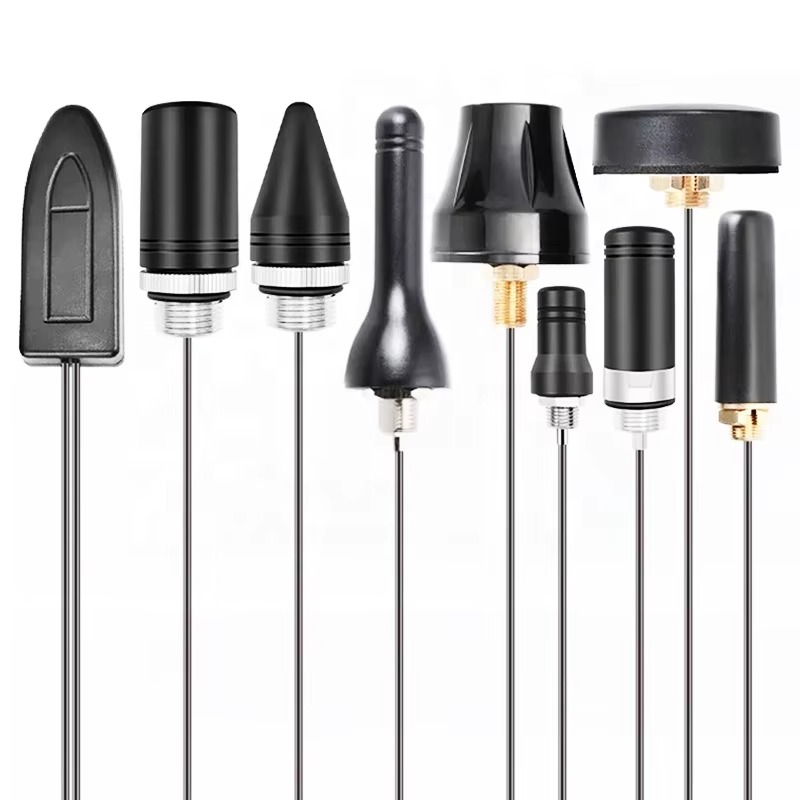
5. Main Application Scenarios of IoT GNSS Combo Antennas
With the rapid popularization of smart IoT technology, IoT GNSS combo antennas have been widely used in almost all IoT scenarios that require both positioning and wireless communication functions, covering smart cities, industrial Internet of Things, smart transportation, smart agriculture, asset tracking, and other core fields.
5.1 Smart Fleet & Vehicle Telematics
Vehicle-mounted IoT terminals, GPS trackers, fleet management equipment, and logistics monitoring equipment are the largest application scenarios of GNSS combo antennas. The combo antenna realizes real-time vehicle positioning, driving trajectory recording, and remote data transmission, helping fleet management platforms monitor vehicle operating status, driving routes, and cargo information in real time. The industrial-grade anti-vibration and high-temperature resistance design adapts to complex vehicle operating environments, ensuring all-weather stable positioning and communication of vehicles.
5.2 Smart City & Public Facility Monitoring
In smart city construction, IoT devices such as smart street lamps, intelligent monitoring cameras, manhole cover monitoring sensors, and environmental monitoring terminals all need combo antenna support. The antenna provides accurate equipment positioning and stable 4G/5G wireless data transmission, realizing unified management and real-time monitoring of urban public facilities, improving the intelligent operation efficiency of cities, and reducing manual operation and maintenance costs.
5.3 Smart Agriculture & Precision Agriculture IoT
Precision agricultural equipment such as agricultural UAVs, intelligent watering equipment, farmland environmental monitoring sensors, and automatic agricultural machinery relies on IoT GNSS combo antennas to realize precise field positioning and remote data transmission. Multi-constellation positioning ensures stable signal reception in open farmland and woodland environments, and low-power communication adaptation meets the long-term battery-powered operation requirements of agricultural IoT equipment, helping realize intelligent planting, precise irrigation, and agricultural resource monitoring.
5.4 Industrial IoT & Equipment Monitoring
Industrial equipment monitoring, outdoor engineering machinery positioning, smart water conservancy, and power monitoring IoT terminals put forward high requirements for antenna stability and anti-interference. Industrial-grade GNSS combo antennas resist electromagnetic interference in industrial environments, adapt to outdoor wind, rain, and high and low temperature environments, realize real-time positioning of industrial equipment and remote transmission of operating data, and support intelligent operation and predictive maintenance of industrial IoT systems.
5.5 Asset Tracking & Logistics IoT
High-value asset tracking tags, container monitoring equipment, and cold chain logistics monitoring terminals use miniaturized IoT GNSS combo antennas to realize real-time positioning and status data transmission of assets and goods. The compact design is convenient for embedded installation of tracking equipment, and low power consumption prolongs the service life of terminal batteries, realizing full-cycle tracking and management of logistics assets.
5.6 Wearable & Consumer IoT Devices
Smart watches, wearable positioning devices, pet trackers, and portable smart terminals also adopt miniaturized GNSS combo antenna solutions. The ultra-small size and low-power design meet the lightweight and long battery life requirements of consumer IoT devices, while ensuring accurate outdoor positioning and stable Bluetooth/Wi-Fi communication functions.
6. How to Choose the Right IoT GNSS Combo Antenna? (Professional Selection Guide)
There are many types of IoT GNSS combo antennas on the market with uneven performance. Many project developers and engineers often encounter problems such as inaccurate positioning, unstable signals, and poor environmental adaptability after selection. The following core selection indicators can help you quickly screen high-quality combo antennas suitable for project scenarios.
6.1 Confirm Positioning & Communication Frequency Band Matching
First, confirm the satellite constellation and frequency band required by the project positioning scenario. For ordinary civil low-precision positioning scenarios, L1 single-band GNSS antennas can meet the demand; for high-precision positioning scenarios such as surveying and mapping and autonomous driving, it is necessary to select dual-band or multi-band antennas supporting L2/L5 to improve positioning accuracy and anti-interference ability. At the same time, match the communication frequency band according to the IoT network used by the terminal (NB-IoT/4G/5G/Wi-Fi) to ensure full-band signal coverage and avoid signal blind spots.
6.2 Check Industrial-Grade Protection & Environmental Adaptability
For outdoor and industrial IoT projects, priority should be given to antennas with IP66/IP68 waterproof and dustproof ratings and wide temperature resistance (-40℃~+85℃). Avoid selecting consumer-grade antennas with low protection levels, which are prone to water ingress, dust accumulation, and performance degradation in harsh environments, resulting in equipment failure. For vehicle-mounted and mobile equipment, it is also necessary to confirm that the antenna has anti-vibration and anti-corrosion performance.
6.3 Focus on Isolation & Anti-Interference Performance
Isolation is the core parameter of combo antennas. It is necessary to select products with isolation ≥25dB between GNSS and communication signals. Too low isolation will lead to serious signal crosstalk, resulting in positioning drift and communication packet loss. In addition, check whether the built-in LNA low-noise amplifier has reasonable gain to ensure weak signal reception ability in complex shielded environments.
6.4 Select Appropriate Installation Method & Size
Select the antenna size and installation method according to the terminal equipment structure. For miniaturized embedded devices, choose ultra-compact FPC built-in combo antennas; for outdoor fixed equipment and vehicle-mounted terminals, choose external rod or shell-type antennas with adhesive mounting, screw fixing, or pole mounting. At the same time, confirm the connector type (SMA/IPEX/MHF) to match the terminal module interface.
6.5 Verify Low Power Consumption & Stability
Most IoT terminals adopt battery-powered low-power design. It is necessary to select low-power GNSS combo antennas to reduce terminal power consumption and prolong battery life. At the same time, select products with stable phase center and low signal attenuation to ensure long-term consistent positioning accuracy and avoid performance attenuation after long-term outdoor operation.
7. Common Installation & Use Precautions
Even high-quality IoT GNSS combo antennas will have performance degradation due to improper installation. The following standard operation precautions can maximize antenna performance and ensure stable operation of IoT equipment:
First, the antenna should be installed in an open and unobstructed position as far as possible, avoiding shielding by metal objects, concrete walls, and dense buildings. Metal shielding will seriously weaken GNSS satellite signals and wireless communication signals, resulting in reduced positioning accuracy and unstable data transmission.
Second, avoid installing the antenna close to high-power electrical equipment and RF signal transmitting equipment to prevent external electromagnetic interference from affecting signal reception. Keep a certain distance between the antenna and the terminal mainboard power supply and high-frequency components to reduce internal equipment signal crosstalk.
Third, fix the antenna firmly according to the installation method. For outdoor and vehicle-mounted scenarios, anti-vibration and waterproof fixing treatment should be done to prevent the antenna from loosening, water ingress, and damage caused by long-term vibration and wind and rain erosion.
Fourth, select a matching high-quality low-loss antenna cable. Too long or poor-quality cables will cause serious signal attenuation, reduce antenna gain and positioning sensitivity, and affect the overall operating performance of the equipment.
8. FAQ About IoT GNSS Combo Antennas
Q1: What is the difference between a GNSS combo antenna and a single GNSS antenna?
A single GNSS antenna only supports satellite positioning signal reception and cannot realize wireless communication. The IoT GNSS combo antenna integrates positioning and communication functions, with high isolation design to avoid signal interference. It has the advantages of small size, low cost, and easy installation, which is more suitable for integrated IoT terminal equipment.
Q2: Can combo antennas achieve centimeter-level high-precision positioning?
Yes. Professional multi-band IoT GNSS combo antennas support L1/L2/L5 multi-frequency signal reception. When matched with an RTK high-precision positioning module, they can realize centimeter-level positioning accuracy, meeting the needs of high-precision scenarios such as intelligent driving, precision agriculture, and engineering surveying.
Q3: Are IoT GNSS combo antennas suitable for outdoor long-term use?
Industrial-grade combo antennas with IP66/IP68 protection rating are fully suitable for long-term outdoor unattended operation. They have waterproof, dustproof, high and low temperature resistance, and anti-aging properties, and can work stably for more than 5 years in harsh outdoor environments.
Q4: Will the integrated design cause signal mutual interference?
High-quality formal combo antennas adopt professional electromagnetic shielding and high-isolation structural design, with isolation far higher than the industry standard, which can completely isolate positioning and communication signal crosstalk. Unqualified low-cost products may have interference problems, so it is necessary to select regular industrial-grade products.
Q5: What communication protocols do IoT GNSS combo antennas support?
Most universal combo antennas support mainstream IoT protocols including NB-IoT, LTE Cat-M1, 4G LTE, 5G NR, Wi-Fi 2.4G/5G/6E, Bluetooth, and Zigbee, covering almost all mainstream IoT communication scenarios on the market.
As the core hardware of intelligent IoT terminals,IoT GNSS combo antennas solve the dual pain points of positioning accuracy and communication stability for IoT devices. Compared with traditional separate antenna solutions, integrated combo antennas have obvious advantages in volume optimization, cost control, installation efficiency, and operating stability, and have become the mainstream antenna solution for new-generation smart IoT devices.
With the continuous development of 5G IoT, smart city, and industrial Internet of Things technologies, the demand for high-precision positioning and high-stability communication of IoT terminals will continue to increase. Industrial-grade, multi-band, high-isolation, and miniaturized IoT GNSS combo antennas will be widely used in more intelligent scenarios, becoming an indispensable key component to promote the intelligent upgrading of the Internet of Things industry. For IoT project developers, selecting high-quality GNSS combo antennas is not only a key step to ensure equipment performance but also an important guarantee to improve project stability and market competitiveness.
Lucy Yang | lucy.y@toxutech.com
Dotty Zhao | sales04@toxutech.com
Global Business Director / Sales Team / Global Operations


 En
En Cn
Cn Korean
 Home >