

-
Products -PCBA Manufacturing RF Connectors RF Cable Assemblys Embedded Antennas External Antennas GNSS Positioning Solutions
RF Connectors

RF Cable Assemblys
Embedded Antennas
External Antennas
GNSS Positioning Solutions































 Language


Language


Time:2026-10-15 Views:0
Why Industrial GNSS Modules Are the Backbone of Modern Automation
In an era where autonomous machinery, precision agriculture, and smart infrastructure are transforming entire industries, the industrial GNSS receiver module has emerged as a critical enabling technology. Unlike consumergrade GPS chips found in smartphones, industrial GNSS modules are engineered for reliability, precision, and resilience in the harshest operating environments. These embedded components receive and process signals from multiple global navigation satellite systems—GPS, BeiDou, Galileo, GLONASS, QZSS, and NavIC—to deliver positioning, velocity, timing, and heading data with centimeterlevel accuracy.
The global GNSS OEM board market alone is projected to grow from US$4,549 million in 2025 to US$7,743 million by 2032, representing a compound annual growth rate of 7.9%. This growth is driven by structural demand across autonomous navigation, robotics, surveying, precision agriculture, and timingcritical infrastructure. Understanding what industrial GNSS modules are, how they differ from consumer alternatives, and how to select the right module for a given application is essential for engineers, system integrators, and procurement professionals alike.
What Is an Industrial GNSS Receiver Module?
An industrial GNSS receiver module is a compact, surfacemount or plugin electronic component that integrates a multiconstellation, multifrequency RF frontend, baseband processor, and positioning engine into a single package. It provides host systems with standardized outputs—typically NMEA messages, raw measurement data, and pulsepersecond (PPS) timing signals—through interfaces such as UART, SPI, I²C, and CAN.
The distinction between a GNSS module and a finished GNSS receiver is important. A module is a component designed for integration onto a printed circuit board, often requiring additional external circuitry such as antenna interfaces, power regulation, and RF filtering. A GNSS board, by contrast, is a larger, connectorized assembly that provides positioning and measurement data through standard interfaces for integration into OEM systems. Industrial modules sit at the component level, offering designers maximum flexibility in form factor, power management, and system architecture.
Compared to consumer GPS modules, industrial GNSS modules typically feature wider operating temperature ranges (commonly 40°C to +85°C), higher vibration and shock tolerance, multifrequency signal reception, and advanced security features including antijamming and antispoofing capabilities.
Core Technical Specifications That Define Industrial GNSS Modules
MultiConstellation and MultiFrequency Reception
Modern industrial GNSS modules track signals from all major satellite constellations. A representative highend module such as the CUAV CRTK 3 X20P supports GPS L1C/A, L2C, and L5; GLONASS L1OF and L2OF; BeiDou B1I, B1C, B2a, and B3I; Galileo E1, E5a, and E6; QZSS; and NavIC, with 672 hardware channels. This multiconstellation capability improves satellite availability by two to three times compared to GPSonly modules and significantly enhances positioning performance in urban canyons, dense foliage, and other signalchallenged environments.
Positioning Accuracy Tiers
Industrial GNSS modules span a wide accuracy spectrum. Standalone positioning typically achieves 1.5 to 3 meters horizontal accuracy. SBAScorrected solutions improve this to approximately 1 meter. DGNSS delivers submeter performance. At the high end, RTK and PPPRTK modules achieve centimeterlevel accuracy—the CUAV CRTK 3 X20P, for example, specifies RTK horizontal accuracy of 0.006 m + 1 ppm and PPPRTK horizontal accuracy below 0.06 m. Research on compact, lowcost GNSS receiverantenna combinations shows that better than 50 cm accuracy is achievable within a hardware cost of US$200–400, while sub10 cm accuracy requires dualfrequency modules costing around US$1,200.
Update Rate and Convergence Time
Industrial applications demand fast, reliable positioning updates. Leading modules offer RTK update rates up to 25 Hz and PPPRTK convergence times under 40 seconds, with RTK fix times below 7 seconds. High update rates are critical for dynamic platforms such as drones, autonomous vehicles, and robotic systems where latency directly impacts control stability.
Interfaces and Integration
Standard industrial interfaces include multiple UART ports, SPI, I²C, and optionally CAN and Ethernet. The ublox ZEDX20P series, for instance, provides UART × 2, SPI, and I²C, operating from a 2.7–3.6 V supply. These interfaces allow seamless integration with microcontrollers, singleboard computers, and industrial control systems.
Environmental Specifications
Industrialgrade modules are rated for operation from 40°C to +85°C, with storage temperature ranges extending further. Vibration and shock specifications often reference MILSTD810F standards, ensuring reliability in mobile and heavyequipment installations.
Types and Classifications of Industrial GNSS Modules
StandardPrecision Modules
These modules provide meterlevel accuracy and are optimized for cost, size, and power consumption. They are widely used in asset tracking, fleet management, and IoT devices. Indicative pricing ranges from approximately US$1.50–8 for highvolume singleband standard modules. The lowcost standardprecision segment is mature, with competition centered on size, power consumption, certification, and supply stability.
HighPrecision RTK Modules
RealTime Kinematic modules achieve centimeterlevel accuracy by processing carrierphase measurements alongside correction data from a base station or network RTK service. Pricing for highprecision RTK modules typically ranges from US$35–250. These modules are essential for precision agriculture, surveying, autonomous machinery, and robotics.
DualAntenna Heading Modules
Modules such as the ublox ZEDX20D and Quectel LG580P use dual antennas to compute heading independently of motion, enabling accurate orientation even at standstill or low speeds. The LG580P achieves 0.8 cm + 1 ppm horizontal positioning accuracy and 0.1° heading accuracy with a 1meter antenna baseline. These modules are critical for autosteering systems, marine navigation, and robotic platforms requiring precise orientation control.
GNSS/INS Integrated Modules
By fusing GNSS measurements with inertial measurement unit (IMU) data, these modules maintain reliable positioning during short signal outages and in urban canyons. The Unicore UM981 series, for example, combines GNSS and INS technologies for precision agriculture and surveying applications.
Timing Modules
GNSS timing modules provide highly stable PPS outputs for telecom basestation synchronization, powergrid timing, and financial network timestamping. Pulse accuracy can reach 20 ns RMS for leading modules.
Applications Across Industrial Sectors
Precision Agriculture
Autosteering tractors, combine harvesters, and autonomous spraying systems rely on RTK GNSS modules for subinch passtopass accuracy. The ublox ZEDX20D targets precision agriculture as a primary application, delivering motionindependent heading for autosteering even at low speeds. Unicore's UM960E module has been specifically optimized for autonomous lawnmowers and outdoor robotics, with network RTK support and widetemperature operation.
Unmanned Aerial Vehicles (UAVs)
Surveying drones, delivery UAVs, and inspection aircraft require lightweight, highprecision GNSS modules. Septentrio's mosaicG5 P6, measuring just 23 mm × 16 mm and weighing 2.2 grams, was designed for commercial UAVs and sizeconstrained robotic applications. Its compatibility with PX4, ArduPilot, and ROS simplifies integration into existing autopilot ecosystems.
Autonomous Machinery and Robotics
Construction equipment, mining vehicles, and agricultural robots use industrial GNSS modules for machine control, grading, and path following. Septentrio positions its mosaicG5 P6 for autonomous machinery, robotics, and precision guidance systems, offering single or dual antenna configurations for robust orientation and motion control. The CUAV CRTK 3 X20P supports DroneCAN/CAN FD communication, making it suitable for industrial automation and unmanned systems requiring plugandplay precision positioning.
Surveying and Mapping
Land surveying, GIS data acquisition, and deformation monitoring demand the highest levels of accuracy and reliability. The ublox ZEDF20P module is optimized for surveying and mapping applications, supporting RTK and PPPRTK corrections with carrierphase output for postprocessing.
Smart Infrastructure and Structural Monitoring
Bridge, dam, and building monitoring systems use GNSS modules to detect millimeterlevel structural displacement. Smart city applications leverage GNSS for traffic management, asset tracking, and timing synchronization.
Telecom and Power Grid Timing
GNSS timing modules provide the precise time references required for 5G basestation synchronization, smart grid phasor measurement, and financial transaction timestamping. Frost & Sullivan notes that GNSS chips and modules will play a crucial role in intelligent transportation, lowaltitude airspace management, invehicle safety, industrial IoT, and digital spatiotemporal infrastructure.
How to Select the Right Industrial GNSS Module
Step 1: Define Your Accuracy Requirement
Selection begins with accuracy. Meterlevel requirements can be met by standardprecision modules. Submeter applications benefit from DGNSS or SBAS. Centimeterlevel requirements demand RTK or PPPRTK modules, with the choice between the two depending on whether a local base station or network correction service is available. RTK provides faster convergence (typically under 7 seconds) but requires a base station or NTRIP service, while PPPRTK offers global coverage with convergence times under 40 seconds.
Step 2: Evaluate Constellation and Frequency Support
Multiconstellation support improves satellite availability, particularly in obstructed environments. Multifrequency support (L1 + L2 + L5) is essential for reliable RTK performance because it enables ionospheric delay correction and faster ambiguity resolution. For applications in regions where specific constellations offer better coverage—such as BeiDou in AsiaPacific—ensure the module supports the relevant signals.
Step 3: Assess Environmental and Integration Requirements
Consider the operating temperature range, shock and vibration specifications, and interface requirements. Applications in mobile machinery or outdoor installations require widetemperature modules and robust connectors. For spaceconstrained designs, module dimensions and power consumption become critical. The Septentrio mosaicG5 P6, for example, consumes minimal power while delivering full multifrequency performance, making it suitable for batterypowered or energyconstrained platforms.
Step 4: Prioritize Security and Resilience
For missioncritical applications, security features are no longer optional. Leading modules now include jamming and spoofing detection, Galileo OSNMA navigation message authentication, secure boot, and encrypted correction data. Septentrio's AIM+ technology provides protection against sophisticated jamming and spoofing attacks, which is essential for autonomous systems operating in contested RF environments.
Step 5: Consider Ecosystem and Support
Module selection also involves evaluating the vendor's ecosystem: evaluation kits, software tools, correction services, antenna compatibility, and technical support. ublox offers PointPerfect correction services integrated with its modules, while Septentrio provides the mosaicgo evaluation kit and RxTools software for rapid prototyping. Unicore bundles its UM960E module with TruePoint network RTK services for turnkey deployment.
Integration Challenges and Best Practices
Integrating an industrial GNSS module into a host system presents several technical challenges. Signal obstruction from buildings, terrain, and vegetation remains the most fundamental limitation. Interference from other RF sources—including WiFi, cellular radios, and DCDC converters—can degrade GNSS sensitivity, requiring careful PCB layout, shielding, and filtering. Antenna optimization is critical: active antenna shortcircuit and opencircuit detection pins, available on modules such as the ublox ZEDF20P, help diagnose antenna faults during development and deployment.
Power rail management is another common pitfall. Coldstart failures frequently trace to inadequate power supply design or improper sequencing. For RTK deployments, correction data link reliability directly impacts positioning availability; network RTK services eliminate the need for local base stations but introduce dependency on cellular coverage.
Best practices include: using a dedicated lownoise power supply for the GNSS module; placing the GNSS antenna away from other radiating elements; implementing proper grounding and shielding; and validating performance across the full operating temperature range.
Security and Resilience: The New Imperative
As GNSS becomes embedded in safetycritical and autonomous systems, the threat landscape has expanded. Jamming—overpowering GNSS signals with interference—and spoofing—broadcasting false signals to mislead the receiver—pose real risks to industrial operations. The DRACONAV project, supported by the European Space Agency, developed an industrial secure GNSS module capable of detecting spoofing, replay, and jamming attacks and providing estimated position, velocity, and time through dead reckoning when an attack is detected.
Modern industrial modules address these threats through multiple layers. Allband frequency diversity improves resilience by providing alternative signals when one band is compromised. Interference monitoring and spectrum analysis functions, such as those in the CUAV CRTK 3 X20P, enable realtime detection of jamming. Cryptographic authentication of navigation messages through Galileo OSNMA ensures that received signals originate from authentic satellites. Secure boot and signed firmware protect against malicious modification of receiver software.
Market Trends and Future Outlook
The industrial GNSS module market is undergoing structural transformation. The premium segment—multiband, IMUintegrated, and securityenabled modules—is forecast to capture a growing share of value, rising from roughly 35% in 2026 to 45–50% by 2035, as end users prioritize accuracy and robustness over initial cost.
Several technology trends are shaping the next generation of industrial GNSS modules. First, the integration of RTK and PPP techniques into single modules is making centimeterlevel positioning more accessible and costeffective. Second, the convergence of GNSS with inertial navigation systems is enabling continuous positioning in environments where satellite signals are intermittently available. Third, the adoption of Lband correction services and Galileo High Accuracy Service is reducing reliance on proprietary correction networks. Fourth, advances in semiconductor process technology—such as 22 nm SoC platforms with dualcore processors—are delivering higher performance at lower power consumption.
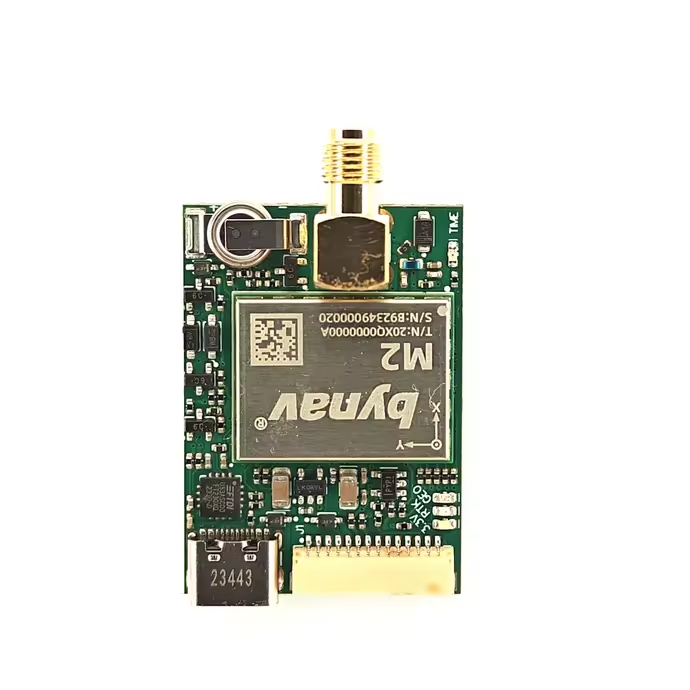
The competitive landscape is layered. Highvolume module suppliers such as ublox, Quectel, Telit Cinterion, STMicroelectronics, FURUNO, Alps Alpine, and Murata dominate standardprecision, automotive, IoT, and timing segments. Highprecision OEM board and module suppliers including Trimble, Hexagon/NovAtel, Septentrio, Topcon, Hemisphere GNSS, JAVAD, Unicore, ComNav, Tersus, and Bynav compete on RTK/PPP performance, multifrequency support, heading, and industrial integration. A third layer of regional and specialist suppliers—LOCOSYS, SkyTraq, GlobalTop, YIC, Navisys, and Antenova—remains relevant in embedded modules and niche IoT applications.
The industrial GNSS receiver module is no longer a commodity component. It is a strategic enabler of autonomy, precision, and safety across agriculture, construction, logistics, telecommunications, and countless other sectors. Selecting the right module requires a systematic evaluation of accuracy requirements, environmental specifications, interface compatibility, security features, and ecosystem support.
As the market continues to evolve toward higher precision, greater resilience, and deeper integration with inertial and correction services, the industrial GNSS module will only grow in importance. Whether you are designing an autonomous tractor, a surveying drone, a robotic delivery platform, or a 5G timing infrastructure, the right GNSS module is the foundation upon which reliable positioning performance is built.
Lucy Yang | lucy.y@toxutech.com
Dotty Zhao | sales04@toxutech.com
Global Business Director / Sales Team / Global Operations


 En
En Cn
Cn Korean
 Home >