

-
Products -PCBA Manufacturing RF Connectors RF Cable Assemblys Embedded Antennas External Antennas GNSS Positioning Solutions
RF Connectors

RF Cable Assemblys
Embedded Antennas
External Antennas
GNSS Positioning Solutions































 Language


Language


Time:2026-10-15 Views:0
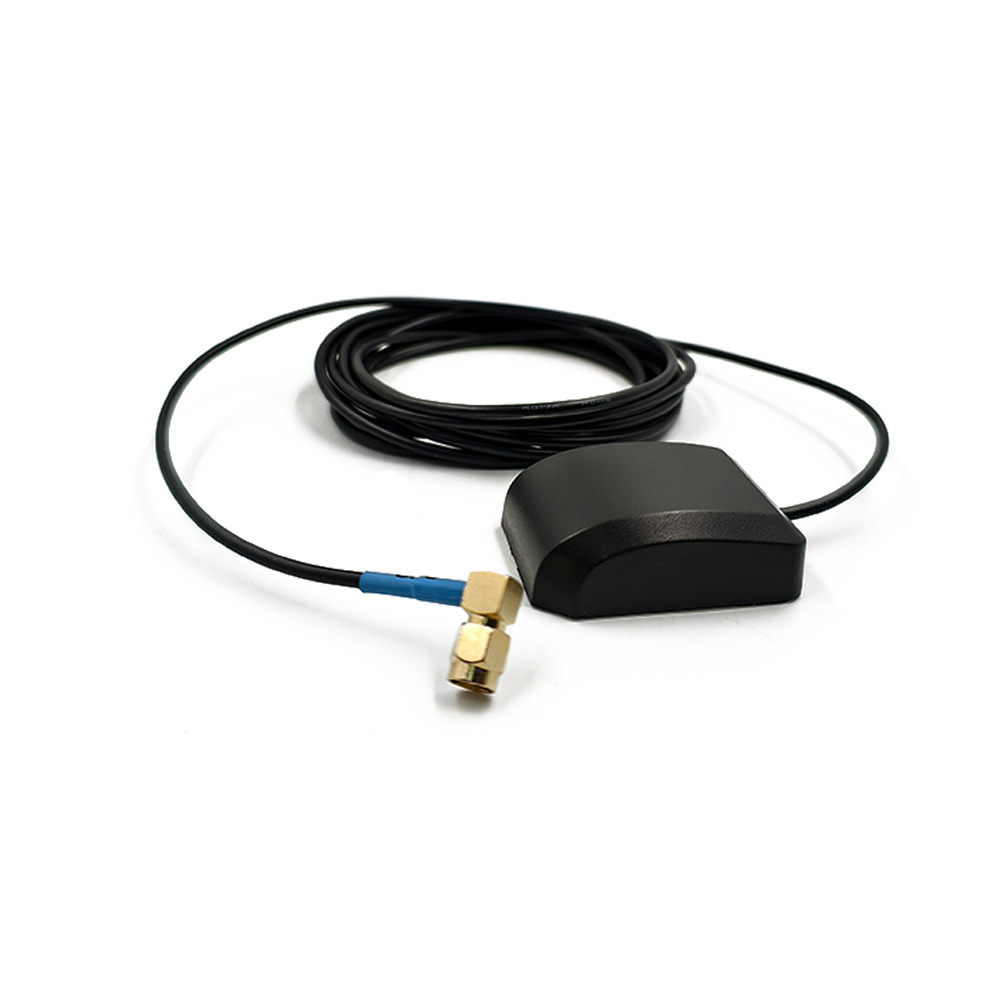
High stability aviation GNSS antennas are the foundational hardware component for reliable, high-precision satellite navigation in all aerial vehicles, including commercial aircraft, general aviation planes, unmanned aerial vehicles (UAVs), drones, and military aviation platforms. Unlike standard consumer-grade GNSS antennas that prioritize low cost over performance, aviation-specific GNSS antennas are engineered with extreme stability, anti-interference capabilities, and environmental durability to meet the rigorous demands of airborne operations. In modern aviation navigation, positioning accuracy, signal continuity, and system reliability directly determine flight safety, operational efficiency, and mission success. This comprehensive guide explores every critical aspect of high stability aviation GNSS antennas, covering core features, working principles, technical advantages, industry compliance standards, key applications, selection criteria, and market trends to help aviation professionals, system integrators, and equipment buyers make informed decisions.
1. What Is a High Stability Aviation GNSS Antenna?
A high stability aviation GNSS antenna is a specialized radio frequency (RF) device designed to receive multi-constellation, multi-frequency satellite navigation signals in complex airborne environments while maintaining consistent phase center stability, signal gain, and low noise performance throughout all flight conditions. GNSS (Global Navigation Satellite System) encompasses four major global satellite systems: GPS (United States), GLONASS (Russia), Galileo (European Union), and BeiDou (China), alongside regional augmentation systems like QZSS and SBAS. High stability aviation GNSS antennas support full-band signal reception for these systems, delivering continuous, centimeter to millimeter-level positioning data for aviation navigation, autopilot control, flight monitoring, and precision surveying missions.
The core definition of “high stability” in aviation GNSS antennas refers to two pivotal performance metrics: phase center stability and environmental operational stability. Phase center stability ensures the antenna’s signal reception center remains fixed without deviation under varying signal incident angles, frequencies, and temperatures, eliminating positioning errors caused by phase center drift. Environmental stability guarantees consistent antenna performance against extreme temperature fluctuations, high-speed airflow vibration, electromagnetic interference (EMI), humidity, and lightning strikes during flight. These stability-focused design features distinguish aviation-grade GNSS antennas from ordinary industrial and consumer antennas, making them indispensable for safety-critical aerial applications.
2. Core Technical Features of High Stability Aviation GNSS Antennas
High stability aviation GNSS antennas integrate cutting-edge RF design, structural optimization, and material technology to meet strict aviation industry requirements. Each technical feature is tailored to solve pain points in airborne navigation, such as signal loss, positioning drift, environmental failure, and electromagnetic interference. Below are the key performance characteristics that define premium high stability aviation GNSS antennas.
2.1 Ultra-High Phase Center Stability
Phase center stability is the most critical indicator of high stability aviation GNSS antennas, directly determining positioning accuracy for precision aviation missions. Ordinary GNSS antennas suffer from severe phase center offset and drift when receiving satellite signals from different elevation and azimuth angles, leading to cumulative positioning errors that can reach meters in dynamic flight environments. High stability aviation GNSS antennas adopt a multi-feed point design and optimized radiation structure, perfectly aligning the antenna’s phase center with its geometric center. This design minimizes phase center variation to less than 0.5mm across all working frequencies and signal incident angles, achieving millimeter-level static and dynamic positioning accuracy.
Additionally, premium models feature temperature-compensated phase stabilization technology, which automatically calibrates phase deviation caused by extreme temperature changes from -40°C to +85°C. This eliminates thermal drift errors and ensures long-term stable positioning output during cross-region, high-altitude, and long-duration flights, making it ideal for RTK (Real-Time Kinematic) aviation positioning, aerial surveying, and precision mapping missions.
2.2 Multi-Constellation & Multi-Frequency Full-Band Reception
Modern aviation navigation requires compatibility with global multi-satellite systems to avoid signal blind zones and improve positioning redundancy. High stability aviation GNSS antennas support full-frequency signal reception for all mainstream GNSS constellations, including GPS L1/L2/L5, GLONASS G1/G2/G3, Galileo E1/E5a/E5b/E6, BeiDou B1/B2/B3, and QZSS L1/L2/L5/L6. Full-band coverage enables the antenna to capture more satellite signals simultaneously, significantly improving positioning continuity and reliability in complex flight environments such as urban low-altitude flight, mountainous terrain, and dense cloud cover.
Compared with single-frequency antennas that only support GPS L1 band, multi-frequency high stability aviation GNSS antennas can eliminate ionospheric delay errors through dual-frequency and triple-frequency differential calculation, further enhancing positioning precision. This full-compatibility design also ensures universal adaptability with mainstream aviation GNSS receivers, autopilot systems, and flight control equipment, realizing plug-and-play integration and reducing system upgrade and maintenance costs.
2.3 Low Noise Figure & High Signal Gain
Airborne environments feature complex electromagnetic noise interference from aircraft avionics, communication equipment, and ground base stations, which easily weakens satellite GNSS signals and causes signal loss or distortion. High stability aviation GNSS antennas are equipped with built-in high-performance low-noise amplifiers (LNA) with an ultra-low noise figure (typically ≤1.5dB). The LNA module amplifies weak satellite signals in real time while suppressing background noise, effectively improving signal-to-noise ratio (SNR) and ensuring stable signal reception even for low-strength satellite signals at high altitudes or occluded environments.
With stable high gain performance across the entire frequency band, these antennas maintain consistent signal reception sensitivity during high-speed flight, rapid ascent, descent, and attitude changes (pitch, roll, yaw). They avoid signal flicker or positioning interruption caused by flight attitude fluctuations, providing continuous and reliable navigation data for dynamic aerial operations.
2.4 Superior Anti-Interference & Anti-Jamming Performance
Electromagnetic interference and intentional signal jamming are major threats to aviation GNSS navigation safety, especially for commercial aviation routes, low-altitude UAV operations, and military aviation missions. High stability aviation GNSS antennas adopt multiple anti-interference technologies to resist complex electromagnetic environments. First, the internal structure realizes isolated layout of radiation units, RF processing modules, and digital signal processing units, preventing internal electromagnetic crosstalk that degrades signal quality.
Second, premium models integrate controlled reception pattern antenna (CRPA) technology and adaptive beamforming algorithms, which can automatically suppress directional interference signals and form anti-jamming nulls in the direction of jamming sources. This effectively resists narrowband interference, broadband interference, and fake satellite signal spoofing. Meanwhile, the antenna features high out-of-band rejection capability, filtering out interference signals outside the GNSS working frequency band and ensuring pure and accurate satellite signal reception.
2.5 Extreme Environmental Adaptability & Aviation Grade Durability
Aviation equipment must withstand harsh airborne environmental conditions, including extreme temperature changes, high-intensity vibration, strong wind pressure, high humidity, and lightning strikes. High stability aviation GNSS antennas are manufactured with aviation-grade aluminum alloy and high-strength engineering plastic materials, featuring lightweight, low wind resistance, and corrosion resistance. The fully sealed waterproof and dustproof structure meets IP67/IP68 protection levels, adapting to rainy, snowy, foggy, and high-humidity aerial environments without performance attenuation or equipment failure.
In terms of mechanical stability, the antenna undergoes professional vibration and shock testing compliant with aviation standards, resisting high-frequency vibration generated by aircraft engines and airflow impact during high-speed flight. It maintains structural integrity and electrical performance stability under long-term dynamic load conditions. Additionally, built-in lightning protection and electrostatic discharge (ESD) modules prevent equipment damage and signal anomalies caused by lightning strikes and static electricity accumulation during high-altitude flight, ensuring all-weather reliable operation.
3. Strict Aviation Industry Compliance Standards
All qualified high stability aviation GNSS antennas must comply with international and regional aviation industry certification standards, which are core guarantees of product stability and safety. Unlike ordinary industrial antennas, aviation GNSS antennas need to pass rigorous environmental, electrical, and mechanical testing to adapt to airborne safety-critical scenarios. The main compliance standards include:
DO-160G Aviation Environmental Conditions Test Standard: This is the most authoritative industry standard for aviation electronic equipment, covering temperature, humidity, vibration, shock, lightning, electromagnetic interference, and salt spray testing. High stability aviation GNSS antennas fully comply with DO-160G requirements, ensuring stable operation in all extreme flight environments and meeting the safety thresholds of civil and military aviation systems.
FCC & CE Certification: For global commercial aviation and civilian UAV applications, antennas pass FCC electromagnetic compatibility certification and CE safety certification, ensuring no electromagnetic radiation interference with aircraft avionics and meeting EU and US market access standards.
RTK Precision Navigation Certification: For professional precision aviation surveying and mapping scenarios, high stability models pass RTK calibration certification, supporting centimeter-level dynamic positioning and meeting the accuracy requirements of aerial mapping, terrain surveying, and engineering inspection missions.
4. Key Application Scenarios of High Stability Aviation GNSS Antennas
Thanks to their ultra-high stability, precision, and reliability, high stability aviation GNSS antennas are widely used in various civil, commercial, industrial, and military aviation fields. They cover low-altitude UAV operations, general aviation flights, commercial airliner navigation, and special aviation mission scenarios, becoming the core navigation supporting equipment for modern aerial systems.
4.1 Commercial & General Aviation
In commercial airliners, cargo aircraft, and general aviation planes (private jets, training aircraft), high stability aviation GNSS antennas provide core positioning and navigation data for flight management systems (FMS), autopilot systems, and precision approach landing systems. Their stable phase center and anti-interference performance ensure accurate positioning during takeoff, cruise, and landing, especially enabling reliable navigation in low-visibility weather such as heavy fog and rain, improving flight safety and operational efficiency. The multi-constellation reception capability also provides redundant navigation signals, avoiding flight risks caused by single satellite system failures.
4.2 Professional UAV & Drone Operations
Low-altitude UAV operations are the largest application scenario for high stability aviation GNSS antennas, covering agricultural plant protection, aerial surveying and mapping, power line inspection, railway patrol, environmental monitoring, and logistics distribution. UAVs operate in complex low-altitude environments with dense buildings, trees, and electromagnetic interference, posing high requirements for antenna stability and anti-interference performance. High stability GNSS antennas maintain centimeter-level RTK positioning accuracy during high-speed UAV flight and attitude changes, ensuring precise route planning, fixed-point operation, and automatic return control. For long-endurance and cross-region UAV missions, their extreme environmental adaptability guarantees uninterrupted operation in different climatic zones.
4.3 Military & Special Aviation Missions
In military aviation fields such as military drones, fighter jets, and transport aircraft, high stability aviation GNSS antennas with anti-jamming and anti-spoofing capabilities are essential for secure navigation. They resist intentional enemy jamming and fake signal interference, ensuring accurate positioning and stable communication during combat missions. Meanwhile, their high dynamic stability adapts to high-speed maneuvering and ultra-low altitude penetration flight of military aircraft, providing reliable navigation support for military reconnaissance, target tracking, and tactical missions.
4.4 Aerial Surveying, Mapping & Geographic Information Collection
Aerial surveying and mapping require millimeter-level positioning accuracy to ensure the precision of 3D terrain modeling, aerial photography, and GIS data collection. High stability aviation GNSS antennas eliminate phase center drift errors, providing high-precision dynamic positioning data for surveying UAVs and aerial survey aircraft. They effectively improve the accuracy and efficiency of geographic information collection, widely serving land resource surveying, urban planning, water conservancy monitoring, and mineral resource exploration projects.
5. High Stability Aviation GNSS Antenna vs. Ordinary GNSS Antenna
Many users confuse aviation-grade high stability GNSS antennas with ordinary industrial or consumer GNSS antennas, but there are essential differences in performance, design, and application scenarios. The core comparison is as follows:
Stability Performance: Ordinary GNSS antennas have obvious phase center drift, with positioning errors up to several meters in dynamic flight environments, and their performance is easily affected by temperature and vibration. High stability aviation GNSS antennas achieve ultra-low phase center variation, with positioning errors controlled within millimeters, and maintain stable performance under extreme aviation environmental conditions.
Anti-Interference Capability: Ordinary antennas only have basic out-of-band filtering functions and cannot resist complex electromagnetic interference and signal jamming in aviation environments. Aviation high stability models integrate multi-dimensional anti-interference and anti-jamming technologies, adapting to high-complexity electromagnetic airborne scenarios.
Environmental Durability: Ordinary industrial antennas can only adapt to static ground environments and are prone to damage and performance degradation under flight vibration, wind pressure, and extreme temperatures. Aviation-grade antennas pass strict aviation environmental testing, with aviation-grade structural materials and fully sealed protection for all-weather airborne operation.
Industry Certification: Ordinary antennas have only basic quality certification, without aviation standard compliance. High stability aviation GNSS antennas strictly comply with DO-160G, FCC, CE and other aviation industry standards, meeting safety and accuracy requirements for aviation safety-critical applications.
6. How to Select a Qualified High Stability Aviation GNSS Antenna?
Selecting a suitable high stability aviation GNSS antenna is crucial to ensure aviation navigation accuracy and safety. Users need to select products according to application scenarios, performance requirements, and environmental conditions, focusing on the following key indicators:
1. Phase Center Stability Index: Prioritize antennas with phase center variation less than 0.5mm, which is the core standard for high-precision aviation positioning. For RTK surveying and mapping scenarios, choose models with temperature-compensated phase stabilization technology to avoid thermal drift errors.
2. Constellation & Frequency Band Compatibility: Select full-band multi-constellation antennas supporting GPS, BeiDou, Galileo, and GLONASS to ensure signal redundancy and avoid positioning blind zones. For high-precision scenarios, dual-frequency or triple-frequency models are recommended to eliminate ionospheric delay errors.
3. Anti-Interference & Anti-Jamming Level: For urban low-altitude flight, military missions, and complex electromagnetic environment operations, choose antennas with CRPA anti-jamming and adaptive beamforming functions to resist signal interference and spoofing.
4. Environmental Protection & Mechanical Performance: Confirm IP67/IP68 waterproof and dustproof level, wide temperature working range (-40°C to +85°C), and aviation-grade vibration resistance to adapt to harsh flight environments. For high-speed UAVs, prioritize low wind resistance and lightweight structural designs to reduce flight load.
5. Industry Certification: Ensure the product has passed DO-160G aviation standard testing, FCC and CE certification, and relevant RTK precision calibration certification to meet industry application specifications and market access requirements.
6. Matching & Scalability: Choose antennas with universal interface protocols that can be perfectly matched with mainstream aviation receivers, autopilots, and flight control systems. Reserve expansion space for subsequent system upgrades and multi-device integration.
7. Market Trends & Future Development of Aviation GNSS Antennas
With the rapid development of global low-altitude economy, civil aviation informatization, and intelligent aviation technology, the market demand for high stability aviation GNSS antennas is growing continuously. According to industry market reports, the global aviation GNSS antenna market will maintain a steady growth rate from 2026 to 2034, driven by the expansion of low-altitude UAV application scenarios and the upgrading of civil aviation precision navigation systems.
Future development trends of high stability aviation GNSS antennas focus on three directions: higher precision and miniaturization, intelligent anti-jamming, and multi-system integrated fusion. First, with the popularization of centimeter-level and millimeter-level precision navigation requirements, antennas will achieve smaller size, lighter weight, and lower power consumption while maintaining ultra-high stability, adapting to lightweight UAV and portable aviation device applications. Second, intelligent anti-jamming technology will be further upgraded, combining AI algorithms to realize real-time intelligent identification and suppression of interference signals, improving navigation security in complex contested environments.
Third, future aviation GNSS antennas will realize deep fusion with INS (Inertial Navigation System), realizing GNSS+INS combined navigation, which can maintain high-precision positioning even when satellite signals are interrupted, further improving the continuity and reliability of aviation navigation. In addition, with the continuous optimization of global satellite navigation systems, antennas will support newer GNSS signal bands and higher-precision differential positioning technologies, empowering the intelligent upgrading of modern aviation navigation systems.
8. Common FAQs About High Stability Aviation GNSS Antennas
Q1: Why is phase center stability so important for aviation GNSS antennas?
A: Phase center stability directly determines positioning accuracy. During flight, satellite signals arrive from different angles, and unstable phase centers will cause continuous positioning drift errors. High phase center stability ensures consistent signal reception benchmarks, eliminating dynamic errors and realizing high-precision real-time positioning, which is essential for flight safety and precision missions.
Q2: Can high stability aviation GNSS antennas work in extreme high and low temperatures?
A: Yes. Qualified aviation-grade antennas adopt temperature-compensated design and aviation-grade materials, supporting normal operation in the temperature range of -40°C to +85°C. They will not experience signal attenuation, phase drift, or structural failure due to extreme temperature changes during high-altitude flight or cross-region operations.
Q3: What is the difference between active and passive aviation GNSS antennas?
A: Active high stability aviation GNSS antennas are equipped with built-in LNA amplifiers, which can amplify weak satellite signals, suppress noise, and are suitable for long-distance signal transmission and complex interference environments. Passive antennas have no amplification function, with low signal gain, and are only suitable for simple ground static scenarios. Almost all aviation dynamic navigation scenarios use active high stability GNSS antennas.
Q4: Do aviation GNSS antennas need regular maintenance?
A: High stability aviation GNSS antennas feature fully sealed waterproof, dustproof, and corrosion-resistant design, with low daily maintenance requirements. It is recommended to regularly check the antenna installation firmness, interface tightness, and surface cleanliness to avoid signal obstruction caused by dust accumulation or structural loosening, ensuring long-term stable operation.
High stability aviation GNSS antennas are the core precision navigation hardware supporting modern aviation development, with irreplaceable advantages in phase center stability, anti-interference performance, environmental adaptability, and operational reliability. Whether for commercial civil aviation flight safety, professional UAV precision operations, aerial surveying and mapping engineering, or military special aviation missions, high-quality high stability aviation GNSS antennas can provide continuous, accurate, and safe satellite navigation data.
As the global aviation industry moves toward intelligence, precision, and low-altitude commercialization, the demand for high-stability, high-precision, and anti-jamming aviation GNSS antennas will continue to rise. Understanding the core technical characteristics, industry standards, and selection criteria of such antennas helps aviation enterprises and practitioners optimize navigation system configuration, improve operational efficiency, and ensure flight safety. Choosing certified, high-performance high stability aviation GNSS antennas is the key to building a reliable modern aviation precision navigation system.
Lucy Yang | lucy.y@toxutech.com
Dotty Zhao | sales04@toxutech.com
Global Business Director / Sales Team / Global Operations


 En
En Cn
Cn Korean
 Home >