

-
Products -PCBA Manufacturing RF Connectors RF Cable Assemblys Embedded Antennas External Antennas GNSS Positioning Solutions
RF Connectors

RF Cable Assemblys
Embedded Antennas
External Antennas
GNSS Positioning Solutions































 Language


Language


Time:2026-10-16 Views:0
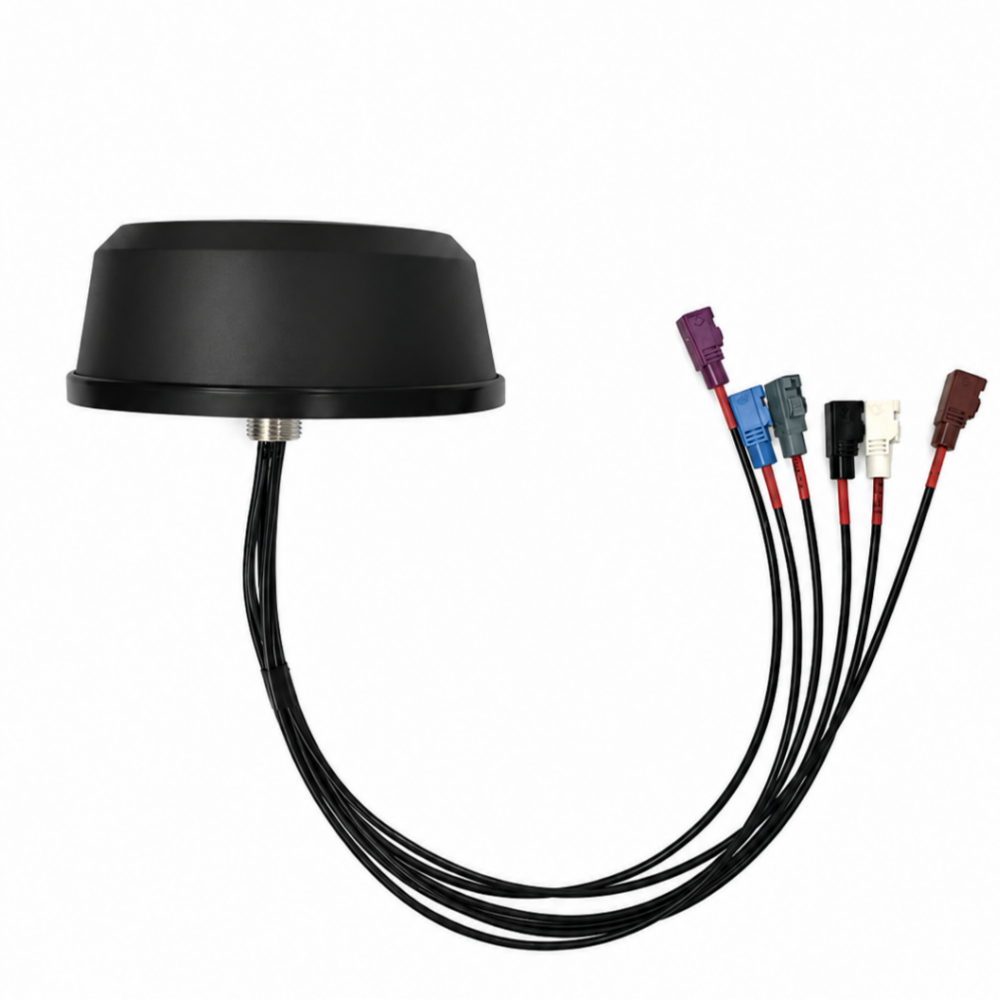
GPS GLONASS 4G Antenna is a multi-functional integrated wireless antenna that combines dual-constellation GNSS positioning and 4G LTE cellular communication capabilities. As a core component of modern IoT devices, vehicle telematics systems, tracking equipment, and industrial smart terminals, this 2-in-1 antenna solves the dual demands of high-precision satellite positioning and stable cellular data transmission. Compared with single-function GPS antennas or 4G antennas, the integrated GPS GLONASS 4G antenna features compact structure, easy installation, low signal loss, and strong environmental adaptability, becoming the preferred wireless solution for global commercial and industrial wireless connectivity projects.
In today’s interconnected world, reliable positioning and seamless mobile network connectivity are essential for countless applications, including vehicle tracking, fleet management, asset monitoring, drone navigation, smart city infrastructure, and industrial IoT (IIoT) devices. Traditional separate antenna solutions suffer from bulky installation, high wiring costs, signal interference, and inconsistent performance. The upgraded GPS GLONASS 4G combo antenna perfectly addresses these pain points by integrating GPS, GLONASS dual-satellite positioning system reception and full-band 4G LTE signal reception in a single unit, delivering dual high-performance guarantees for positioning accuracy and network stability.
1. What Is a GPS GLONASS 4G Antenna? Core Definition & Working Principle
A GPS GLONASS 4G antenna is a multi-band omnidirectional antenna designed to receive satellite signals from the US GPS constellation and Russian GLONASS constellation, while supporting full-frequency 4G LTE cellular signal transceiving. It integrates two independent antenna modules inside a single housing: a high-sensitivity GNSS positioning antenna and a high-gain 4G LTE communication antenna, with built-in anti-interference filters and low-loss signal amplification chips to ensure no crosstalk between positioning and communication signals.
The core working principle is divided into two independent signal processing systems. For the GNSS positioning part, the antenna captures L-band satellite signals: GPS works at 1575.42MHz (L1 frequency band), while GLONASS operates at 1602MHz frequency band. The dual-constellation reception doubles the number of receivable satellites, enabling faster satellite locking, higher positioning accuracy, and stronger anti-blocking capability. For the 4G communication part, the antenna supports global mainstream 4G LTE frequency bands (700MHz–2700MHz), compatible with 2G/3G/4G full-network signals, realizing stable data upload and download, device remote communication, and real-time data transmission.
Different from ordinary single GPS antennas that only support GPS satellite signals, the GPS GLONASS dual-mode positioning antenna can receive more satellite signals in complex environments such as urban dense buildings, mountainous areas, and tunnels, effectively solving the problem of positioning failure or drift caused by insufficient satellite signals. Paired with 4G high-speed network transmission, it realizes real-time positioning data upload, remote device monitoring, and intelligent data interaction, forming a complete "positioning + communication" wireless terminal solution.
2. Key Technical Specifications of GPS GLONASS 4G Antenna
High-performance GPS GLONASS 4G antennas adopt industrial-grade design standards, with standardized frequency bands, stable gain, low standing wave ratio, and excellent weather resistance. The core technical parameters that determine antenna performance are summarized below, covering all key indicators for Google SEO target users (device manufacturers, engineering purchasers, IoT solution providers):
2.1 Frequency Band Coverage
GNSS Positioning Band: GPS L1 (1575.42±1.023MHz), GLONASS (1602±5MHz), compatible with Galileo and BeiDou auxiliary reception
4G Communication Band: Full-band LTE 700/800/900/1800/2100/2600MHz, compatible with GSM 900/1800MHz, WCDMA, TD-LTE, FDD-LTE global mainstream networks
2.2 Core Performance Parameters
Antenna Gain: GNSS gain 28±2dBi, 4G gain 3±1dBi; high gain ensures long-distance stable signal reception and weak signal penetration
VSWR (Voltage Standing Wave Ratio): ≤1.5; low standing wave ratio reduces signal reflection loss and improves signal transmission efficiency
Impedance: Standard 50Ω, matching most industrial wireless modules and terminal devices
Polarization Mode: GNSS right-hand circular polarization (RHCP), 4G omnidirectional vertical polarization; adaptive to satellite signal characteristics and cellular network signal coverage
Signal Sensitivity: -165dBm high sensitivity, realizing fast satellite locking within 30 seconds in open areas
2.3 Structural & Environmental Parameters
Housing Material: High-strength ABS/PC waterproof material, UV-resistant, anti-aging
Protection Grade: IP67 waterproof and dustproof, suitable for outdoor, vehicle-mounted, and harsh industrial environments
Working Temperature: -40℃ ~ +85℃, adapting to extreme cold and high-temperature working scenarios
Installation Method: Magnetic suction base, screw fixation, adhesive installation, flexible and diverse
Connector Type: Standard SMA male/female, MMCX, IPEX, compatible with most IoT modules and routing equipment
Cable Specification: RG174 low-loss coaxial cable, customizable 1m/2m/3m/5m length
3. Core Advantages of GPS GLONASS 4G Integrated Antenna
The integrated design of GPS GLONASS positioning + 4G communication brings unparalleled advantages compared with traditional separate dual-antenna solutions, covering installation cost, performance stability, space utilization, and scene adaptability, which are also the core selling points for industrial and commercial users:
3.1 Dual-Constellation Positioning, Higher Accuracy & Faster Lock
Single GPS positioning only relies on US satellite constellations, which is prone to signal occlusion and positioning delay in complex terrain. The GPS + GLONASS dual-mode antenna can receive signals from two independent satellite systems simultaneously, with more than 40 available satellites at any time, greatly improving satellite coverage density. It realizes centimeter-level auxiliary positioning in open environments and effectively avoids positioning drift, failure, and delay in urban valleys, forest areas, and underground parking lots, ensuring real-time and accurate positioning data.
3.2 Integrated Design, Save Space & Reduce Costs
Traditional solutions require installing independent GPS positioning antennas and 4G communication antennas separately, which occupies large equipment space, requires complicated wiring, and increases installation and maintenance costs. The 2-in-1 GPS GLONASS 4G antenna integrates two functional modules into one compact housing, reducing 50% of installation space, simplifying wiring layout, and lowering manual installation and later maintenance costs. It is especially suitable for space-constrained devices such as vehicle terminals, portable trackers, and miniature IoT sensors.
3.3 Built-In Anti-Interference Design, Stable Signal Output
The antenna is equipped with professional frequency filtering and electromagnetic shielding technology, which effectively isolates signal crosstalk between GNSS positioning band and 4G communication band, and resists external electromagnetic interference from vehicle equipment, industrial machinery, and wireless devices. The low-loss cable and high-purity copper core conductor ensure minimal signal transmission loss, maintaining stable positioning and network signal strength in long-term working environments, avoiding network disconnection and positioning offset caused by signal interference.
3.4 Full-Network Compatibility, Global Universal
The 4G part supports all global mainstream LTE frequency bands, compatible with 2G, 3G, 4G multi-generation cellular networks, adapting to network operators in Europe, America, Southeast Asia, Africa, and other regions. The GNSS part supports GPS/GLONASS dual constellations, compatible with mainstream global positioning systems, realizing seamless positioning and network access worldwide. It is the best choice for cross-border IoT equipment, global fleet management, and overseas asset monitoring projects.
3.5 Industrial-Grade Durability, Wide Environmental Adaptability
With IP67 waterproof, dustproof, UV-resistant, and high and low temperature resistant design, the antenna can work stably in harsh environments such as outdoor wind and rain, vehicle vibration, industrial high temperature, and low temperature cold. The magnetic suction base has strong adsorption force, which is not easy to fall off during vehicle driving and equipment operation, ensuring long-term stable operation of the antenna and reducing equipment failure rate and replacement frequency.
4. Main Application Scenarios of GPS GLONASS 4G Antenna
Relying on dual advantages of high-precision positioning and stable 4G communication, GPS GLONASS 4G antennas are widely used in commercial, industrial, automotive, and smart city fields, covering almost all terminal devices that need both positioning and wireless data transmission:
4.1 Vehicle Telematics & Fleet Management
It is the core accessory of vehicle GPS trackers, car navigation terminals, fleet management systems, and commercial vehicle monitoring equipment. The dual-mode positioning ensures accurate vehicle position tracking, even in urban complex road conditions and tunnel environments. The 4G network realizes real-time upload of vehicle positioning data, driving trajectory, speed information, and remote fault diagnosis data, helping enterprises realize intelligent fleet scheduling, vehicle anti-theft monitoring, and driving safety management. It is widely used in logistics trucks, taxis, online car-hailing, engineering vehicles, and passenger cars.
4.2 Industrial IoT & Smart Asset Monitoring
In industrial IoT scenarios such as outdoor equipment monitoring, container tracking, logistics asset management, and smart energy equipment monitoring, the antenna provides stable positioning and data transmission functions. It can monitor the real-time position and operating status of remote industrial equipment, upload operating data to the cloud platform through 4G network, realize unattended remote monitoring, reduce manual inspection costs, and improve industrial operation efficiency. Its waterproof and anti-interference design adapts to outdoor and industrial harsh working environments.
4.3 Drone & Mobile Robot Navigation
Consumer and industrial drones, intelligent mobile robots, and AGV handling robots require high-precision real-time positioning and remote data transmission. GPS GLONASS dual-mode positioning improves drone positioning accuracy and flight stability, avoiding flight deviation and crash caused by weak satellite signals. The 4G network supports long-distance remote control and real-time image transmission, meeting the needs of industrial drone surveying, mapping, patrol, and intelligent robot autonomous navigation.
4.4 Smart City & Public Facility Monitoring
It is applied to smart street lamps, intelligent traffic monitoring equipment, outdoor environmental monitoring stations, and public security mobile monitoring terminals. The antenna provides accurate equipment positioning information and stable 4G network transmission, realizing intelligent management of urban public facilities, real-time monitoring of environmental data, and accurate early warning of traffic conditions, helping build intelligent and digital smart city systems.
4.5 Portable Intelligent Terminal Equipment
Widely used in portable positioning trackers, personal safety terminals, outdoor sports positioning equipment, and intelligent wearable devices. The compact integrated design reduces equipment volume and weight, while ensuring accurate positioning and real-time data upload, meeting the portable and wireless use needs of outdoor exploration, personnel positioning, and asset anti-lost scenarios.
5. How to Choose a High-Quality GPS GLONASS 4G Antenna? Buying Guide
When purchasing GPS GLONASS 4G combo antennas, many buyers often confuse parameter standards and product quality, leading to poor equipment operation effect. The following key selection indicators help users quickly screen high-performance and suitable products, which is also the core reference standard for engineering procurement and equipment matching:
5.1 Confirm Frequency Band & Compatibility
First, confirm whether the antenna frequency band matches the local operator network and equipment module parameters. For global use scenarios, it is necessary to select full-band 4G LTE antennas to ensure compatibility with networks in different countries and regions. At the same time, verify that the GNSS part supports both GPS and GLONASS dual constellations, avoiding single-mode positioning products with poor signal stability.
5.2 Check Core Performance Parameters
Prioritize products with high gain (GNSS gain ≥25dBi, 4G gain ≥3dBi) and low VSWR (≤1.5). High gain ensures weak signal reception capability, and low standing wave ratio guarantees low signal loss. Avoid low-gain antennas with cheap materials, which are prone to signal instability and frequent network disconnection in use.
5.3 Focus on Environmental Adaptability
For outdoor, vehicle-mounted, and industrial scenarios, must select IP67 waterproof and dustproof grade products, with working temperature covering -40℃ to +85℃. High-quality antennas adopt UV-resistant and anti-aging shell materials, which can resist long-term outdoor wind and sun exposure without deformation and aging, ensuring long-term service life.
5.4 Match Installation Method & Interface Type
Select the installation method according to the equipment use environment: magnetic suction type is suitable for vehicle-mounted and mobile equipment, screw fixation type is suitable for fixed industrial equipment, and adhesive type is suitable for miniature portable terminals. The interface needs to match the device module interface (SMA/MMCX/IPEX) to avoid installation mismatch and poor signal contact.
5.5 Verify Anti-Interference & Shielding Performance
High-quality integrated antennas are equipped with independent shielding layers for positioning and communication modules to avoid internal signal crosstalk. It is recommended to choose products with professional filter chips, which can effectively resist external electromagnetic interference and ensure stable signal output in complex electromagnetic environments.
6. Common FAQs About GPS GLONASS 4G Antenna
6.1 What is the difference between GPS-only antenna and GPS GLONASS dual-mode antenna?
GPS-only antennas only receive US GPS satellite signals, with limited satellite quantity, slow locking speed, and poor anti-occlusion ability, prone to positioning drift in complex environments. GPS GLONASS dual-mode antennas receive two sets of satellite signals simultaneously, with more available satellites, faster positioning speed, higher accuracy, and stronger stability, which is suitable for high-precision and high-stability positioning scenarios.
6.2 Can the GPS GLONASS 4G antenna work outdoors in rainy and snowy weather?
Industrial-grade GPS GLONASS 4G antennas adopt IP67 waterproof and dustproof design, with sealed internal structure and UV-resistant shell. They can work stably in rainy, snowy, foggy, and high-temperature and low-temperature environments, with no water ingress and signal attenuation, fully adapting to outdoor all-weather operation.
6.3 Does the integrated antenna have signal crosstalk between positioning and communication?
High-quality integrated antennas adopt independent modular design and professional frequency filtering technology. The GNSS positioning band and 4G communication band are completely isolated, with no signal crosstalk and mutual interference. The built-in electromagnetic shielding layer further ensures independent and stable operation of the two signal systems.
6.4 Is the antenna compatible with 5G modules and new IoT devices?
The 4G part of the antenna is backward compatible with 2G/3G networks and can be matched with most 4G IoT modules on the market. Although it does not support 5G frequency bands temporarily, it can meet the mainstream positioning and communication needs of current IoT and vehicle equipment, with wide compatibility and strong versatility.
As a mature and high-performance wireless integrated solution, GPS GLONASS 4G antenna perfectly integrates high-precision dual-constellation satellite positioning and full-band 4G cellular communication functions. It solves the pain points of large space occupation, high cost, unstable signal, and complicated installation of traditional separate antenna solutions. With the advantages of high positioning accuracy, stable network signal, strong environmental adaptability, and wide compatibility, it has become an indispensable core component in vehicle monitoring, industrial IoT, smart city, drone navigation, and asset management fields.
With the continuous development of global IoT technology and intelligent mobile equipment, the market demand for multi-functional integrated antennas is growing rapidly. The upgraded GPS GLONASS 4G combo antenna will continue to empower various intelligent wireless terminal devices, providing reliable positioning and communication guarantee for global intelligent connection, and creating higher value for industrial intelligent upgrading and commercial wireless application scenarios.
Lucy Yang | lucy.y@toxutech.com
Dotty Zhao | sales04@toxutech.com
Global Business Director / Sales Team / Global Operations


 En
En Cn
Cn Korean
 Home >