

-
Products -PCBA Manufacturing RF Connectors RF Cable Assemblys Embedded Antennas External Antennas GNSS Positioning Solutions
RF Connectors

RF Cable Assemblys
Embedded Antennas
External Antennas
GNSS Positioning Solutions































 Language


Language


Time:2026-10-15 Views:0
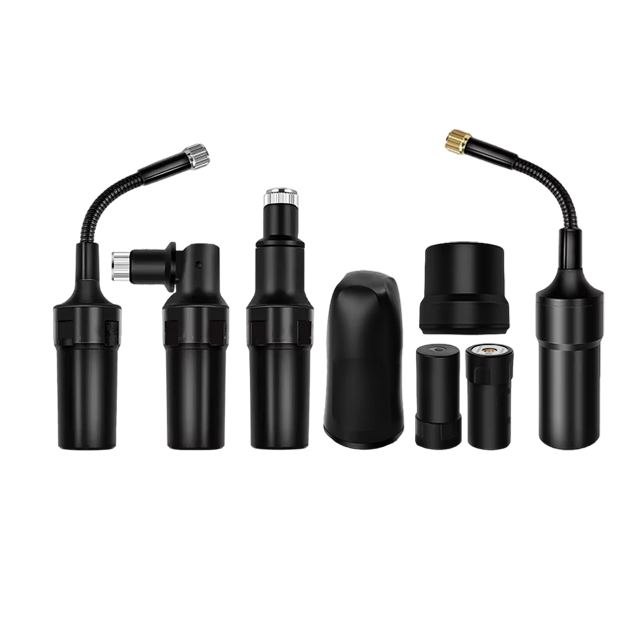
Four arm helical GNSS antenna (also known as quadrifilar helical GNSS antenna) is the gold-standard RF component for high-precision satellite positioning, navigation, and timing (PNT) applications across commercial, industrial, and aerospace sectors. Engineered with four symmetric helical radiation arms, this specialized antenna delivers superior circular polarization, wide-angle signal coverage, stable phase center performance, and robust anti-interference capabilities compared to traditional patch antennas, single-helix antennas, and whip antennas. As global demand for centimeter-level RTK positioning, drone navigation, autonomous robotics, and smart mobility surges, the four arm helical GNSS antenna has become the preferred choice for professional GNSS receiver systems worldwide.
In this comprehensive SEO guide, we explore everything about four arm helical GNSS antennas, including their working principle, core technical features, key specifications, industry applications, advantages over alternative antennas, installation tips, and selection criteria. Whether you are a system integrator, drone manufacturer, surveying engineer, or IoT developer, this article will help you understand why high-quality four arm helical GNSS antennas are essential for reliable GNSS signal reception in complex environments.
1. What Is a Four Arm Helical GNSS Antenna?
A four arm helical GNSS antenna is a compact, multi-band, right-hand circularly polarized (RHCP) antenna designed exclusively for Global Navigation Satellite System (GNSS) signal reception. Unlike single-arm or dual-arm helical antennas, it features four evenly spaced helical radiation elements arranged in a symmetrical cylindrical structure, fed with precise 90-degree phase quadrature signals to achieve uniform circular polarization performance.
This antenna type is purpose-built to capture signals from all major global satellite constellations, including GPS (L1/L2/L5), GLONASS (G1/G2), Galileo (E1/E5a/E5b), and BeiDou (B1/B2/B3). It supports both standard positioning service (SPS) and high-precision real-time kinematic (RTK) positioning, making it a versatile solution for low-precision navigation and centimeter-level surveying applications.
One defining characteristic of the four arm helical GNSS antenna is its ground-plane-independent design. Traditional GNSS patch antennas require a large, flat metallic ground plane to ensure stable signal radiation and reception, which limits their installation flexibility on small, lightweight devices such as UAVs and portable survey instruments. In contrast, four arm helical antennas operate efficiently without a dedicated ground plane, enabling ultra-compact, lightweight integration for mobile and airborne positioning systems.
2. Core Working Principle of Quadrifilar Helical GNSS Antennas
The exceptional performance of the four arm helical GNSS antenna stems from its unique structural design and electromagnetic working mechanism. The four helical arms are identical in length, pitch, and diameter, and are symmetrically distributed around a central dielectric support column. Through a precision phase-shift feeding network, each arm receives electromagnetic signals with a 90-degree phase difference in sequence, forming a stable right-hand circular polarization (RHCP) radiation field.
GNSS satellite signals are inherently transmitted in RHCP mode. The four arm helical structure perfectly matches this polarization characteristic, effectively suppressing left-hand circularly polarized (LHCP) multipath signals reflected from the ground, buildings, and vegetation. This anti-multipath interference capability is far stronger than linear polarized antennas and ordinary patch antennas, drastically improving positioning accuracy in complex urban and suburban environments.
Additionally, the symmetrical four-arm layout achieves an ultra-stable phase center. The phase center refers to the virtual signal reception center of the antenna. For high-precision RTK positioning, tiny phase center offset and variation will cause significant positioning errors. The four arm helical design minimizes phase center fluctuation under different signal incident angles and antenna tilt angles, ensuring consistent positioning data even when the carrier (UAV, robot, vehicle) is shaking or tilting during operation.
Modern four arm helical GNSS antennas adopt optimized dielectric materials and impedance matching circuits, achieving a fractional bandwidth of 5% to 20% with a VSWR value lower than 2:1 and an axial ratio less than 3dB. This wide bandwidth design ensures stable reception of all mainstream GNSS frequency bands without signal attenuation or distortion.
3. Key Technical Features of High-Performance Four Arm Helical GNSS Antennas
Professional-grade four arm helical GNSS antennas integrate multiple optimized technical features that distinguish them from ordinary GNSS antennas. These features directly determine positioning stability, accuracy, and environmental adaptability, making them ideal for industrial and professional applications.
3.1 Full-Band GNSS Constellation Compatibility
Premium four arm helical GNSS antennas support all global GNSS satellite systems and full frequency bands, covering GPS L1/L2/L5, BeiDou B1/B2/B3, Galileo E1/E5a/E5b, and GLONASS G1/G2. Full-band coverage enables the antenna to receive more satellite signals simultaneously, effectively solving the problem of insufficient satellite signals in blocked environments such as urban canyons, mountainous areas, and dense forests. More valid satellite observation data directly improves positioning fix rate and reduces positioning failure probability.
3.2 Excellent Low-Elevation Signal Reception
Most ordinary GNSS antennas only perform well for high-elevation satellite signals and suffer from severe signal attenuation for low-elevation satellites close to the horizon. However, low-elevation satellites are critical for improving positioning continuity in complex terrain. The four arm helical structure features a wide beamwidth and superior low-angle gain, stably capturing weak low-elevation GNSS signals. This feature ensures continuous positioning when drones fly at low altitudes, vehicles travel in mountainous areas, or surveying work is conducted in valley environments.
3.3 Ultra-Stable Phase Center & High Positioning Accuracy
Phase center stability is the core indicator of RTK-level GNSS antennas. Four arm helical GNSS antennas achieve near-zero phase center variation through symmetrical structural design and precision manufacturing. The phase center offset is controlled within millimeter level, supporting centimeter-level RTK dynamic and static positioning. Compared with patch antennas that have obvious phase center drift with angle changes, this antenna maintains consistent positioning accuracy in all attitude states.
3.4 Strong Anti-Multipath & Anti-Interference Performance
By virtue of pure RHCP polarization characteristics, the four arm helical GNSS antenna effectively filters out multipath signals reflected by buildings, ground, and water surfaces. It also integrates built-in low-noise amplifiers (LNA) and band-pass filters in active antenna models, which suppress out-of-band electromagnetic interference from 4G/5G communication, Bluetooth, and industrial equipment. This anti-interference design ensures stable signal output in complex electromagnetic environments such as urban business districts, industrial parks, and smart transportation scenarios.
3.5 Lightweight & Ground-Plane-Independent Design
Most four arm helical GNSS antennas adopt miniaturized and lightweight design, with a total weight of only a few grams to tens of grams, which will not cause load pressure on UAVs, portable surveying instruments, and mobile robots. More importantly, the ground-plane-independent structure eliminates the need for additional metal grounding plates, greatly reducing installation space and structural design difficulty for terminal equipment.
3.6 Industrial-Grade Environmental Adaptability
Professional four arm helical GNSS antennas are equipped with IP67 or IP68 waterproof and dustproof housings, supporting wide temperature operation from -40℃ to +85℃. They can resist rain, snow, frost, sand dust, and ultraviolet radiation, adapting to outdoor long-term unattended operation scenarios such as field surveying, drone aerial survey, and outdoor intelligent monitoring.
4. Standard Technical Specifications of Four Arm Helical GNSS Antenna
The following are universal standard parameters of mainstream industrial-grade four arm helical GNSS antennas, covering electrical, mechanical, and environmental indicators, providing reliable reference for product selection and system design.
Polarization Mode: Right-Hand Circular Polarization (RHCP), consistent with GNSS satellite signal polarization
Frequency Coverage: 1559MHz–1606MHz (L1/B1/E1), 1164MHz–1278MHz (L2/L5/B2/B3/E5), full-band GNSS coverage
Antenna Gain: ≥2.0dBi (low elevation), 3.0–5.0dBi (broadside), ensuring stable weak signal reception
VSWR: ≤1.8:1 (full frequency band), excellent impedance matching, low signal loss
Axial Ratio: ≤3dB (0°–90° radiation angle), pure circular polarization, strong anti-multipath ability
Phase Center Variation: ≤±1mm, millimeter-level stability for RTK high-precision positioning
Input Impedance: 50Ω, compatible with standard GNSS receiver RF interfaces
Working Voltage: 3.3V–5V DC (active antenna)
Connector Type: Standard SMA-J, IPEX, U.FL optional, convenient for diverse installation
Protection Grade: IP67 waterproof, dustproof, weather-resistant
Working Temperature: -40℃ ~ +85℃, storage temperature: -50℃ ~ +90℃
Weight: 5g–30g (miniature model), 30g–80g (industrial enhanced model)
5. Four Arm Helical GNSS Antenna vs. Traditional GNSS Antennas
To better understand the advantages of four arm helical GNSS antennas, we compare them with the two most commonly used traditional GNSS antennas: patch antennas and single-arm helical antennas.
5.1 VS GNSS Patch Antenna
Patch antennas are the most common low-cost GNSS antennas, widely used in consumer navigation devices. However, they have obvious shortcomings in high-precision scenarios. Patch antennas rely heavily on large ground planes; without a complete metal ground plane, their gain drops sharply and polarization performance deteriorates severely. Their phase center stability is poor, with large deviation under tilted attitudes, making them unable to meet RTK centimeter-level positioning requirements. In contrast, four arm helical GNSS antennas work normally without a ground plane, have stable phase center in any attitude, and excel in low-elevation signal reception, perfectly adapting to dynamic carrier scenarios such as UAVs and mobile robots.
5.2 VS Single/Dual-Arm Helical Antenna
Single-arm and dual-arm helical antennas improve polarization performance compared with patch antennas, but their structural asymmetry leads to uneven signal radiation and large phase center variation. Their beamwidth is narrow, and low-elevation signal reception capability is weak. The four-arm symmetrical structure of four arm helical GNSS antennas achieves 360° uniform omnidirectional radiation, wider beam coverage, and more stable signal reception in all directions, with comprehensive performance far exceeding single/dual-arm helical antennas.
6. Wide Industry Applications of Four Arm Helical GNSS Antennas
Thanks to its compact size, light weight, high precision, strong stability, and flexible installation, the four arm helical GNSS antenna has been widely adopted in high-precision positioning scenarios across multiple industries, becoming a core component of modern PNT systems.
6.1 UAV Aerial Survey & Industrial Drone Navigation
UAVs are the largest application scenario for four arm helical GNSS antennas. Drones require lightweight antenna equipment to reduce flight load, and need stable positioning signals during high-speed flight, tilting, and rolling. The ground-plane-independent, ultra-lightweight design of four arm helical antennas perfectly matches UAV installation requirements. Its excellent attitude adaptability and low-elevation signal reception ensure continuous and accurate RTK positioning for aerial survey drones, agricultural plant protection drones, inspection drones, and mapping drones, supporting centimeter-level flight control and high-precision aerial mapping.
6.2 Field Surveying & Mapping Equipment
Professional RTK surveyors, GNSS receivers, and mobile mapping systems require millimeter-level phase center stability and high anti-interference performance. Four arm helical GNSS antennas effectively eliminate multipath interference in field environments such as urban roads, mountainous areas, and water conservancy projects, ensuring high-precision static and dynamic positioning data. They are widely used in land surveying, engineering construction, road mapping, water conservancy surveying, and geological exploration.
6.3 Autonomous Robots & Smart Equipment
Outdoor inspection robots, agricultural robots, logistics AGVs, and autonomous lawn mowers rely on GNSS positioning for autonomous navigation. The four arm helical GNSS antenna maintains stable positioning in complex outdoor environments, supports multi-constellation signal fusion positioning, and solves positioning drift and failure problems caused by signal occlusion. Its compact size is easy to integrate into small robot equipment, providing reliable position data for autonomous operation.
6.4 Smart Transportation & Vehicle Positioning
In-vehicle high-precision navigation, autonomous driving vehicles, and vehicle monitoring terminals require all-weather stable GNSS signal reception. Four arm helical GNSS antennas resist electromagnetic interference from vehicle electronic equipment, adapt to vehicle vibration and attitude changes, and provide centimeter-level positioning support for intelligent connected vehicles, fleet management, and automatic driving systems.
6.5 Aerospace & Marine Monitoring
In aviation, aerospace, and marine scenarios, positioning equipment faces severe environmental interference and complex attitude changes. The high stability, wide temperature adaptability, and strong anti-interference performance of four arm helical GNSS antennas ensure reliable signal reception for airborne navigation equipment, ship positioning terminals, and offshore monitoring systems, supporting long-term stable operation of marine and aerospace PNT systems.
6.6 Portable Handheld GNSS Devices
Handheld survey instruments, outdoor navigation terminals, and portable GIS collection devices pursue miniaturization and portability. The ground-plane-free design of four arm helical GNSS antennas greatly reduces equipment volume and weight, while maintaining professional high-precision positioning performance, meeting the portable operation needs of field workers, surveyors, and outdoor explorers.
7. Active vs Passive Four Arm Helical GNSS Antenna
Four arm helical GNSS antennas are divided into active and passive types according to internal structure and working mode, with distinct application scenarios.
7.1 Passive Four Arm Helical GNSS Antenna
Passive antennas have no built-in LNA and filter circuits, featuring simpler structure, lower cost, and smaller size. They are suitable for short-distance signal reception and low-interference environments, commonly used in low-precision navigation devices and cost-sensitive consumer products. However, their signal gain is low, and they are susceptible to environmental interference, unable to meet high-precision RTK positioning requirements.
7.2 Active Four Arm Helical GNSS Antenna
Active four arm helical GNSS antennas integrate high-gain low-noise amplifiers and narrow-band band-pass filters. They amplify weak satellite signals while filtering out out-of-band interference, significantly improving signal-to-noise ratio and reception sensitivity. Even in weak signal environments such as urban occlusions and suburban woodlands, they can stably capture valid GNSS signals. Almost all professional RTK positioning, drone high-precision navigation, and industrial monitoring scenarios adopt active four arm helical GNSS antennas, which are the mainstream high-performance choice in the market.
8. How to Choose the Right Four Arm Helical GNSS Antenna (Selection Guide)
To maximize positioning system performance, users need to select a suitable four arm helical GNSS antenna according to application scenarios and technical requirements. The core selection factors are as follows:
8.1 Confirm Frequency Band & Constellation Support
For ordinary navigation scenarios, single-band (L1/B1) antennas can meet basic needs. For high-precision RTK positioning, multi-band (L1/L2/L5, B1/B2/B3) full-constellation antennas must be selected to support multi-system signal fusion and improve positioning accuracy and fix speed.
8.2 Prioritize Phase Center Stability
Phase center variation is the core index affecting RTK positioning accuracy. For surveying, mapping, and drone high-precision scenarios, select antennas with phase center variation less than ±1mm. For low-precision navigation scenarios, conventional stable phase center models are sufficient.
8.3 Match Gain & Sensitivity Requirements
Outdoor complex environments and mobile dynamic carriers require high-gain active antennas to ensure weak signal reception. Indoor static or open flat environments can choose medium-gain models to balance performance and cost.
8.4 Consider Environmental Protection Grade
Long-term outdoor operation must select IP67/IP68 waterproof and dustproof models with wide temperature resistance. Indoor short-term use can choose ordinary lightweight models without high-level protection.
8.5 Select Appropriate Interface & Size
Miniature devices such as micro-drones and handheld instruments prefer ultra-small U.FL/IPEX interfaces. Industrial fixed equipment and large drones can choose standard SMA interfaces for more stable connection. Meanwhile, select antenna volume and weight according to terminal installation space and load limit.
9. Installation & Maintenance Tips for Four Arm Helical GNSS Antennas
Correct installation and daily maintenance are key to ensuring long-term stable operation of four arm helical GNSS antennas and avoiding positioning errors and signal failures.
Installation Notes: First, install the antenna in an open area with no shelter from buildings, trees, or metal shields to ensure unobstructed satellite signal reception. Second, keep the antenna vertical as much as possible; although it has good tilt adaptability, vertical installation can maximize signal reception efficiency. Third, avoid installation near high-power electromagnetic equipment such as transmitters and motors to reduce interference. Fourth, fix the antenna firmly to prevent signal jitter caused by vibration during equipment operation.
Daily Maintenance: Regularly clean the antenna surface of dust, sediment, and water stains to avoid affecting signal radiation. Check the connector connection status regularly to prevent poor contact caused by loosening or oxidation. For outdoor long-term operation equipment, regularly inspect the shell for aging, cracking, or water ingress. Avoid violent collision and extrusion during use to prevent structural deformation of the helical arm and damage to internal circuits.
10. Common FAQs About Four Arm Helical GNSS Antennas
10.1 Why do four arm helical GNSS antennas not need a ground plane?
The four symmetrical helical arms form a self-balanced radiation structure through 90-degree phase feeding, realizing independent electromagnetic radiation and signal reception. Unlike patch antennas that rely on ground planes to form radiation fields, its working mechanism does not require auxiliary grounding structures, so it can work normally without a metal ground plane.
10.2 What is the difference between RHCP and LHCP GNSS antennas?
All GNSS satellite signals adopt right-hand circular polarization (RHCP). RHCP antennas can match satellite signals perfectly and receive signals efficiently. LHCP antennas can hardly capture GNSS signals, so all professional four arm helical GNSS antennas adopt RHCP polarization mode.
10.3 Can four arm helical GNSS antennas achieve centimeter-level positioning?
Yes. High-quality active four arm helical GNSS antennas have ultra-stable phase center, full-band signal coverage, and strong anti-multipath performance. When matched with RTK GNSS receivers, they can realize centimeter-level static and dynamic positioning, meeting professional surveying, mapping, and high-precision navigation needs.
10.4 Are four arm helical antennas suitable for all drones?
Basically yes. Miniature lightweight models are suitable for micro consumer drones, while industrial enhanced models are suitable for large industrial drones, surveying drones, and agricultural drones. Users only need to select the corresponding size, weight, and gain model according to drone load and positioning accuracy requirements.
The four arm helical GNSS antenna is a revolutionary high-precision positioning antenna solution that solves the pain points of traditional GNSS antennas such as ground plane dependence, poor attitude adaptability, unstable phase center, and weak anti-interference ability. With its full-constellation signal compatibility, excellent low-elevation reception, millimeter-level phase center stability, lightweight compact structure, and industrial-grade environmental adaptability, it has become the core hardware foundation of modern high-precision GNSS positioning systems.
From drone aerial survey and field mapping to autonomous robot navigation and smart vehicle positioning, four arm helical GNSS antennas provide reliable, accurate, and continuous satellite signal support for various professional scenarios. With the continuous development of high-precision positioning, autonomous driving, and smart IoT industries, four arm helical GNSS antennas will usher in wider application prospects and become an indispensable key component of global PNT infrastructure.
Lucy Yang | lucy.y@toxutech.com
Dotty Zhao | sales04@toxutech.com
Global Business Director / Sales Team / Global Operations


 En
En Cn
Cn Korean
 Home >