

-
Products -PCBA Manufacturing RF Connectors RF Cable Assemblys Embedded Antennas External Antennas GNSS Positioning Solutions
RF Connectors

RF Cable Assemblys
Embedded Antennas
External Antennas
GNSS Positioning Solutions































 Language


Language


Time:2026-10-15 Views:0
Flexible MHF4 to SMA cables are essential highperformance RF coaxial jumper wires widely used in modern wireless communication, IoT devices, industrial electronics, and embedded system integration. As a critical bridge between miniature boardlevel MHF4 (IPEX 4) connectors and standard SMA antenna ports, these flexible cables solve the core pain points of space limitation, signal attenuation, and rigid installation constraints in compact electronic equipment. This comprehensive guide covers everything you need to know about flexible MHF4 to SMA cables, including core specifications, key benefits, application scenarios, selection criteria, installation tips, and frequently asked questions, helping you select the best RF cable for your project while optimizing wireless signal stability and equipment compatibility.
1. What Is a Flexible MHF4 to SMA Cable?
A flexible MHF4 to SMA cable is a 50ohm impedance coaxial pigtail cable designed to convert ultracompact MHF4 (IPEX Generation 4) board connectors to standard SMA external antenna connectors. Unlike rigid RF cables that are prone to breakage and difficult to route in tight spaces, this cable features a highly flexible outer jacket and ultrathin coaxial core, supporting arbitrary bending, twisting, and folding without damaging internal signal transmission structures.
The MHF4 connector, also known as IPEX 4, is the fourthgeneration miniature RF connector developed by IPEX, featuring an ultralow profile of only 1.2mm when mated. It is exclusively compatible with ultrathin coaxial wires such as 0.81mm and 1.13mm specifications, and cannot be matched with conventional RG178 or LMR100 cables. On the opposite end, the standard SMA connector (including SMA male, SMA female, and RPSMA variants) is a universal threaded RF interface, widely adopted in routers, wireless modules, industrial antennas, and RF test equipment.
The core design purpose of flexible MHF4 to SMA cables is to realize seamless signal transmission between embedded miniature wireless modules and external highgain antennas, solving the problem that builtin module antennas have insufficient signal coverage and cannot meet longdistance wireless communication requirements. Its flexible structure adapts to complex equipment internal wiring, making it the preferred RF connecting wire for miniaturized electronic devices.
2. Core Technical Specifications of Flexible MHF4 to SMA Cable
Professionalgrade flexible MHF4 to SMA cables have strict standardized parameters that directly determine signal transmission quality, service life, and application compatibility. Below are the key technical specifications of mainstream highquality products in the market, which are critical for Google SEO search matching and professional product selection:
2.1 Impedance & Frequency Range
All standard flexible MHF4 to SMA cables adopt 50Ω characteristic impedance, which matches the impedance of most wireless communication devices, WiFi modules, LTE/5G cellular modules, and GNSS positioning equipment. The uniform impedance design eliminates impedance mismatchinduced signal reflection and standing wave interference, ensuring efficient signal transmission.
In terms of frequency response, highperformance models support a wide frequency range from DC to 6GHz, fully covering mainstream wireless frequency bands including 2.4GHz WiFi, 5GHz dualband WiFi, 4G LTE, 5G sub6GHz, Bluetooth, and Zigbee. Some industrialgrade enhanced versions can even support up to 8GHz frequency bands, meeting the highfrequency transmission needs of professional RF test and highprecision communication equipment.
2.2 Cable Wire Specifications & Flexibility Performance
Flexible MHF4 to SMA cables are mainly divided into two mainstream wire gauge specifications: 0.81mm ultrathin coaxial cable and 1.13mm thin coaxial cable. The 0.81mm model features ultrasmall outer diameter, superior flexibility, and minimal bending radius, suitable for ultracompact equipment such as M.2 wireless modules, mini PCIe cards, and wearable IoT devices with extremely limited internal space. The 1.13mm model has slightly thicker wire core, lower signal loss, and stronger tensile resistance, balancing flexibility and transmission performance, ideal for conventional industrial embedded equipment and wireless routing devices.
Different from ordinary rigid RF cables, qualified flexible MHF4 to SMA cables use highelasticity TPE or PVC flexible outer jackets and multistrand braided copper shielding layers. The minimum bending radius can reach 3mm, supporting repeated bending for more than 1000 times without core breakage or shielding layer damage. This excellent flexibility allows wiring along equipment gaps, corner bending, and hidden installation, greatly improving the flexibility of equipment structural design.
2.3 Connector Structure & Craftsmanship
The MHF4 terminal adopts a solderless crimping integrated molding process, with precise pin alignment and firm connection, effectively avoiding poor contact and signal interruption caused by loose interfaces during equipment vibration. The ultrasmall size of the MHF4 connector does not occupy extra board space, perfectly adapting to highly integrated circuit boards.
The SMA terminal has two mainstream structures: straight head and rightangle elbow. The threaded locking structure of the standard SMA connector ensures stable docking with external antennas, preventing interface loosening caused by vibration or pulling. Highquality products use brass goldplated contacts, which have excellent conductivity, oxidation resistance, and corrosion resistance, ensuring longterm stable signal transmission in complex industrial environments.
2.4 Signal Transmission Performance (VSWR & Insertion Loss)
Signal stability is the core indicator of flexible MHF4 to SMA cables. Premium products feature ultralow VSWR (Voltage Standing Wave Ratio) ≤ 1.2:1 within the full frequency band, and extremely low insertion loss. The ultralow standing wave ratio ensures no signal reflection loss during transmission, while low insertion loss guarantees maximum signal output power from the wireless module to the external antenna.
Compared with ordinary adapter wires, highflexibility MHF4 to SMA cables maintain stable lowloss transmission after repeated bending, without significant attenuation of signal quality, which is crucial for longterm stable operation of wireless communication systems.
3. Key Advantages of Flexible MHF4 to SMA Cables
Flexible MHF4 to SMA cables have become the mainstream choice for miniature RF connection solutions, thanks to their unique structural design and performance advantages, which solve many pain points of traditional RF cables in embedded device applications:
3.1 Excellent Flexibility & Space Adaptability
Traditional RF cables such as RG174 and RG178 are relatively rigid, difficult to bend, and prone to core breakage after repeated bending, which cannot adapt to the narrow internal space of modern miniaturized electronic equipment. Flexible MHF4 to SMA cables are customized for compact equipment, with ultrathin wire body and super elastic structure, which can be bent, folded, and routed at will. It can adapt to complex internal structures of routers, industrial control hosts, IoT sensors, and vehiclemounted equipment, realizing hidden and standardized wiring without occupying equipment installation space.
3.2 Stable Signal Transmission & Low Interference
The cable adopts a doublelayer shielding structure of braided copper mesh and aluminum foil, which can effectively isolate external electromagnetic interference (EMI) and radio frequency interference (RFI). In complex industrial environments with dense electronic equipment, it can ensure pure signal transmission and avoid wireless network delay, packet loss, and signal distortion caused by external interference. The 50Ω precise impedance matching design eliminates internal signal reflection, ensuring highefficiency transmission of WiFi, cellular, and positioning signals.
3.3 High Compatibility & Wide Applicability
The MHF4 interface is compatible with all mainstream M.2 wireless modules, including Intel AX200, AX210, 8265, 9560 WiFi modules, 4G/5G LTE cellular modules, and GNSS GPS/Beidou positioning modules. The SMA interface is universally compatible with all standard external antennas, including omnidirectional rubber antennas, highgain directional antennas, vehiclemounted antennas, and industrial waterproof antennas. This high compatibility makes the cable a universal RF adapter for most miniature wireless devices.
3.4 Durable & Long Service Life
Highquality flexible MHF4 to SMA cables use wearresistant, antiaging outer jacket materials, which can resist daily friction, high and low temperature aging, and environmental humidity corrosion. The goldplated connector contacts have strong oxidation resistance, avoiding poor contact caused by longterm use and oxidation. The integrated crimping process ensures that the connector and the cable body do not fall off after longterm vibration and pulling, with a service life far exceeding ordinary adapter cables.
3.5 Lightweight & Easy Installation
The ultrathin cable body is lightweight and will not increase the overall load of miniaturized equipment. The plugandplay design requires no professional welding or wiring operation. Users can complete the connection between the wireless module and the external antenna in seconds, which greatly reduces the difficulty of equipment assembly and later maintenance.
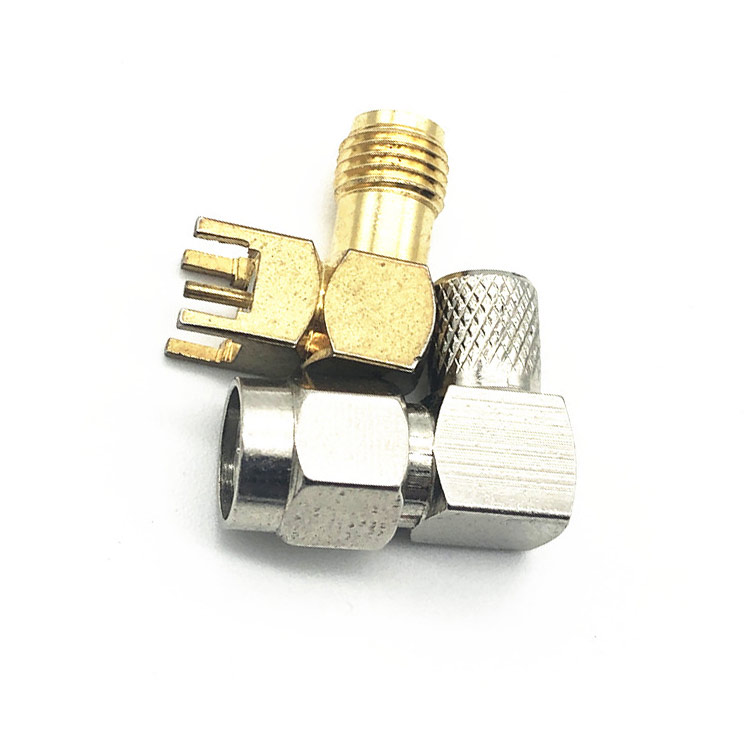
4. Main Application Scenarios of Flexible MHF4 to SMA Cables
With the rapid development of miniaturization and wireless intelligence of electronic equipment, flexible MHF4 to SMA cables are widely used in civil, commercial, industrial, and vehiclemounted fields, covering almost all miniature wireless communication devices. The main application scenarios are as follows:
4.1 Computer Wireless Hardware Upgrading
It is the most common application scenario of MHF4 to SMA flexible cables. Most desktop motherboards and mini hosts are equipped with M.2 WiFi module slots, and the builtin small antennas have weak signal reception and limited coverage. Users can use flexible MHF4 to SMA cables to extend the module antenna interface to the chassis exterior, connect highgain external WiFi antennas, effectively improving WiFi signal strength, expanding wireless coverage, and solving problems such as desktop network instability and weak 5G WiFi signal.
In addition, it is also suitable for mini PCIe wireless network card transformation of industrial control computers and notebook computers, realizing external antenna expansion and improving the antiinterference ability of notebook wireless signals.
4.2 IoT & Smart Embedded Devices
A large number of miniature IoT devices such as smart sensors, smart home controllers, wireless gateways, and Bluetooth communication modules adopt MHF4 interface builtin modules. These devices have small internal space and high requirements for cable flexibility. Flexible MHF4 to SMA cables can realize external antenna extension, improving the wireless transmission distance and stability of IoT devices, ensuring stable data transmission of smart monitoring, environmental sensing, and smart home systems.
4.3 Industrial Wireless Communication Equipment
Industrial routers, industrial wireless APs, 4G/5G industrial DTUs, and wireless data transmission terminals all use MHF4 interface communication modules. Industrial equipment is usually installed in complex environments such as outdoors, workshops, and equipment cabinets, with serious electromagnetic interference. Flexible MHF4 to SMA shielded cables can resist industrial electromagnetic interference, support longterm stable operation of equipment, and adapt to complex wiring environments inside industrial equipment through flexible bending performance.
4.4 VehicleMounted Wireless Systems
Vehiclemounted GPS positioning modules, vehiclemounted WiFi modules, and car IoT communication modules mostly adopt MHF4 miniature interfaces. The vehicle internal space is narrow and the equipment is prone to vibration during driving. The high flexibility and antivibration performance of MHF4 to SMA flexible cables can adapt to vehicle complex wiring, avoid signal interruption caused by vibration, and ensure stable operation of vehicle positioning, network connection, and intelligent communication systems.
4.5 RF Test & Experimental Equipment
In electronic engineering experiments, RF signal testing, and product debugging, flexible MHF4 to SMA cables are used as test jumper wires to connect miniature wireless modules with signal analyzers, spectrum analyzers, and test antennas. Its low loss and high stability performance ensure the accuracy of test data, and the flexible structure is convenient for multiangle debugging and testing.
5. MHF4 vs U.FL vs MHF1: Key Interface Differences (Selection Guide)
Many users easily confuse MHF4, U.FL, and MHF1 interfaces when purchasing RF cables, resulting in incompatible purchases. It is necessary to clarify the differences between mainstream miniature RF interfaces to accurately select flexible MHF4 to SMA cables:
First of all, MHF4 (IPEX 4) is the fourthgeneration miniature RF connector with the smallest size, a mating height of only 1.2mm, suitable for 0.81mm/1.13mm ultrathin cables, and widely used in newgeneration M.2 WiFi 6/6E/7 modules, 5G modules, and highprecision IoT devices.
U.FL/MHF1 is the firstgeneration miniature connector with a higher mating height and larger volume, compatible with slightly thicker cables, mostly used in oldgeneration WiFi modules and early IoT equipment. It is not interchangeable with MHF4 interfaces, and cables cannot be通用兼容.
In addition, it is necessary to distinguish SMA and RPSMA interfaces: standard SMA male pins correspond to female holes, while RPSMA is a reverse polarity interface with opposite pin positions. Most wireless modules use standard SMA interfaces, while some routing devices use RPSMA. Users need to confirm the interface type before purchasing flexible MHF4 to SMA cables to ensure perfect compatibility.
6. How to Choose the Right Flexible MHF4 to SMA Cable?
To purchase costeffective and highperformance flexible MHF4 to SMA cables, you need to select according to equipment parameters, usage environment, and wiring requirements. The core selection factors are as follows:
6.1 Confirm Interface Compatibility
First, confirm whether the device wireless module interface is MHF4 (not U.FL/MHF1), and clarify whether the required SMA end is male or female, straight or rightangle. For equipment with limited wiring space at the antenna port, it is recommended to choose a rightangle elbow SMA cable to avoid interface extrusion and damage.
6.2 Select Appropriate Cable Length
Common lengths of flexible MHF4 to SMA cables include 5cm, 10cm, 15cm, 20cm, 30cm, etc. It is not recommended to pursue excessive length blindly, because the longer the coaxial cable, the higher the signal insertion loss. For shortdistance wiring inside equipment, 515cm is preferred; for external antenna extension of chassis and industrial equipment, 2030cm is suitable, which balances wiring convenience and signal transmission efficiency.
6.3 Match Cable Wire Specification
0.81mm ultrathin cables are suitable for ultracompact equipment with extremely narrow internal space and strict size requirements; 1.13mm cables have lower signal loss and stronger durability, suitable for conventional industrial, vehiclemounted, and longterm working equipment. For highfrequency 5G and WiFi 6E/7 equipment, priority should be given to 1.13mm lowloss flexible cables to ensure highfrequency signal stability.
6.4 Focus on Environmental Adaptability
For indoor ordinary use, conventional PVC outer jacket cables can meet the demand; for outdoor, industrial workshop, and vehiclemounted scenarios with high temperature, low temperature, humidity, and friction, it is recommended to choose TPE highelastic wearresistant outer jacket cables with antiaging and environmental resistance functions to extend service life.
7. Installation & Wiring Precautions
Although the flexible MHF4 to SMA cable is easy to install, standardized operation can effectively avoid signal attenuation and cable damage, ensuring longterm stable equipment operation:
1. Standard Bending Operation: Although the cable has good flexibility, avoid sharp bending with a radius less than 3mm to prevent internal coaxial core breakage and shielding layer fracture, which will cause signal leakage and attenuation.
2. Secure Interface Connection: The MHF4 end needs to be lightly pressed and snapped into the module interface to ensure full contact; the SMA end needs to be tightened by threading to avoid loosening. Do not pull the cable violently during installation to prevent interface falling off.
3. Reasonable Wiring Layout: Keep the cable away from highpower power lines, transformer modules, and heatgenerating components inside the equipment to avoid electromagnetic interference and hightemperature aging of the cable body.
4. Avoid Excessive Tension: Reserve a proper margin during wiring, do not stretch the cable tightly, and prevent core damage caused by longterm tension.
8. Frequently Asked Questions (FAQs) About Flexible MHF4 to SMA Cable
Q1: Is MHF4 the same as U.FL interface?
No, they are completely different interfaces and not interchangeable. MHF4 (IPEX 4) is the fourthgeneration ultraminiature interface with a smaller size and lower profile, suitable for newgeneration highspeed wireless modules; U.FL/MHF1 is the firstgeneration interface with a larger volume. Cables for the two interfaces cannot be confirmed the interface model before purchase.
Q2: Will flexible bending affect the signal performance of MHF4 to SMA cables?
Highquality professional flexible MHF4 to SMA cables are specially optimized for bending performance. Within the standard bending radius, repeated bending will not cause obvious signal attenuation and VSWR change. Only sharp bending and excessive stretching will damage the internal structure and affect signal transmission.
Q3: Can MHF4 to SMA cables support 5G and WiFi 6E/7 signals?
Yes. Highperformance flexible MHF4 to SMA cables support a frequency band up to 6GHz or even 8GHz, fully covering 5G sub6GHz frequency bands and WiFi 6E/7 ultrahigh frequency bands, which can meet the highspeed transmission requirements of newgeneration wireless networks.
Q4: What is the difference between straight and rightangle SMA connectors?
Straight SMA connectors are suitable for open and straight wiring scenarios; rightangle elbow connectors are suitable for narrow space and corner wiring, which can avoid interface collision and extrusion, and are more suitable for equipment internal hidden wiring.
Q5: Why is my MHF4 to SMA cable causing weak signal and network packet loss?
The main reasons include incorrect interface docking, excessive cable length leading to large loss, sharp bending damage to the cable core, unqualified cable shielding performance leading to electromagnetic interference, and interface oxidation causing poor contact. It is recommended to recheck the installation status and replace highquality lowloss shielded cables.
Flexible MHF4 to SMA cables are indispensable core accessories for modern miniature wireless communication equipment. With their excellent flexibility, stable lowloss signal transmission, wide compatibility, and high durability, they solve the wiring and signal expansion problems of embedded wireless modules in compact equipment. Whether it is computer wireless hardware upgrading, IoT smart device development, industrial wireless equipment deployment, or vehiclemounted communication system construction, highquality flexible MHF4 to SMA cables can provide reliable RF connection solutions.
When selecting products, users should comprehensively consider interface compatibility, cable specification, length, and usage environment, avoid inferior cables with large signal loss and poor durability, and ensure the longterm stable operation of wireless communication systems. Standardized installation and wiring can further maximize the performance advantages of flexible MHF4 to SMA cables, bringing stronger and more stable wireless signal coverage for various electronic devices.
Lucy Yang | lucy.y@toxutech.com
Dotty Zhao | sales04@toxutech.com
Global Business Director / Sales Team / Global Operations


 En
En Cn
Cn Korean
 Home >