

-
Products -PCBA Manufacturing RF Connectors RF Cable Assemblys Embedded Antennas External Antennas GNSS Positioning Solutions
RF Connectors

RF Cable Assemblys
Embedded Antennas
External Antennas
GNSS Positioning Solutions































 Language


Language


Time:2026-10-16 Views:0
The FAKRA Z code connector is one of the most versatile and widely used RF coaxial connectors in modern automotive, industrial, and consumer electronics systems. As a universal keyed variant of the standard FAKRA connector series, the Z code variant stands out for its unmatched compatibility, reliable high-frequency performance, and robust mechanical durability. Whether you are working on automotive infotainment systems, ADAS sensors, GPS antenna installations, or prototype testing projects, understanding the technical specifications, unique features, and practical applications of the FAKRA Z code connector is critical for optimal system design and signal transmission stability.
In this comprehensive Google SEO-optimized guide, we dive deep into every aspect of the FAKRA Z code connector, including its core definition, technical parameters, structural design, key advantages, industry applications, installation guidelines, comparison with other FAKRA code types, and frequently asked questions. This article is designed to provide engineers, procurement specialists, system integrators, and electronics enthusiasts with authoritative, actionable information about FAKRA Z connectors for commercial and industrial use.
1. What Is a FAKRA Z Code Connector?
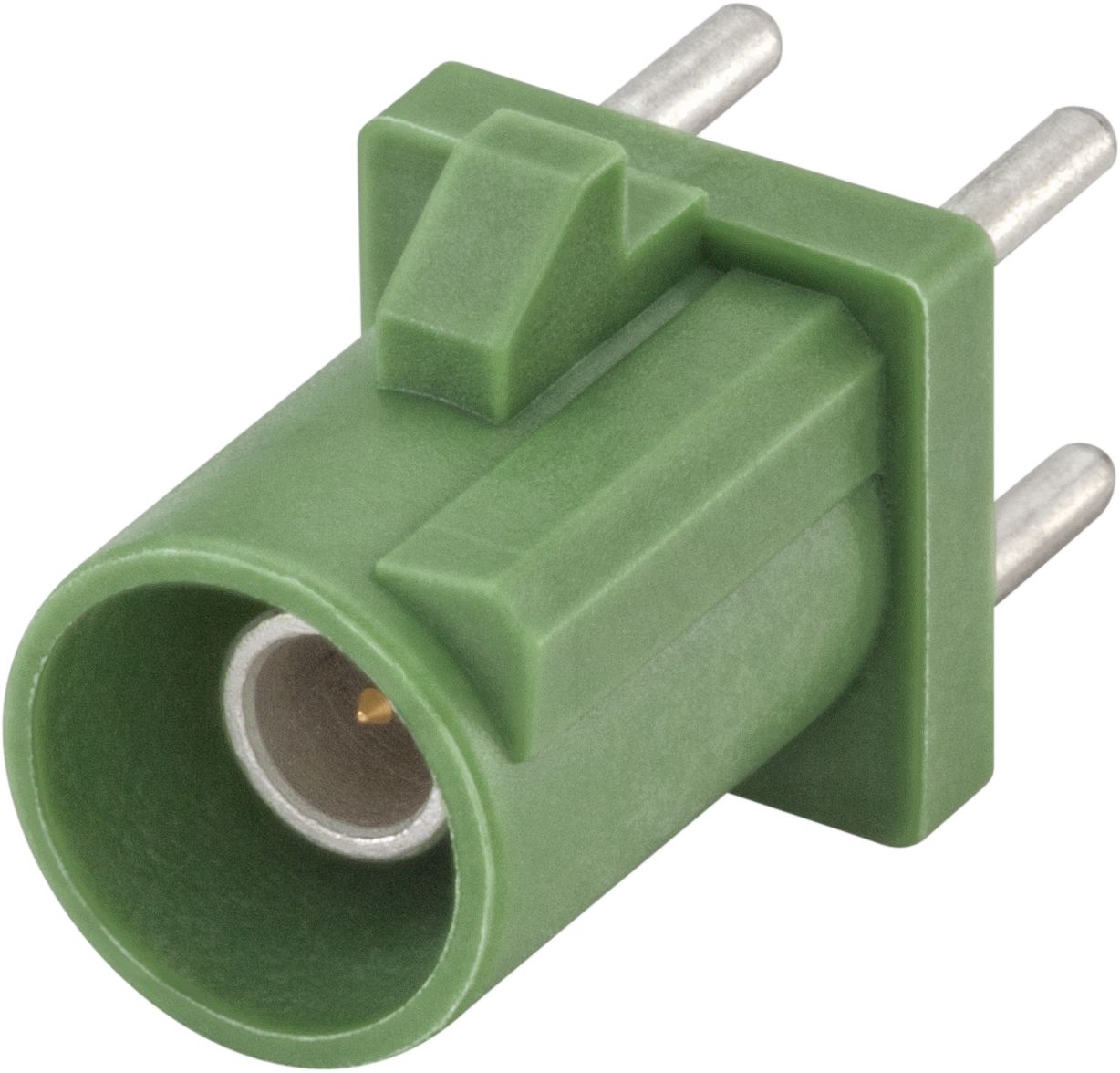
A FAKRA Z code connector is a 50-ohm impedance RF coaxial connector compliant with international ISO 20860-1 and SAE/USCAR-18 automotive industry standards. Unlike other coded FAKRA connectors (A, B, C, D, E codes) that feature dedicated mechanical keying for exclusive mating, the Z code is defined as the universal neutral keying variant in the FAKRA product lineup. It is visually identified by its signature water blue (light blue) plastic housing, making it easily distinguishable from other color-coded FAKRA connectors on the market.
The core design philosophy of the FAKRA Z code connector is universal compatibility. It can mate seamlessly with all other FAKRA coded connectors without mechanical mismatch or signal interference, a feature that makes it irreplaceable in prototype testing, universal antenna connections, and non-specialized RF transmission scenarios. Despite its universal mating capability, the Z code connector retains the classic FAKRA coaxial structure, ensuring stable 50Ω characteristic impedance and high-fidelity RF signal transmission across a wide frequency spectrum.
Common form factors of FAKRA Z code connectors include straight male/female plugs, right-angle male/female terminals, PCB-mount connectors, and cable-assembled connectors compatible with RG174, RG58, and other mainstream coaxial cables. This diverse form factor range enables flexible integration into various electronic devices and wiring systems.
2. Core Technical Specifications of FAKRA Z Code Connector
The superior performance of the FAKRA Z code connector is built on strict industrial-grade technical parameters. All standard Z code connectors undergo rigorous quality testing to meet automotive and industrial environmental tolerance requirements. Below are the authoritative, industry-recognized technical specifications that define its performance boundaries:
2.1 Electrical Specifications
Characteristic Impedance: 50Ω (standard for automotive RF systems, ensures consistent signal matching and minimal reflection loss)
Frequency Range: DC to 6GHz, covering all mainstream automotive wireless frequency bands including GPS, Bluetooth, 4G/5G cellular, Wi-Fi, and ADAS radar signals
VSWR (Voltage Standing Wave Ratio): ≤1.3 for 0–3GHz frequency range; ≤1.5 for 3–6GHz frequency range, guaranteeing low signal reflection and high transmission efficiency
Contact Resistance: ≤5mΩ for both center and outer contacts, ensuring stable electrical conductivity and low power loss
Insulation Resistance: ≥100MΩ, effectively preventing current leakage and signal crosstalk
Withstand Voltage: 1000V RMS at sea level; operating voltage rated at 335V RMS, providing excellent electrical safety margin
Rated Current: Up to 1A, sufficient for low-power RF signal transmission in automotive and consumer electronic devices
2.2 Mechanical Specifications
Mating Cycles: ≥25 standard mating cycles, meeting long-term daily use and maintenance requirements
Insertion Force: ≤25N, enabling easy manual installation without professional tools
Latching Force: ≥100N, ensuring ultra-firm connection and resistance to vibration and loosening
Anti-error Mating Force: ≥40N, avoiding accidental disconnection in complex vibration environments
Structural Design: Integrated locking mechanism, dustproof and anti-loosening structure, standardized coaxial core alignment
2.3 Environmental & Material Specifications
Operating Temperature Range: -40°C to +125°C, adapting to extreme high and low temperature environments in automotive engine compartments, outdoor equipment, and industrial workshops
Housing Material: High-strength engineering plastic (water blue insulation layer), flame-retardant, anti-aging, and corrosion-resistant
Contact Material: High-purity copper with gold-plated surface treatment, optimizing conductivity and oxidation resistance
Environmental Resistance: Vibration resistance, shock resistance, dustproof, and moisture-proof, compliant with automotive USCAR environmental test standards
3. Unique Structural & Functional Features of FAKRA Z Code Connector
The FAKRA Z code connector’s market popularity stems from its unique structural design and functional advantages that distinguish it from other FAKRA code connectors and ordinary RF connectors. Below are its core competitive features:
3.1 Universal Mating Compatibility (Core Advantage)
The most defining feature of the FAKRA Z code connector is its zero-restriction universal mating capability. Unlike A, B, C, D, and E code FAKRA connectors which adopt exclusive keying designs to prevent wrong mating and signal confusion, the Z code has no directional or restrictive mechanical keying. It can pair perfectly with any standard FAKRA male/female connector regardless of the code type. This feature makes it the ideal choice for universal test interfaces, prototype development, and multi-functional antenna connection systems.
3.2 Visual Color Identification
All standard FAKRA Z code connectors adopt a unified water blue (light blue) housing. This standardized color coding allows technicians to quickly identify Z code connectors on dense wiring harnesses, effectively improving installation and maintenance efficiency and reducing human error in wiring assembly.
3.3 High-Frequency Stable Transmission
With a precise 50Ω impedance matching design and optimized coaxial core structure, the FAKRA Z code connector maintains ultra-stable signal transmission in the DC-6GHz full frequency band. It effectively suppresses signal attenuation, crosstalk, and standing wave interference, ensuring high-fidelity transmission of high-speed wireless signals, video signals, and positioning signals. This performance fully meets the technical requirements of modern high-bandwidth automotive electronic systems.
3.4 Industrial-Grade Environmental Adaptability
Engineered for harsh working environments, the FAKRA Z code connector features wide temperature resistance, strong vibration resistance, and excellent anti-aging performance. It can stably operate in extreme scenarios such as high-temperature engine compartments, low-temperature northern outdoor environments, and high-vibration vehicle driving conditions, avoiding signal instability or connector failure caused by environmental changes.
3.5 Tool-Free Easy Installation
The integrated snap-locking structure of the FAKRA Z code connector supports manual plug-and-play installation without additional crimping tools or welding equipment. The moderate insertion force and firm locking structure balance installation convenience and connection reliability, greatly reducing on-site construction time and labor costs for engineering projects.
4. Main Applications of FAKRA Z Code Connector
Thanks to its universal compatibility, stable high-frequency performance, and industrial-grade durability, the FAKRA Z code connector is widely applied in automotive electronics, industrial testing, smart devices, and wireless communication fields. Its mainstream application scenarios are summarized as follows:
4.1 Automotive Electronic Systems (Primary Application)
The automotive industry is the largest application market for FAKRA Z code connectors. It is widely used in passenger vehicles, new energy vehicles, and commercial vehicles for various RF signal connection scenarios:
GPS/Beidou Positioning Antennas: Z code connectors are the mainstream matching connectors for vehicle positioning antennas, providing stable high-frequency signal transmission for precise vehicle positioning
Automotive Infotainment Systems: Used for Bluetooth, Wi-Fi, FM/AM radio, and 4G/5G vehicle network antenna connections, ensuring smooth audio, video, and network signal transmission
ADAS Advanced Driving Assistance Systems: Applied to 360-degree panoramic cameras, reversing cameras, millimeter-wave radars, and other sensor signal interfaces, supporting high-speed LVDS video and radar data transmission
Remote Control & Keyless Entry Systems: Provide stable RF signal connection for vehicle remote start and intelligent keyless entry functions
4.2 Laboratory Prototype & Testing Equipment
Due to its universal mating feature, the FAKRA Z code connector is the preferred universal interface for electronic engineering laboratories and testing institutions. Engineers use Z code connectors for prototype circuit testing, RF signal debugging, and compatibility verification of FAKRA device products. It eliminates the need to replace different coded connectors for multi-model testing, greatly improving R&D and testing efficiency.
4.3 Consumer & Smart Electronic Devices
In consumer electronics, FAKRA Z code connectors are applied to smart navigation devices, vehicle-mounted tablets, wireless communication modules, and portable positioning equipment. Their small size, stable performance, and easy assembly make them suitable for compact electronic product structural design, meeting the miniaturization and high-performance requirements of modern smart devices.
4.4 Industrial Wireless Communication Equipment
Industrial wireless transmission equipment such as industrial routers, IoT communication modules, and outdoor wireless base stations also adopts FAKRA Z code connectors. Their wide temperature resistance and anti-interference performance ensure stable signal transmission in complex industrial environments, supporting industrial IoT data transmission and remote equipment monitoring.
5. FAKRA Z Code vs. Other FAKRA Code Types: Key Differences
Many users confuse FAKRA Z code with other common FAKRA codes (A, B, C, D). The core difference lies in keying design, compatibility, color marking, and application scenarios. A clear comparison helps users select the correct FAKRA connector for their projects:
FAKRA A/B/C/D Code: Feature exclusive mechanical keying design, supporting only one-to-one fixed mating. Each code corresponds to an independent signal channel, effectively preventing signal crosstalk and wrong connection. They are mainly used for mass-produced automotive formal wiring systems with strict signal classification requirements. Each code has a dedicated housing color for distinction.
FAKRA Z Code: No restrictive mechanical keying, universal mating with all FAKRA codes, water blue housing. It is suitable for prototype testing, universal antenna interfaces, and non-critical signal connection scenarios. However, due to its universal mating characteristic, it is not recommended for formal mass-production automotive wiring systems that require strict signal isolation and anti-mismatching.
In short, coded FAKRA connectors (A-D) focus on signal specificity and anti-mismatching for formal production, while the Z code focuses on universality and flexibility for testing and general scenarios.
6. Installation & Wiring Guidelines for FAKRA Z Code Connectors
To ensure the best signal transmission performance and service life of FAKRA Z code connectors, standardized installation and wiring operations are essential. The key installation specifications are as follows:
6.1 Pre-Installation Inspection
Before installation, check the connector housing for cracks, deformation, or dust contamination, and verify that the gold-plated contact pins are intact and free of oxidation or scratches. Confirm the matching coaxial cable model (RG174 is the most commonly used) meets the impedance and frequency requirements to avoid signal mismatch.
6.2 Standard Mating Operation
Align the male and female FAKRA Z code connectors axially, push them steadily until a clear "click" sound is heard, indicating the internal locking mechanism is fully engaged. After mating, gently pull the connector to confirm no loosening, ensuring reliable connection. Avoid oblique insertion or violent plugging to prevent damage to the coaxial core and locking structure.
6.3 Wiring & Layout Requirements
During wiring, avoid excessive bending, stretching, or extrusion of the coaxial cable. Keep FAKRA Z code connector wiring away from high-voltage lines, engine vibration sources, and heat sources to prevent signal interference and high-temperature aging. For vehicle wiring harnesses, fix the cables with cable ties to reduce long-term vibration wear.
6.4 Post-Installation Testing
After installation, use a network analyzer to test VSWR and signal attenuation parameters to ensure the connector works within the standard performance range. For automotive systems, conduct real machine debugging to verify the stability of positioning, network, and video signals.
7. Key Advantages of Choosing FAKRA Z Code Connectors
7.1 Ultra-High Compatibility & Flexibility
As the only universal FAKRA code, it adapts to all FAKRA interface devices, greatly reducing connector model inventory and replacement costs for R&D testing and after-sales maintenance. One Z code connector can meet multiple matching needs, improving project flexibility.
7.2 Excellent High-Frequency Performance
The DC-6GHz full-band stable transmission capability covers all current mainstream automotive and consumer wireless signal frequencies, with low loss and low standing wave characteristics, ensuring high-quality signal transmission and reducing system failure rates caused by signal attenuation.
Custom FAKRA cable assembly is the backbone of modern high-frequency signal transmission systems, widely adopted in automotive electronics, industrial automation, smart mobility, telecommunication, and precision IoT devices. Unlike standard off-the-shelf FAKRA cables, custom FAKRA cable assemblies are engineered, designed, and manufactured to meet unique project specifications, including customized lengths, connector keying codes, impedance parameters, shielding grades, environmental resistance, and mechanical routing requirements. As a critical RF coaxial interconnect component, custom FAKRA cable assemblies deliver stable, low-loss signal transmission, superior vibration resistance, and long-term durability in harsh working conditions, making them the preferred choice for engineers, OEM manufacturers, and system integrators worldwide.
In this comprehensive guide, we will cover everything you need to know about custom FAKRA cable assemblies, including core definitions, key customization options, industry applications, manufacturing standards, quality testing procedures, selection tips, and common FAQs. This content is fully optimized for Google SEO, targeting high-intent keywords such as custom FAKRA cable assembly, custom automotive FAKRA cable, FAKRA coaxial cable customization, and industrial FAKRA cable assembly solutions, helping global buyers and technical professionals find reliable custom FAKRA cable solutions efficiently.
Lucy Yang | lucy.y@toxutech.com
Dotty Zhao | sales04@toxutech.com
Global Business Director / Sales Team / Global Operations


 En
En Cn
Cn Korean
 Home >