

-
Products -PCBA Manufacturing RF Connectors RF Cable Assemblys Embedded Antennas External Antennas GNSS Positioning Solutions
RF Connectors

RF Cable Assemblys
Embedded Antennas
External Antennas
GNSS Positioning Solutions































 Language


Language


Time:2026-10-15 Views:0
Custom antenna hardware production is a specialized manufacturing process tailored to deliver precision RF (Radio Frequency) antenna components for diverse industrial, commercial, and consumer wireless applications. Unlike standard offtheshelf antennas, custom antenna hardware is engineered and fabricated to meet unique frequency requirements, size constraints, environmental conditions, and performance benchmarks, making it indispensable for modern wireless communication systems. From IoT devices and industrial automation equipment to aerospace, telecommunication base stations, and marine navigation systems, highquality custom antenna hardware serves as the core foundation of stable, longrange wireless signal transmission. This comprehensive guide explores every aspect of custom antenna hardware production, including design principles, core manufacturing processes, material selection, quality control, customization capabilities, and industry best practices, helping businesses and engineers understand how premium custom antenna hardware is manufactured to fit specific project needs.
In today’s rapidly evolving wireless technology landscape, generic antenna products often fail to address specialized application challenges such as limited installation space, extreme temperature environments, highinterference industrial scenarios, and multiband signal transmission demands. Custom antenna hardware production bridges this gap by providing fully customized antenna structures, hardware accessories, and performance parameters. Key customized hardware components include antenna radiators, mounting brackets, connector assemblies, grounding kits, protective enclosures, and precision PCB antenna substrates. Professional custom antenna manufacturers integrate RF design simulation, precision mechanical processing, surface treatment, and strict performance testing to produce antenna hardware with high efficiency, low signal loss, and strong environmental adaptability, which is critical for optimizing overall wireless system performance.
1. Core Classification of Custom Antenna Hardware
Custom antenna hardware covers a wide range of product types, classified by structural form, manufacturing process, and application scenario. Understanding these classifications is the basis for targeted custom production and helps clients select the most suitable hardware solution for their projects. The mainstream custom antenna hardware products in the market are divided into the following categories:
1.1 Custom PCB Antenna Hardware
PCB antenna hardware is the most widely used custom antenna type for compact electronic devices, including consumer electronics, IoT sensors, wearable devices, and small industrial control equipment. Custom PCB antenna production focuses on precision circuit board fabrication and impedance optimization. Common types include PIFA (Planar InvertedF Antenna), dipole antennas, loop antennas, and patch antennas. Professional manufacturers adopt 4layer ENIG plating technology and strict ±10% impedance control in production to ensure stable RF performance. Customizable parameters include board size, antenna layout, frequency band (2.4GHz, 5GHz, sub6GHz, etc.), and grounding structure, perfectly adapting to miniaturized device design requirements.
1.2 Custom Structural Metal Antenna Hardware
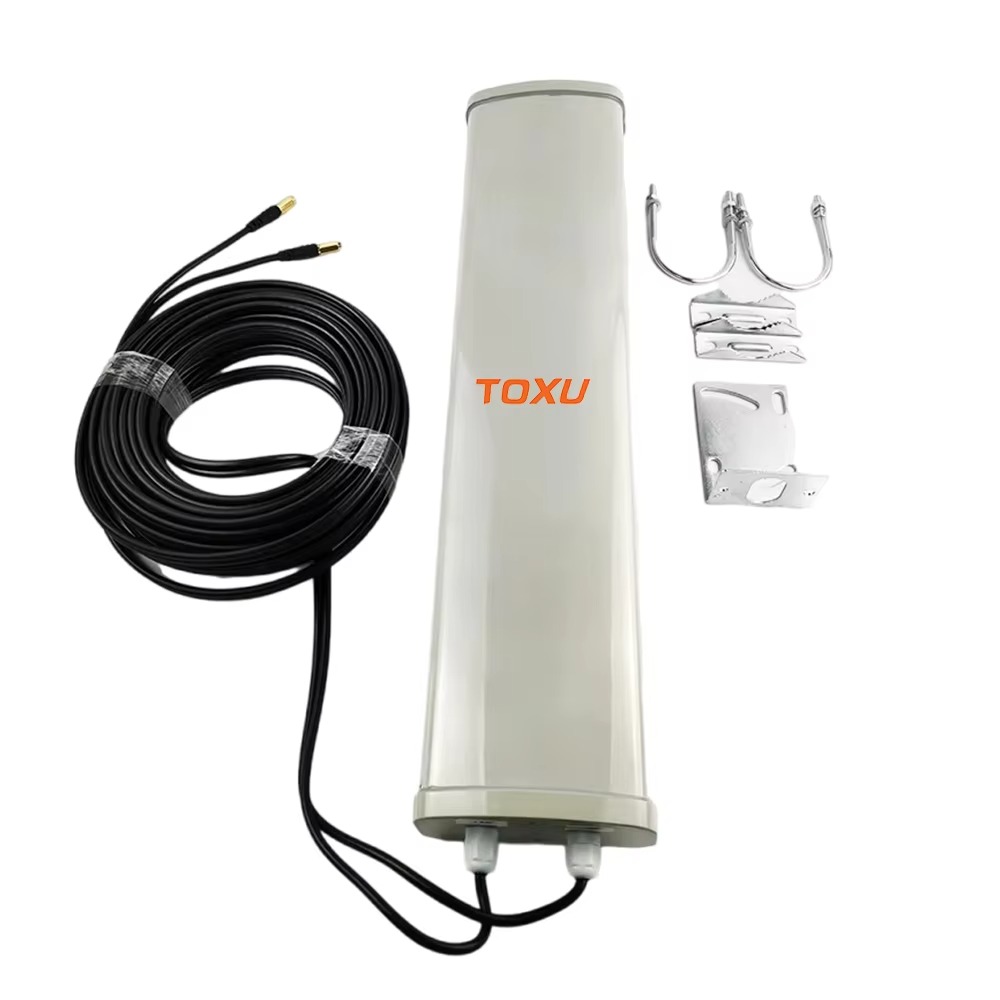
Structural metal antenna hardware is mainly used for highpower, longdistance wireless transmission scenarios such as base station communication, industrial wireless gateway, and outdoor monitoring systems. This type of custom hardware includes metal radiators, antenna booms, support frames, and signal reflection panels. It features high structural stability, strong signal penetration, and high power tolerance. Production processes involve laser cutting, CNC precision machining, bending forming, and welding assembly. Manufacturers can customize the shape, size, metal thickness, and installation structure according to onsite installation and signal coverage requirements.
1.3 Custom Antenna Accessory Hardware
Complete antenna system operation relies on supporting custom hardware accessories, which are essential for antenna installation, fixation, protection, and signal connection. Customizable accessory hardware includes antenna mounting brackets, wallmounted fixtures, pole clamps, waterproof connectors, cable fixing parts, grounding hardware, and anticorrosion protective shells. These customized accessories solve practical application pain points such as unstable outdoor installation, easy corrosion of hardware, inconvenient wiring, and poor waterproof performance, improving the overall durability and stability of the antenna system.
1.4 Custom Specialized Environment Antenna Hardware
For extreme application scenarios such as outdoor high temperature, low temperature, high humidity, salt fog, and strong electromagnetic interference, custom environmentalresistant antenna hardware is required. This series of products undergoes special material selection and surface treatment processes, with customizable waterproof, dustproof, anticorrosion, and antiinterference functions. It is widely used in marine navigation, outdoor base stations, mining equipment, and automotive wireless systems, adapting to harsh working environments that conventional antenna hardware cannot withstand.
2. Key Material Selection for Custom Antenna Hardware Production
Material selection directly determines the electrical performance, structural stability, service life, and production cost of custom antenna hardware. Different antenna types and application scenarios require matching raw materials, and professional manufacturers strictly screen materials based on RF conductivity, mechanical strength, environmental resistance, and processing performance. The mainstream materials used in custom antenna hardware production are as follows:
2.1 Conductive Metal Materials for Antenna Radiators
Conductive materials are the core of antenna signal transmission, requiring high conductivity, low signal loss, and good processing performance. Copper is the most preferred material for highperformance custom antenna radiators due to its excellent electrical conductivity. Pure copper and copper alloy materials are widely used in highprecision PCB antennas and highpower metal antennas, ensuring minimal RF signal attenuation. For costsensitive projects, aluminum alloy is an ideal alternative, with lower material costs and good ductility, suitable for largescale structural antenna hardware. Stainless steel is used for antenna hardware requiring high structural strength and anticorrosion performance, though its conductivity is slightly lower, making it suitable for supporting structures rather than signal radiating parts.
2.2 Insulating and Protective Materials
Insulating materials such as FR4 dielectric boards are the base materials for custom PCB antennas, with stable dielectric constant and excellent insulation performance, ensuring no signal interference and stable impedance characteristics. For protective and structural support parts, highperformance engineering plastics including PETG and nylon are commonly used in prototype production and lightweight antenna accessories. In addition, outdoor antenna hardware adopts highgrade ABS and PC materials with UV resistance and weather resistance, effectively preventing aging and damage caused by longterm exposure to sunlight and rain.
2.3 Surface Treatment Materials and Processes
Surface treatment is a key process to improve the performance and service life of custom antenna hardware. Common treatment processes include electroless nickel plating, gold plating, zinc plating, and anodization. ENIG (Electroless Nickel Immersion Gold) plating is widely used for PCB antenna hardware, providing excellent oxidation resistance and solderability, ensuring longterm stable electrical connection. For outdoor metal antenna hardware, anodization and hotdip galvanizing processes are adopted to enhance anticorrosion and antirust capabilities, adapting to outdoor harsh environments. Conductive plating treatment can also optimize the surface conductivity of metal antennas and reduce signal transmission loss.
3. Full Production Workflow of Custom Antenna Hardware
Professional custom antenna hardware production follows a standardized, rigorous workflow from demand confirmation to finished product delivery, integrating RF design simulation, precision processing, assembly, and performance testing. Each link is strictly controlled to ensure that the final products fully meet customer customization requirements and industry performance standards. The complete production process is divided into the following stages:
3.1 Custom Demand Confirmation and Scheme Design
The first step of custom antenna hardware production is indepth demand communication with customers. Professional engineers confirm core customization parameters including working frequency band, signal gain, impedance value, installation size, application environment, power tolerance, and supporting accessory requirements. For special scenarios, engineers conduct onsite environment investigation and signal interference analysis to formulate targeted customization schemes. After demand confirmation, the team uses professional RF simulation software to simulate antenna radiation patterns, signal efficiency, and impedance matching, optimize structural design drawings, and complete scheme verification and customer confirmation before formal production.
3.2 Prototype Fabrication and Trial Testing
Before mass production, prototype fabrication is essential to verify the feasibility of the custom design scheme. For PCB antenna hardware, manufacturers complete prototype production through precision PCB etching, component soldering, and impedance calibration. For structural metal antennas, laser cutting and smallbatch CNC machining are used to produce prototype parts. During the prototype stage, engineers conduct preliminary performance tests, including return loss testing, standing wave ratio (SWR) detection, and signal gain testing. Common design problems such as unreasonable ground plane size, improper feed trace setting, and metal interference are optimized and corrected in the prototype stage to avoid mass production defects.
3.3 Precision Mass Production Processing
After prototype testing and design optimization, the project enters formal mass production. For custom PCB antenna hardware, the production process includes board cutting, pattern transfer, etching, drilling, ENIG plating, impedance testing, and precision component assembly, with 0402 miniature components handsoldered for highprecision products. For metal antenna hardware, automated laser cutting, CNC precision machining, bending, stamping, and welding processes are adopted to ensure consistent product size and structural accuracy. All production processes follow strict dimensional tolerance standards to ensure the interchangeability and installation compatibility of customized hardware.
3.4 Surface Treatment and AntiCorrosion Processing
All custom antenna hardware products undergo standardized surface treatment according to application requirements. Indoor antenna hardware focuses on oxidation resistance and solderability, adopting nickelgold plating and polishing processes. Outdoor antenna hardware focuses on anticorrosion, UV resistance, and waterproof performance, using anodization, galvanizing, and special weatherresistant coating processes. After surface treatment, the products are cleaned and inspected to remove surface impurities and ensure smooth and flat hardware surfaces, avoiding signal transmission interference caused by surface defects.
3.5 Precision Assembly and Structural Debugging
Custom antenna hardware involving multipart combination needs professional assembly and debugging, including antenna radiator and base assembly, connector wiring, bracket fixation, and waterproof sealing treatment. Professional workers follow standardized assembly processes to ensure firm connection and accurate positioning of each component. For antenna products with highprecision signal requirements, manual finetuning of structural parameters is carried out to optimize impedance matching and ensure the consistency of signal performance of each batch of products.
3.6 Strict Performance Testing and Quality Inspection
Quality testing is the core link to ensure the qualification rate of custom antenna hardware products. Finished products undergo comprehensive performance and structural tests, including RF performance testing (return loss, SWR, gain, radiation pattern, efficiency), dimensional tolerance inspection, structural stability testing, waterproof and dustproof level testing, and anticorrosion aging testing. Highprecision testing equipment such as network analyzers and Xray detectors are used for nondestructive testing of internal structures and electrical performance. Products that fail the test are reworked and optimized, and only fully qualified products can enter the packaging and delivery link.
3.7 Professional Packaging and Custom Delivery
Custom antenna hardware is packaged with anticollision, moistureproof, and antioxidation materials to avoid damage and performance changes during transportation. For customized products with special specifications, independent packaging and labeling are adopted to ensure accurate delivery. Manufacturers support customized packaging and batch delivery schemes according to customer needs, providing complete product inspection reports and technical parameter documents to facilitate customer installation and subsequent use and maintenance.
4. Core Advantages of Professional Custom Antenna Hardware Production
Compared with purchasing standard antenna hardware, customized production has irreplaceable advantages in adapting to personalized project needs, optimizing system performance, and reducing overall application costs. The core advantages of professional custom antenna hardware production are summarized as follows:
4.1 Perfect Adaptation to Personalized Application Scenarios
Standard antenna hardware has fixed specifications and performance parameters, which often cannot adapt to special requirements such as miniaturized equipment installation, irregular installation positions, special frequency band operation, and extreme environmental use. Custom antenna hardware production can adjust product size, structure, performance parameters, and protection functions according to customer onsite conditions, realizing onetoone targeted customization and solving the matching problem of antenna hardware and terminal equipment.
4.2 Optimized RF Performance and Higher System Stability
Professional custom production adopts simulationdriven design and precise parameter calibration, effectively avoiding common problems of standard antennas such as large signal loss, unstable impedance, poor antiinterference ability, and mismatched signal gain. Customized antenna hardware can maximize signal transmission efficiency, reduce dead zones and signal attenuation, and improve the stability and coverage of wireless communication systems, which is particularly important for highprecision industrial communication and longdistance transmission scenarios.
4.3 Durable Structure and Lower LongTerm Maintenance Costs
Custom antenna hardware is customized for the application environment in terms of material selection and surface treatment. Outdoor customized products have excellent waterproof, dustproof, anticorrosion, and UV resistance, with a service life far exceeding standard products. The optimized structural design makes the antenna hardware more stable in installation and operation, reducing equipment failure rates and subsequent maintenance and replacement costs, bringing higher longterm economic benefits to customers.
4.4 Flexible Production and Customized Service Support
Professional custom antenna manufacturers support flexible production modes including prototype customization, smallbatch trial production, and largebatch mass production, meeting the diverse needs of scientific research and development, project trial production, and largescale engineering construction. At the same time, they provide onestop services including design optimization, production processing, performance testing, installation guidance, and aftersales technical support, helping customers save procurement cycles and technical communication costs.
5. Common Application Industries of Custom Antenna Hardware
Custom antenna hardware has a wide range of applications in all fields involving wireless communication, covering civil, industrial, commercial, and military industries. With the rapid development of 5G, IoT, industrial Internet, and smart device technology, the market demand for customized antenna hardware continues to grow. The main application scenarios are as follows:
5.1 Smart IoT and Consumer Electronics
Smart home devices, wearable devices, IoT sensors, smart terminals, and other consumer electronics have strict requirements on antenna size and power consumption. Custom miniaturized PCB antenna hardware is widely used in this field, realizing stable wireless connection under the condition of limited equipment space, supporting WiFi, Bluetooth, ZigBee, and other wireless communication protocols.
5.2 Industrial Automation and Intelligent Equipment
Industrial wireless gateways, automated production equipment, environmental monitoring instruments, and logistics intelligent terminals need to work in complex industrial environments with strong electromagnetic interference. Custom high antiinterference, highstability antenna hardware ensures stable signal transmission in industrial scenarios, avoiding communication interruptions affecting production operation.
5.3 Communication Base Station and Outdoor Wireless Coverage
5G base stations, outdoor signal repeaters, community wireless coverage systems, and traffic monitoring systems require highpower, longcoverage custom antenna hardware. Custom structural antennas and waterproof and lightningproof antenna hardware accessories are used to adapt to outdoor allweather working conditions and realize efficient signal coverage.
5.4 Aerospace, Marine and Automotive Electronics
Aerospace equipment, marine navigation systems, and automotive wireless communication equipment have extremely high requirements for hardware stability, environmental resistance, and safety. Custom hightemperature resistant, lowtemperature resistant, anticorrosion, and highprecision antenna hardware is adopted to meet the strict working standards of special industries.
6. How to Choose a Reliable Custom Antenna Hardware Manufacturer
The quality of custom antenna hardware depends entirely on the manufacturer’s design capability, production technology, and quality control system. Choosing a professional and reliable manufacturer is the key to ensuring product performance and project progress. The core selection criteria are as follows:
First, focus on the manufacturer’s professional RF design capability. Excellent manufacturers have professional RF engineer teams, can independently complete scheme design, simulation optimization, and parameter debugging, and can solve various complex customization problems. Second, verify production equipment and process strength. Advanced CNC processing equipment, automated production lines, and standardized surface treatment processes ensure product precision and consistency. Third, check the quality testing system. Formal manufacturers have complete testing equipment and strict testing processes to ensure that each batch of products meets customization standards.
In addition, it is necessary to evaluate the manufacturer’s customization flexibility and aftersales service capability, confirm whether it supports personalized parameter adjustment, smallbatch customization, and rapid proofing, and whether it can provide professional technical support and aftersales maintenance services. Finally, refer to the manufacturer’s industry experience and customer cases, and prioritize manufacturers with rich experience in serving multiple industries and stable customer reputation.
7. Future Development Trends of Custom Antenna Hardware Production
With the continuous upgrading of wireless communication technology towards 5G/6G, high frequency, high speed, and miniaturization, custom antenna hardware production is also constantly innovating and optimizing. In the future, the industry will show three major development trends: miniaturization and integration, high performance and low loss, and intelligent customization.
First, miniaturization and integration will become the mainstream. With the continuous miniaturization of intelligent terminal equipment, custom antenna hardware will develop towards smaller size, lighter weight, and integrated design, realizing the integration of antenna, installation structure, and protective functions. Second, highfrequency and lowloss performance will be further optimized. Facing the highfrequency communication demand of 5G and future 6G technologies, manufacturers will adopt new materials and optimized production processes to reduce signal loss and improve antenna transmission efficiency and bandwidth performance. Third, intelligent customized production will be popularized. Combining 3D printing rapid prototyping, intelligent simulation design, and automated production technology, the customization cycle will be further shortened, and the accuracy and flexibility of personalized customization will be greatly improved.
Custom antenna hardware production is a highprecision, professional manufacturing field integrating RF design, mechanical processing, material engineering, and quality testing. It provides personalized, highperformance antenna hardware solutions for various wireless communication scenarios, making up for the limitations of standard antenna products. From material selection, design simulation, precision processing to performance testing, every production link determines the final quality and application effect of custom antenna hardware. With the continuous development of wireless communication technology, the market demand for highprecision, environmentalresistant, and customized antenna hardware will continue to increase. Choosing a professional custom antenna hardware manufacturer with mature technology, complete processes, and strict quality control can effectively optimize wireless system performance, reduce application costs, and create stable and reliable communication guarantees for various industrial and commercial projects.
Lucy Yang | lucy.y@toxutech.com
Dotty Zhao | sales04@toxutech.com
Global Business Director / Sales Team / Global Operations


 En
En Cn
Cn Korean
 Home >