

-
Products -PCBA Manufacturing RF Connectors RF Cable Assemblys Embedded Antennas External Antennas GNSS Positioning Solutions
RF Connectors

RF Cable Assemblys
Embedded Antennas
External Antennas
GNSS Positioning Solutions































 Language


Language


Time:2026-10-15 Views:0
Automotive FAKRA SMA cables are highperformance coaxial cable assemblies designed to bridge automotivegrade FAKRA connectors and standard SMA RF connectors, serving as a critical connectivity solution for modern vehicle wireless systems. As the automotive industry rapidly evolves toward intelligent driving, connected cars, and invehicle digitalization, reliable radio frequency signal transmission has become indispensable for vehicle safety, communication, and entertainment functions. FAKRA SMA transition cables perfectly combine the antivibration, weatherresistant advantages of automotivespecific FAKRA interfaces and the universal compatibility of SMA connectors, making them the most widely used RF cable solution for vehicle aftermarket modification, original equipment matching, and industrial vehicle wireless integration.
In this comprehensive SEO guide, we will delve into every detail of automotive FAKRA SMA cables, including core definitions, structural features, technical specifications, key benefits, application scenarios, color coding standards, selection tips, installation best practices, and maintenance guidelines. This article aims to help automotive engineers, procurement specialists, vehicle modification technicians, and industry buyers fully understand FAKRA SMA cables, solve signal transmission problems, and select the most suitable cable assemblies for diverse automotive wireless system needs.
1. What Is an Automotive FAKRA SMA Cable?
An automotive FAKRA SMA cable is a customized 50ohm impedance coaxial cable assembly that features a FAKRA connector on one end and an SMA connector on the other end. It is a professional RF transition cable exclusively optimized for automotive working environments, solving the compatibility gap between vehicle factory FAKRA antenna interfaces and universal SMA RF equipment interfaces.
To fully understand this cable type, it is essential to clarify the origins and characteristics of the two core connectors:
1.1 FAKRA Connector Overview
FAKRA is the abbreviation of Fachkreis Automobil, a German automotive coaxial connector standard formulated specifically for vehicle wireless systems. Derived from SMB connector design, FAKRA connectors are exclusively tailored for harsh automotive operating conditions, abandoning ordinary civilian RF connector structures. They adopt integrated plastic housing, mechanical keying positioning, and secondary locking structures, with builtin antiloosening and antiinterference functions. Strictly compliant with automotive industry vibration, temperature, and waterproof standards, FAKRA connectors have become the unified standard interface for original vehicle GPS, cellular communication, infotainment, and ADAS wireless systems.
1.2 SMA Connector Overview
SMA (SubMiniature version A) is a globally universal threaded RF coaxial connector standard, widely used in civilian and industrial wireless devices. It features a threaded locking structure, stable connection, wide frequency coverage, and strong versatility. Most aftermarket vehicle navigation hosts, signal amplifiers, external antennas, and testing equipment adopt SMA interfaces, which is why FAKRA SMA transition cables are required to realize signal docking between original vehicle equipment and aftermarket modified devices.
1.3 Core Definition of AutomotiveGrade FAKRA SMA Cables
Different from ordinary civilian FAKRA SMA cables, automotivegrade products undergo strict environmental resistance upgrades. They use automotivespecific coaxial wire cores, hightemperatureresistant insulating materials, antiaging outer sheaths, and reinforced connector locking structures, fully adapting to extreme vehicle environments such as hightemperature exposure in summer, lowtemperature freezing in winter, longterm road vibration, and engine compartment electromagnetic interference. All products comply with ISO/TS 16949 automotive quality management system standards and IATF automotive industry certification requirements.
2. Core Structural Components & Technical Specifications
The stable performance of automotive FAKRA SMA cables stems from their precise structural design and standardized technical parameters. Each component is optimized for automotive RF signal transmission, ensuring low loss, high stability, and strong antiinterference capabilities. Below are the detailed structure and core specifications of mainstream automotive FAKRA SMA cable assemblies.
2.1 Complete Cable Structure
Automotive FAKRA SMA cables adopt a multilayer shielding coaxial structure, consisting of five core layers from the inside to the outside, which jointly ensure highquality signal transmission:
Inner Conductor: Made of tinned copper or pure copper singlestrand wire, with high conductivity and low resistivity, effectively reducing signal transmission loss and ensuring stable current conduction. Automotivegrade models use oxygenfree copper materials to avoid signal attenuation caused by metal oxidation.
Insulation Layer: Made of highdensity PE or FEP fluoroplastic insulation material, featuring high temperature resistance (40℃ to +125℃), low dielectric constant, and excellent insulation performance. It isolates the inner conductor from the outer shielding layer to prevent signal short circuits and parasitic capacitance interference.
Shielding Layer: Doublelayer braided shielding structure (tinned copper braid + aluminum foil shielding), with a shielding rate of over 95%. It effectively isolates external vehicle electromagnetic interference from engine, circuit, and electrical equipment, preventing signal distortion and noise, and ensuring the integrity of highfrequency RF signals.
Outer Sheath: Automotivegrade PVC or TPU antiaging sheath, with wear resistance, oil resistance, corrosion resistance, and UV resistance. It adapts to complex vehicle installation environments, resists longterm friction and bending, and avoids cable aging and cracking caused by extreme temperatures.
Connector Reinforcement Layer: The connection between the cable and FAKRA/SMA connector is reinforced with injection molding and rubber stress relief design, which effectively prevents core wire breakage and signal interruption caused by longterm vehicle vibration and cable bending.
2.2 Standard Technical Parameters
Mainstream automotive FAKRA SMA cables in the market uniformly adopt 50Ω characteristic impedance, matching the impedance requirements of automotive wireless communication systems. The core technical parameters are as follows:
Characteristic Impedance: 50Ω ±2Ω (automotive industry standard)
Frequency Range: DC 6GHz (supports GPS, 4G LTE, 5G lowfrequency, AM/FM radio, Bluetooth, and vehicle WiFi signals; highend models support up to 9GHz)
Working Temperature Range: 40℃ to +125℃ (adapt to global vehicle operating environments)
Signal Loss: ≤0.5dB/m @2GHz, lowloss cable design, effectively reducing longdistance transmission attenuation in vehicles
Vibration Resistance: Comply with automotive ISO 16750 vibration standards, no loose connection or signal interruption after longterm vibration
Waterproof Grade: IP67 (connector part), suitable for external vehicle and chassis installation, dustproof and waterproof
Bending Radius: ≥5mm, flexible cable body, suitable for narrow vehicle interior wiring
Service Life: More than 10 years of automotivegrade aging resistance, adapting to longterm vehicle use
3. FAKRA Connector Color Coding & Keying Standards
A unique feature of automotive FAKRA SMA cables is the colorcoded and mechanical keying design of FAKRA connectors. Different colors and key codes correspond to different vehicle wireless application scenarios, which is a core standard for automotive cable selection and installation. This design effectively prevents wrong plugging and signal crosstalk of multiple vehicle antenna interfaces, ensuring the independent and stable operation of each wireless system.
The mainstream FAKRA color codes and matching application scenarios in the automotive industry are unified as follows:
Code A (White): Special for vehicle AM/FM radio antenna systems, used for traditional radio signal reception, widely applicable to all fuel vehicles and new energy vehicles
Code B (Blue): Dedicated to GPS navigation antenna signals, the most common FAKRA SMA cable type, supporting vehicle positioning and navigation system signal transmission
Code D (Bordeaux Violet/RAL 4004): Applied to vehicle cellular communication systems, including 4G/5G network transmission and remote keyless entry systems, supporting vehicle networking and remote control functions
Code E (Green): Special for satellite radio (Sirius XM) signals, commonly used in European and American imported vehicles and modified vehicles
Code Z (Universal): No directional keying, universal compatible with all FAKRA interfaces, suitable for general vehicle wireless signal transition and testing scenarios
Each colorcoded FAKRA connector is equipped with an independent mechanical key position, which can only be matched with the corresponding interface, fundamentally avoiding equipment damage and signal failure caused by wrong wiring. When purchasing automotive FAKRA SMA cables, users must select the corresponding color code according to specific vehicle functional requirements.
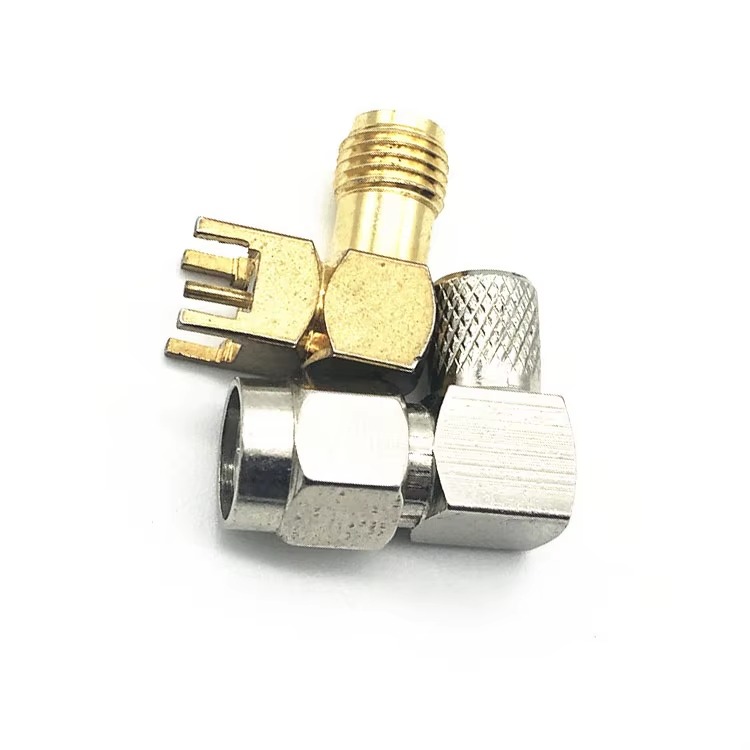
4. Key Advantages of Automotive FAKRA SMA Cables
Compared with ordinary civilian RF cables and singletype automotive antenna cables, professional automotive FAKRA SMA transition cables have irreplaceable advantages in vehicle adaptation, signal performance, and service reliability, which are the core reasons for their wide application in the automotive industry.
4.1 Perfect Interface Compatibility
Original factory vehicles uniformly adopt FAKRA dedicated antenna interfaces, while most aftermarket navigation hosts, signal amplifiers, external highgain antennas, and detection equipment use standard SMA threaded interfaces. Automotive FAKRA SMA cables perfectly solve the interface mismatch problem, realizing seamless docking between original vehicle equipment and modified equipment. They support free switching between vehicle dedicated interfaces and universal RF interfaces, greatly improving the flexibility of vehicle equipment upgrading and modification.
4.2 Extreme Environmental Adaptability
Vehicle working environments are extremely complex, with extreme temperature differences, continuous vibration, engine electromagnetic interference, chassis dust and water, and oil corrosion. Automotive FAKRA SMA cables are fully optimized for these harsh conditions: high and low temperature resistant materials adapt to seasonal temperature changes, reinforced antivibration structures avoid loose connections during driving, multilayer shielding resists electromagnetic interference, and waterproof and oilproof sheaths adapt to chassis and engine compartment installation. Compared with ordinary RF cables that are prone to aging, signal loss, and disconnection in vehicle environments, automotivegrade products maintain stable performance throughout the vehicle service life.
4.3 UltraLow Signal Transmission Loss
Modern intelligent vehicles have higher and higher requirements for wireless signal stability. Lowquality cables will cause serious signal attenuation, resulting in inaccurate GPS positioning, stuck vehicle network, and unclear radio signals. Automotive FAKRA SMA cables adopt lowloss coaxial wire cores and highprecision shielding technology, with extremely low highfrequency signal loss. They can maintain complete signal transmission in longdistance vehicle wiring, ensuring highprecision positioning of GPS systems, smooth transmission of 4G/5G vehicle network data, and stable reception of radio and satellite signals.
4.4 AntiMismating & High Safety
The colorcoded keying design of FAKRA connectors effectively avoids wrong wiring of multiple vehicle wireless interfaces, preventing system failure and equipment burnout caused by signal crosstalk. The SMA threaded locking structure ensures firm connection, no loose contact or signal interruption caused by vehicle jitter during driving. The whole cable assembly has no exposed conductive parts, with high insulation safety, avoiding short circuit faults in vehicle circuits.
4.5 Easy Installation & Strong Versatility
Automotive FAKRA SMA cables have flexible cable bodies and various length specifications (10cm, 20cm, 30cm, 50cm, 1m, customized lengths), adapting to different vehicle wiring spaces. The straight and rightangle optional connector design solves the installation dead angle problem of narrow vehicle interiors. No professional welding or wiring is required for installation, plugandplay, which greatly reduces the difficulty of vehicle modification and aftersales maintenance.
5. Main Application Scenarios in Modern Vehicles
With the continuous upgrading of vehicle intelligence and networking, automotive FAKRA SMA cables have covered almost all vehicle wireless communication systems, becoming a essential accessory for traditional fuel vehicles, new energy electric vehicles, and intelligent autonomous vehicles. The main application scenarios are as follows:
5.1 Vehicle GPS & Beidou Positioning Systems
This is the most widely used scenario for FAKRA SMA cables. The original vehicle GPS antenna adopts FAKRA B blue interface, and when users upgrade aftermarket navigation hosts or highprecision positioning equipment, SMA interface docking is required. FAKRA SMA cables realize stable transmission of positioning signals, ensuring accurate vehicle positioning, fast satellite searching, and no signal drift, which is the core guarantee for normal operation of vehicle navigation systems.
5.2 Vehicle 4G/5G Networking & Telematics Systems
Intelligent connected vehicles rely on 4G/5G cellular networks to realize vehicle networking, remote monitoring, OTA upgrade, and invehicle network functions. The vehicle network antenna uses FAKRA D violet interface, which needs to be converted to SMA interface to connect external signal amplifiers and vehicle network modules. Highperformance FAKRA SMA cables ensure highspeed and stable transmission of cellular data, avoiding network delay and disconnection during vehicle driving.
5.3 InVehicle Infotainment Audio Systems
Vehicle AM/FM radio and satellite radio systems use FAKRA A white and FAKRA E green interfaces respectively. Aftermarket modified audio hosts, car stereos, and signal enhancement equipment mostly use SMA interfaces. FAKRA SMA transition cables effectively improve radio signal reception sensitivity, solve the problems of unclear radio sound and frequent signal switching, and optimize the invehicle entertainment experience.
5.4 ADAS & Intelligent Driving Auxiliary Systems
Highend intelligent vehicles are equipped with ADAS auxiliary driving systems, including millimeterwave radar, 360degree panoramic imaging, and wireless sensing modules. These highprecision wireless detection devices require lowloss RF cables for signal transmission. Highspec FAKRA SMA cables support highfrequency and highspeed signal transmission, ensuring the realtime and accuracy of intelligent driving sensing data, and improving driving safety.
5.5 Vehicle Aftermarket Modification & Maintenance
In vehicle aftersales maintenance and modification scenarios, FAKRA SMA cables are essential universal accessories. Whether it is replacing aging antenna cables, upgrading highgain external antennas, or testing vehicle wireless signal faults, transition cables can quickly realize equipment docking, improve maintenance efficiency, and reduce modification costs.
6. How to Choose the Right Automotive FAKRA SMA Cable? (Complete Selection Guide)
There are many types of automotive FAKRA SMA cables on the market, with differences in connector type, color code, cable specification, length, and performance grade. Improper selection will lead to poor signal transmission, interface mismatch, and even equipment damage. The following systematic selection guide helps users quickly select suitable products:
6.1 Confirm FAKRA Connector Color & Key Code
First, determine the vehicle functional scenario to select the corresponding color code: GPS positioning chooses blue B code, vehicle cellular network chooses violet D code, AM/FM radio chooses white A code, satellite radio chooses green E code, and general testing chooses universal Z code. Never mix different color code cables, otherwise interface docking failure and system signal abnormality will occur.
6.2 Select Connector Gender & Angle
According to the docking equipment interface, select FAKRA male/female and SMA male/female matching models. At the same time, select straight or rightangle connectors according to the vehicle wiring space: rightangle connectors are suitable for narrow interior and corner wiring to avoid cable bending damage and interface extrusion.
6.3 Match Cable Specification & Length
Conventional vehicle wiring uses RG174 automotivegrade coaxial cables, which are flexible and spacesaving, suitable for most conventional signal transmission scenarios. For highfrequency 5G and highprecision positioning scenarios, lowloss RG316 cables are recommended to reduce signal attenuation. Select the cable length according to the actual wiring distance, and avoid excessive cable redundancy causing messy wiring and signal crosstalk, or insufficient length causing unable docking.
6.4 Prioritize AutomotiveGrade Certification
Strictly distinguish between civiliangrade and automotivegrade products. Formal automotive FAKRA SMA cables must comply with IATF16949 automotive quality certification, with high and low temperature resistance, vibration resistance, and antiaging properties. Civilian cables are only suitable for indoor use and will age and fail quickly in vehicle environments.
6.5 Check Shielding Performance & Process Quality
Highquality products adopt doublelayer shielding structure with tight braiding and no exposed gaps. The connector injection molding is smooth and firm, without loose core wires and cracks. Poorquality cables have insufficient shielding rate, rough process, and are prone to signal interference and wire breakage failure.
7. Professional Installation & Maintenance Best Practices
Even highquality automotive FAKRA SMA cables need standardized installation and daily maintenance to ensure longterm stable operation. Nonstandard installation will cause increased signal loss and loose interfaces, and irregular maintenance will accelerate cable aging. The following are industrystandard installation and maintenance guidelines:
7.1 Standard Installation Steps
Step 1: Vehicle Power Off Cut off the vehicle power supply before installation to avoid short circuit and static damage to wireless equipment during wiring operation.
Step 2: Sort Wiring Path Plan the wiring path in advance, avoid crossing with engine highvoltage lines and circuit lines, and stay away from heat sources and moving parts to reduce electromagnetic interference and cable friction damage.
Step 3: Interface Docking Align the FAKRA connector key position for accurate docking, press firmly until a clicking sound is heard to ensure secondary locking is in place; screw the SMA threaded connector tightly to avoid virtual connection.
Step 4: Fix the Cable Body Use cable ties to fix the cable at intervals to avoid suspension and jitter during driving, and reserve a proper bending margin to prevent excessive tension on the cable core.
Step 5: Signal Test After installation, turn on the vehicle equipment to test GPS positioning, network signal, and radio reception to confirm no signal abnormality.
7.2 Daily Maintenance & Fault Prevention
Regularly check the cable exterior to avoid sheath cracking, aging, and abrasion caused by longterm exposure and friction.
Check the connector tightness regularly to prevent interface loosening caused by longterm vehicle vibration, which leads to signal instability.
Avoid pulling and bending the cable violently during vehicle maintenance to prevent internal core wire breakage and shielding layer damage.
For vehicles used in hightemperature and humid areas, regularly clean the interface dust and moisture to ensure good contact performance.
7.3 Common Faults & Solutions
Weak GPS Signal & Slow Positioning: It may be caused by excessive cable length, poor shielding performance, or loose interface. Replace lowloss cables, relock the interface, and optimize the wiring path.
Vehicle Network Signal Stuck: Check whether the cable is squeezed and deformed, resulting in core wire damage, replace the damaged cable assembly.
Radio Signal Noise: The wiring is too close to the highvoltage circuit, resulting in electromagnetic interference. Readjust the wiring path and increase shielding protection.
8. Frequently Asked Questions (FAQs)
To solve users' common search doubts, we have sorted out the most frequently asked questions about automotive FAKRA SMA cables in the industry, with professional and accurate answers:
Q1: What is the difference between FAKRA and SMA connectors in automotive cables?
FAKRA is an exclusive automotive standardized connector with color keying, antivibration locking, and environmental resistance, specially designed for vehicle harsh environments, fixed on original vehicle antennas and equipment. SMA is a universal threaded RF connector with wide compatibility, mostly used in aftermarket modified equipment and testing instruments. FAKRA SMA cables realize signal transition between the two different standard interfaces.
Q2: Are all FAKRA SMA cables suitable for automotive use?
No. Ordinary civilian FAKRA SMA cables only adapt to indoor room temperature environments, without vibration resistance, high and low temperature resistance, and antiaging capabilities. Only automotivegrade products that comply with IATF16949 standards can be used for longterm vehicle installation.
Q3: Does cable length affect vehicle wireless signal quality?
Yes. The longer the coaxial cable, the higher the signal transmission loss. It is recommended to select the shortest applicable length according to the actual wiring distance, and use lowloss cables for longdistance wiring to ensure signal stability.
Q4: What color FAKRA SMA cable do I need for car GPS?
Vehicle GPS positioning systems uniformly use blue FAKRA B code connectors. Users need to select FAKRA B (blue) to SMA cables for GPS signal transition.
Q5: Can FAKRA Z code cables replace other color code cables?
FAKRA Z code is a universal nonkeyed interface, which can physically match all FAKRA interfaces. However, in order to avoid system crosstalk and ensure professional matching, it is recommended to use the corresponding color code cable for special functional scenarios, and Z code is only suitable for general testing and temporary use.
Automotive FAKRA SMA cables are small but core components of modern vehicle wireless systems, undertaking the important task of stable transmission of vehicle positioning, communication, and entertainment signals. With the continuous development of automobile intelligence, networking, and new energy, the performance requirements for automotive RF connection cables are becoming higher and higher. Highquality automotivegrade FAKRA SMA cables, with their excellent environmental adaptability, lowloss signal transmission, and strong interface compatibility, have become indispensable supporting products for vehicle original equipment manufacturing and aftermarket modification.
When purchasing and using FAKRA SMA cables, users must take automotivegrade certification, color key matching, shielding performance, and installation standardization as the core selection and use principles, avoid lowquality civilian products and mismatched models, and fully guarantee the longterm stable operation of vehicle wireless systems. Whether for automotive engineering procurement, technical maintenance, or personal vehicle modification, mastering the professional knowledge of FAKRA SMA cables can effectively solve various vehicle signal transmission problems and improve vehicle intelligent experience and driving safety.
Lucy Yang | lucy.y@toxutech.com
Dotty Zhao | sales04@toxutech.com
Global Business Director / Sales Team / Global Operations


 En
En Cn
Cn Korean
 Home >