

-
Products -PCBA Manufacturing RF Connectors RF Cable Assemblys Embedded Antennas External Antennas GNSS Positioning Solutions
RF Connectors

RF Cable Assemblys
Embedded Antennas
External Antennas
GNSS Positioning Solutions































 Language


Language


Time:2026-10-16 Views:0
Why a Waterproof GPS BDS LTE Antenna Is Critical for Modern IoT
In 2026, over 18.8 billion connected IoT devices operate worldwide, and more than 60% of that equipment is deployed outdoors—on trucks, marine vessels, agricultural machinery, smart meters, and remote industrial sites. Every one of those deployments depends on a single, often overlooked component: the antenna. A waterproof GPS BDS LTE antenna is the unsung hero that keeps fleet telematics accurate, industrial gateways online, and autonomous equipment on course—even when rain, salt spray, dust, and temperature swings would destroy ordinary RF components.
This guide covers everything engineers, procurement specialists, and system integrators need to know about waterproof GPS BDS LTE antennas: what they are, how they perform, where they are used, how to select the right model, and what trends will shape the market through 2032.
What Is a Waterproof GPS BDS LTE Antenna?
A waterproof GPS BDS LTE antenna is a multi-band combo antenna that integrates three critical RF functions into a single weather-sealed housing:
GPS (Global Positioning System) — the U.S.-operated satellite navigation system
BDS (BeiDou Navigation Satellite System) — China's satellite navigation constellation
LTE (Long-Term Evolution) — the cellular standard for data connectivity
The "waterproof" designation refers to the antenna's Ingress Protection (IP) rating, which specifies its resistance to dust and water intrusion. In practical terms, a waterproof GPS BDS LTE antenna is usually a permanent-mount or adhesive-mount external antenna designed to survive years of outdoor exposure.
These antennas are also frequently described as GNSS + LTE combo antennas, because GPS and BDS are both part of the broader GNSS (Global Navigation Satellite System) family, which also includes GLONASS and Galileo. A well-designed waterproof GPS BDS LTE antenna typically covers:
GNSS bands: GPS L1 at 1575.42 MHz, BDS B1 at 1561.098 MHz, and often GLONASS L1 and Galileo E1
LTE bands: 700–960 MHz (low band), 1710–2690 MHz (mid/high band), and increasingly 2500–2700 MHz for additional capacity
Modern models often integrate Wi-Fi as well, creating 3-in-1 or 5-in-1 combo antennas that consolidate multiple radios into one compact enclosure.
Technical Specifications: What to Look For
Frequency Coverage
The frequency range is the most fundamental specification. A waterproof GPS BDS LTE antenna must cover both the GNSS receive bands and the LTE transmit/receive bands. Representative coverage includes:
| Function | Frequency Range |
|---|---|
| LTE Low Band | 698–960 MHz |
| LTE Mid Band | 1710–2170 MHz |
| LTE High Band | 2490–2690 MHz |
| GPS L1 | 1575.42 MHz |
| BDS B1 | 1561.098 MHz |
| GLONASS L1 | 1598–1606 MHz |
| Wi‑Fi (optional) | 2400–2500 MHz / 5150–7125 MHz |
A typical 2-in-1 LTE/GNSS antenna covers LTE at 698–960 MHz, 1710–2170 MHz, and 2500–2700 MHz, with GNSS at 1575.42 MHz (GPS) and 1598–1606 MHz (GLONASS/Galileo). Higher-end 5-in-1 models add dual-band Wi-Fi MIMO alongside LTE MIMO and GNSS.
Gain and LNA Performance
GNSS antennas typically use an active low-noise amplifier (LNA) to boost weak satellite signals. LNA gain values in the 26–30 dB range are common. For example, the Abracon AANE-PU puck antenna features a 28 ± 3 dB LNA with integrated pre-filtering for anti-jamming performance. A high-spec 2-in-1 antenna from Grid Connect provides 28 dB GNSS gain at 2.7 V, designed for low-signal environments.
LTE gain is generally lower—typically 2–4 dBi for the cellular elements, since cellular signals are stronger and the focus is on bandwidth and efficiency rather than raw gain.
VSWR and Impedance
Voltage Standing Wave Ratio (VSWR) indicates how efficiently the antenna transfers power to the receiver. A VSWR of 2:1 or lower across the operating bands is standard for quality combo antennas. Impedance is nominally 50 ohms, the industry standard for RF systems.
IP Rating: The Waterproof Standard
The IP rating consists of two digits: the first indicates dust protection (6 = dust-tight), and the second indicates water protection. For waterproof GPS BDS LTE antennas, the relevant ratings are:
IP67: Dust-tight and withstands immersion in 1 meter of water for 30 minutes
IP68: Dust-tight and withstands deeper or longer submersion (manufacturer-specified)
IP69K: Dust-tight and withstands high-pressure, high-temperature water jet cleaning
For most outdoor IoT deployments, IP67 is the recommended minimum. Marine, chemical, and high-pressure washdown environments require IP68 or IP69K, along with salt-spray testing of 96 hours or more. The Taoglas MA850, for instance, carries an IP69K rating in an ASA enclosure with a zinc alloy base, suitable for the harshest exterior conditions.
Operating Temperature and Environmental Durability
Waterproof GPS BDS LTE antennas are typically rated for -40°C to +85°C operating temperature. Beyond temperature, look for:
UV-stabilized housings (ASA or UV-inhibitive ABS) to prevent cracking from sun exposure
Corrosion-resistant bases (aluminum or stainless steel)
Vibration resistance for vehicle-mounted applications
Flame retardancy (UL 94 V-0) for public safety and automotive deployments
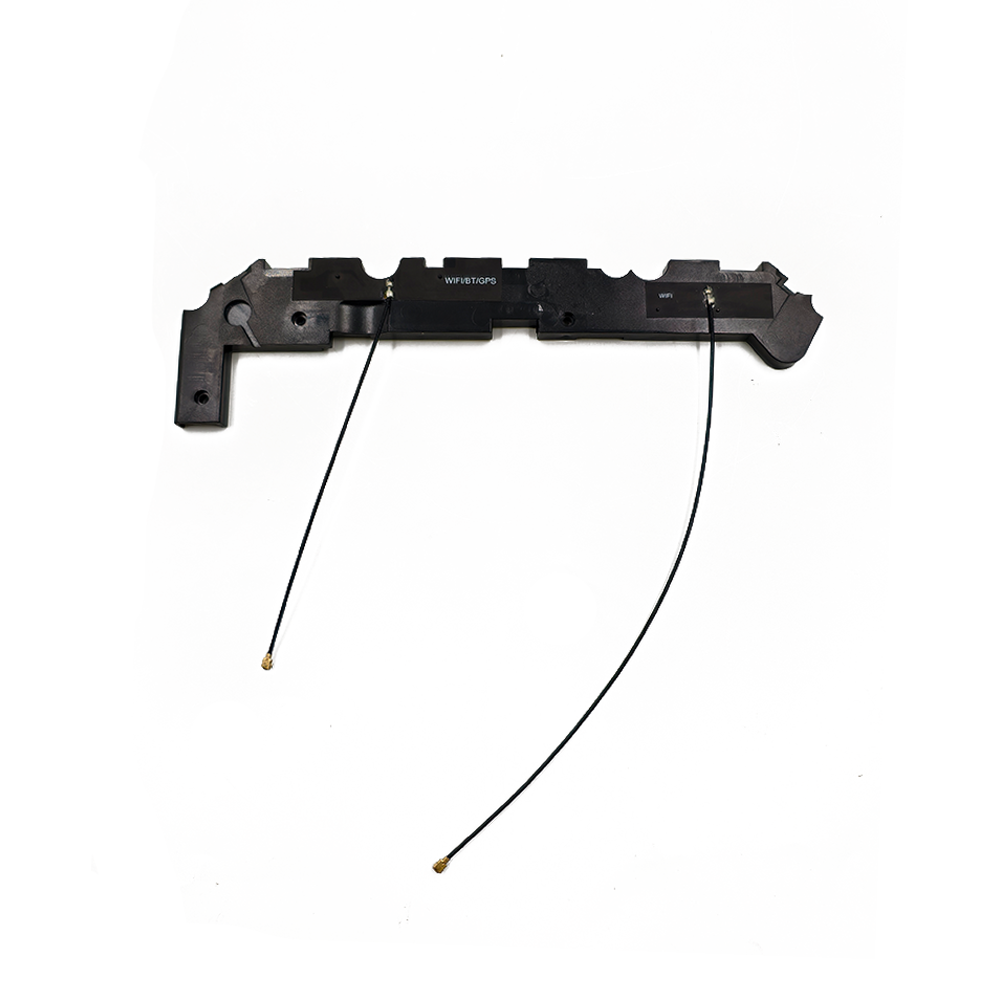
Design Features of Modern Waterproof Combo Antennas
Multi-Band Integration and Isolation
The core engineering challenge in a waterproof GPS BDS LTE antenna is packing multiple radiating elements into a compact housing while maintaining isolation between them. A well-designed combo antenna ensures that the LTE elements do not resonate within GNSS bands, preserving navigation accuracy.
Modern designs achieve this through:
Stacked patch GNSS elements (e.g., 20×20×8 mm) covering GPS, BDS, Galileo, and GLONASS simultaneously
LTE MIMO elements distributed along the antenna's edge for spatial diversity
Symmetrical configurations that maintain low axial ratio for GNSS and radiation pattern symmetry
MIMO for LTE
Many waterproof GPS BDS LTE antennas support 2×2 LTE MIMO, which improves cellular throughput and reliability by using two independent cellular elements. The Mobile Mark LTMG302, for example, combines two LTE MIMO elements covering 694–960 MHz and 1710–3700 MHz with one GNSS element supporting GPS, Galileo, GLONASS, QZSS, and BeiDou.
Connector and Cable Options
Standard connectors include SMA male for both LTE and GNSS, often color-coded for easy identification (red for LTE, blue for GNSS). FAKRA connectors are common in automotive applications, with FAKRA-C for GPS, FAKRA-D for 4G main, and FAKRA-K for 4G diversity. Cable lengths typically range from 1 meter to 4.5 meters, with low-loss coaxial types such as RG-174, TGC-1.5DS, or LL-195 depending on the run length and frequency.
Key Applications of Waterproof GPS BDS LTE Antennas
Fleet Management and Vehicle Telematics
This is the largest application segment. Fleet operators need continuous GPS/BDS positioning for route tracking and LTE connectivity for real-time data upload. A waterproof GPS BDS LTE antenna mounted on a truck roof must survive years of vibration, weather, and washdown. The Quectel YEMD302L1A, for example, is explicitly designed for fleet management and automotive vehicle tracking, with IP67 protection, UV resistance, and UL 94 V-0 flame rating.
Asset Tracking and Logistics
Shipping containers, trailers, and high-value cargo require antennas that can operate in ports, rail yards, and open highways. The Abracon AANE-PU offers LTE and multi-constellation GNSS connectivity in an IP67 puck housing measuring just 59.5 × 52.5 × 16.5 mm, with low current consumption (down to 15 mA) for battery-powered trackers.
Smart Grid and Utility Monitoring
Smart meters, grid sensors, and remote utility terminals are often mounted on poles or in cabinets where antenna placement is constrained. A waterproof GPS BDS LTE antenna provides both the positioning data for asset management and the cellular backhaul for meter readings. The Abracon AANE-PU is explicitly recommended for smart grid and energy generation/storage systems.
Public Safety and Video Surveillance
Police vehicles, ambulances, and mobile surveillance units require reliable GNSS and LTE in all weather conditions. Quectel's combo antennas are marketed specifically for public safety and high-definition video streaming use cases. The IP67 rating and flame-retardant housing meet the demanding safety standards of these deployments.
Marine and Agricultural Equipment
Marine vessels face salt spray and constant moisture, while agricultural machinery encounters dust, mud, and chemical sprays. In these environments, IP68 or IP69K waterproof GPS BDS LTE antennas with 316 stainless steel hardware and ASA enclosures are essential. Antennas like the Taoglas MA850, with its IP69K rating and zinc alloy base, are engineered for exactly these harsh conditions.
Autonomous Equipment and Robotics
Autonomous guided vehicles (AGVs), drones, and robotic survey equipment depend on centimeter-level GNSS accuracy combined with low-latency LTE for remote command and telemetry. The GeoMax Zenith55, for example, integrates a multi-constellation GNSS board with 600+ channels, an LTE modem, and IP68 protection, withstanding 2-meter pole topple-over—a common failure mode for survey equipment.
How to Choose the Right Waterproof GPS BDS LTE Antenna
Step 1: Define Your Environment and Required IP Rating
Indoor or protected cabinet: IP54–IP65 may suffice if the antenna is shielded from direct rain
General outdoor (land vehicles, UAVs, pole-mounted sensors): IP67 is the safety line. It handles rain, dust, and occasional splashing
Marine, chemical, or high-pressure washdown: IP68–IP69K with 96-hour salt-spray certification and 316 stainless steel hardware
Step 2: Match Frequency Bands to Your Region and Network
LTE band requirements vary by region and carrier. A waterproof GPS BDS LTE antenna covering 698–960 MHz and 1710–2690 MHz will work in most global markets. For North American FirstNet and Band 14 deployments, ensure coverage up to 3700 MHz if your modem requires it. For GNSS, confirm BDS B1 support if your application operates in China or requires BeiDou augmentation.
Step 3: Determine Gain and LNA Requirements
GNSS: 26–30 dB LNA gain is standard for active antennas. Higher gain helps in weak-signal or high-interference environments
LTE: 2–4 dBi passive gain is typical. For MIMO, ensure both elements have similar gain and radiation patterns for balanced performance
Cable loss: At 1.5 GHz, RG-174 cable loses approximately 0.5 dB per meter. For cable runs longer than 3 meters, consider low-loss alternatives like LL-195 or TGC-1.5DS
Step 4: Select the Mounting Method
Screw/stud mount: Permanent, most secure, requires drilling. Best for fleet vehicles and fixed installations
Adhesive mount: Non-destructive, quick installation, suitable for glass or plastic surfaces. The Taoglas Sentinel MA252 is designed for direct mounting on vehicle glass or plastic
Magnetic mount: Fastest deployment, removable, but less secure at high speeds. Ideal for temporary installations and testing
Step 5: Verify Connector Compatibility
Confirm that the antenna's connectors match your modem or tracker. SMA male is the most common, but FAKRA and N-type connectors are also used. Color-coded cables (red for LTE, blue for GNSS) simplify installation and reduce wiring errors.
Installation Best Practices for Waterproof GPS BDS LTE Antennas
Mounting Location and Ground Plane
GNSS performance depends heavily on a proper ground plane. Most active GNSS antennas are designed to work with a 70 × 70 mm or larger ground plane. Mounting the antenna on a metal roof provides an ideal ground plane; if mounting on plastic, ensure the antenna includes or is paired with a ground plane kit.
For LTE MIMO, separation between the two elements is critical for diversity performance. Maintain at least 0.1 wavelength (approximately 10 cm at 700 MHz) between LTE elements if using separate antennas.
Sealing and Cable Management
Even with an IP67 or IP69K antenna, water ingress often occurs at the cable entry point. Best practices include:
Use self-sealing N-type or TNC connectors where possible, and verify that the connector itself carries an IP67 rating
Create a drip loop in the cable before it enters the enclosure, so water runs off rather than following the cable
Seal the mounting hole with a silicone gasket or butyl tape on the exterior side
Use UV-resistant cable ties or stainless steel clamps to secure cables and prevent abrasion
Cold-Weather Considerations
In applications where temperatures cycle below freezing, internal condensation can form inside the antenna housing. Large dome antennas should include a waterproof breathable vent (Gore-Tex or equivalent) to equalize pressure and prevent moisture buildup. Silicone gaskets should be rated for -40°C to +85°C and be replaceable without replacing the entire antenna.
Testing After Installation
After installation, verify:
VSWR across the operating bands using a network analyzer or SWR meter
GNSS satellite acquisition and signal-to-noise ratio (C/N₀) for at least four satellites
LTE signal strength (RSRP) and quality (SINR) on the target network
Water tightness by performing a low-pressure spray test on the mounting area
Market Trends: What's Driving Demand for Waterproof GPS BDS LTE Antennas
Market Size and Growth
The global embedded active antenna market—which includes waterproof GPS BDS LTE antennas—was valued at approximately $227 million in 2025 and is projected to reach $300 million by 2032, growing at a compound annual growth rate (CAGR) of 3.7%. The broader embedded GNSS active antenna segment follows a similar trajectory, with a 3.7% CAGR from 2026 to 2032. Unit production reached approximately 26.7 million pieces in 2025, with average unit prices around $8.50.
Trend 1: Miniaturization
Modern IoT hardware is shrinking, and antenna designers are responding with compact solutions. High-dielectric ceramic substrates have reduced antenna size by up to 40% without performance loss. Stacked patch GNSS antennas measuring just 20×20×8 mm now support GPS, BDS, Galileo, and GLONASS simultaneously. This miniaturization is critical for portable trackers, drones, and space-constrained industrial gateways.
Trend 2: Multi-Band Combo Integration
Separate single-band antennas increase bill-of-materials (BOM) costs, create wiring complexity, and cause cross-frequency interference. Multi-band combo antennas—integrating GNSS, LTE, and Wi-Fi in one high-isolation housing—are now mainstream for 2026 designs. A European fleet client reported 32% lower BOM costs, 70% less assembly time, and failure rates dropping from 18% to below 3% after switching to a combo antenna solution.
Trend 3: Higher Waterproof Standards as Default
IP67 is becoming the minimum acceptable rating for outdoor IoT antennas. IP68 and IP69K are increasingly specified for marine, agricultural, and heavy-duty applications. Buyers are also demanding UV-stabilized shells, anti-salt-spray bases, and wide-temperature operation as standard features rather than premium options.
Trend 4: Integration with Non-Terrestrial Networks (NTN)
Satellite-based IoT connectivity is emerging as a complement to cellular LTE, particularly in remote areas. Antennas like the Taoglas MA114 are already recommended for NTN devices operating on Band 255 (Global), Band 256 (Europe), and Band 23 (North America), combining GNSS, 5G/4G, and satellite connectivity in a single IP67 package.
Maintenance and Troubleshooting
Routine Inspection Checklist
Housing integrity: Check for cracks, discoloration, or UV degradation annually
Gasket condition: Inspect silicone gaskets for hardening, cracking, or compression set; replace if brittle
Connector torque: Verify SMA and FAKRA connectors remain snug; vibration can loosen them over time
Cable abrasion: Look for chafing where cables pass through bulkheads or zip ties
Drainage: Ensure drip loops are intact and water does not pool around the mounting base
Common Failure Modes and Solutions
Frequently Asked Questions
Q: What is the difference between GPS, BDS, and GNSS?
GPS is the U.S. satellite navigation system. BDS (BeiDou) is China's system. GNSS is the umbrella term for all satellite navigation systems, including GPS, BDS, GLONASS, and Galileo. A waterproof GPS BDS LTE antenna receives signals from multiple constellations for improved accuracy and reliability.
Q: Can I use a waterproof GPS BDS LTE antenna with a 5G modem?
Yes, provided the antenna's LTE bands cover the 5G NR bands used by your carrier. Many modern combo antennas support 600–6000 MHz, which includes 5G sub-6 GHz frequencies.
Q: How long do waterproof GPS BDS LTE antennas last outdoors?
With a proper IP67 or higher rating, UV-stabilized housing, and quality gaskets, a well-installed antenna should last 5–10 years. IP69K models with ASA housings and stainless steel hardware can exceed 10 years in marine environments.
Q: Do I need a ground plane for a waterproof GPS BDS LTE antenna?
Most active GNSS antennas require a ground plane of at least 70 × 70 mm for optimal performance. Many permanent-mount antennas use the vehicle roof or metal enclosure as the ground plane. If mounting on non-conductive surfaces, choose an antenna with an integrated ground plane or add a ground plane kit.
Q: What does "combo antenna" mean?
A combo antenna integrates multiple radio functions—such as GPS, BDS, LTE, and Wi-Fi—into a single physical housing. This reduces installation complexity, saves mounting space, and lowers BOM costs compared to using separate antennas for each function.
| Symptom | Likely Cause | Solution |
|---|---|---|
| GNSS accuracy degrades | Water ingress into GNSS element | Replace antenna; verify gasket and cable entry seal |
| LTE signal intermittent | Loose connector or cable damage | Re-terminate or replace cable; check torque |
| Both GNSS and LTE fail | Cable cut or rodent damage | Replace cable; install conduit or armored cable |
| Condensation inside radome | Failed breathable vent | Replace vent membrane; consider adding desiccant |
| VSWR elevated | Corrosion at connector or ground plane | Clean and reseal connector; verify ground plane integrity |
A waterproof GPS BDS LTE antenna is far more than a passive accessory. It is the RF gateway that determines whether a fleet stays tracked, a smart grid stays connected, or an autonomous vehicle stays on course. As IoT deployments expand into increasingly harsh environments, the demand for antennas that combine multi-constellation GNSS, wideband LTE, and robust waterproof construction will only grow.
When selecting a waterproof GPS BDS LTE antenna, prioritize IP67 or higher protection, verify frequency coverage against your regional network bands, confirm connector compatibility, and follow best practices for mounting and sealing. The upfront investment in a quality antenna pays dividends in reduced maintenance, longer service life, and uninterrupted connectivity—the three metrics that matter most in any outdoor IoT deployment.
For procurement teams and design engineers, the market offers a mature and expanding range of options. From compact 2-in-1 GNSS/LTE pucks with IP67 housings to heavy-duty 5-in-1 IP69K domes with LTE MIMO and Wi-Fi, there is a waterproof GPS BDS LTE antenna for virtually every application and environment. The key is to match the antenna's specifications to the actual demands of the deployment—not to over-specify, and never to under-specify.
Lucy Yang | lucy.y@toxutech.com
Dotty Zhao | sales04@toxutech.com
Global Business Director / Sales Team / Global Operations


 En
En Cn
Cn Korean
 Home >