

-
Products -PCBA Manufacturing RF Connectors RF Cable Assemblys Embedded Antennas External Antennas GNSS Positioning Solutions
RF Connectors

RF Cable Assemblys
Embedded Antennas
External Antennas
GNSS Positioning Solutions































 Language


Language


Time:2026-10-16 Views:0
Why Ultra Thin Low Profile Combo Antennas Matter
The relentless push toward miniaturization in wireless communication has created an engineering paradox: devices are getting smaller, but the demand for connectivity is expanding exponentially. Smartphones must support 5G, Wi-Fi 6E/7, Bluetooth, GNSS, and UWB—all within enclosures that grow thinner with each product generation. Industrial IoT sensors deployed in smart agriculture need cellular backhaul, GPS positioning, and local wireless mesh networking in packages small enough to attach to equipment. Connected vehicles require V2X communication, multiple GNSS bands, and high-bandwidth cellular modems without the aerodynamic penalties of protruding antenna structures.
The ultra thin low profile combo antenna has emerged as the definitive answer to this challenge. By integrating multiple wireless technologies into a single, space-efficient radiating structure, these antennas eliminate the need for multiple discrete components while maintaining the performance characteristics required for reliable connectivity. According to industry projections, 7.2 billion antennas will be shipped for IoT devices by 2025—nearly threefold the volume shipped in 2021. This explosive growth is driven by devices that require multiple radios operating simultaneously within increasingly constrained physical envelopes.
This comprehensive guide examines the technology behind ultra thin low profile combo antennas, explores the design challenges and material innovations that make them possible, analyzes their applications across industries, and provides practical guidance for engineers and product managers selecting the right solution for their projects.
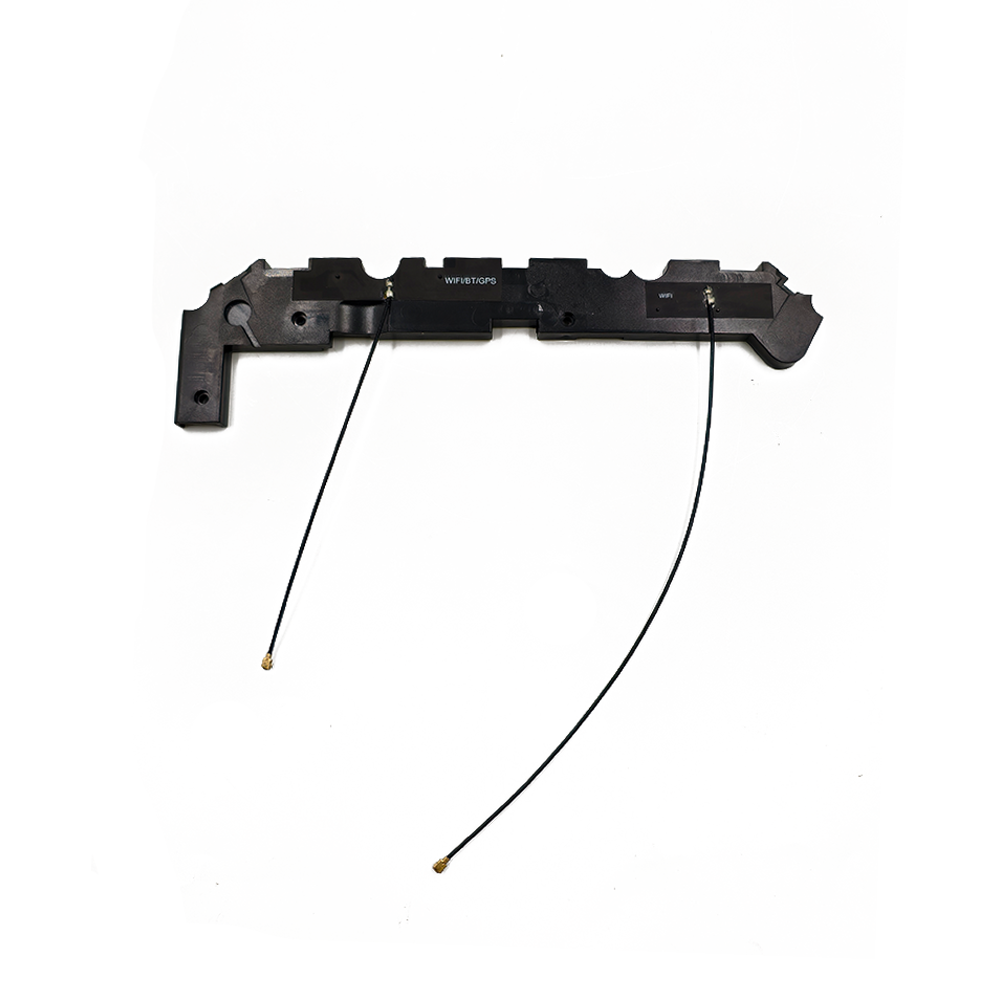
What Is an Ultra Thin Low Profile Combo Antenna?
A combo antenna, also known as a multiband, multi-service, or integrated antenna, is a single antenna assembly designed to support multiple distinct frequency bands and wireless communication standards simultaneously within a unified structure. Unlike traditional antenna arrays that require separate radiating elements for each technology, combo antennas consolidate cellular, GNSS, Wi-Fi, Bluetooth, and other wireless services into one integrated component.
The ultra thin and low profile designations refer to the physical characteristics that make these antennas suitable for space-constrained applications. Ultra thin typically describes antenna profiles measured in fractions of a millimeter—flexible PCB antennas can achieve thicknesses of 0.1 mm or less. Low profile, meanwhile, refers to the antenna's minimal vertical protrusion from the mounting surface, a critical specification for applications where aesthetics, aerodynamics, or mechanical clearance are concerns.
The convergence of these characteristics—multiband functionality in an ultra thin, low profile form factor—represents the current state of the art in antenna engineering. Modern combo antennas can integrate up to ten or more individual antenna functions within a single unit, each supporting different technologies and frequencies. This integration capability is what enables designers to support cellular, GNSS, and Wi-Fi connectivity with a single embedded component, reducing device component count while simplifying design and accelerating time-to-market.
Market Drivers: The Forces Behind Ultra Thin Combo Antenna Adoption
The 5G Rollout and Spectrum Expansion
The global deployment of 5G networks has fundamentally changed antenna requirements. Unlike previous cellular generations that operated within relatively narrow, well-defined bands, 5G spans an enormous frequency range—from sub-1 GHz bands for wide-area coverage to millimeter-wave frequencies above 24 GHz for high-capacity urban deployments. A single ultra thin combo antenna must now accommodate cellular frequencies from 600 MHz to 8000 MHz, a bandwidth ratio of more than 13:1.
This spectrum expansion is not limited to cellular. Wi-Fi has evolved from its original 2.4 GHz-only operation to include 5 GHz and now 7.125 GHz bands with Wi-Fi 6E and Wi-Fi 7. GNSS systems have expanded beyond GPS L1 to include L5, B1I, G1, and L-Band frequencies for improved accuracy and resilience. Each additional frequency band places new demands on antenna design, making the integration challenge increasingly complex.
IoT and M2M Device Proliferation
Cellular IoT connections are projected to reach 5.9 billion by 2035, driven by technologies including 5G RedCap, 5G Massive IoT, and LTE Cat-1 bis. These devices—from smart utility meters to industrial sensors to asset trackers—share common requirements: compact form factors, long operational life, and reliable connectivity across multiple wireless standards. The market for RF antennas is growing at a compound annual growth rate of 6.8% to 8.8% from 2025 to 2030, propelled by the global 5G rollout, the rise of connected vehicles, and the expansion of IoT ecosystems.
For IoT device designers, the ability to use a single combo antenna rather than multiple discrete components offers substantial advantages beyond space savings. Fewer components mean simplified RF design, reduced bill of materials cost, faster assembly times, and fewer potential failure points in the RF chain.
Automotive Connectivity Requirements
Modern vehicles are becoming mobile data centers. Connected cars require telematics units that support cellular connectivity for over-the-air updates and emergency calls, GNSS for navigation and location-based services, Wi-Fi for in-cabin connectivity, and increasingly, V2X communication for vehicle-to-everything applications. The antenna industry is seeing integrated antenna-TCU solutions gain traction in the automotive market, while mission-critical networks drive demand for external combination antennas.
The automotive environment presents unique challenges for antenna design. Vehicles operate across extreme temperature ranges, are subjected to vibration and mechanical shock, and must maintain performance despite the metallic vehicle body that can interfere with RF propagation. Ultra thin combo antennas mounted inside vehicle enclosures or integrated into shark-fin modules must address all these constraints while delivering reliable multi-band performance.
Design Challenges in Ultra Thin Low Profile Combo Antennas
Isolation and Mutual Coupling
The most fundamental challenge in combo antenna design is achieving sufficient isolation between co-located radiating elements. When multiple antennas operate within close proximity—as they must in a compact combo assembly—electromagnetic coupling between elements can degrade performance, causing interference, reduced efficiency, and degraded signal quality.
Existing technologies make it difficult to achieve low-profile designs of multiple antenna components, resulting in reduced isolation and efficiency between antenna elements, particularly poor performance in low-frequency bands. The coupling of surface waves from different antennas is among the possible mechanisms that can cause such degradation.
Engineers employ several strategies to address isolation challenges. Physical separation between elements provides the most straightforward isolation mechanism, but this directly conflicts with the goal of miniaturization. Decoupling techniques—including shorting pins grounding, orthogonal polarization, and the use of dielectric materials—can achieve high port-to-port isolation exceeding 100 dB between transmit and receive chains. Advanced filtering and isolation techniques are key to ensuring reliable signal reception and transmission for all integrated technologies.
Ground Plane Dependence and Independence
Antenna performance is fundamentally influenced by the ground plane—the conductive surface that serves as the reference for the radiating element. In compact devices, the ground plane is often the device's PCB or metallic housing, and its size and shape directly affect antenna efficiency and radiation patterns.
A significant advancement in ultra thin combo antenna design is the development of ground-plane independent architectures. Taoglas' FXP30x series, for example, combines high radiation efficiency with ground-plane independence, meaning the antenna performs consistently regardless of the ground plane conditions in the host device. This characteristic dramatically simplifies integration, as designers do not need to redesign the antenna when the device's internal layout changes.
For designs where ground plane dependence cannot be eliminated, engineers must carefully manage the relationship between the antenna and its reference plane. The radiating element grounding may be based on proximity-coupled grounding, introducing dielectric adhesive tape or other insulating materials below the radiating elements to avoid direct galvanic contact between the radiating elements and the ground plane.
Bandwidth and Efficiency Trade-offs
Achieving wide bandwidth in a compact antenna involves fundamental physics trade-offs. The Chu-Harrington limit establishes a theoretical relationship between antenna size, bandwidth, and efficiency: for a given electrical size, there is a maximum achievable bandwidth for a specified efficiency. Ultra thin combo antennas push against this limit, requiring careful optimization of radiating element geometry, matching networks, and dielectric loading.
Modern combo antennas achieve wideband cellular coverage from 600 MHz to 8000 MHz while maintaining strong peak gain and compact footprints. This is accomplished through a combination of techniques including multi-resonant structures, parasitic elements, and advanced matching networks that compensate for the thin substrates and constrained ground planes typical of space-constrained designs.
Thermal Management
When multiple radios operate simultaneously within a compact antenna assembly, thermal management becomes a critical concern. Power amplifiers and other active components generate heat that can affect antenna performance and reliability. The antenna design must provide adequate thermal pathways to dissipate this heat without compromising RF performance. In automotive and industrial applications where ambient temperatures may exceed 85°C, thermal considerations become particularly demanding.
Materials and Construction Technologies
Flexible Polymer and LCP Substrates
The substrate material is the foundation of any ultra thin antenna. Liquid crystal polymer (LCP) has emerged as a preferred material for high-performance flexible antennas due to its exceptional electrical properties at microwave frequencies, low moisture absorption, and excellent dimensional stability. LCP dielectric thin film materials are commercially available with thicknesses ranging from 25 to 100 micrometers, enabling extremely thin antenna profiles.
A recent example demonstrates the capability of LCP-based designs: a flexible tri-band MIMO antenna fabricated on an LCP substrate features an ultra-thin profile of 0.1 mm and a compact size of 60 × 35 mm², making it highly suitable for integration into modern flexible and wearable devices. LCP substrates have contributed to diverse applications including MEMS devices, antennas, metamaterials, sensors, and microfluidics.
Flexible polymer antenna technology, as employed in Taoglas' FXP30x series, combines high radiation efficiency, ground-plane independence, and ultra-thin construction suitable for installation inside compact device enclosures. These antennas feature peel-and-stick adhesive backing for secure mounting on non-metal surfaces such as plastic housings or glass, while flexible PCB construction allows installation in tight internal spaces where rigid antennas may not fit.
Rigid FR4 Alternatives
While flexible substrates enable conformal mounting and ultra-thin profiles, rigid FR4 PCB antennas offer a mechanically stable alternative for applications where the antenna can be mounted directly inside the device enclosure. The PC30x series from Taoglas provides the same connectivity options as its flexible counterparts but on a rigid FR4 substrate, suitable for mounting with adhesive backing or plastic screws. These rigid variants are particularly appropriate for applications where the antenna must withstand mechanical stress or where a stable, predictable mounting orientation is required.
Conductive Materials and Fabrication
The conductive elements of ultra thin combo antennas are typically fabricated from copper or copper alloys, patterned using standard PCB photolithography techniques. For flexible antennas, the conductive layer must maintain electrical continuity while bending and flexing—a requirement that demands careful attention to material selection and trace geometry.
Emerging conductive inks and patterned transparent conductive oxides are enabling new fabrication approaches, including additive manufacturing and roll-to-roll processing that can cut prototyping cycles and enable higher throughput. These techniques are particularly relevant for transparent film antennas, where optical clarity must be balanced with electromagnetic performance.
Connectors and Cable Assemblies
The antenna itself is only one part of the complete RF solution. Ultra thin combo antennas are typically supplied with pre-assembled cable assemblies and miniature RF connectors such as I-PEX MHF I (U.FL). The cables are supplied in different colors to ensure accurate connections for variants that require longer cables, enabling straightforward integration with wireless modules.
Cable selection is critical for maintaining signal integrity. Losses in the cable can significantly degrade the effective gain of the antenna system, particularly at higher frequencies. Engineers must balance cable length requirements against insertion loss budgets, selecting cable types appropriate for the frequency range and application requirements.
Applications Across Industries
Consumer Electronics and Wearables
Ultra thin combo antennas are essential enablers of modern consumer devices. Smartphones, tablets, laptops, and wearables including smartwatches and AR/VR headsets all demand global connectivity—5G, Wi-Fi, Bluetooth, and GPS—in packages that leave virtually no space for protruding antenna structures. The integration of multiple wireless technologies into a single ultra thin antenna assembly allows designers to maintain the sleek industrial designs that consumers expect while delivering the connectivity performance they demand.
IoT and Industrial M2M
The IoT and M2M sector represents one of the largest and fastest-growing markets for ultra thin combo antennas. Compact, cost-effective sensors for smart agriculture, industrial monitoring, asset tracking, and smart city infrastructure benefit from a single combo unit that handles cellular backhaul, local wireless communications, and precise location determination.
Specific applications include:
Asset tracking devices that require cellular connectivity for location reporting, GNSS for position determination, and Wi-Fi or Bluetooth for local configuration and data offloading.
Smart agriculture equipment that combines cellular backhaul for remote monitoring, GNSS for field mapping and autonomous navigation, and LPWAN technologies for sensor networks.
Connected healthcare systems that need reliable cellular connectivity for telemedicine and remote patient monitoring, along with Wi-Fi and Bluetooth for local device communication.
Industrial IoT devices deployed in factories and warehouses where cellular, Wi-Fi, and positioning capabilities must operate reliably in challenging RF environments.
Automotive and Telematics
Connected vehicles rely on combo antennas for telematics units, infotainment systems, and autonomous driving sensors. Automotive applications require cellular connectivity for over-the-air updates and emergency calls (eCall), GNSS for navigation and high-precision location, Wi-Fi for in-cabin connectivity and vehicle-to-device communication, and increasingly V2X for vehicle-to-infrastructure and vehicle-to-vehicle communication.
The automotive environment imposes rigorous requirements on antenna performance and reliability. Antennas must maintain performance across temperature extremes, resist vibration and mechanical shock, and survive exposure to moisture, salt spray, and other environmental stressors. Low-profile, IP67-rated enclosures are common for externally mounted automotive combo antennas, providing robust protection while maintaining discrete aesthetics.
Smart Home and Security
Smart home hubs, security cameras, and connected appliances increasingly integrate multiple wireless protocols—Wi-Fi, Bluetooth, Thread/Zigbee, and sometimes cellular failover—into single devices. Ultra thin combo antennas enable these products to maintain compact, aesthetically pleasing form factors while delivering the robust, always-on connectivity that consumers expect from home automation systems.
Selection Guide: Choosing the Right Ultra Thin Combo Antenna
Define Your Connectivity Requirements
The first step in selecting an ultra thin combo antenna is to clearly define which wireless technologies the device must support. Common configurations include:
| Configuration | Technologies | Typical Applications |
|---|---|---|
| 2‑in‑1 (Cellular + GNSS) | 5G/4G LTE, GPS/GNSS L1/L5 | Asset tracking, vehicle telematics |
| 2‑in‑1 (Cellular + Wi‑Fi) | 5G/4G LTE, Wi‑Fi 6E/7 | IoT gateways, smart home hubs |
| 3‑in‑1 (Cellular + GNSS + Wi‑Fi) | 5G/4G, GNSS, Wi‑Fi | Industrial IoT, connected healthcare |
| Multi‑band MIMO | 4×4 or 8×8 cellular MIMO, GNSS, Wi‑Fi MIMO | Automotive, mission‑critical systems |
Modern combo antennas can be configured for combinations such as 4G LTE and GPS, 5G and GNSS, Wi-Fi and Bluetooth, cellular and Wi-Fi, or cellular, GNSS, Wi-Fi, and other wireless services.
Evaluate Form Factor and Mounting Options
Ultra thin combo antennas are available in several form factors:
Flexible PCB antennas with adhesive backing for conformal mounting on curved or irregular surfaces. These are ideal for devices with complex internal geometries or where the antenna must be mounted on a non-planar surface.
Rigid FR4 PCB antennas for applications requiring a stable, predictable mounting orientation. These can be secured with adhesive or mechanical fasteners.
Chip antennas that mount directly on the PCB, offering the smallest footprint but typically limited to narrower bandwidth.
External combo antennas with rugged enclosures for applications where the antenna must be mounted outside the device enclosure. These are available in low-profile, screw-mount, or adhesive-mount configurations.
Assess Environmental Requirements
The operating environment dictates the required environmental ratings:
IP67 or IP68 for outdoor applications exposed to rain, dust, and moisture.
Extended temperature range (-40°C to +85°C or wider) for automotive and industrial applications.
UV resistance for external antennas exposed to sunlight.
Vibration and shock resistance for automotive and mobile equipment applications.
Consider Cable Loss and Connector Requirements
Cable length and type directly affect system performance. Longer cables introduce greater insertion loss, reducing the effective gain of the antenna system. Engineers should:
Minimize cable length where possible.
Select low-loss cable types for longer runs.
Verify that connector types (typically I-PEX MHF I or SMA) are compatible with the wireless module.
Account for cable loss in the overall system gain budget.
Validate Regulatory Compliance
Combo antennas must comply with relevant regulatory requirements, including:
Carrier certification for cellular bands (PTCRB, GCF, carrier-specific requirements).
FCC/CE requirements for the host device.
Specific Absorption Rate (SAR) compliance for consumer devices.
RoHS and REACH material compliance.
Quectel's combo antenna selection guide notes that vendors can help customers consider the certification and performance requirements they need to address for carrier acceptance, ensuring product quality through manufacturing services that include sample creation, tooling and molding, assembly, and production testing.
Future Trends and Technology Outlook
5G-Advanced and 6G Readiness
As 5G-Advanced rolls out and research into 6G accelerates, the demand for highly integrated, high-performance combo antennas is projected to surge significantly over the next five years. Future antenna designs will need to support higher frequency bands, including millimeter-wave frequencies, while maintaining the ultra thin, low profile form factors that current applications demand. New antenna topologies that once required bulky housings are being reimagined as planar solutions that coexist with touch layers and display stacks, facilitating tighter integration into smartphones, automotive glass, and wearable housings.
Transparent and Invisible Antennas
Transparent film antennas represent an emerging frontier in ultra thin antenna technology. These optically transparent radiating elements allow designers to move antennas from visible bezels and external modules into windows, displays, and instrument panels without degrading aesthetics or obstructing functionality. Advances in substrate engineering and printing techniques have expanded feasible frequency ranges while preserving low-profile form factors, enabling new approaches to device architecture and placement.
AI-Driven Antenna Optimization
Artificial intelligence and machine learning are increasingly being applied to antenna design and optimization. AI algorithms can explore vast design spaces more efficiently than traditional parametric optimization, identifying antenna geometries that achieve superior performance within given size constraints. This capability is particularly valuable for ultra thin combo antennas, where the design space is highly constrained and multi-objective optimization is required.
Sustainable and Recyclable Materials
Environmental considerations are driving interest in sustainable antenna materials and manufacturing processes. The development of green, low-carbon wireless networks combined with AI is driving demand for green antennas and smart management systems. Future ultra thin combo antennas may incorporate biodegradable substrates, recycled conductive materials, and energy-efficient manufacturing processes.
Hybrid Cellular-Satellite Solutions
The integration of cellular and satellite connectivity is creating new antenna design requirements. Direct-to-satellite communication for IoT devices, in particular, requires antennas capable of operating across the very different frequency bands and propagation conditions of terrestrial cellular and satellite links. Ultra thin combo antennas that integrate both capabilities will enable truly global connectivity for remote assets and mobile applications.
The ultra thin low profile combo antenna represents a convergence of materials science, electromagnetic engineering, and system integration that is reshaping how connected devices are designed and manufactured. By consolidating multiple wireless technologies into a single, space-efficient component, these antennas enable the miniaturization and multi-functionality that modern applications demand.
For design engineers and product managers, selecting the right ultra thin combo antenna requires careful consideration of connectivity requirements, form factor constraints, environmental conditions, and regulatory compliance. The rapidly expanding portfolio of available solutions—from flexible PCB antennas for conformal mounting to rugged external antennas for harsh environments—means that a suitable option exists for virtually every application.
As 5G-Advanced and 6G technologies emerge, and as IoT deployments continue to scale globally, the ultra thin low profile combo antenna will remain at the forefront of enabling the hyper-connected world. The continued evolution of materials, design techniques, and manufacturing processes promises even thinner, more capable, and more sustainable antenna solutions in the years ahead.
For engineers beginning their antenna selection process, the key is to engage with antenna vendors early in the design cycle, clearly define requirements across all wireless technologies, and validate performance through comprehensive testing. The right ultra thin combo antenna can dramatically simplify device design, reduce time-to-market, and ensure reliable connectivity across the diverse wireless standards that modern products must support.
Lucy Yang | lucy.y@toxutech.com
Dotty Zhao | sales04@toxutech.com
Global Business Director / Sales Team / Global Operations


 En
En Cn
Cn Korean
 Home >