

-
Products -PCBA Manufacturing RF Connectors RF Cable Assemblys Embedded Antennas External Antennas GNSS Positioning Solutions
RF Connectors

RF Cable Assemblys
Embedded Antennas
External Antennas
GNSS Positioning Solutions































 Language


Language


Time:2026-10-15 Views:0
In modern agriculture, a positioning error of just 20 centimeters can severely misalign crop rows, leading to wasted inputs, reduced yields, and operational inefficiency. Traditional GNSS systems, while adequate for basic navigation, typically deliver only ±1–3 meters of accuracy in ideal conditions—and can degrade to 3–5 meters in complex field environments. For precision agriculture operations such as automated planting, variable-rate fertilization, and autonomous harvesting, this level of accuracy is simply insufficient.
Enter the RTK agriculture GNSS antenna—a specialized high-precision antenna engineered to work with Real-Time Kinematic (RTK) correction services, enabling centimeter-level positioning that transforms agricultural machinery from simple guided vehicles into intelligent, precision-controlled systems. With RTK, positioning accuracy improves to ±2–3 centimeters in a fixed solution state and approximately ±10 centimeters in a floating solution state. This dramatic improvement in accuracy is the foundation upon which modern precision agriculture is built.
The global market for GPS/GNSS smart antennas was valued at approximately US$1,517 million in 2024 and is forecast to reach US$2,309 million by 2031, growing at a CAGR of 6.2% during the review period. This growth is driven primarily by the accelerating adoption of precision agriculture technologies worldwide, as farmers seek to reduce input costs, increase yields, and meet sustainability targets through data-driven field management.
This comprehensive guide explores every critical aspect of RTK agriculture GNSS antennas—from the underlying technology and its transformative benefits, to selection criteria, installation best practices, and the market trends shaping the future of agricultural positioning.
Understanding RTK Technology: How Centimeter-Level Precision Is Achieved
The Fundamentals of GNSS Positioning
Global Navigation Satellite Systems (GNSS) encompass multiple satellite constellations, including GPS (United States), GLONASS (Russia), BeiDou (China), and Galileo (European Union). These systems work by triangulating position from signals broadcast by multiple satellites. However, atmospheric disturbances, ionospheric delays, satellite clock drift, and multipath effects introduce errors that degrade positioning accuracy to meter-level performance in standard GNSS receivers.
How RTK Corrects GNSS Errors
Real-Time Kinematic (RTK) technology addresses these error sources through differential correction. The RTK system employs a reference station positioned at a known, fixed location. This reference station receives signals from the same GNSS satellites as the mobile rover unit (typically mounted on agricultural machinery). Since the exact position of the reference station is known, it can precisely calculate the expected distance from each satellite and identify discrepancies between expected and received signals.
These discrepancies—which represent the combined error from atmospheric delays, satellite clock drift, and orbit deviations—are communicated as correction data to the rover in real time. The rover then applies these corrections to its own position calculation, refining positioning accuracy from meters to centimeters. The corrected distance can be expressed as:
D_corrected = D_measured − C_RTK
where D_measured is the distance initially calculated from the GPS signal, and C_RTK is the correction factor provided by the reference station.
The Critical Role of the Antenna
While RTK corrections provide the mathematical framework for precision positioning, the antenna is the physical interface that captures the satellite signals upon which all calculations depend. The RTK agriculture GNSS antenna must be capable of:
Receiving signals from multiple satellite constellations and frequency bands simultaneously
Maintaining consistent performance across all elevation angles, from zenith to near-horizon
Rejecting multipath signals reflected from the ground, machinery, and nearby structures
Preserving stable phase center characteristics to minimize measurement errors
Withstanding the vibration, dust, moisture, and temperature extremes of agricultural environments
A poorly performing antenna undermines even the most sophisticated RTK correction service, which is why antenna selection is arguably the most critical hardware decision in any precision agriculture system.
The Transformative Benefits of RTK GNSS Antennas in Agriculture
Dramatic Improvement in Positioning Accuracy
The most fundamental benefit of RTK agriculture GNSS antennas is the leap from meter-level to centimeter-level positioning. In standard GNSS systems, positioning accuracy is typically only ±1–3 meters even under ideal conditions, with errors reaching 3–5 meters in complex environments. Without RTK, GNSS errors typically range from 1 to 3 meters and can reach 3 to 5 meters in challenging conditions. With RTK and a properly matched antenna, positioning accuracy improves to ±2–3 centimeters in a fixed solution state—a fifty-fold improvement that enables entirely new categories of agricultural automation.
Research demonstrates the practical impact of this accuracy. A study developing a low-cost RTK GNSS system for oil palm planting achieved a horizontal positioning error of 8.95 centimeters, with planting trials yielding mean errors of 8.40 centimeters for square layouts and 7.78 centimeters for triangular layouts—both well within the 10-centimeter tolerance required for commercial planting patterns.
Quantifiable Operational Efficiency Gains
The precision enabled by RTK GNSS antennas translates directly into measurable efficiency improvements across the entire crop production cycle:
Seeding and Transplanting: Row spacing uniformity and seed placement accuracy improve dramatically. Overlap rates commonly drop from 8% to 2%, and row spacing deviation decreases sufficiently to allow mechanical operation speeds to increase by 5–10%. AB lines established with RTK can be reused across seasons, ensuring consistent alignment of crop rows with irrigation infrastructure and inter-row cultivation equipment.
Fertilization and Spraying: Section control and individual nozzle shutoff enabled by precise positioning reduce overlap application by 5–15%, directly reducing fertilizer and pesticide costs. Nighttime and low-visibility operations become feasible without reliance on physical markers, extending the effective working window.
Harvesting: Header overlap optimization reduces missed crop and improves header utilization. Harvesting along the same tramlines established during planting ensures consistent row following even in lodged crops. Quantifiable benefits include a 3–8% increase in harvested area per unit time, reduced fuel consumption per tonne, and lower grain loss rates.
Land Preparation: RTK provides the elevation and slope reference needed for precision land leveling, improving irrigation efficiency and water conservation. Contour farming and drainage ditch construction follow precisely defined paths, reducing soil erosion and improving water management.
Enhanced Resource Efficiency and Sustainability
The resource savings enabled by RTK precision extend beyond direct cost reduction. Reduced overlap in fertilizer and pesticide application means fewer chemicals entering waterways and groundwater. Optimized fuel consumption from more efficient field operations reduces the carbon footprint of agricultural production. Improved irrigation uniformity from precise land leveling conserves water—an increasingly critical resource in many agricultural regions.
Centimeter-level precision cuts resource waste by 10%–15% and improves operational consistency. This efficiency gain is particularly significant given the volatility of input costs and the growing regulatory pressure to reduce agricultural chemical use.
Enabling Autonomous Agricultural Operations
RTK GNSS antennas are the foundational technology for agricultural autonomy. Autonomous mowers, driverless tractors, and seeding robots all depend on reliable centimeter-level positioning for safe and effective operation. Smart antennas with integrated RTK modules enable initialization reliability exceeding 99.9% and RTK fixed recovery in under 5 seconds, maintaining steady fixed solutions even during high-dynamic motion.
This reliability is essential for field operations where traditional GNSS solutions struggle. In agricultural scenarios, an error of just 20 centimeters can misalign crop rows. Autonomous systems cannot tolerate the path drift and signal loss that characterize standard GNSS performance in obstructed or interference-heavy environments.
Key Applications of RTK GNSS Antennas in Modern Agriculture
Automated Guidance and Machine Steering
The most widely adopted application of RTK GNSS antennas in agriculture is automated guidance for tractors, sprayers, and combines. These systems use RTK-derived position data to steer machinery along predefined paths with centimeter-level accuracy, reducing operator fatigue and improving field operation consistency.
Guidance systems with RTK support enable straight and curved AB line tracking, automatic headland turns, and repeatable path following across multiple field passes. The ability to reuse identical paths for planting, spraying, and harvesting minimizes soil compaction and ensures that later operations align precisely with earlier ones.
Precision Planting and Seeding
RTK-guided planters and seeders place seeds at precisely controlled depths and spacings, creating optimal conditions for uniform germination and crop development. The technology enables variable-rate seeding—adjusting seed population density based on soil conditions, yield potential, and management zones within a field.
The accuracy achieved by RTK systems enables planting patterns that optimize sunlight interception, nutrient uptake, and mechanical cultivation. For specialty crops planted in geometric patterns, the precision of RTK-guided planting systems ensures consistent plant spacing that facilitates subsequent field operations.
Variable Rate Application (VRA)
Integrating RTK positioning with field GIS data enables variable-rate application of fertilizers, pesticides, and other inputs. The system automatically adjusts application rates based on prescription maps, applying more inputs where soil fertility or pest pressure is higher and reducing application where conditions do not warrant it.
Section control and individual nozzle control further enhance application efficiency by automatically shutting off application when the implement passes over previously treated areas or non-target zones. This technology is particularly valuable for irregularly shaped fields and areas with waterways, buffers, or other environmentally sensitive zones.
Autonomous Field Operations
Autonomous tractors, robots, and drones equipped with RTK GNSS antennas can perform field operations without human intervention. These systems rely on continuous, reliable centimeter-level positioning to navigate fields, avoid obstacles, and execute precision tasks such as weeding, spraying, and harvesting.
Smart antennas that integrate GNSS reception, RTK processing, and communication modules into a single compact unit significantly simplify autonomous system integration. These all-in-one solutions reduce system complexity, improve real-time performance, and lower total system cost by 10%–20% for OEMs.
Field Mapping and Data Collection
RTK GNSS antennas enable the collection of precise georeferenced data for field mapping and management. Elevation data collected with RTK accuracy supports drainage planning, land leveling, and topographic analysis. Crop scouting data collected with RTK precision can be overlaid with yield maps, soil sampling results, and satellite imagery to create comprehensive field management zones.
Livestock and Pasture Management
Beyond crop production, RTK technology finds applications in livestock management. Virtual fencing systems use RTK positioning to define pasture boundaries and manage rotational grazing without physical fences. Animal tracking collars equipped with RTK-capable GNSS receivers enable precise monitoring of grazing patterns and animal health indicators.
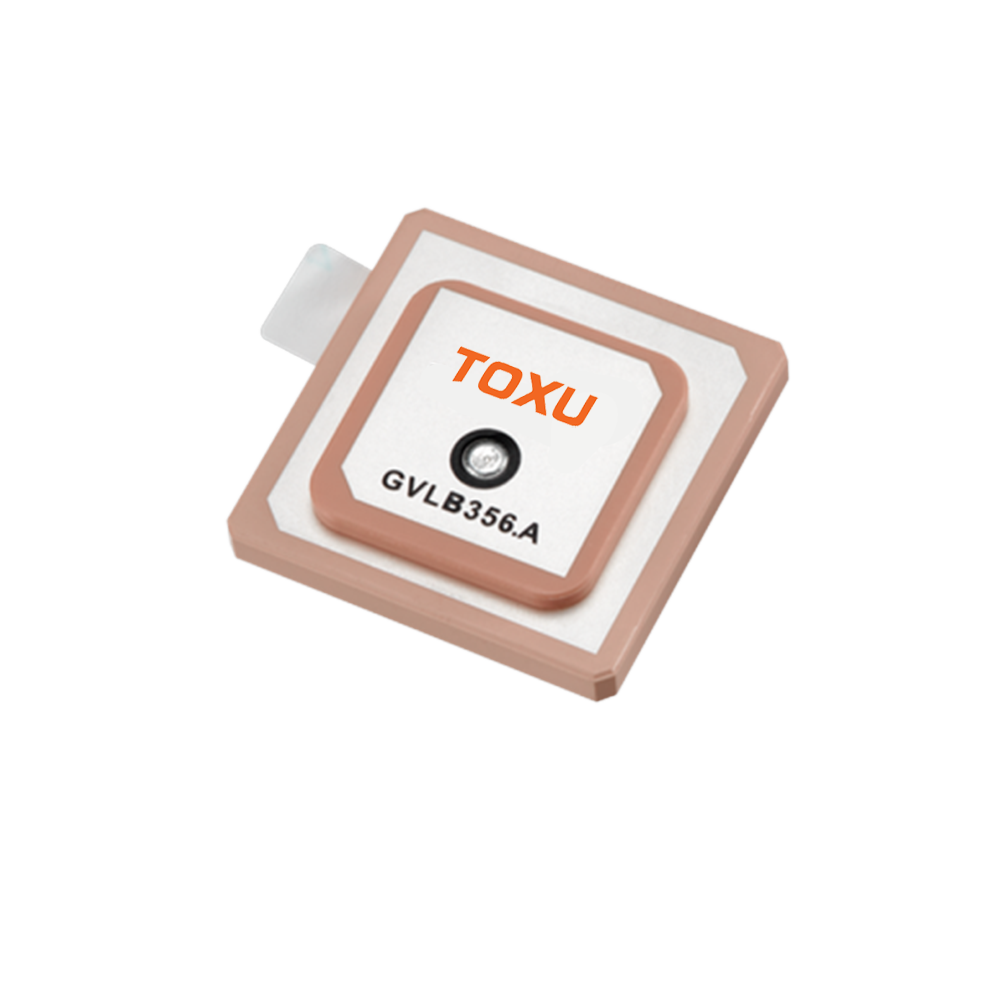
How to Select the Right RTK GNSS Antenna for Agricultural Applications
Understanding Your Accuracy Requirements
The first and most fundamental step in antenna selection is defining the accuracy demands of your specific application. Agriculture applications are typically more forgiving than surveying in terms of mounting precision and budget, but the accuracy requirements for automated guidance and section control are stringent.
For RTK applications requiring centimeter-level accuracy, multi-band antenna support (L1, L2, and L5 frequencies) is essential. Multi-band capability allows the antenna to capture more signals, correct more error sources, and achieve faster ambiguity resolution—the process by which the RTK system determines the exact number of carrier wave cycles between the satellite and receiver.
Frequency Coverage and Constellation Compatibility
Modern high-performance RTK antennas support multiple GNSS constellations and frequency bands:
GPS: L1, L2, L5
GLONASS: G1, G2, G3
Galileo: E1, E5a, E5b, E6
BeiDou: B1I, B2I, B3I, B1C, B2a, B2b
QZSS, NavIC, SBAS: Various bands
L-Band correction services (for satellite-based RTK corrections)
Multi-constellation support is particularly important in agricultural environments where signal obstruction from trees, buildings, or terrain can reduce the number of visible satellites. Tracking multiple constellations increases the total number of available satellites and improves positioning reliability in challenging conditions.
Phase Center Stability: The Precision Foundation
The phase center of a GNSS antenna is the apparent point from which it receives satellite signals. For high-precision applications, the phase center must remain stable across all azimuth and elevation angles. Phase center variation (PCV) directly affects measurement accuracy—even small variations introduce positioning errors that can accumulate over time.
High-quality RTK antennas achieve phase center stability through multi-feed designs that ensure the phase center coincides with the geometric center of the antenna. The best antennas achieve phase center variation of ≤2 mm from zenith to 15° above the horizon, ensuring consistent performance across the full sky view.
Multipath Rejection Capabilities
Multipath—the reception of satellite signals reflected from the ground, machinery, or nearby structures—is one of the most significant error sources in agricultural GNSS applications. Metal machinery surfaces, in particular, create strong reflections that can shift positioning by 1–2 meters if not properly mitigated.
Antennas with excellent axial ratio and circular polarization purity are most effective at rejecting multipath signals. The quad-feed Accutenna® technology, for example, enables an excellent axial ratio that strongly mitigates multipath while maintaining tightly grouped phase center variation. Choke ring designs further improve multipath rejection by suppressing signals arriving from below the horizon.
Low Elevation Angle Gain for L-Band Corrections
Agricultural applications frequently use L-band GNSS corrections broadcast from geostationary satellites. As distance from the equator increases, the look angle to these satellites decreases, requiring antennas with good low elevation angle gain to maintain reliable correction reception.
This requirement is particularly critical for operations in northern and southern latitudes. Antennas with best-in-class low elevation angle gain ensure consistent L-band correction reception across diverse geographic regions.
Environmental Ruggedness and Durability
Agricultural RTK antennas must withstand harsh environmental conditions including:
Temperature extremes (-40°C to +85°C operating range)
Vibration and shock from machinery operation
Dust, moisture, and chemical exposure
UV radiation degradation
Electromagnetic interference from farm equipment
IP67 or higher ingress protection ratings are recommended for permanent outdoor installations. Rugged through-hole metallic bases and weatherproof enclosures ensure reliable long-term performance in permanent installations.
Interference Mitigation and Filtering
The radio frequency spectrum has become increasingly congested, with new LTE bands and other signals potentially interfering with GNSS reception. Out-of-band signals can saturate antenna amplifiers and degrade positioning performance.
Advanced RTK antennas incorporate eXtended Filtering (XF) technology that creates deep attenuation of nearby out-of-band radio frequency signals. This filtering is particularly important as new LTE bands are activated and their signals or harmonic frequencies can affect GNSS antennas and receivers.
Mounting Options and Form Factor
Mounting method and antenna size have significant impacts on performance. Key considerations include:
Size and weight: Compact, lightweight antennas are essential for UAVs and small robots, while larger machines can accommodate larger radomes
Mounting interface: Options include pole mount (5/8″-11 screw), magnetic mount, fixed surface mount, adhesive, and embedded through-hole configurations
Ground plane requirements: Some antennas require a proper ground plane for optimal performance, while ground-plane-independent designs offer greater installation flexibility
Cable length and connector type: Ensure compatibility with existing receiver and RTK module connections
Installation Best Practices for RTK GNSS Antennas in Agriculture
Base Station Antenna Placement
The RTK base station antenna must be installed with an unobstructed view of the sky. A clear sky view means no obstacles within a 30° angle above the antenna position. Optimal placement is at a high point such as the edge of a building, above the roof ridge, or on a dedicated mast that clears nearby trees, silos, or other potential obstructions.
Critical placement guidelines include:
Avoid mounting near chimneys: Chimney smoke can cause signal interference
Maintain distance from solar panels: Reflected signals from solar arrays can disrupt satellite communications
Avoid metal roofs: Flat metal surfaces reflect satellite signals, causing instability. If metal roof installation is unavoidable, position the antenna at the highest point to minimize reflectionEnsure stable anchoring: The mounting surface must be stable and immovable, unaffected by strong winds or adverse weather. Do not install on masts, chimneys, or towers that may sway
The RTK base station must be installed within 10 km of the operating field for accurate navigation. For farms with fields distributed across a wider area, multiple base stations may be required to ensure complete coverage.
Rover Antenna Installation on Machinery
For mobile applications on tractors, sprayers, and combines, the antenna should be mounted on a stable point of the vehicle, away from potential signal interference from metal structures or electronics. A clear view of the sky above and around the vehicle is essential.
Key considerations for machine-mounted antennas include:
Ground plane design: A properly designed ground plane improves radiation pattern symmetry and reduces signal distortion. On metallic machinery, radio frequency surface currents and reflections can degrade antenna performance if not properly managed
Vibration isolation: Agricultural machinery generates significant vibration that can cause antenna movement and introduce positioning errors. Secure mounting with vibration-damping materials is recommended
Cable routing: Avoid sharp bends and kinks that can damage cables and degrade signal quality
Electromagnetic interference: Position the antenna away from motors, alternators, and other electronic equipment that generates RF noise
Ground Plane Optimization
The ground plane—the conductive surface beneath the antenna—plays a critical role in antenna performance. A well-designed ground plane has been shown to improve pattern symmetry and reduce signal distortion, with the result that downward signal reception is suppressed.
For patch antennas, operating efficiently on a metal ground plane is one of their key advantages. The ground plane size should be sufficient to support the antenna's radiation pattern—typically a minimum diameter of 100–150 mm for agricultural applications, though larger ground planes generally provide better performance.
RTK Correction Service Integration
RTK corrections can be delivered through two primary methods:
1. Local base station: A dedicated RTK base station installed on the farm broadcasts corrections via radio to roving receivers within range. This approach provides independence from cellular networks but requires infrastructure investment and maintenance.
2. Network RTK (NTRIP): Corrections are delivered over the internet via the Networked Transport of RTCM via Internet Protocol (NTRIP). NTRIP streams corrections over an ordinary internet connection, so the reference station can be located many kilometers away. This eliminates the need for a local base station but requires reliable cellular coverage.
Many modern RTK systems support both radio and NTRIP simultaneously, ensuring continuous corrections even when one communication channel becomes unstable.
Market Trends and Future Outlook
Market Growth and Drivers
The global market for GPS/GNSS smart antennas is experiencing robust growth, driven primarily by precision agriculture adoption. Market analysts project the GPS/GNSS smart antenna market will grow from approximately US$1,526 million in 2025 to US$2,243 million in 2031, representing a CAGR of 6.6%. Other analyses forecast even stronger growth, with some projecting a CAGR of 8.24% as RTK and PPP correction technologies expand across sectors.
Technology Trends
Integration and Miniaturization: The trend toward all-in-one smart antennas that integrate GNSS reception, RTK processing, communication modules, and inertial sensors into a single compact unit is accelerating. These integrated designs simplify installation, reduce system latency, and lower total system cost for OEMs.
Multi-Frequency, Multi-Constellation Support: Full-band antennas covering all GNSS frequencies and constellations are becoming the standard for precision agriculture. The ability to track GPS L1/L2/L5, GLONASS G1/G2/G3, Galileo E1/E5a/E5b/E6, and BeiDou B1/B2/B3 signals ensures maximum satellite availability and positioning reliability.
L-Band and PPP-RTK Convergence: The convergence of L-Band satellite correction services with RTK and PPP (Precise Point Positioning) technologies is expanding the range of correction options available to farmers. PPP-RTK combines the rapid convergence of RTK with the wide-area coverage of PPP, offering centimeter-level accuracy without the need for a local base station.
Anti-Interference and Filtering: As the RF spectrum becomes more congested, advanced filtering technologies that mitigate out-of-band interference are becoming essential. Antennas with deep attenuation of nearby LTE and other signals ensure reliable performance in increasingly challenging RF environments.
Regional Market Dynamics
North America: The United States and Canada represent mature markets for RTK agriculture technology, driven by large farm sizes, advanced mechanization, and widespread adoption of precision agriculture practices. The presence of major GNSS antenna manufacturers and technology providers further supports market growth.
Europe: European agriculture benefits from strong government support for precision farming through the Common Agricultural Policy. The region's focus on sustainability and input reduction aligns well with the resource efficiency benefits of RTK technology.
Asia-Pacific: China, Japan, Australia, and Southeast Asia represent high-growth markets for RTK agriculture. China's large agricultural sector and government investment in smart agriculture technologies are driving rapid adoption. Australia's extensive broadacre farming operations are well-suited to RTK guidance systems.
Latin America: Brazil and Argentina are emerging markets for RTK technology, driven by large-scale soybean, corn, and sugarcane production. The adoption of precision agriculture practices in these regions is accelerating as farmers recognize the economic benefits of improved accuracy.
The RTK agriculture GNSS antenna represents far more than a hardware upgrade—it is the enabling technology for a fundamental transformation in how food is produced. By delivering centimeter-level positioning accuracy that is reliable, repeatable, and affordable, RTK GNSS antennas unlock the full potential of precision agriculture.
From automated guidance systems that reduce overlap and improve field efficiency, to variable-rate application systems that optimize input use, to autonomous field operations that operate around the clock, the applications of RTK precision continue to expand. As the technology matures and costs decrease, adoption is accelerating across farm sizes, crop types, and geographic regions.
The market data confirms this trajectory: sustained growth in the GPS/GNSS smart antenna market reflects the fundamental value that RTK precision delivers to agricultural operations. For farmers evaluating precision agriculture investments, the RTK GNSS antenna is not merely a component—it is the foundation upon which all other precision technologies depend.
As we look to the future, the convergence of RTK with other technologies—inertial sensors, artificial intelligence, cloud-based data analytics, and autonomous machinery—will continue to push the boundaries of what is possible in agricultural production. The farms of tomorrow will be built on the centimeter-level precision that RTK GNSS antennas deliver today.
Lucy Yang | lucy.y@toxutech.com
Dotty Zhao | sales04@toxutech.com
Global Business Director / Sales Team / Global Operations


 En
En Cn
Cn Korean
 Home >