

-
Products -PCBA Manufacturing RF Connectors RF Cable Assemblys Embedded Antennas External Antennas GNSS Positioning Solutions
RF Connectors

RF Cable Assemblys
Embedded Antennas
External Antennas
GNSS Positioning Solutions































 Language


Language


Time:2026-10-16 Views:0
Why Multi-System Antennas Matter
In an era where positioning accuracy can mean the difference between a successful autonomous mission and a catastrophic failure, the antenna you choose is no longer a simple accessory—it is a critical component of your entire GNSS architecture. Multi-system GPS GLONASS antennas represent the current gold standard in satellite navigation technology, enabling devices to simultaneously receive signals from multiple satellite constellations including GPS, GLONASS, Galileo, BeiDou, QZSS, and IRNSS.
The global GNSS multiband antenna market was valued at approximately US$1,221 million in 2025 and is projected to reach US$1,848 million by 2032, growing at a compound annual growth rate of 6.3%. This remarkable growth reflects the fundamental shift in how industries approach positioning technology—moving from single-constellation solutions to robust, multi-system architectures that deliver superior accuracy, reliability, and performance in even the most challenging environments.
This comprehensive guide explores everything you need to know about multi-system GPS GLONASS antennas, from their technical specifications and performance characteristics to real-world applications, selection criteria, and installation best practices.
Understanding Multi-System GNSS Technology
What Is a Multi-System GNSS Antenna?
A multi-system GNSS antenna is a specialized radio frequency (RF) device designed to receive signals from multiple global navigation satellite systems operating across various frequency bands. Unlike traditional single-system antennas that were limited to GPS L1 signals, modern multi-system antennas can simultaneously track signals from GPS, GLONASS, Galileo, BeiDou, QZSS, IRNSS, and SBAS systems across multiple frequency bands including L1, L2, and L5.
The architecture of these antennas typically employs advanced circularly polarized designs that match the Right-Hand Circularly Polarized (RHCP) signals transmitted by GNSS satellites. This polarization matching is essential for maximizing signal reception while minimizing interference from multipath reflections and other noise sources.
Key Frequency Bands and Constellations
Modern multi-system GNSS antennas support an extensive range of frequency bands across multiple constellations:
GPS (United States): L1 (1575.42 MHz), L2 (1227.60 MHz), L5 (1176.45 MHz)
GLONASS (Russia): G1 (1602 MHz), G2 (1246 MHz), G3 (1202 MHz)
Galileo (European Union): E1 (1575.42 MHz), E5a (1176.45 MHz), E5b (1207.14 MHz), E6 (1278.75 MHz)
BeiDou (China): B1I (1561.098 MHz), B1C (1575.42 MHz), B2I (1207.14 MHz), B2a (1176.45 MHz), B2b (1207.14 MHz), B3I (1268.52 MHz)
QZSS (Japan): L1, L2, L5, L6
IRNSS/NavIC (India): L5, S-band
This multi-band, multi-constellation capability dramatically increases the number of visible satellites available to a receiver, improving position availability, accuracy, and redundancy. Access to several constellations increases the number of satellites available to the receiver and can improve the geometry used to calculate position, particularly in environments where buildings, machinery, or terrain obstruct part of the sky.
The Evolution from Single to Multi-System
The transition from single-system GPS antennas to multi-system solutions has been driven by several converging factors. The proliferation of satellite navigation systems globally has created an environment where multi-constellation reception is not just beneficial but essential for achieving the accuracy and reliability demanded by modern applications. Multi-band, multi-constellation antennas are becoming baseline requirements, with premium segments projected to grow 2–3% per year faster than single-band segments.
Multi-frequency GNSS is essential for applications requiring high-accuracy positioning, as it allows ionospheric error correction using dual-frequency processing. The ionosphere, a layer of charged particles in the upper atmosphere, introduces signal delays that vary with frequency. By receiving signals on multiple frequencies, receivers can measure and correct these errors, dramatically improving positioning accuracy.
Technical Specifications and Performance Parameters
Electrical Performance Characteristics
When evaluating multi-system GPS GLONASS antennas, several critical electrical parameters determine overall performance:
Gain and Efficiency: Antenna gain measures how effectively the antenna converts received signals into electrical power. For GNSS applications, peak gain typically ranges from 3 to 38 dBi depending on the antenna type and application. High-performance multi-system antennas often deliver LNA gains of 35 to 40 dB, ensuring signal strength is sufficient for receiver processing even after cable losses. Gain is defined as Efficiency × Directivity, and both attributes are intrinsically related.
Polarization and Axial Ratio: GNSS signals are Right-Hand Circularly Polarized (RHCP), and the antenna must match this polarization for optimal reception. Axial ratio describes the purity of polarization, with a perfect circular polarization having a ratio of 1:1 or 0 dB. A very common target for high-quality GNSS antennas is an axial ratio of ≤3 dB. This parameter directly affects multipath rejection capability—the lower the axial ratio, the better the antenna can discriminate between direct satellite signals and reflected signals that can degrade positioning accuracy.
Noise Figure: The LNA noise figure is particularly critical in GNSS antenna design because satellite signals are extremely weak by the time they reach Earth. A noise figure of ≤2 dB is considered excellent for high-performance antennas. Recent advancements have pushed this even further, with some antennas achieving noise figures of 2.5 dB while maintaining gains of 28–30 dB.
Voltage Standing Wave Ratio (VSWR): VSWR measures impedance matching between the antenna and the receiver. For GNSS applications, a VSWR of ≤2.0 across the operating bands ensures efficient power transfer and minimizes signal reflection.
Phase Center Stability: Perhaps the most critical parameter for high-precision applications, phase center stability refers to the consistency of the antenna's electrical phase center relative to its physical center. High-performance antennas achieve phase center errors of just ±2 mm. Advanced designs employ multi-point feeding mechanisms to achieve greater phase center stability, effectively improving measurement accuracy and providing better positioning solutions. Phase center offset and phase center variation are critical parameters in GNSS performance, particularly for precision applications.
Mechanical and Environmental Specifications
Housing and Protection: Multi-system GNSS antennas must withstand harsh environmental conditions across diverse applications. Ingress Protection (IP) ratings range from IP64 for general outdoor use to IP67 and IP69K for the most demanding environments. A rugged IP67-rated enclosure is essential for applications involving exposure to dust, water, and vibration. Some high-end antennas are built to IP69K standards, providing protection against high-pressure, high-temperature water jets.
Operating Temperature Range: Professional-grade antennas typically operate from -40°C to +85°C, ensuring reliable performance in extreme climates from arctic conditions to desert environments.
Vibration and Shock Resistance: For mobile and vehicle-mounted applications, compliance with MIL-STD-810 standards for vibration and shock ensures the antenna can survive the rigors of dynamic environments. Vibration resistance to MIL-STD-810G Method 514.7 is common in high-quality antennas.
Dimensions and Weight: Multi-system antennas come in various form factors. Compact designs for embedded applications can measure just 35 × 35 × 15 mm, while larger survey-grade antennas may be 100 mm in diameter with heights of 36.5 mm. Weight ranges from as little as 29 grams for compact models to over 290 grams for full-survey antennas.
Types of Multi-System GNSS Antennas
Patch Antennas
Patch antennas are the most common type of GNSS antenna, featuring a flat, rectangular or circular radiating element suspended above a ground plane. These antennas offer excellent performance-to-size ratio and are widely used in applications where space is limited. Multi-stacked patch designs, such as those used in dual-band GNSS L1/L5 antennas, utilize a single-feed stacked patch assembly to cover GPS L1 and L5, BeiDou B1/B2a, Galileo E1 and E5a, and GLONASS G1 bands.
Modern patch antennas are tuned and tested on specific ground planes (typically 70mm × 70mm) to ensure optimal radiation patterns and fast positioning capabilities. Their compact dimensions—some measuring just 25mm × 25mm × 6mm—make them ideal for installations where height is at a premium.
Helical Antennas
Helical antennas offer superior circular polarization purity and are particularly effective at suppressing multipath interference. The design consists of one or more conductive elements wound in a helical pattern, creating a broadband response with excellent axial ratio characteristics.
A precision-tuned, four-star full-frequency helical antenna can receive signals from multiple bands simultaneously, combining them in a hybrid combiner, amplifying through a wide-band Low Noise Amplifier, then band-splitting for narrow filtering in each band before final amplification and recombination at the output. This architecture provides excellent axial ratio and tightly grouped phase center variation.
Choke Ring Antennas
Choke ring antennas represent the pinnacle of multipath rejection technology, featuring concentric rings surrounding the radiating element that create a "choke" effect, suppressing signals arriving from low elevation angles where multipath is most problematic. These antennas are primarily used in high-precision surveying and geodetic applications where millimeter-level accuracy is required.
Dipole and Cross-Dipole Antennas
Circularly polarized cross-dipole array antennas offer wide impedance bandwidth, high gain, and compactness, addressing the needs of modern GNSS applications. CP antennas are preferred for GNSS because they suppress multipath interference and maintain orientation independence, which is critical for portable devices like GNSS-enabled wearables.
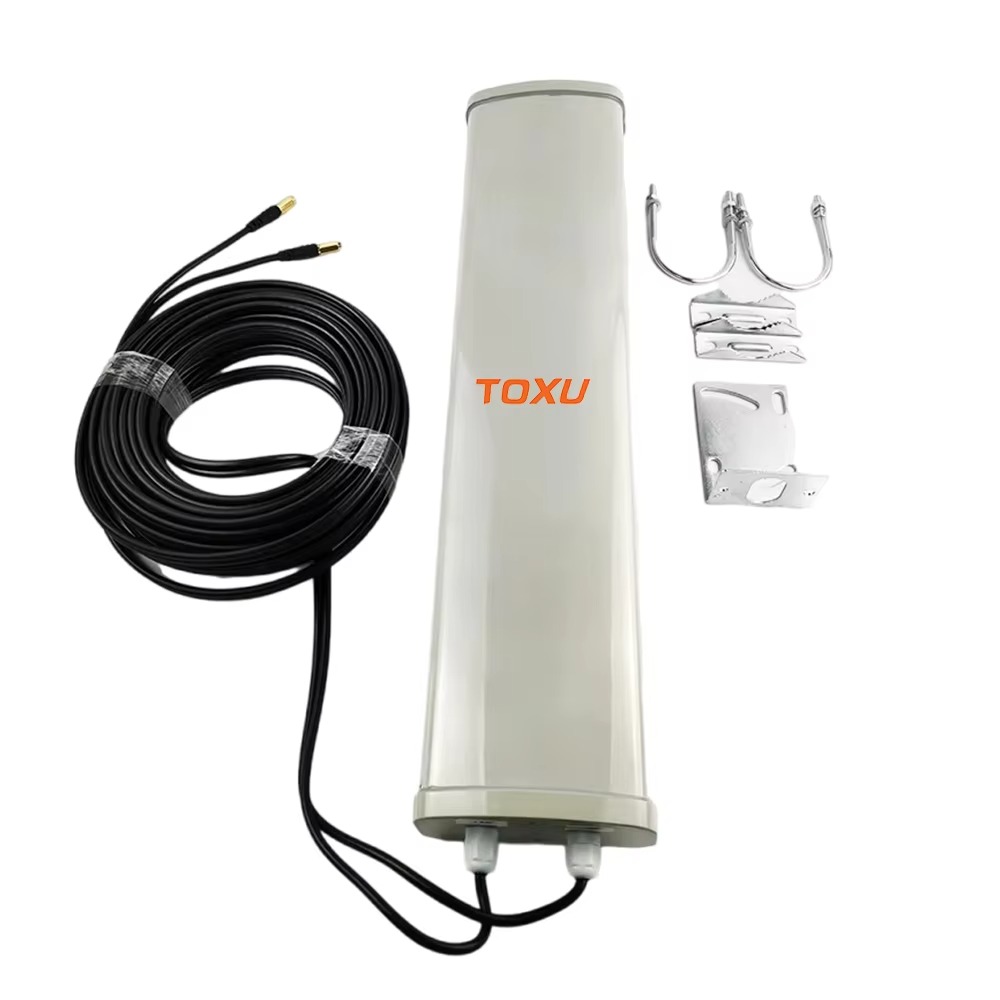
Key Benefits of Multi-System GNSS Antennas
Enhanced Accuracy Through Multi-Constellation Processing
The most significant advantage of multi-system antennas is the dramatic improvement in positioning accuracy. By receiving signals from multiple constellations, receivers can use signals from far more satellites than any single system provides. GPS nominally requires four satellites for a position fix, but in urban canyons or mountainous terrain, the number of visible GPS satellites may drop below this threshold. Adding GLONASS, Galileo, and BeiDou satellites ensures that enough satellites are always visible for reliable positioning.
Multi-system compatibility improves satellite signal availability, particularly in complex environments or under obstruction conditions. It enhances signal availability rates, reduces the risk of single-system failure, and is particularly important for cross-regional and cross-national applications.
Ionospheric Error Correction
The ionosphere introduces frequency-dependent signal delays that represent one of the largest error sources in GNSS positioning. Multi-frequency antennas enable dualand triple-frequency processing that can measure and correct these errors. The multi-band architecture effectively mitigates ionospheric errors, while the L5 band offers superior interference resistance and multipath performance compared to the L2 band.
Improved Multipath Rejection
Multipath occurs when GNSS signals reflect off buildings, terrain, and other surfaces before reaching the antenna, causing positioning errors. Multi-system antennas with excellent axial ratio and circular polarization purity are inherently better at rejecting multipath signals. The design achieves this through a combination of circular polarization purity and optimized radiation patterns that prioritize signals arriving from high elevation angles.
Superior Reliability and Redundancy
When one constellation experiences outages or degradation—whether due to satellite failures, signal jamming, or regional interference—multi-system antennas automatically continue receiving signals from other systems. This redundancy is critical for safety-of-life applications such as autonomous vehicles, aviation, and maritime navigation. The signal diversity needed for precise, resilient satellite positioning is provided without the risk of signal blackouts if one constellation becomes unavailable.
Faster Time-to-First-Fix
Multi-constellation receivers can acquire and track more satellites simultaneously, dramatically reducing the time required to achieve the first position fix. This is particularly important for applications requiring rapid initialization, such as survey equipment, drones, and portable navigation devices.
Industry Applications and Use Cases
Automotive and Autonomous Driving
The automotive industry represents one of the fastest-growing markets for multi-system GNSS antennas. Advanced Driver Assistance Systems (ADAS) and Vehicle-to-Everything (V2X) technologies require positioning accuracy far beyond what single-system GPS can provide. Automotive navigation systems, autonomous driving positioning modules, and smart transportation systems all depend on robust multi-constellation reception.
High-precision vehicle antennas designed for these applications feature multi-point feeding designs for greater phase center stability, robust pre-filtered LNAs for excellent out-of-band interference rejection, and compact ruggedized housings with IP67 protection.
Precision Agriculture
Modern precision agriculture relies on GNSS-guided tractors, combines, and sprayers that operate with centimeter-level accuracy. Multi-system antennas enable these machines to follow precise paths, avoid overlaps and gaps, and optimize input usage. The agriculture sector represents one of the most rapidly expanding application areas for multi-band GNSS antennas, with equipment requiring rugged but cost-effective solutions.
Surveying and Mapping
Surveying applications demand the highest levels of accuracy, with requirements extending to millimeter-level precision in geodetic applications. Multi-system antennas used in surveying must deliver exceptional phase center stability, superior multipath rejection, and consistent performance across all frequency bands. Survey-grade antennas typically feature large ground planes, choke rings for multipath suppression, and precision-tuned phase centers.
Drones and UAVs
Unmanned aerial vehicles require lightweight, compact antennas that can deliver reliable positioning despite the challenging electromagnetic environment created by motors, ESCs, and other onboard electronics. Multi-system GNSS antennas for drones must balance performance with size and weight constraints, with compact designs measuring just 35 × 35 × 15 mm being ideal for these applications.
Industrial IoT and Asset Tracking
The Industrial Internet of Things (IoT) has created enormous demand for compact, cost-effective GNSS antennas that can be integrated into tracking devices, logistics terminals, and remote monitoring systems. Multi-system antennas enable reliable asset tracking across diverse environments, with applications including fleet management, container tracking, inventory management, and telematics.
Marine and Aviation Navigation
Maritime and aviation navigation systems require the highest levels of reliability and integrity. Multi-system antennas provide the signal diversity and redundancy needed for safety-critical applications, ensuring continuous positioning even when individual constellations experience interference or degradation.
Timing and Synchronization
Many critical infrastructure systems—including telecommunications networks, financial trading systems, and power grids—rely on GNSS timing signals for synchronization. Multi-system antennas provide redundant timing sources, ensuring that these systems maintain precise time synchronization even if one constellation experiences disruption.
How to Select the Right Multi-System GNSS Antenna
Step 1: Define Your Application Requirements
The selection process begins with a thorough understanding of your application's specific needs. Consider the required accuracy level, environmental conditions, platform constraints, and whether you need RTK or PPP capabilities. Understanding your use case drives all subsequent decisions, from frequency band selection to mounting method to amplifier gain requirements.
Key questions to address include: What accuracy level is required (meter, decimeter, centimeter, or millimeter)? What constellations must be supported? What environmental conditions will the antenna face? What are the size, weight, and power constraints? What is the required operating temperature range?
Step 2: Select Frequency Coverage and Constellation Compatibility
Once application requirements are defined, determine which frequency bands and constellations the antenna must support. For centimeter-level accuracy (RTK/PPP), multi-band (L1, L2, L5) support is essential to capture more signals and correct more errors. For dynamic environments such as drones and moving vehicles, low-elevation tracking is important, requiring wide beam width, high gain, and low phase center variation.
A simple decision framework for frequency selection: If you need basic positioning for consumer applications, L1 coverage may suffice. For professional-grade accuracy, dual-band (L1/L2 or L1/L5) is recommended. For the highest precision and robustness, triple-band (L1/L2/L5) with multi-constellation support provides the best performance.
Step 3: Evaluate Performance Specifications
Compare antennas based on key performance parameters:
Gain: Higher gain (typically 28–40 dB for active antennas) provides better signal strength but may come at the cost of increased power consumption and size
Noise Figure: Lower is better; aim for ≤2 dB for high-precision applications
Axial Ratio: Lower is better; ≤3 dB is the industry standard for quality antennas
Phase Center Stability: ±2 mm or better for survey-grade applications
VSWR: ≤2.0 across all operating bands
Step 4: Consider Mounting and Environmental Factors
Mounting method and size have a significant impact on performance. For drones and small robots, compact, lightweight antennas are favored. Larger survey poles or vehicle roofs can accommodate bigger radomes. Consider ground plane requirements—some antennas need a proper ground plane, while others are ground-plane independent.
Environmental protection rating is another critical factor. IP67 or IP69K ratings are essential for applications exposed to dust, water, and vibration. For marine applications, additional protection against salt spray and corrosion is necessary.
Step 5: Factor in Integration and Cost
Finally, consider integration complexity and total cost of ownership. Antennas with standard connectors (SMA, TNC) and flexible cable options simplify installation. Ready-to-use designs with integrated filtering reduce the time, cost, and RF expertise required to implement multi-band GNSS solutions.
The industry's average gross profit margin is approximately 28%, with product costs primarily driven by ceramic dielectric antenna materials and metal conductors (approximately 35%), electronic components such as RF chips and amplifiers (approximately 20%), and manufacturing and testing costs (approximately 20%).
Installation Best Practices
Site Selection and Placement
Proper installation is critical to achieving optimal antenna performance. Select an open location with a clear, unobstructed view of the sky down to the horizon. Ensure a minimum clear sky view of 120° at zenith. When installing on rooftops, maintain a distance of at least 0.5–1 meter from the roof edge to minimize signal reflections.
Avoid placing antennas near powerful RF emitters such as radio transmitters, radar systems, or high-current wiring. For vehicle installations, the best placement is typically on the roof, where windows and other obstructions won't interfere with signal reception.
Ground Plane Considerations
The ground plane plays a crucial role in antenna performance, affecting radiation patterns, gain, and multipath rejection. The minimum recommended ground plane radius is 60 mm, or as specified by the antenna supplier. Some antennas are tuned and tested on specific ground plane sizes (typically 70mm × 70mm for compact designs) and will perform optimally only when installed with an appropriate ground plane.
Mounting Methods
Common mounting options for multi-system GNSS antennas include:
Magnetic mount: Easy installation and repositioning on metal surfaces
Adhesive mount: Permanent or semi-permanent installation on non-metallic surfaces
Screw mount: Secure installation with 4× 6-32 UNC screws, suitable for high-vibration environments
Pole mount: Standard 5/8″-11 screw mount for survey applications
For vehicle installations, position the antenna as close to the center of the vehicle as possible, ensuring it is level with the ground.
Cable and Connector Considerations
Use low-loss coaxial cables such as LMR-400 grade or better to minimize signal attenuation. Keep cable runs as short as practical, as cable loss directly impacts system noise figure. Common connector options include SMA and TNC, with SMA being the most prevalent for compact installations.
Minimizing Multipath and Interference
To minimize multipath effects: install the antenna at the highest practical point (recommended >2 meters), ensure horizontal installation without tilting, and use a metal reflector plate or anti-multipath choke ring below the antenna. For fixed installations, ensure antennas are level with respect to each other and positioned away from reflective surfaces.
Market Trends and Future Outlook
Market Growth and Drivers
The global GNSS antenna market is experiencing robust growth driven by multiple factors. The high-precision GPS and GNSS antenna market is projected to grow from US$3,725 million in 2024 to US$4,878 million by 2031, at a CAGR of 4.2%. The GNSS smart antenna market, valued at US$1,517 million in 2024, is forecast to reach US$2,309 million by 2031 with a CAGR of 6.2%.
Growth is driven by policy initiatives promoting satellite navigation infrastructure, technological innovations in multi-frequency multi-constellation receiving technology, and rapidly increasing consumer demand for high-precision positioning from emerging applications such as autonomous driving, drone delivery, smart logistics, and precision agriculture.
Technological Advancements
The industry is witnessing continuous advancement in several key areas:
Miniaturization: Ceramic patch antennas are becoming increasingly compact without sacrificing performance, enabling integration into ever-smaller devices.
Integrated Filtering: Modern antennas are incorporating additional notch filters and extended filtering to mitigate out-of-band interference from LTE, Wi-Fi, and other RF sources. The integration of notch filters in the L1 RF path provides the best possible out-of-band interference mitigation while minimizing design complexity.
Low-Noise RF Design: Advances in LNA technology are reducing noise figures and improving sensitivity, enabling reliable positioning with weaker signals.
Multi-Frequency RTK: The adoption of triple-band (L1/L2/L5) antennas is making high-precision positioning more accessible for mass adoption, with improved performance-price ratios.
Regional Market Dynamics
The Asia-Pacific region, particularly China, represents a significant and growing market for GNSS multi-band antennas. China's GNSS multiband antenna market is expected to grow substantially, driven by the country's aggressive deployment of BeiDou constellation services and smart transportation infrastructure. Europe and North America remain strong markets for high-precision antennas, with established surveying, agriculture, and automotive industries driving demand.
Multi-system GPS GLONASS antennas have become indispensable components in the modern positioning landscape. Their ability to receive signals from multiple satellite constellations across multiple frequency bands delivers the accuracy, reliability, and redundancy that countless applications now demand—from autonomous vehicles navigating complex urban environments to precision agriculture equipment operating in remote fields.
As satellite navigation systems continue to evolve and new applications emerge, the demand for high-performance multi-system antennas will only intensify. The market's projected growth trajectory—from US$1.2 billion to nearly US$1.85 billion over the next seven years—reflects the fundamental importance of this technology to the future of positioning, navigation, and timing systems worldwide.
Whether you're designing autonomous vehicles, building precision agriculture systems, developing IoT tracking devices, or deploying surveying equipment, selecting the right multi-system GNSS antenna is a critical decision that directly impacts the performance, reliability, and success of your application. By understanding the technical specifications, evaluating your application requirements carefully, and following proper installation practices, you can ensure your system achieves the accuracy and reliability that modern positioning demands.
For businesses in the GNSS antenna market, combining technical excellence with a well-executed digital marketing strategy—including targeted SEO for high-intent technical keywords—will be essential for capturing market share in this rapidly growing industry. The intersection of superior RF engineering and effective online visibility will define the winners in the competitive multi-system GNSS antenna market.
Lucy Yang | lucy.y@toxutech.com
Dotty Zhao | sales04@toxutech.com
Global Business Director / Sales Team / Global Operations


 En
En Cn
Cn Korean
 Home >