

-
Products -PCBA Manufacturing RF Connectors RF Cable Assemblys Embedded Antennas External Antennas GNSS Positioning Solutions
RF Connectors

RF Cable Assemblys
Embedded Antennas
External Antennas
GNSS Positioning Solutions































 Language


Language


Time:2026-10-15 Views:0
In the rapidly evolving world of wireless communication, the demand for smaller, faster, and more reliable radio frequency (RF) interconnects has never been greater. As devices shrink from smartphones to IoT sensors and 5G modules, engineers face a persistent challenge: how to route highfrequency signals from a tiny surfacemount connector on a printed circuit board (PCB) to an external antenna without compromising signal integrity. The miniature MHF4 SMA harness has emerged as the definitive solution to this challenge, combining the ultralow profile of the IPEX MHF4 connector with the industrystandard SMA interface in a single, preconfigured cable assembly.
This comprehensive guide explores every aspect of the MHF4 SMA harness, from its technical specifications and performance characteristics to its applications, selection criteria, and role in the future of wireless connectivity. Whether you are a design engineer, a procurement specialist, or a technology enthusiast, this article will provide the deep technical insight needed to understand why the MHF4 SMA harness has become indispensable in modern RF design.
What Is an MHF4 SMA Harness?
A miniature MHF4 SMA harness is a preassembled RF coaxial cable that terminates with an IPEX MHF4 (also known as IPEX MHF4 or UMCC Gen 4) connector on one end and an SMA (SubMiniature version A) connector on the other. The harness serves as a bridge between the miniature, boardmounted MHF4 receptacle—typically found on wireless modules, M.2 cards, and compact IoT devices—and an external SMA antenna or bulkhead connector mounted on the enclosure of a device.
The term "harness" in this context refers to a complete cable assembly that is ready for immediate integration, as opposed to loose connectors or bulk cable that require field termination. These assemblies are manufactured under controlled conditions to ensure consistent impedance, minimal insertion loss, and reliable mechanical performance.
The MHF4 Connector: A Breakthrough in Miniaturization
The MHF4 connector, developed by IPEX Inc., represents the fourth generation of the company's Micro High Frequency (MHF) connector series. With a mated height of just 1.2 mm and a footprint of 2.0 mm × 2.0 mm, the MHF4 is one of the smallest RF connectors available for surfacemount applications. This ultralow profile is achieved through advanced precision engineering, allowing the connector to fit into spaces where even the alreadysmall U.FL connector would be too bulky.
The MHF4 is designed for use with 0.81 mm outer diameter (OD) microcoaxial cable, the thinnest cable option in the MHF series. Despite its diminutive size, the MHF4 supports frequencies up to 6 GHz for the standard version and up to 12 GHz for the MHF4L variant, making it suitable for a wide range of wireless protocols including WiFi, Bluetooth, 5G sub6 GHz, 4G LTE, and GPS.
The connector features a snapon mating mechanism that enables quick and secure connections without the need for soldering or specialized tools. Gold plating on the center contact and phosphor bronze construction ensure excellent corrosion resistance and stable electrical performance over the connector's lifetime.
The SMA Connector: The Industry Standard for External Antennas
The SMA (SubMiniature version A) connector is one of the most widely used RF connectors in the world, known for its threaded coupling mechanism, robust construction, and reliable performance up to 18 GHz (and beyond for precision variants). In the context of an MHF4 SMA harness, the SMA end is typically a female bulkhead jack designed to be mounted through the wall of an enclosure, providing a secure, weatherresistant external antenna port.
SMA connectors used in these harnesses are constructed from goldplated brass, offering excellent conductivity and resistance to corrosion. The threaded interface ensures a stable, lowresistance connection that is resistant to vibration and mechanical stress—a critical requirement for applications in automotive, aerospace, and industrial environments.
MHF4 vs. Other Miniature RF Connectors
To fully appreciate the MHF4 SMA harness, it is essential to understand how the MHF4 connector compares to other miniature RF connectors commonly found in wireless designs.
MHF4 vs. U.FL (MHF1)
The U.FL connector, also known as MHF1 or IPEX MHF1, has been the de facto standard for miniature RF interconnects for many years. However, the MHF4 offers significant advantages in spaceconstrained designs. The U.FL has a mated height of 2.5 mm, more than double that of the MHF4's 1.2 mm. The footprint of the U.FL is also larger at 3.1 mm × 3.0 mm, compared to 2.0 mm × 2.0 mm for the MHF4.
In practical terms, this size difference means that MHF4 connectors can be placed in locations where U.FL connectors simply will not fit—such as on densely populated M.2 cards or in ultrathin portable devices. Importantly, U.FL and MHF4 are not mateable; an adapter cable is required to connect a U.FL receptacle to an MHF4 plug, and vice versa.
MHF4 vs. MHF3
The MHF3 connector is compatible with the W.FL connector and occupies an intermediate position in the MHF series. While the MHF3 is smaller than the MHF1, it is larger than the MHF4. The MHF4 cable connector is the smallest in the series, while the MHF1 is the largest, comparable to a U.FL connector.
MHF4 vs. MHF4L and MHF4L LK
The MHF4L is an enhanced version of the MHF4 that supports higher frequencies (up to 12 GHz) and is compatible with 1.13 mm OD cable in addition to 0.81 mm cable. The MHF4L has a slightly taller mated profile of 1.4 mm with 1.13 mm cable, but this still represents an exceptionally low profile for the performance it delivers.
The MHF4L LK variant adds a mechanical locking feature that prevents the plug from disengaging from the receptacle during vibration or mechanical stress. This makes it ideal for rugged applications such as unmanned aerial vehicles (UAVs), defense equipment, and automotive systems.
Anatomy of a Miniature MHF4 SMA Harness
A typical MHF4 SMA harness consists of several precisely engineered components, each contributing to the assembly's overall performance and reliability.
The MHF4 Plug Connector
The MHF4 plug is the mating half of the connector pair that terminates the cable. It features a snapon interface that mates with the MHF4 receptacle soldered onto the PCB. The plug is constructed with a goldplated center contact and a phosphor bronze shell that provides both mechanical retention and electrical grounding. The connector is designed for a limited number of mating cycles—typically 30 cycles for standard versions—which is sufficient for the majority of applications where the cable is mated once during assembly and remains connected for the life of the product.
The MicroCoaxial Cable
The cable used in MHF4 SMA harnesses is a microcoaxial cable with an outer diameter of 0.81 mm (AWG 36) for standard MHF4 configurations, or 1.13 mm for MHF4L configurations. The cable typically features a silverplated copper center conductor, a foamed or solid PTFE dielectric, and a silverplated copper shield to provide excellent signal integrity and shielding effectiveness.
The 0.81 mm cable is the thinnest option and is ideal for applications where space is at an absolute premium. The 1.13 mm cable offers slightly better electrical performance and mechanical robustness, making it suitable for longer cable runs and applications where durability is a concern.
The SMA Bulkhead Connector
The SMA end of the harness is typically a female bulkhead jack designed to be mounted through a panel or enclosure wall. The bulkhead design includes a threaded body, a lock washer, and a hex nut to secure the connector to the enclosure. The center contact is goldplated brass, and the dielectric is PTFE or a similar highperformance material.
For applications requiring environmental sealing, variants with IP67 or IP68 ratings are available. These sealed SMA bulkhead connectors utilize Orings and gaskets to prevent the ingress of dust and moisture, making them suitable for outdoor and industrial applications.
Assembly and Termination
The MHF4 plug is terminated to the microcoaxial cable using a precision crimping or soldering process. Highquality harnesses are assembled under controlled conditions to ensure consistent impedance and minimal signal reflection. The cabletoconnector junction is often reinforced with heatshrink tubing or overmolding to provide strain relief and protect against mechanical damage.
Key Technical Specifications
When specifying an MHF4 SMA harness, engineers must consider a range of electrical, mechanical, and environmental parameters.
Electrical Specifications
The 30cycle mating durability of the standard MHF4 is an important consideration. For applications where the cable may need to be disconnected and reconnected multiple times during testing or maintenance, the highcycle adapter option (rated for 500 cycles) should be specified.
Environmental Specifications
The standard MHF4 SMA harness operates reliably over a temperature range of 40°C to +90°C, making it suitable for most commercial and industrial applications. For outdoor or harshenvironment applications, sealed variants with IP67 or IP68 ratings are available. These assemblies utilize Oring seals on the SMA bulkhead and are tested to withstand dust, water immersion, and other environmental stressors.
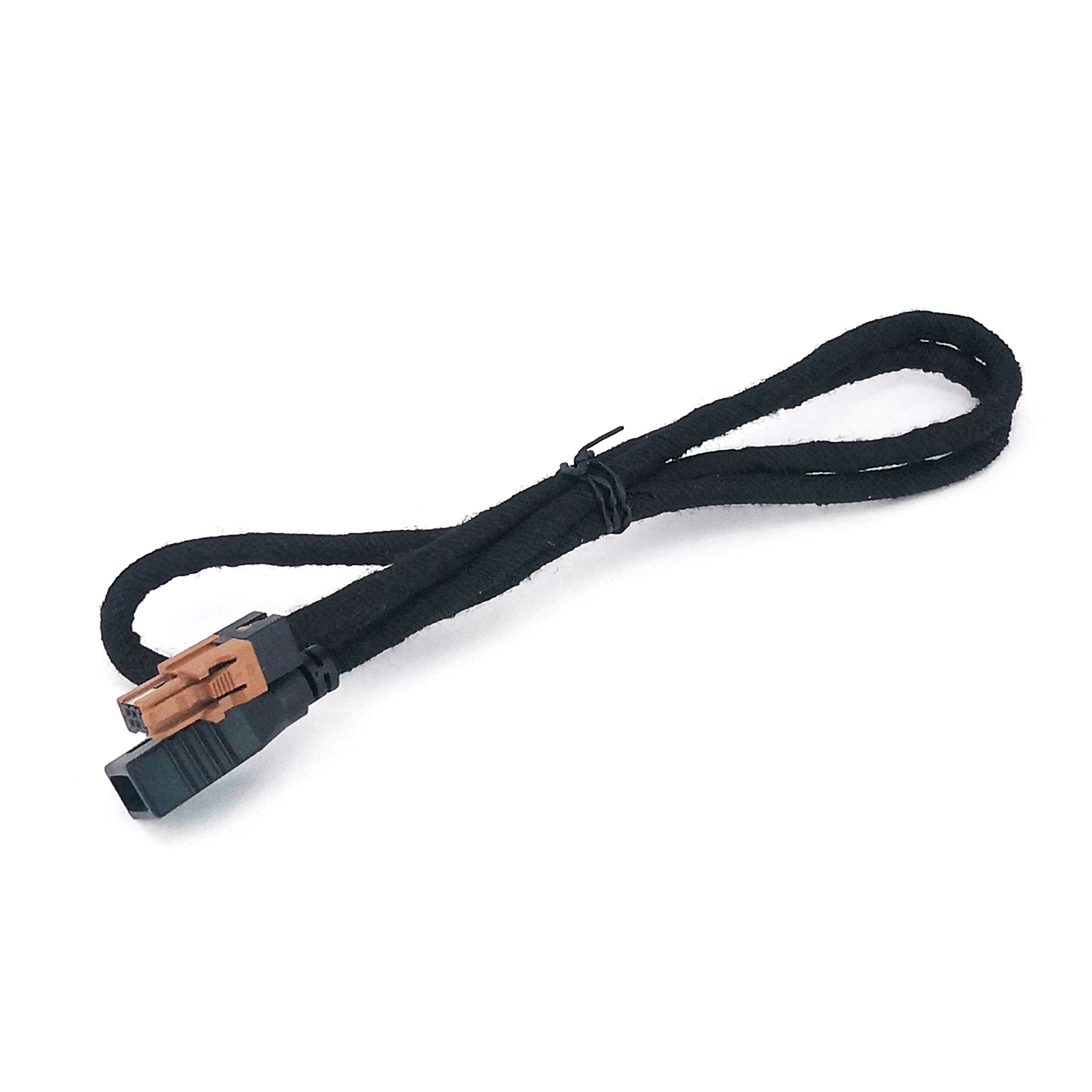
Performance Characteristics and Signal Integrity
The performance of an MHF4 SMA harness is determined by a complex interplay of connector design, cable construction, and assembly quality.
Insertion Loss
Insertion loss is the reduction in signal power as it travels through the harness. It is caused by resistive losses in the conductors, dielectric losses in the insulating material, and radiation losses. The MHF4 SMA harness achieves exceptionally low insertion loss for its size through the use of highconductivity materials (goldplated contacts, silverplated conductors) and lowloss dielectric materials.
For a 100 mm harness, the typical insertion loss at 2.4 GHz (a common WiFi frequency) is approximately 0.57 dB, while at 6 GHz it rises to about 0.91 dB. These figures are critical for link budget calculations in wireless system design, where every decibel of loss directly impacts range and reliability.
Voltage Standing Wave Ratio (VSWR)
| Parameter | Typical Value |
|---|---|
| Impedance | 50 Ω ± 3 Ω |
| Frequency Range | DC to 6 GHz (standard MHF4); DC to 12 GHz (MHF4L) |
| VSWR (DC–3 GHz) | 1.3 max (plug); 1.3 max (receptacle) |
| VSWR (3–6 GHz) | 1.5 max (plug); 1.4 max (receptacle) |
| Insertion Loss (100 mm) | 0.37√f in GHz (typical) |
| Insertion Loss (200 mm) | 0.68√f in GHz (typical) |
| Voltage Rating | 60 V |
| Contact Resistance | 20 mΩ max |
| Insulation Resistance | 100 MΩ min |
VSWR is a measure of how well the impedance of the harness matches the 50 Ω system impedance. A VSWR of 1.0 represents a perfect match, while higher values indicate reflections that can degrade signal quality. The MHF4 SMA harness maintains a VSWR of 1.3 or better up to 3 GHz and 1.5 or better up to 6 GHz, ensuring efficient power transfer with minimal reflection.
Shielding Effectiveness
The microcoaxial cable used in these harnesses features a silverplated copper braid shield that provides excellent protection against electromagnetic interference (EMI). The shield is electrically connected to the connector shells at both ends, creating a continuous ground path that minimizes signal leakage and susceptibility to external noise. This is particularly important in densely packed electronic devices where multiple RF systems operate in close proximity.
Phase Stability
For applications requiring phase coherence—such as phasedarray antennas or MIMO systems—the phase stability of the cable assembly is critical. The MHF4 SMA harness exhibits excellent phase stability over temperature and bending, thanks to the use of lowloss dielectric materials and precision manufacturing techniques.
Applications of the MHF4 SMA Harness
The MHF4 SMA harness is used across a diverse range of industries and applications, wherever there is a need to connect a compact wireless module to an external antenna.
IoT and M.2 Modules
One of the most common applications for MHF4 SMA harnesses is connecting M.2 form factor wireless modules (such as WiFi 6/6E, 5G, and LTE modules) to external antennas. M.2 cards typically feature multiple MHF4 receptacles for connecting multiple antennas, and the harness provides a reliable, lowloss path from these receptacles to SMA bulkhead connectors on the host device enclosure.
5G and Cellular Infrastructure
The rollout of 5G networks has created enormous demand for compact RF interconnects. MHF4 SMA harnesses are used in 5G customer premises equipment (CPE), small cells, and IoT gateways to connect sub6 GHz and mmWave radios to external antennas. The low insertion loss and high shielding effectiveness of these harnesses are essential for maintaining signal quality in highfrequency 5G systems.
Automotive and Transportation
Modern vehicles are equipped with a growing array of wireless systems, including WiFi hotspots, cellular telematics, GPS navigation, and V2X communication. MHF4 SMA harnesses are used to connect these systems to roofmounted or windowmounted antennas. The rugged construction of the locking MHF4L LK variant makes it particularly wellsuited for automotive applications, where vibration and temperature cycling are constant challenges.
Aerospace and Defense
In aerospace and defense applications, reliability is paramount. MHF4 SMA harnesses with locking connectors are used in drones, unmanned aerial vehicles (UAVs), portable radios, and secure communication systems. The locking mechanism prevents accidental disconnection during highvibration flight conditions, while the low profile and lightweight construction minimize the impact on vehicle weight and aerodynamics.
Test and Measurement
RF engineers and technicians use MHF4 SMA harnesses in test fixtures and measurement setups to connect devices under test to spectrum analyzers, network analyzers, and other test equipment. The highcycle adapter option allows for repeated mating and unmating without degradation, making these harnesses ideal for laboratory and production test environments.
Medical Devices
Miniature wireless medical devices, such as implantable monitors, wearable health trackers, and portable diagnostic equipment, rely on MHF4 SMA harnesses to connect wireless transceivers to antennas. The biocompatible materials and low outgassing properties of the cable and connector components make them suitable for medical applications where patient safety is critical.
How to Select the Right MHF4 SMA Harness
Selecting the appropriate MHF4 SMA harness for a specific application requires careful consideration of several factors.
Cable Length
The length of the harness directly affects insertion loss. Longer cables introduce more loss, which can degrade system performance. For most applications, a harness length of 100 mm to 300 mm provides a good balance between routing flexibility and electrical performance. Custom lengths are available from most manufacturers.
Cable Diameter
The 0.81 mm cable is the standard choice for MHF4 harnesses and offers the smallest possible footprint. The 1.13 mm cable (used with MHF4L) provides slightly better electrical performance and greater mechanical robustness, making it preferable for longer runs or applications where the cable may be subjected to bending or flexing.
Connector Orientation
MHF4 plugs are available in both straight and rightangle configurations. Rightangle plugs are useful in spaceconstrained designs where the cable needs to exit parallel to the PCB surface. The choice of orientation affects both the routing path and the mechanical stress on the connector.
Locking vs. NonLocking
For applications subject to vibration or mechanical shock, the MHF4L LK locking variant should be specified. The locking mechanism provides additional retention force that prevents the plug from disengaging from the receptacle, ensuring reliable operation even in harsh conditions.
Environmental Sealing
For outdoor or industrial applications, specify a harness with an IP67 or IP68 rated SMA bulkhead. These sealed connectors feature Orings and gaskets that prevent the ingress of dust and moisture, protecting the internal RF path from environmental degradation.
Frequency Requirements
The standard MHF4 supports frequencies up to 6 GHz, which covers WiFi 2.4/5 GHz, Bluetooth, Zigbee, GPS, and most sub6 GHz 5G bands. For applications requiring higher frequencies—such as WiFi 6E (6 GHz band), 5G mmWave, or certain radar systems—the MHF4L variant, which supports up to 12 GHz, should be used.
Market Trends and the Future of Miniature RF Interconnects
The market for miniature RF cable assemblies is experiencing robust growth, driven by the proliferation of wirelessconnected devices across every sector of the economy. The global RF cable assembly market is projected to continue expanding as 5G deployment accelerates, IoT adoption increases, and new applications such as satellitebased internet, autonomous vehicles, and smart cities emerge.
Several key trends are shaping the future of miniature RF interconnects:
Increasing Frequency Requirements
As wireless systems move to higher frequencies—including the 6 GHz WiFi 6E band, 5G mmWave bands (24–40 GHz), and satellite communication (Ku/Ka band)—connector and cable manufacturers are developing new products with higher frequency ratings. The MHF4L, with its 12 GHz capability, is already positioned to serve many of these emerging applications.
Demand for Locking and Sealed Connectors
The growing use of wireless technology in automotive, aerospace, and industrial environments is driving demand for connectors with enhanced mechanical retention and environmental sealing. The MHF4L LK locking connector and IP67/68 sealed SMA bulkheads are direct responses to this trend.
Miniaturization Beyond MHF4
IPEX and other manufacturers continue to push the boundaries of miniaturization. The MHF5 and MHF7 series offer even smaller footprints for the most spaceconstrained designs, though with tradeoffs in frequency range and cable compatibility. The MHF4 remains the sweet spot for most applications, balancing size, performance, and cost.
Integration with Active Antenna Systems
As antenna systems become more integrated, there is a growing trend toward embedding active components—such as lownoise amplifiers (LNAs) and filters—directly into the antenna module. This reduces the length and complexity of the RF harness, but also places greater demands on the connector's electrical performance and reliability.
The miniature MHF4 SMA harness is a critical enabling technology for the wireless revolution. Its ability to bridge the gap between ultracompact, boardmounted MHF4 connectors and industrystandard SMA antenna interfaces—while maintaining excellent signal integrity, low insertion loss, and reliable mechanical performance—makes it indispensable in applications ranging from smartphones and IoT sensors to 5G infrastructure and defense systems.
As wireless technology continues to evolve toward higher frequencies, smaller form factors, and more demanding environmental requirements, the MHF4 SMA harness will remain at the forefront of RF interconnect innovation. For engineers and designers, understanding the capabilities and limitations of this remarkable assembly is essential for creating the next generation of connected devices.
Whether you are designing a WiFi 6E module, a 5G CPE, an automotive telematics unit, or a ruggedized military radio, the MHF4 SMA harness offers a proven, highperformance solution that delivers reliable RF connectivity in the most challenging spaces.
Lucy Yang | lucy.y@toxutech.com
Dotty Zhao | sales04@toxutech.com
Global Business Director / Sales Team / Global Operations


 En
En Cn
Cn Korean
 Home >