

-
Products -PCBA Manufacturing RF Connectors RF Cable Assemblys Embedded Antennas External Antennas GNSS Positioning Solutions
RF Connectors

RF Cable Assemblys
Embedded Antennas
External Antennas
GNSS Positioning Solutions































 Language


Language


Time:2026-10-15 Views:0
Why Low Loss SMA MCX RF Harnesses Matter
In the rapidly evolving world of wireless communication, the demand for reliable, highperformance radio frequency (RF) interconnects has never been greater. From 5G base stations and IoT devices to advanced aerospace systems and precision test equipment, every decibel of signal loss directly impacts system performance, battery life, and data throughput. A low loss SMA MCX RF harness represents one of the most versatile and widely deployed solutions for engineers seeking to minimize signal attenuation while maintaining a compact, flexible, and costeffective interconnect.
This comprehensive guide explores everything you need to know about low loss SMA MCX RF harnesses—from connector fundamentals and cable selection to insertion loss benchmarks, application scenarios, and best practices for choosing the right assembly for your project. Whether you are designing a compact IoT sensor, optimizing a 5G small cell, or specifying RF interconnects for missioncritical defense systems, understanding the nuances of SMAtoMCX low loss cable assemblies will help you make informed decisions that directly improve your system's RF performance.
What Is a Low Loss SMA MCX RF Harness?
A low loss SMA MCX RF harness is a preassembled coaxial cable assembly terminated with an SMA (SubMiniature version A) connector on one end and an MCX (Micro CoaXial) connector on the other. The "low loss" designation refers to the use of specially engineered coaxial cables—such as LMR100, PEP195, or other lowloss alternatives—that exhibit significantly lower signal attenuation compared to standard RGseries cables like RG174 or RG316.
These harnesses are typically designed for 50ohm impedance systems and operate effectively from DC to 3 GHz, with some configurations extending to 6 GHz. The combination of a threaded SMA interface and a snapon MCX interface makes these assemblies ideal for applications where one end requires a secure, vibrationresistant connection (SMA) and the other demands rapid mating and compact form factor (MCX).
Typical configurations include:
SMA Male to MCX Plug (straight or right angle)
SMA Female Bulkhead to MCX Plug Right Angle
SMA Female to MCX Plug with formable or flexible cable
Custom gender combinations and connector orientations
A representative low loss SMA male to right angle MCX plug cable using LMR100A coax operates to 3 GHz with a maximum VSWR of 1.4:1 and shielding effectiveness exceeding 90 dB. The right angle MCX interface allows for easier connections in tight spaces, while the double shielding of the cable assembly provides excellent shielding effectiveness.
Understanding the Connectors: SMA and MCX
SMA Connector: The Industry Workhorse
The SMA connector, standardized under IEC 6116915, is a threaded coaxial connector with a characteristic impedance of 50 ohms and an outer conductor inner diameter of 4.13 mm (0.163 in). Known for its robust construction and excellent electrical performance, the SMA connector is typically rated for modefree operation from DC to 18 GHz, though some proprietary versions are rated to 26.5 GHz. While manufacturing is possible up to 18 GHz, almost all commercial SMA connectors are manufactured with an upper frequency cutoff between 3 and 6 GHz.
Key SMA specifications include:
Impedance: 50 ohms
Frequency Range: DC to 18 GHz (standard), DC to 12.4 GHz common
Voltage Rating: 450 V AC/DC
Operating Temperature: 65°C to +165°C
Power Handling: 75 W at 10 GHz at 25°C
Coupling Mechanism: Threaded, 1/436 UNS2A
SMA connectors are available in both male (plug) and female (jack) configurations, with straight, right angle, bulkhead, and PCB mount options. The threaded coupling provides excellent mechanical stability and repeatability, making SMA the preferred choice for test equipment, instrumentation, and applications where vibration resistance is critical.
MCX Connector: Compact and QuickConnect
The MCX connector, standardized under IEC 6116936, is a microminiature RF connector featuring a snapon coupling mechanism with 50ohm impedance. The standard specifies an operating frequency range of 3 GHz, though many commercially available MCX connectors operate to 6 GHz.
The snapon coupling mechanism is the defining feature of the MCX interface. It enables quick connect and disconnect without the need for threading, making MCX connectors ideal for highdensity applications where assembly time and ease of use are paramount. The MCX series is one of the smallest RF connector series available, with the same inner and outer contact interface dimensions as SMB but 30% smaller.
Key MCX specifications include:
Impedance: 50 ohms
Frequency Range: DC to 6 GHz
Voltage Rating: 250 V max
Insulation Resistance: ≥1000 MΩ
Dielectric Withstanding Voltage: 750 V
Coupling Mechanism: Snapon
Contact Captivation: 2.3 lbs
MCX connectors are commonly found in GPS equipment, medical MRI systems, compact IoT devices, and any application where space is at a premium and quick mating is required.
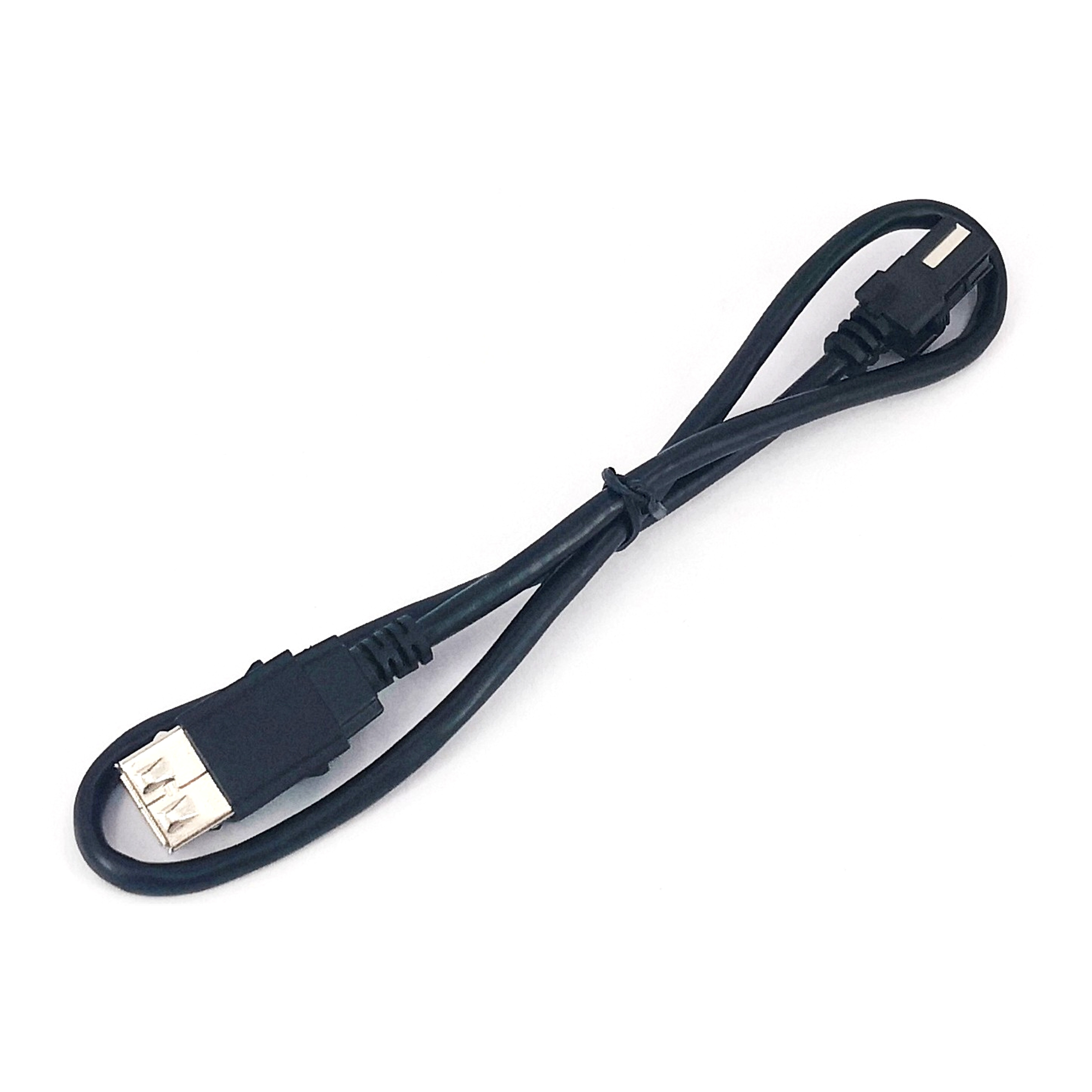
The Critical Role of Low Loss Cable
Why Cable Selection Determines Harness Performance
The insertion loss of an RF coaxial cable assembly is more than 90% generated by the RF coaxial cable itself, and within that cable, more than 90% of the loss is generated by the inner and outer conductors. This means that the choice of coaxial cable is the single most important factor determining the overall performance of a low loss SMA MCX RF harness.
Lowloss cables are specifically engineered to minimize signal attenuation over distance by employing advanced dielectric materials, optimized conductor geometries, and multilayer shielding. Common lowloss cable families include:
LMR Series (LMR100, LMR195, LMR240, LMR400): Industrystandard lowloss flexible cables
PEP195: Low loss flexible RG142 type coax, triple shielded with tan FEP jacket
PESR405FLJ: Formable coax offering an alternative to costly preformed semirigid assemblies
NITROWAVE LL Series: Highperformance microwave cables with lowdensity PTFE dielectric and silverplated copper conductors
LMR100A: The GoTo Low Loss Cable for Miniature Assemblies
LMR100A is one of the most widely used lowloss cables for SMA MCX RF harnesses. It offers a compelling balance of small diameter, flexibility, and electrical performance. The cable features a 66% velocity of propagation, 30.8 pF/ft capacitance, and 90 dB RF shielding. At 1 GHz, LMR100A exhibits an attenuation of approximately 24 dB per 100 feet.
The double shielding of LMR100A—typically comprising an aluminum tape inner shield and a tinned copper braid outer shield—provides excellent shielding effectiveness of better than 90 dB, making it suitable for environments with high electromagnetic interference.
PEP195: TripleShielded Performance
For applications requiring even greater shielding effectiveness and lower loss, PEP195 coax offers a step up in performance. This tripleshielded cable features a 70% velocity of propagation and FEP jacket, with typical insertion loss of 0.039 dB/ft at 0.1 GHz, 0.125 dB/ft at 1 GHz, and 0.22 dB/ft at 3 GHz. The triple shielding ensures excellent isolation from external interference, making PEP195 an excellent choice for sensitive receive chains and highdynamicrange systems.
Insertion Loss Comparison: Making Informed Cable Choices
Understanding insertion loss characteristics across different cable types is essential for optimizing your RF harness design. The table below compares typical attenuation values for common lowloss cables used in SMA MCX assemblies:
| Cable Type | Attenuation @ 900 MHz | Attenuation @ 2 GHz | Attenuation @ 3 GHz |
|---|---|---|---|
| LMR100A | ~22.8 dB/100 ft | ~35 dB/100 ft | ~43 dB/100 ft |
| PEP195 | ~0.039 dB/ft @ 0.1 GHz | ~0.125 dB/ft @ 1 GHz | ~0.22 dB/ft @ 3 GHz |
| RG174 (standard) | Higher loss | Higher loss | Higher loss |
| RG316 (standard) | Moderate loss | Moderate loss | Moderate loss |
For a 12inch (1 ft) SMA MCX assembly using LMR100A, the cable attenuation alone would be approximately 0.35 dB at 2 GHz. When connector losses are included—typically 0.1 dB for the SMA female connector and 0.2 dB for the MCX plug connector—the total insertion loss for a 1foot assembly would be approximately 0.65 dB at 2 GHz.
It is important to note that insertion loss data for cable assemblies often does not include the loss due to connectors, so engineers must add estimated connector losses to obtain the true total insertion loss of the assembly.
Key Performance Specifications for Low Loss SMA MCX RF Harnesses
When evaluating a low loss SMA MCX RF harness, several critical performance parameters must be considered:
VSWR (Voltage Standing Wave Ratio)
VSWR is a measure of impedance matching efficiency. A VSWR of 1.0:1 represents perfect matching, while higher values indicate reflections and signal loss. Low loss SMA MCX assemblies typically achieve VSWR of 1.4:1 or better across their operating frequency range. For applications requiring the lowest possible reflections, such as precision test equipment, assemblies with VSWR of 1.3:1 or better are available.
Shielding Effectiveness
Shielding effectiveness determines how well the cable assembly prevents electromagnetic interference from entering or leaving the signal path. Highquality low loss SMA MCX harnesses achieve shielding effectiveness of 90 dB or better. Some assemblies using PESR405FLJ coax achieve shielding effectiveness exceeding 100 dB.
Velocity of Propagation
Velocity of propagation (VoP) indicates the speed at which signals travel through the cable relative to the speed of light. Higher VoP values generally correlate with lowerloss dielectric materials. LMR100A offers 66% VoP, while PEP195 achieves 70%, and PESR405FLJ reaches 69.5%.
Operating Temperature Range
The operating temperature range of the assembly is determined by both the cable jacket material and the connector construction. Standard assemblies typically operate from 55°C to +125°C, though specific configurations may vary. SMA connectors are rated for 65°C to +165°C, providing wide thermal margins for demanding environments.
Mechanical Durability
The mechanical durability of SMA MCX harnesses is influenced by the connector types and cable construction. SMA threaded connectors typically offer 500 mating cycles, while MCX snapon connectors are rated for 500 cycles as well. The flexible cable construction of LMR100A and similar cables supports repeated flexure and tight bend radii, making them suitable for applications where routing is challenging.
Applications of Low Loss SMA MCX RF Harnesses
5G and Wireless Communications
The deployment of 5G networks—both sub6 GHz and millimeter wave—has dramatically increased the demand for low loss RF interconnects. Low loss SMA MCX harnesses are used in 5G micro base station modules, small cell equipment, and customer premises equipment (CPE) where compact size and minimal signal loss are critical. The 80mm length often specified for these applications is optimized for compact devices, offering flexible internal routing while minimizing inherent transmission loss.
IoT and M2M Devices
The Internet of Things (IoT) encompasses billions of connected devices, from smart sensors and wearables to industrial monitoring equipment. Low loss SMA MCX RF harnesses are ideal for IoT applications because they combine the secure threaded interface of SMA (for connections that must not loosen over time) with the quickconnect MCX interface (for internal boardtoboard or moduletoantenna connections). Typical IoT applications include:
Smart agriculture sensors
Industrial automation and IIoT devices
Medical monitoring equipment
Smart home devices
Asset tracking systems
Test and Measurement
Precision test and measurement equipment—including vector network analyzers (VNAs), spectrum analyzers, and automated test equipment (ATE)—requires cable assemblies with the lowest possible insertion loss and excellent phase stability. Low loss SMA MCX harnesses are frequently used in test setups where the SMA end connects to the test instrument and the MCX end interfaces with the device under test (DUT). The low attenuation of cables like PEP195 and the excellent VSWR of precision SMA connectors ensure accurate measurement results.
Aerospace and Defense
Aerospace and defense systems demand RF interconnects that can withstand extreme environmental conditions while delivering reliable performance. Low loss SMA MCX harnesses are used in satellite communication systems, radar modules, electronic warfare equipment, and avionics. The low loss per gram of mass offered by advanced cables like NITROWAVE LL series is critical for reducing launch costs and increasing payload capacity in satellite applications.
Medical Devices
Medical imaging systems, including MRI machines, and medical telemetry devices rely on low loss RF interconnects for signal integrity. MCX connectors are particularly wellsuited for medical applications due to their compact size and nonmagnetic options. Low loss SMA MCX harnesses provide the signal fidelity required for accurate diagnostic imaging and reliable patient monitoring.
How to Select the Right Low Loss SMA MCX RF Harness
Selecting the optimal low loss SMA MCX RF harness requires a systematic approach that considers the complete RF path and the specific requirements of your application. Follow these steps to ensure you choose the right assembly:
Step 1: Define Your Frequency Requirements
The operating frequency range is the starting point for cable and connector selection. While standard SMA MCX assemblies operate from DC to 3 GHz, some configurations extend to 6 GHz. If your application operates above 3 GHz, verify that the MCX connector and cable are rated for the higher frequency. For applications above 6 GHz, consider alternative connector types such as SMP or 2.92mm.
Step 2: Calculate Your Loss Budget
Determine the maximum insertion loss your system can tolerate. This requires calculating the loss of each component in the signal chain—cable attenuation, connector losses, and any additional losses from adapters or switches. Remember that insertion loss data for cables is typically specified per unit length, so the total cable loss scales with assembly length.
For a typical SMA MCX assembly using LMR100A, the connector losses are estimated at 0.1 dB for the SMA female connector and 0.2 dB for the MCX plug connector. Add these to the cable attenuation to determine total insertion loss.
Step 3: Consider Mechanical Constraints
Mechanical constraints often dictate connector style and cable diameter:
Space limitations: MCX connectors are significantly smaller than SMA, making them ideal for tight spaces. Right angle configurations further reduce the required clearance.
Bend radius: Flexible cables like LMR100A can be routed through tight bends, but every bend introduces additional loss and potential impedance discontinuities. Observe the minimum bend radius specified by the manufacturer.
Mating cycles: Consider how often the assembly will be connected and disconnected. Threaded SMA connectors are more durable for frequent mating, while snapon MCX connectors are faster but may have lower cycle life.
Environmental factors: For outdoor or harsh environments, select assemblies with appropriate jacketing (FEP, FRPE) and consider weatherproofing options.
Step 4: Evaluate Shielding Requirements
The electromagnetic environment in which your system operates determines the required shielding effectiveness. Standard low loss assemblies offer 90 dB shielding, while premium assemblies achieve 100 dB or more. In highinterference environments or applications with sensitive receivers, prioritize higher shielding effectiveness.
Step 5: Balance Cost and Performance
Low loss cables and precision connectors come at a premium. Highperformance cables with silverplated conductors and lowdensity PTFE dielectrics offer the lowest loss and longest lifespan, but they are more expensive than standard alternatives. Evaluate whether the marginal improvement in loss justifies the additional cost for your specific application. In many cases, a welldesigned LMR100A assembly provides an excellent balance of performance and costeffectiveness.
Custom vs. Standard Low Loss SMA MCX RF Harnesses
Standard OfftheShelf Assemblies
Standard low loss SMA MCX RF harnesses are available in common lengths (e.g., 6", 12", 24", 36") and configurations (SMA male to MCX plug, SMA female bulkhead to MCX right angle, etc.). These assemblies offer the advantages of immediate availability, lower cost, and proven performance. Pasternack, Fairview Microwave, and Lcom are among the leading suppliers offering sameday shipping for many standard configurations.
Custom Assemblies
When standard assemblies cannot meet your requirements, custom SMA MCX RF harnesses offer the flexibility to specify:
Custom lengths: Any length from a few inches to several feet
Connector combinations: Mixed genders, right angle configurations, bulkhead mounts
Cable types: LMR100A, PEP195, PESR405FLJ, and other lowloss cables
Valueadded services: Heat shrink booting, custom labeling, connector orientation/clocking
RF testing: Documented electrical performance for each assembly
Custom assemblies are typically built and shipped quickly—many manufacturers offer sameday turnaround for custom versions of their standard products. For production quantities, custom assemblies can be manufactured to exact specifications with consistent quality and performance.
Market Trends and Future Outlook
Miniaturization Continues
The trend toward smaller, denser electronic systems continues to drive demand for miniature RF interconnects. MCX connectors, with their 30% size reduction compared to SMB, are wellpositioned to serve this trend. Future developments may include even smaller connector interfaces with comparable electrical performance.
Higher Frequencies
As 5G mmWave and future 6G systems push operating frequencies higher, the demand for low loss RF harnesses that operate above 6 GHz will increase. While standard MCX connectors are limited to 6 GHz, specialized versions and alternative connector interfaces (such as SMPM and SMPS) are being developed to meet these requirements.
Integration with Digital Systems
The convergence of RF and digital technologies—exemplified by phased array antennas, softwaredefined radio, and integrated RF frontend modules—requires cable assemblies that can handle both RF signals and digital control/data lines. Multichannel RF harnesses that combine low loss coaxial cables with digital signal lines are an emerging trend.
Sustainability and Materials
Environmental regulations and sustainability initiatives are influencing material selection for RF cable assemblies. Leadfree soldering, halogenfree jacketing, and recyclable materials are becoming increasingly important considerations for manufacturers and endusers alike.
Best Practices for Installation and Maintenance
To maximize the performance and longevity of your low loss SMA MCX RF harness:
1. Torque SMA connectors properly: Use a torque wrench set to the manufacturer's specification (typically 710 inlbs for SMA) to ensure proper mating without damaging the connector.
2. Avoid overflexing: While low loss cables are flexible, repeated flexing at sharp angles can degrade performance. Route cables with gradual bends and secure them to prevent movement.
3. Inspect connectors regularly: Check for wear, contamination, or damage on both SMA threads and MCX snapon interfaces. Clean with appropriate solvents and lintfree swabs.
4. Use strain relief: Secure cables near connectors to prevent stress on the connectorcable junction, which is the most vulnerable point for mechanical failure.
5. Test before deployment: Verify insertion loss and VSWR of each assembly before installing it in the final system. Document baseline performance for future comparison.
A low loss SMA MCX RF harness is a precisionengineered interconnect solution that combines the mechanical reliability of the threaded SMA interface with the compact, quickconnect convenience of the MCX snapon interface. By selecting the right lowloss cable—whether LMR100A for generalpurpose applications, PEP195 for tripleshielded performance, or PESR405FLJ for formable routing—engineers can achieve insertion losses that preserve signal integrity across a wide range of frequencies and applications.
From 5G base stations and IoT devices to aerospace systems and precision test equipment, low loss SMA MCX RF harnesses deliver the performance, reliability, and flexibility that modern RF systems demand. By understanding the key specifications, following a systematic selection process, and adhering to best installation practices, you can ensure that your RF interconnect delivers optimal performance throughout the life of your product.
As wireless technology continues to evolve toward higher frequencies, denser integration, and more stringent performance requirements, the importance of low loss RF harnesses will only grow. Investing in highquality SMA MCX assemblies today will pay dividends in system performance, reliability, and customer satisfaction tomorrow.
Lucy Yang | lucy.y@toxutech.com
Dotty Zhao | sales04@toxutech.com
Global Business Director / Sales Team / Global Operations


 En
En Cn
Cn Korean
 Home >