

-
Products -PCBA Manufacturing RF Connectors RF Cable Assemblys Embedded Antennas External Antennas GNSS Positioning Solutions
RF Connectors

RF Cable Assemblys
Embedded Antennas
External Antennas
GNSS Positioning Solutions































 Language


Language


Time:2026-10-15 Views:0
Why Lightweight Aviation GNSS Antennas Matter
In modern aviation and unmanned aerial systems, every gram of weight carries consequences. For manned aircraft, weight directly impacts fuel consumption, payload capacity, and operational range. For UAVs and drones, the equation is even more critical—antenna weight can determine flight endurance, maneuverability, and whether a mission is feasible at all. This is where lightweight aviation GNSS antennas have become indispensable.
A lightweight aviation GNSS antenna is a specialized antenna designed to receive signals from global navigation satellite systems (GPS, GLONASS, Galileo, BeiDou, and others) while minimizing physical weight and aerodynamic drag. These antennas must deliver precise positioning data without compromising the aircraft's performance envelope. The global aviation GNSS antenna market was valued at approximately USD 1.2 billion in 2024 and is projected to reach USD 2.5 billion by 2034, registering a compound annual growth rate (CAGR) of 7.5%. This growth is driven largely by the proliferation of UAVs, the modernization of commercial avionics, and the increasing demand for high-precision positioning in aerospace applications.
This comprehensive guide explores every facet of lightweight aviation GNSS antennas—from their fundamental design principles and material innovations to real-world applications, installation considerations, and market trends. Whether you are an avionics engineer, a drone manufacturer, or a procurement specialist, this article will equip you with the knowledge needed to make informed decisions about weight-optimized GNSS antenna solutions.
What Is a Lightweight Aviation GNSS Antenna?
A lightweight aviation GNSS antenna is an antenna system specifically engineered for airborne platforms where weight reduction is a primary design constraint. Unlike ground-based GNSS antennas, which can afford to be bulkier and heavier, aviation GNSS antennas must balance three competing requirements: RF performance, mechanical durability, and minimal weight.
Core Functions
These antennas perform several critical functions:
1. Multi-constellation signal reception: Modern lightweight aviation GNSS antennas support multiple satellite systems simultaneously, including GPS (L1/L2/L5), GLONASS (G1/G2/G3), Galileo (E1/E5a/E5b/E6), BeiDou (B1/B2/B3), and QZSS.
2. L-band correction service reception: Many aviation applications require reception of satellite-based augmentation systems (SBAS) and L-band correction signals for centimeter-level accuracy.
3. Multipath rejection: The antenna must discriminate between direct satellite signals and reflected signals that can degrade positioning accuracy.
4. Interference mitigation: With the proliferation of LTE, 5G, and other RF sources, aviation GNSS antennas must incorporate advanced filtering to maintain signal integrity.
Defining "Lightweight" in Aviation Context
The term "lightweight" in aviation GNSS antennas encompasses a broad spectrum. At the ultra-light end, embedded helix antennas can weigh as little as 10 grams—such as the Harxon HX-HE401A, which weighs only 10g with dimensions of Φ45×39.8mm, making it ideal for integration into lightweight UAVs. Mid-range aviation antennas typically fall between 24g and 45g, while heavier, FAA-certified airborne antennas may weigh between 200g and 320g.
This weight spectrum reflects the diverse requirements of different aviation platforms. A small survey drone may prioritize the absolute minimum weight, while a commercial airliner's GNSS antenna must meet stringent FAA certification requirements that often necessitate more robust—and therefore heavier—construction.
The Critical Importance of Weight in Aviation
Impact on Manned Aircraft
In manned aviation, antenna weight affects multiple performance parameters:
Fuel efficiency: Every kilogram of additional weight increases fuel burn. For commercial operators flying thousands of hours annually, even modest weight savings translate into significant cost reductions.
Payload capacity: Weight allocated to antennas is weight unavailable for revenue-generating payload.
Center of gravity: Antenna placement and weight distribution affect aircraft stability and control characteristics.
Impact on UAVs and Drones
For unmanned platforms, the weight equation is even more acute:
Flight endurance: Battery-powered UAVs have fixed energy budgets. Reducing antenna weight directly extends flight time.
Payload capacity: Small UAVs have strict maximum takeoff weight (MTOW) limits. A lighter antenna allows for heavier cameras, sensors, or cargo.
Dynamic performance: Lighter antennas reduce rotational inertia, improving agility and responsiveness.
As one industry analysis notes, lightweight design is especially critical for UAVs, where antenna weight reduction involves optimizing materials, PCB design, integrated structures, and installation methods to minimize impact on flight time and payload capacity.
The Cascading Benefits of Weight Reduction
Weight reduction in aviation antennas creates cascading benefits throughout the system. A lighter antenna may allow for thinner mounting structures, reduced reinforcement requirements, and simpler installation hardware—all of which further reduce overall weight. This virtuous cycle explains why manufacturers invest heavily in weight optimization, even when the absolute savings appear modest.
Key Technologies Enabling Lightweight Design
Helical Antenna Technology
Helical antennas have emerged as a dominant technology for lightweight aviation GNSS applications. The helical design offers several advantages over traditional patch antennas:
Ground plane independence: Helical antennas can operate without a ground plane, eliminating the weight and installation complexity of ground plane structures.
Excellent axial ratios: Precision-tuned helix elements provide superior circular polarization purity, enhancing signal reception and multipath rejection.
Compact form factor: Modern helical designs achieve significant size and weight reductions. Calian's second-generation helical element is approximately 25% lighter and 20% shorter than the first generation, without compromising performance.
The Maxtena M9PLUS-HCT-A-SMA exemplifies this technology, using Helicore™ technology to provide excellent pattern control, polarization purity, and high efficiency in a compact ø34mm × 51mm form factor weighing just 24g.
Advanced Materials
Material science plays a pivotal role in lightweight antenna design:
Terrablast Polymer Dielectric: Taoglas has developed a proprietary polymer dielectric material that is 30% lighter than ceramic while withstanding 12-meter drops, extreme temperatures (-40°C to 85°C), and eight hours of vibration per axis (ISO16750).
Ceramic-Free Designs: Traditional ceramic-loaded microstrip antennas, while compact, suffer from high cost, excessive weight, and limited robustness. New ceramic-free dual-band GNSS antennas based on distributed capacitive loading address these limitations.
Carbon Fiber and Engineering Plastics: For antenna housings and radomes, carbon fiber composites and specialty engineering plastics offer high strength-to-weight ratios, reducing overall antenna weight without sacrificing durability.
Integrated Design Approaches
Modern lightweight aviation GNSS antennas increasingly adopt integrated design philosophies:
LNA and filter integration: Combining the low-noise amplifier (LNA) and filters into the antenna assembly reduces connector count and overall system weight.
Multi-constellation single-antenna solutions: Rather than using multiple single-frequency antennas, modern designs cover all relevant GNSS bands in a single unit.
Embedded form factors: Embedded helix antennas can be integrated directly into airframe structures, reducing drag and eliminating separate mounting hardware.
Low-Profile and Aerodynamic Designs
Aerodynamic considerations are inseparable from weight optimization in aviation. A lighter antenna with poor aerodynamics can create drag that more than negates the weight savings. Leading designs feature:
Low-profile form factors: The Trimble AV37, at just 23mm in height, is designed to reduce aerodynamic drag for airborne mapping applications.
Streamlined radomes: Bulkhead-mounted designs ensure only the rugged radome is exposed to airflow, minimizing drag while protecting sensitive RF components.
ARINC 743 footprint compliance: Standardized mounting footprints simplify integration and ensure proper aerodynamic sealing.
Lightweight GNSS Antenna Specifications: A Comparative Overview
Ultra-Light Embedded Antennas (10g–45g)
Compact High-Precision GNSS Antennas (10g–45g)
| Model | Weight | Dimensions | Frequency Bands | Key Features |
|---|---|---|---|---|
| Harxon HX-HE401A | 10g | Φ45×39.8mm | GPS L1/L2/L5, GLONASS G1/G2/G3, Galileo E1/E5a/E5b/E6, BeiDou, QZSS, L-Band | IPEX connector, high phase center stability |
| Maxtena M9PLUS | 24g | ø34×51mm | GPS L1/L2/L5, Galileo, BeiDou, GLONASS, L-Band | IP67, LTE pre-filter, ground plane independent |
| SBG ANT-MAX-M7 | 25g | 34×51mm | GPS L1/L2/E5b | IP67, −40 to +105°C operating range |
| Calian HC976SXF | 32g | Not specified | GPS/QZSS L1/L2/L6, GLONASS G1/G2, Galileo E1/E6, BeiDou B1/B3 | 2nd gen helix, 25% lighter than gen 1, XF filtering |
| Calian HC885XF | 42g | Not specified | GPS/QZSS L1/L5, GLONASS G1/G3, Galileo E1/E5a/E5b, BeiDou | 25–31mA, 2.2–16 VDC, IP67 |
| Taoglas EAHP.125 | 45g | Ø60×31.52mm | GPS L1/L2/L5, Galileo E1/E5/E5a/E5b, GLONASS G1/G2/G3 | Quadrifilar helix, dual-stage active, 37dB gain |
Mid-Range Aviation Antennas (130g–213g)
| Model | Weight | Dimensions | Frequency Bands | Key Features |
|---|---|---|---|---|
| Harxon HX-CA7606A | 130g | 90×27.5mm | Aviation GNSS | IP67 ruggedized cover |
| Tersus AX3703 | 137g | φ90×41.5mm | GPS L1/L2, GLONASS L1/L2, BeiDou B1/B2/B3 | Multi-frequency aviation antenna |
| Trimble AV34 | 213g | 21mm(H)×89mm(D) | GPS L1/L2, GLONASS L1/L2 | Bulkhead mount, sub-cm phase center repeatability |
FAA-Certified Heavy-Duty Antennas (283g+)
| Model | Weight | Dimensions | Certifications | Applications |
|---|---|---|---|---|
| Trimble AV37 | 283g | 11.9×7.6×2.3cm | FAA Certified | Airborne mapping and surveying, ARINC 743 footprint |
| Janak AirAnt | 320g | 120×74×44mm | Not FAA-certified | General aviation |
This comparison reveals a clear trade-off between weight and certification requirements. Ultra-light antennas in the 10g–45g range are predominantly designed for UAVs and embedded applications, while heavier units are required for certified airborne installations where regulatory compliance demands more robust construction.
Applications of Lightweight Aviation GNSS Antennas
Unmanned Aerial Vehicles (UAVs) and Drones
UAVs represent the fastest-growing application segment for lightweight aviation GNSS antennas. The requirements vary significantly by platform type:
Small Survey Drones: These platforms demand the lightest possible antennas with high precision. The Harxon HE401A, at just 10g, is specifically designed for integration into lightweight UAVs and supports full-band signal reception from GPS, GLONASS, BDS, and Galileo. Its multi-point feeding technology ensures high phase center stability with centimeter-level accuracy.
Precision Agriculture UAVs: These require RTK-level accuracy and robust performance in challenging environments. Antennas like the Maxtena M9PLUS provide L1/L2/L5 support with integrated LTE pre-filtering, ensuring reliable operation near agricultural communication systems.
Delivery and Logistics Drones: Weight directly impacts payload capacity and range. Ultra-light antennas with multi-constellation support enable precise navigation while maximizing delivery capacity.
Commercial Aviation
For commercial aircraft, GNSS antennas must meet stringent FAA and EASA certification requirements. The Trimble AV37, FAA-certified and designed with an ARINC 743 footprint, supports centimeter-level accuracy in a lightweight, aerodynamic housing for airborne mapping and surveying applications.
Modern commercial aviation GNSS antennas must support a comprehensive range of signals including GPS, GLONASS, Galileo, BeiDou, QZSS, OmniSTAR, Trimble RTX, and SBAS, while being built to reduce aerodynamic drag.
Helicopter Operations
Helicopter GNSS antennas face unique challenges due to rotor-induced vibration and complex aerodynamic environments. Lightweight antennas designed for helicopter use must combine robust vibration resistance with minimal weight. Low-drag, streamlined structures with symmetric multi-feed patch designs provide stable phase centers and wide beam coverage to maintain satellite tracking during high-dynamic flight maneuvers.
Aerial Surveying and Mapping
Aerial surveying demands survey-grade antenna technology in compact, reliable form factors. The ability to maintain sub-centimeter phase center repeatability—as achieved by the Trimble AV34—is essential for consistent, repeatable mapping results.
Emergency and Public Safety
Law enforcement, search and rescue, and public safety aviation operations rely on GNSS antennas that deliver reliable positioning in challenging environments. Lightweight antennas with IP67 protection and wide operating temperature ranges (-40°C to +85°C) ensure dependable performance in diverse conditions.
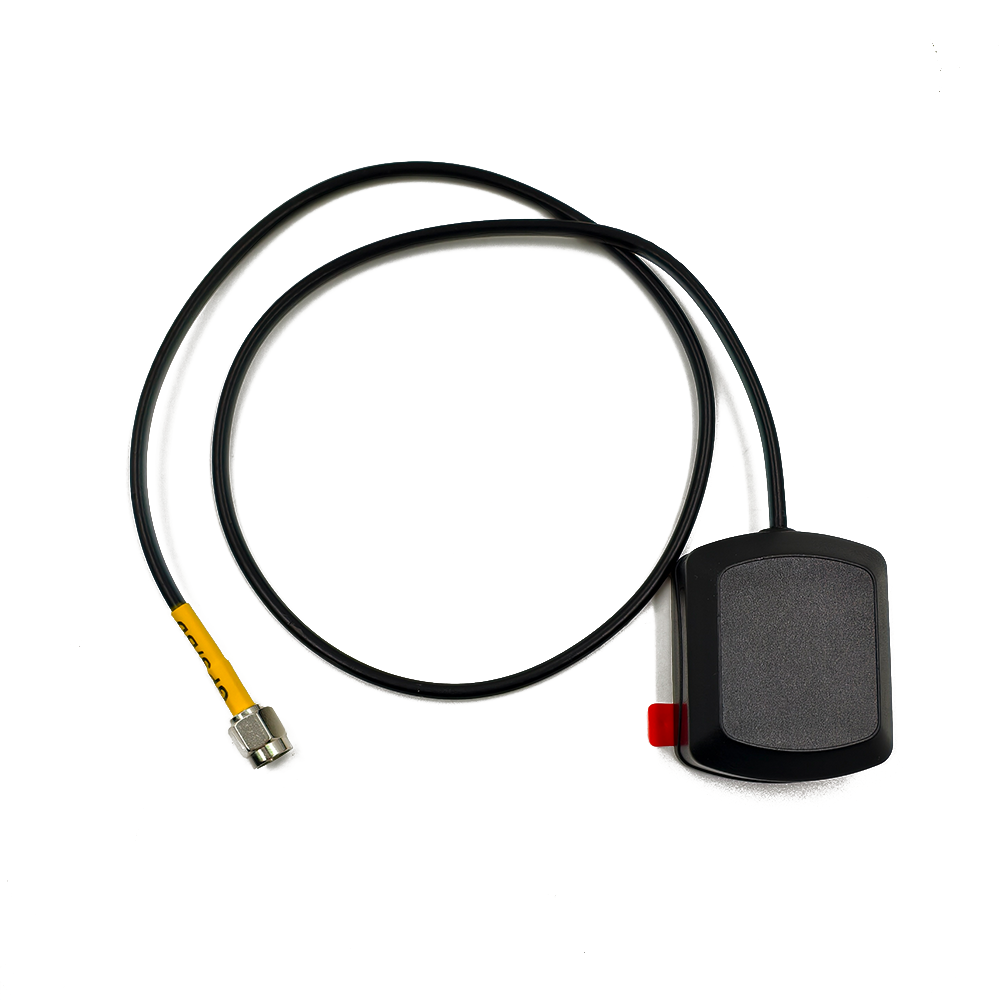
Installation Considerations for Lightweight Aviation GNSS Antennas
Placement and Separation Requirements
Proper installation is critical to maximizing GNSS antenna performance. Key considerations include:
Separation from Interference Sources: GNSS antennas should be mounted no closer than two feet (edge-to-edge) and ideally three feet from any antennas emitting more than 25 watts of power. They should be positioned no closer than six inches edge-to-edge from VHF COM antennas to minimize pattern distortion and blockage of low-elevation satellites.
Ground Plane Considerations: Helical antennas offer a significant advantage in that they can operate without a ground plane, simplifying installation and reducing weight. This makes them particularly suitable for UAVs and aircraft where ground plane installation is impractical.
Mounting Orientation: The antenna should be mounted with a clear, unobstructed view of the sky, oriented vertically upward. Avoiding mounting positions under engine cowlings or other structures that could block satellite signals is essential.
Structural Integration
Bulkhead Mounting: For certified aircraft, bulkhead mounting ensures only the rugged radome is exposed to the elements, with the connector protected underneath. This approach maintains aerodynamic efficiency while protecting sensitive components.
Anti-Vibration Design: Aviation environments subject antennas to continuous vibration. Secure mounting with appropriate damping materials prevents performance degradation and ensures long-term reliability.
Cable Routing: Antenna feed cables should be kept as short as possible and routed away from high-power sources. Double-shielded, low-loss coaxial cables minimize signal degradation and prevent interference pickup.
Environmental Protection
Lightweight aviation GNSS antennas must withstand harsh environmental conditions:
IP67 rating: Ensures protection against dust and water immersion, essential for all-weather operations.
Temperature range: -40°C to +85°C operating range covers virtually all aviation environments.
ESD protection: Up to 15 kV ESD protection safeguards against static discharge during flight and ground operations.
Chemical resistance: Compliance with REACH and RoHS standards ensures material safety and environmental compatibility.
Market Trends and Future Outlook
Market Growth Drivers
The aviation GNSS antenna market is experiencing robust growth, driven by several factors:
UAV Proliferation: The commercial drone market continues to expand across agriculture, construction, delivery, and public safety sectors. Each new UAV platform requires at least one GNSS antenna, often multiple for redundancy.
Precision Positioning Demand: Applications like autonomous flight, precision landing, and formation flying require increasingly precise GNSS positioning, driving demand for advanced antennas with multi-frequency, multi-constellation capabilities.
Avionics Modernization: Commercial and business aircraft fleets are being upgraded with next-generation GNSS systems to meet evolving air traffic management requirements, including ADS-B and RNAV/RNP operations.
The broader positioning antenna market is estimated at USD 3.64 billion in 2026 and expected to reach USD 7.76 billion by 2033, growing at a CAGR of 11.4%. The GNSS receiver and antenna segment specifically is projected to grow at approximately 7.2% annually through 2035.
Technology Trends
Multi-Frequency, Multi-Constellation Integration: The industry is moving toward antennas that support all major GNSS constellations and frequency bands in a single compact unit. This reduces installation complexity and weight while improving positioning reliability.
Advanced Interference Mitigation: As RF spectrum becomes increasingly congested, antennas must incorporate sophisticated filtering. Calian's eXtended Filter (XF) technology mitigates interference from LTE bands, Ligado service (1526-1536 MHz), Inmarsat uplinks (1626.5-1660.5 MHz), and other sources that can degrade GNSS reception.
Miniaturization Without Performance Compromise: Second-generation helical elements demonstrate that significant size and weight reductions are possible without sacrificing RF performance. The trend toward smaller, lighter, and more capable antennas will continue.
Integration with Smart Antenna Systems: The line between antenna and receiver is blurring, with "smart antennas" incorporating GNSS modules, inertial measurement units (IMUs), and processing capabilities in integrated packages.
Regional Market Dynamics
The aviation GNSS antenna market shows distinct regional characteristics. North America and Europe remain the largest markets for certified aviation antennas, driven by mature aerospace industries and stringent safety regulations. The Asia-Pacific region is experiencing the fastest growth, fueled by expanding UAV manufacturing and increasing commercial aviation activity.
Tariffs and trade policies have catalyzed regional reshoring and nearshoring initiatives for critical components, potentially affecting supply chains and pricing dynamics.
How to Select the Right Lightweight Aviation GNSS Antenna
Define Your Requirements
Before selecting an antenna, clearly define:
1. Platform type: Manned aircraft, UAV, helicopter, or other
2. Required accuracy: Meter-level, sub-meter, or centimeter-level (RTK/PPP)
3. Weight budget: Absolute maximum weight allowance
4. Certification requirements: FAA, EASA, or other regulatory approvals needed
5. Environmental conditions: Operating temperature range, moisture exposure, vibration levels
6. Interference environment: Proximity to LTE, 5G, or other RF sources
Evaluate Key Performance Parameters
Frequency band coverage: Ensure the antenna supports all GNSS signals required for your application
Gain and noise figure: Higher gain and lower noise figure improve signal reception in challenging environments
Axial ratio: Better axial ratio (lower dB) indicates superior circular polarization purity and multipath rejection
Phase center stability: Critical for high-precision applications like surveying and RTK positioning
Power consumption: Important for battery-powered UAVs
Consider Total Cost of Ownership
The purchase price of an antenna is only one component of total cost. Consider:
Integration costs: Ground plane independence and standard connectors reduce installation labor
Reliability: IP67-rated antennas with wide temperature ranges minimize replacement frequency
Performance impact: A slightly more expensive antenna that improves positioning reliability can reduce operational costs
Certification value: FAA-certified antennas may command higher prices but eliminate the cost and time of independent certification
Frequently Asked Questions
What is the lightest aviation GNSS antenna available?
The Harxon HX-HE401A embedded helix antenna weighs just 10 grams, making it one of the lightest aviation GNSS antennas available. It supports full-band reception from GPS, GLONASS, BeiDou, and Galileo.
Can lightweight GNSS antennas work without a ground plane?
Yes. Many modern lightweight aviation GNSS antennas, particularly helical designs, operate without requiring a ground plane. The Calian HC976SXF and Maxtena M9PLUS are examples of ground-plane-independent antennas suitable for weight-sensitive applications.
What is the difference between a lightweight UAV antenna and a certified aviation antenna?
Lightweight UAV antennas prioritize minimal weight and compact size, often sacrificing certification for weight savings. Certified aviation antennas, such as the FAA-certified Trimble AV37, meet stringent regulatory requirements for airborne installation, which typically results in a heavier construction.
How does antenna weight affect drone flight time?
Antenna weight directly impacts drone flight time by consuming part of the available payload capacity and battery energy. For small UAVs, reducing antenna weight by even 20-30 grams can meaningfully extend flight endurance, especially on platforms where every gram matters.
Are multi-frequency GNSS antennas heavier than single-frequency models?
Not necessarily. Advances in antenna design and materials have enabled multi-frequency, multi-constellation antennas to achieve weights comparable to or even lower than older single-frequency designs. The Harxon HE401A, for example, supports all major GNSS bands at just 10g.
What environmental protection ratings should I look for?
IP67 is the minimum recommended rating for aviation GNSS antennas, ensuring protection against dust ingress and water immersion. Additionally, look for operating temperature ranges of at least -40°C to +85°C and ESD protection of 15 kV or higher.
Lightweight aviation GNSS antennas represent a critical enabling technology for modern airborne operations. From 10-gram embedded helix antennas for small UAVs to FAA-certified aerodynamic units for commercial aircraft, the spectrum of available solutions continues to expand in capability while shrinking in weight.
The key to successful selection lies in understanding the specific requirements of your application—balancing weight, performance, certification, and cost against operational needs. As the aviation industry continues its trajectory toward greater autonomy, precision, and efficiency, the demand for lightweight GNSS antennas that deliver uncompromising performance will only intensify.
Whether you are designing the next generation of delivery drones, upgrading a commercial aircraft fleet, or equipping helicopters for challenging missions, investing in the right lightweight aviation GNSS antenna is an investment in operational capability, safety, and mission success. The technology has never been more capable—or more essential.
Lucy Yang | lucy.y@toxutech.com
Dotty Zhao | sales04@toxutech.com
Global Business Director / Sales Team / Global Operations


 En
En Cn
Cn Korean
 Home >