

-
Products -PCBA Manufacturing RF Connectors RF Cable Assemblys Embedded Antennas External Antennas GNSS Positioning Solutions
RF Connectors

RF Cable Assemblys
Embedded Antennas
External Antennas
GNSS Positioning Solutions































 Language


Language


Time:2026-10-15 Views:0
In the rapidly evolving world of RF and microwave engineering, the demand for compact, reliable, and highperformance interconnect solutions has never been greater. From 5G infrastructure and IoT devices to advanced test and measurement equipment, engineers constantly seek cable assemblies that can deliver pristine signal integrity in increasingly smaller form factors. Among the most versatile and widely adopted solutions is the high frequency SMA MMCX assembly — a hybrid cable assembly that combines the robust, threaded SMA interface with the ultraminiature, snapon MMCX connector.
This comprehensive guide explores every critical aspect of high frequency SMA to MMCX cable assemblies, including connector specifications, cable selection, frequency performance, design considerations, and realworld applications. Whether you are designing a compact IoT sensor module, a GPS receiver, or a sophisticated RF test setup, understanding the nuances of these assemblies will help you make informed decisions that balance performance, cost, and reliability.
What Is an SMA Connector?
The SMA (SubMiniature version A) connector is one of the most ubiquitous coaxial interfaces in the RF industry. Originally developed in the 1960s, the SMA connector features a threaded coupling mechanism that provides a secure, vibrationresistant connection with excellent electrical performance. SMA connectors are designed for modefree operation from DC to 18 GHz, and on optimized precision versions, they can operate up to 27 GHz.
The standard SMA interface uses a 50ohm impedance, which is the de facto standard for most RF and microwave systems. The threaded coupling ensures consistent mating torque and reliable signal transmission, making SMA connectors ideal for applications where connection stability is paramount. SMA connectors are commonly found on WiFi and cellular antennas, test equipment, and general RF systems operating up to several gigahertz.
One of the key advantages of SMA connectors is their compatibility with a wide range of coaxial cables. Depending on the specific connector variant, SMA connectors can be terminated to flexible cables like RG174, RG178, and RG316, as well as semirigid and conformable cables. This flexibility makes SMA an excellent choice for the bulkhead or panelmount side of a hybrid assembly, where a secure, weathersealed interface is often required.
What Is an MMCX Connector?
The MMCX (MicroMiniature Coaxial) connector is an ultrasmall, snapon coaxial interface designed for spaceconstrained applications. Measuring just a fraction of the size of an SMA connector, the MMCX connector is widely used in wearables, small IoT modules, GPS receivers, and other compact electronic devices where every millimeter of board space counts.
Unlike threaded connectors, MMCX connectors use a pushon snap mechanism that allows for rapid mating and unmating. This snapon design is particularly advantageous in tight enclosures where a wrench or fingers cannot easily reach a threaded nut. Despite their small size, MMCX connectors deliver impressive electrical performance, with many variants supporting frequencies up to 6 GHz and some reaching 8 GHz.
The MMCX interface typically exhibits a VSWR of 1.15:1 to 1.5:1, depending on the specific connector and cable combination. Return loss characteristics are also strong, with typical values of ≥32 dB from DC to 1 GHz, ≥28 dB from 1 to 4 GHz, and ≥25 dB from 4 to 6 GHz for straight, semirigid cable configurations. These performance metrics make MMCX connectors suitable for a wide range of highfrequency applications, provided that the cable and assembly are properly designed.
Why Combine SMA and MMCX in a HighFrequency Assembly?
The combination of SMA and MMCX connectors in a single cable assembly addresses a common challenge in RF system design: the need to interface a compact, internal RF module with an external, rugged antenna or test port. The MMCX end provides an ultrasmall, snapon connection that is ideal for terminating to a PCB or a miniature device, while the SMA end offers a robust, threaded interface suitable for bulkhead mounting, panel feeds, or connection to test equipment.
This hybrid configuration is particularly valuable in applications such as:
IoT sensing and telemetry units: Where the RF module is sealed inside an enclosure and must connect to an external antenna via a bulkhead SMA connector.
Smart metering and industrial instrumentation: Where reliable, weathersealed connections are required in harsh environments.
Laboratory RF test and measurement: Where SMA provides a stable connection to test equipment while MMCX allows quick connection to a device under test.
Telecom antenna tower component jumper connections: Where the SMA interface provides a secure outdoor connection and the MMCX end interfaces with compact radio modules.
By combining these two connector types, engineers can achieve the best of both worlds: the compactness and ease of mating of MMCX, and the durability and electrical stability of SMA.
Cable Types and Their Impact on HighFrequency Performance
The performance of any high frequency SMA MMCX assembly is heavily influenced by the coaxial cable used. Three cable types are most commonly specified for these assemblies: RG178, RG316, and RG174. Each offers a different balance of size, flexibility, and frequency performance.
RG178 Coaxial Cable
RG178 is an ultrathin, flexible coaxial cable with an outer diameter of approximately 1.8 mm. It is commonly used in highfrequency signal transmission where space is extremely limited. RG178 cable has a 50ohm characteristic impedance and a velocity of propagation of approximately 69%. Its maximum operating frequency is typically 3 GHz for standard versions, though some highperformance variants can operate up to 6 GHz.
Due to its small diameter, RG178 exhibits higher attenuation than larger cables. At 400 MHz, signal attenuation is approximately 29.0 dB per 100 feet. This makes RG178 best suited for short cable runs where space savings outweigh the need for minimal loss. The GCT SMAtoMMCX rear bulkhead assemblies, for example, use RG178 coax across all four of their 3 GHz and 6 GHz options.
RG316 Coaxial Cable
RG316 is a slightly larger flexible coaxial cable with an outer diameter of approximately 2.5 mm. It offers a good balance between size, flexibility, and electrical performance. RG316 has a 50ohm impedance and a propagation velocity of approximately 70%. Its frequency range typically extends from DC to 3 GHz for standard versions, with some highperformance variants reaching 6 GHz.
RG316 is often chosen for applications where a bit more durability and lower loss are required compared to RG178, but where a larger cable like RG174 would be too bulky. Würth Elektronik offers an SMA to MMCX assembly using RG316/U cable with a frequency range of DC to 6 GHz, demonstrating the cable's suitability for higherfrequency applications when paired with the right connectors.
RG174 Coaxial Cable
RG174 is a larger flexible coaxial cable, typically with an outer diameter of around 2.5 to 2.8 mm. It is widely used in generalpurpose RF applications, including GPS/GNSS systems and wireless communications. RG174 has a 50ohm impedance and a frequency range that typically extends to 1 GHz for standard assemblies.
While RG174 offers greater durability and lower attenuation than RG178, its larger size makes it less suitable for ultracompact designs. It is often used in applications where the cable will be exposed to more handling or where a longer cable run is required.
Comparison Table
| Cable Type | Outer Diameter | Frequency Range | Typical Application |
|---|---|---|---|
| RG178 | ~1.8 mm | DC to 3–6 GHz | Ultra-compact IoT, wearables |
| RG316 | ~2.5 mm | DC to 3–6 GHz | General-purpose RF, test equipment |
| RG174 | ~2.5–2.8 mm | DC to 1 GHz | GPS/GNSS, wireless communications |
Frequency Range and Electrical Specifications
The frequency performance of a high frequency SMA MMCX assembly depends on the combination of connector and cable. While SMA connectors themselves can operate up to 18 GHz or higher, the MMCX interface and the cable used often limit the overall assembly's maximum frequency.
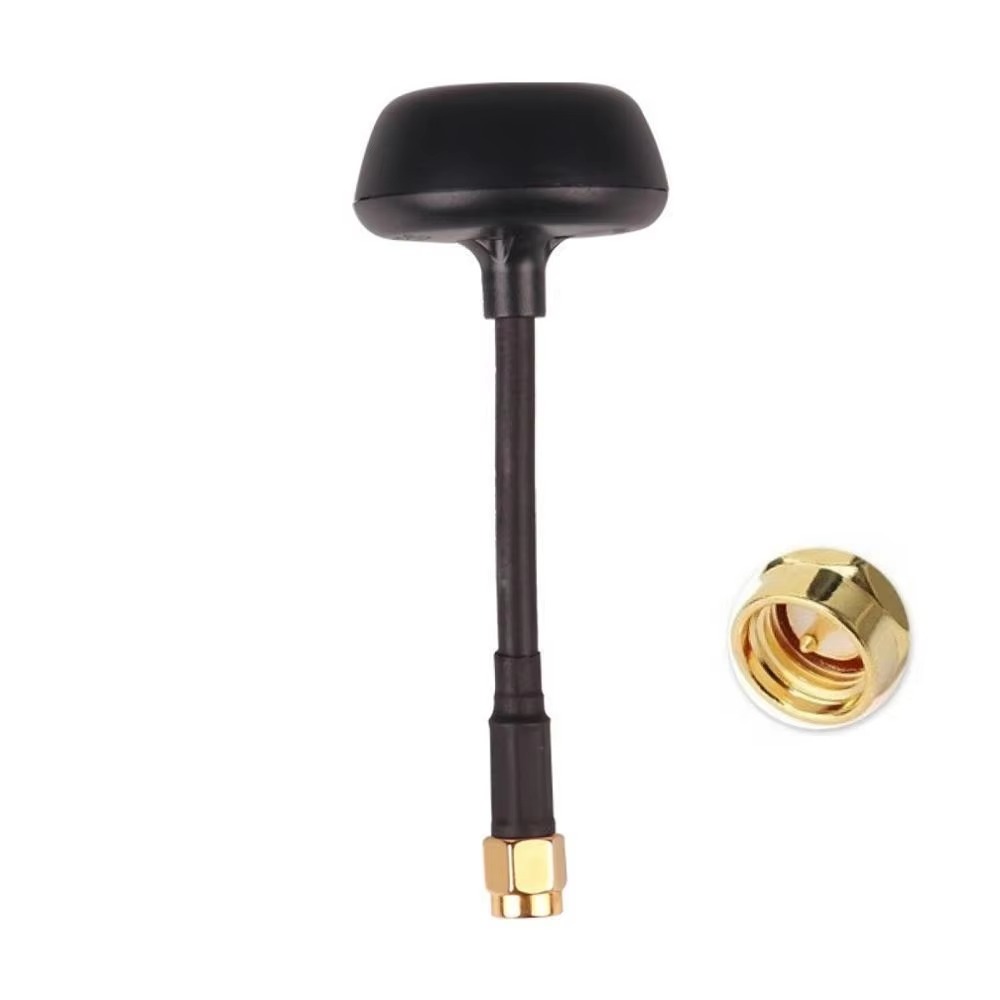
SMA Connector Frequency Performance
SMA connectors are designed for modefree operation from DC to 18 GHz, with precision versions reaching 27 GHz. The frequency rating depends on the specific connector configuration:
Cabled connectors: 0–12.4 GHz
Uncabled receptacles and rightangle semirigid cable connectors: 0–18.0 GHz
Straight semirigid cable connectors and field replaceable connectors: 0–26.5 GHz
MMCX Connector Frequency Performance
MMCX connectors typically operate up to 6 GHz, with some highperformance variants reaching 8 GHz. Key performance metrics for MMCX connectors include:
VSWR: 1.15:1 to 1.5:1 depending on configuration
Return loss: ≥32 dB (DC–1 GHz), ≥28 dB (1–4 GHz), ≥25 dB (4–6 GHz) for straight, semirigid cable
Impedance: 50 ohms
AssemblyLevel Frequency Ratings
When SMA and MMCX connectors are combined with a coaxial cable, the overall assembly frequency rating is determined by the lowestrated component. Common configurations include:
SMA to MMCX with RG178: DC to 3 GHz or DC to 6 GHz depending on the specific assembly
SMA to MMCX with RG316: DC to 6 GHz
SMA to MMCX with RG174: DC to 1 GHz
For applications requiring frequencies above 6 GHz, semirigid or handformable cable assemblies with SMA and MMCX connectors can be used. Pasternack offers handformable semirigid cable assemblies with frequency ratings up to 18 GHz, available with SMA, N, TNC, MCX, and MMCX connectors.
Design Considerations for HighFrequency SMA to MMCX Assemblies
Designing a high frequency SMA MMCX assembly requires careful attention to several factors that directly impact signal integrity, mechanical reliability, and overall system performance.
Impedance Matching
Maintaining a consistent 50ohm impedance throughout the assembly is critical for minimizing signal reflection and insertion loss. Any impedance mismatch—whether at the connectorcable interface, along the cable, or at the mating interface—will cause signal reflections that degrade performance. Engineers must ensure that both the SMA and MMCX connectors, as well as the cable, are specified for 50ohm impedance. Most standard SMA and MMCX connectors are 50ohm designs, but it is always prudent to verify this specification.
Shielding Effectiveness
The outer conductor and jacket of the coaxial cable serve to block external electromagnetic interference (EMI) from corrupting the signal, and to prevent the cable itself from radiating noise into nearby components. For highfrequency applications, shielding effectiveness becomes increasingly important. Handformable semirigid cable assemblies can provide shielding greater than 100 dB, making them suitable for sensitive RF environments. Flexible cables like RG178, RG316, and RG174 offer varying levels of shielding, with doubleshielded variants providing improved performance.
Insertion Loss and Cable Length
Every connector, cable length, and bend adds attenuation to the signal. At higher frequencies, even small design choices—such as connector quality, cable diameter, and bend radius—start to matter significantly. Engineers should keep cable runs as short as routing allows to minimize loss and clutter. Best practice is to route and measure the cable early rather than adding length "to be safe".
Bend Radius and Routing
RF coaxial cable has a minimum bend radius before the internal dielectric and shield geometry begin to degrade. Routing the cable too tightly inside an enclosure will silently increase loss and potentially cause impedance discontinuities. Design guidelines recommend:
Maintaining a single bend radius where possible
Avoiding bends exceeding 180 degrees
Preventing direct bends immediately behind the connector
Avoiding multiple adjacent bends to reduce geometric deformation and signal interference
Rightangle connector mounts can reduce strain on connectors and improve routing efficiency in tight spaces.
Connector Retention and Vibration Resistance
In products that experience vibration or repeated handling—such as industrial equipment, vehicles, or portable devices—connector retention becomes a critical concern. Threaded SMA connectors provide superior vibration resistance compared to snapon MMCX connectors. However, MMCX connectors are designed to maintain reliable snapon engagement, and GCT's SMAtoMMCX assemblies have been shock and vibration tested and validated to EIA36409 durability standards. In highvibration environments, engineers should consider additional strain relief or cable clamping to prevent connector loosening.
Environmental Protection
For outdoor or harshenvironment applications, ingress protection (IP) ratings are essential. The SMA bulkhead interface is typically the point where environmental sealing is most critical. GCT's SMAtoMMCX rear bulkhead assemblies feature SMA jacks sealed to IP67 even when unmated, with some models (CABLE196 and CAB469) extending protection to IP68 submersion capability. Internal sealing for waterresistant and dusttight performance is achieved through gaskets and Orings at the bulkhead interface.
Thermal Management
RF cables should not obstruct airflow or be placed too close to components that generate significant heat, as this can impact both cable performance and system reliability. Hightemperature cable variants, such as those with FEP jackets, are available for applications where elevated temperatures are expected.
Applications of HighFrequency SMA to MMCX Assemblies
The versatility of high frequency SMA MMCX assemblies makes them suitable for a remarkably diverse range of applications across multiple industries.
IoT Sensing and Telemetry Units
In IoT deployments, RF modules are often sealed inside compact enclosures to protect them from environmental hazards. The MMCX end of the assembly connects to the RF module on the PCB, while the SMA bulkhead connector provides a sealed external interface for an antenna. GCT's SMAtoMMCX assemblies are specifically designed for "enclosed RF modules requiring sealed panel feeds," making them ideal for smart metering, waste management systems, agricultural technology platforms, and industrial instrumentation.
GPS and GNSS Systems
GPS and GNSS receivers require highquality RF connections to maintain signal lock and positioning accuracy. SMA to MMCX assemblies using RG174 or RG178 cable are commonly used in GPS/GNSS applications, providing a reliable link between the receiver module and the antenna.
Laboratory RF Test and Measurement
In laboratory environments, SMA to MMCX assemblies facilitate quick and reliable connections between test equipment (which typically uses SMA or Ntype connectors) and devices under test (which may use MMCX interfaces). Pasternack's RF cable assemblies are widely used in "laboratory RF test and measurement" applications, where highquality connections and repeatable performance are essential.
Telecom and Networking Equipment
Telecom antenna tower component jumper connections often require robust, weatherresistant interfaces. SMA to MMCX assemblies with sealed bulkhead connectors provide the necessary environmental protection while maintaining excellent RF performance.
Defense and Military Systems
Ruggedized SMA to MMCX assemblies are used in defense and military applications where reliability under extreme conditions is paramount. Handformable semirigid cable assemblies with SMA and MMCX connectors are particularly suited for these environments, offering excellent shielding and mechanical durability.
Wearables and Portable Electronics
The ultrasmall MMCX connector is a natural fit for wearables and portable electronics, where board space is at a premium. When paired with an SMA bulkhead for charging or antenna connections, these assemblies enable compact, highperformance RF designs.
How to Select the Right SMA to MMCX Assembly
Selecting the optimal high frequency SMA MMCX assembly for your application requires careful consideration of several key parameters. The following selection guide outlines the most important factors.
Step 1: Determine Your Frequency Requirements
Start by identifying the maximum operating frequency of your system. If your application operates below 1 GHz, RG174 cable assemblies may suffice. For frequencies up to 3 GHz, RG178 or RG316 assemblies are appropriate. For 6 GHz applications, RG316 or specialized RG178 variants should be selected. For frequencies above 6 GHz, consider semirigid or handformable cable assemblies.
Step 2: Choose the Right Cable Type
Consider the physical constraints of your design:
Ultracompact spaces: RG178
Generalpurpose, balanced performance: RG316
Longer runs, lower loss: RG174 or larger cables
Highest performance, semipermanent routing: Semirigid or handformable cable
Step 3: Select Connector Configurations
Determine the gender and mounting requirements for each end:
SMA end: Male (plug) or female (jack)? Straight or rightangle? Bulkhead mount for panel feeds?
MMCX end: Male (plug) or female (jack)? Straight or rightangle?
Rightangle MMCX plugs with 360degree rotational freedom when mated offer excellent routing flexibility in tight enclosures.
Step 4: Evaluate Environmental Requirements
If your application requires environmental sealing, look for assemblies with IP67 or IP68 ratings at the bulkhead interface. Verify that the SMA jack maintains its IP rating even when unmated, as this is critical for fieldserviceable connections.
Step 5: Consider Mechanical Durability
For highvibration environments, prioritize assemblies that have been shock and vibration tested. Check the durability rating, typically expressed in mating cycles. GCT's assemblies are validated to EIA36409 durability standards.
Step 6: Verify Impedance and VSWR
Ensure that all components are specified for 50ohm impedance. Review the VSWR specifications to confirm they meet your system requirements. Typical VSWR values for SMA to MMCX assemblies range from 1.15:1 to 1.5:1.
Market Trends and the Future of SMA MMCX Assemblies
The market for high frequency SMA MMCX assemblies is being shaped by several broader trends in the electronics industry.
Miniaturization
The relentless drive toward smaller electronic devices continues to push demand for ultraminiature interconnect solutions. MMCX connectors, with their tiny footprint, are increasingly favored over larger connectors in consumer electronics, wearables, and medical devices. The combination of MMCX with SMA bulkhead interfaces enables designers to achieve compact internal routing while maintaining robust external connections.
5G and Beyond
The rollout of 5G infrastructure and the development of 6G technology are driving demand for RF components that can operate at higher frequencies with lower loss. While MMCX connectors are generally limited to 6 GHz, their use in sub6 GHz 5G applications remains strong. For millimeterwave frequencies, other connector types such as SMP, SMPM, and 2.92 mm are more appropriate, but SMA and MMCX assemblies continue to serve the vast sub6 GHz market.
IoT and Edge Computing
The proliferation of IoT devices—from smart meters to industrial sensors—is creating unprecedented demand for compact, reliable RF interconnects. SMA to MMCX assemblies are wellpositioned to serve this market, particularly in applications where a sealed bulkhead interface is required for outdoor or harshenvironment deployments.
Customization and Rapid Prototyping
As RF designs become more specialized, demand for custom cable assemblies is growing. Manufacturers like Samtec offer configurable RF cable assemblies with a choice of SMA, MCX, or MMCX terminations and RG316 or RG178 cable, enabling engineers to rapidly prototype and deploy custom solutions. This trend toward customization is expected to accelerate as timetomarket pressures intensify.
The high frequency SMA MMCX assembly represents a powerful solution for engineers seeking to balance compactness, performance, and reliability in RF system design. By combining the robust, threaded SMA interface with the ultraminiature, snapon MMCX connector, these assemblies enable seamless transitions between compact internal RF modules and external antennas, test equipment, or bulkhead panel feeds.
From the selection of the right coaxial cable—whether RG178 for ultracompact designs, RG316 for balanced performance, or RG174 for generalpurpose applications—to the careful consideration of impedance matching, shielding, bend radius, and environmental protection, every design decision impacts the final assembly's performance.
As the electronics industry continues to push the boundaries of miniaturization and frequency performance, the SMA to MMCX assembly will remain an essential building block for IoT devices, 5G infrastructure, test and measurement systems, and countless other RF applications. By understanding the specifications, design considerations, and selection criteria outlined in this guide, engineers can confidently specify the right assembly for their next highfrequency project.
For engineers seeking readymade solutions, manufacturers such as GCT, Pasternack, Amphenol RF, Würth Elektronik, and Samtec offer a wide range of standard and custom SMA to MMCX assemblies to meet diverse application requirements. Whether you need a sealed bulkhead assembly for outdoor IoT deployment or a flexible test cable for laboratory use, the right high frequency SMA MMCX assembly is available to bring your RF design to life.
Lucy Yang | lucy.y@toxutech.com
Dotty Zhao | sales04@toxutech.com
Global Business Director / Sales Team / Global Operations


 En
En Cn
Cn Korean
 Home >