

-
Products -PCBA Manufacturing RF Connectors RF Cable Assemblys Embedded Antennas External Antennas GNSS Positioning Solutions
RF Connectors

RF Cable Assemblys
Embedded Antennas
External Antennas
GNSS Positioning Solutions































 Language


Language


Time:2026-10-16 Views:0
Why GPS BDS Dual System Antennas Matter in 2026
The Global Navigation Satellite System (GNSS) landscape has undergone a fundamental transformation. No longer is a single constellation sufficient for reliable positioning. Modern applications—from autonomous vehicles navigating dense urban canyons to precision agriculture operating in remote fields—demand the robustness, redundancy, and accuracy that only multi-constellation reception can provide. At the heart of this capability lies the GPS BDS dual system antenna, a specialized component engineered to receive signals from both the United States' Global Positioning System (GPS) and China's BeiDou Navigation Satellite System (BDS) simultaneously.
This article provides a comprehensive technical and commercial overview of GPS BDS dual system antennas. We will explore their underlying design principles, performance characteristics, application scenarios, market dynamics, and the strategies for effectively promoting these products in an increasingly competitive global marketplace. Whether you are an RF engineer specifying components for a new design, a procurement specialist evaluating suppliers, or a technical marketer seeking to optimize your product's digital presence, this guide delivers the actionable intelligence you need.
Technical Fundamentals: Understanding Dual-System GNSS Reception
Frequency Bands and Signal Structure
A GPS BDS dual system antenna must accommodate the specific frequency allocations of both satellite constellations. The GPS system primarily utilizes the L1 band centered at 1575.42 MHz for civilian positioning, with the L2 band at 1227.60 MHz and the L5 band at 1176.45 MHz providing additional signals for higher precision and ionospheric correction. The BeiDou system operates across a distinct set of frequencies: the B1 band at 1561.098 MHz, the B3 band at 1268.52 MHz, and the B2 band at 1207.14 MHz, among others.
The challenge for antenna designers is to create a single radiating structure that resonates efficiently at these disparate frequencies while maintaining consistent performance characteristics. As one technical analysis notes, the frequency difference between GPS L1 (1575.42 MHz) and BeiDou B1 (1561.098 MHz) is approximately 14 MHz, which requires careful tuning to ensure adequate bandwidth coverage for both signals. Advanced dual-band designs often employ stacked patch configurations or fractal-inspired geometries to achieve the required multi-resonant behavior. For instance, a dual-layer microstrip antenna with a crown-like fractal top layer and a rectangular bottom patch, fed by a single coaxial probe, has been demonstrated to operate effectively across both GPS L1 and BeiDou B1/B3 bands with right-hand circular polarization (RHCP).
Design Architectures: Patch, Helical, and Beyond
The physical implementation of a GPS BDS dual system antenna typically follows one of several established design paradigms, each with distinct advantages for specific use cases.
Stacked Patch Antennas represent the most prevalent architecture for dual-band GNSS applications. These designs layer two or more dielectric substrates, each supporting a radiating patch element tuned to a specific frequency band. A representative example is the KYOCERA AVX Part No. 1002649, a dual-feed patch antenna covering 1.575 GHz to 1.606 GHz with a peak gain of 5 to 5.5 dBi and an impressive axial ratio of just 1 dB. The stacked configuration allows for independent optimization of each frequency band, resulting in excellent isolation between the GPS and BeiDou signal paths.
Helical Antennas offer a compelling alternative, particularly for applications where size, weight, and multipath rejection are critical. The Calian GNSS HC885XF exemplifies this approach, featuring a dual-band helical design that supports GPS/QZSS (L1/L5), GLONASS (G1/G3), Galileo (E1/E5a/E5b), and BeiDou (B1/B2/B2a). Its eXtended Filter (XF) technology provides advanced out-of-band interference protection, including LTE and nearby satellite signals, ensuring clean reception even in complex RF environments. Helical designs provide excellent multipath rejection and optimal GNSS signal reception without requiring a ground plane, making them ideal for UAVs, drones, and mobile platforms where weight and installation flexibility are paramount.
Constant-Gap Spiral Antennas represent a more recent innovation in dual-band GNSS design. A patent filing (CN121863045A) describes a constant-gap spiral antenna with three secondary radiators positioned to tune the higher-order resonant point of the primary radiator, achieving dual-frequency operation for GPS L1 and L5 bands. This approach reduces structural complexity and manufacturing costs compared to stacked patch designs, while also being compatible with various connection methods including monopole connectors, SMA connectors, or direct soldering.
Key Performance Metrics and Specifications
When evaluating a GPS BDS dual system antenna, several critical performance parameters determine its suitability for a given application:
Gain and Radiation Pattern – Antenna gain, typically expressed in dBi or dBic, quantifies the antenna's ability to direct energy in a particular direction. For GNSS applications, a broad, hemispherical radiation pattern with consistent gain across the upper hemisphere is essential for tracking satellites at various elevation angles. The Kinghelm KH-GPS/BD-SS04 achieves a gain of ≥4.0 dBi with a VSWR of ≤1.5, providing excellent signal clarity for satellite positioning applications. The Calian HC885XF offers zenith gain values of 0.5 dB for GPS L1, GLO L1, GAL E1, and BDS B1 bands, and 1.1 dB for the L2/E5b/B2 bands.
VSWR (Voltage Standing Wave Ratio) – VSWR measures the impedance matching between the antenna and the receiver. A VSWR of 1.5:1 or lower is generally considered excellent for GNSS antennas, indicating that less than 4% of the incident power is reflected. The Tallysman TW4721-00 dual-band GNSS antenna achieves a VSWR of 1.5 across its 1.559 GHz to 1.606 GHz operating range.
Axial Ratio – For circularly polarized GNSS antennas, the axial ratio measures the purity of the circular polarization. A lower axial ratio (closer to 0 dB) indicates better polarization purity and improved multipath rejection. The KYOCERA AVX 1002649 achieves an axial ratio of just 1 dB, representing exceptional circular polarization performance.
Noise Figure and LNA Gain – Active GNSS antennas integrate a low-noise amplifier (LNA) to boost the received signal above the noise floor of the receiver. The ANT-MAX-M7HCT-A-SMA features an LNA gain of 30 dB with a noise figure of 1.5 dB typical and 2 dB maximum. The Kinghelm KH-GPS/BD-SS04 integrates an LNA with a gain of 28±2 dB, ensuring reliable signal acquisition even in challenging environments.
Phase Center Stability – For high-precision applications such as RTK surveying and machine control, the stability of the antenna's phase center is critical. A phase center variation of less than 2 mm is considered excellent for precision GNSS antennas, directly impacting the achievable positioning accuracy.
Applications: Where GPS BDS Dual System Antennas Excel
Autonomous Vehicles and Intelligent Transportation
The autonomous vehicle sector represents one of the most demanding and rapidly growing markets for GPS BDS dual system antennas. Autonomous driving systems require continuous, centimeter-level positioning accuracy to navigate safely through complex environments. The redundancy provided by simultaneous GPS and BeiDou reception is invaluable: if one constellation experiences signal degradation due to atmospheric conditions, urban obstructions, or intentional interference, the other constellation can maintain positioning integrity.
The HX-VR401A from Harxon exemplifies this application category, a multi-constellation full-band external vehicle antenna supporting GPS, GLONASS, BDS, and GALILEO, specifically designed for unmanned vehicles, autonomous driving, drones, and precision agriculture. Similarly, the UM960G high-precision board antenna is engineered for autonomous driving controllers and automotive-grade T-Box applications, simultaneously receiving GPS/BDS L1 + L2/L5 signals to enable rapid positioning even in weak-signal environments.
Surveying, Mapping, and Geospatial Intelligence
Professional surveying and mapping applications demand the highest levels of positioning accuracy, often requiring RTK (Real-Time Kinematic) or PPP (Precise Point Positioning) techniques that achieve centimeter or even millimeter-level precision. GPS BDS dual system antennas are indispensable in these contexts, as dual-frequency reception enables the ionospheric delay correction that is essential for high-precision positioning.
The Calian HC885XF is specifically designed for surveying applications, offering dual-band helical GNSS reception compatible with GPS/QZS (L1/L5), GLONASS (G1/G3), Galileo (E1/E5a/E5b), BeiDou (B1/B2/B2a), and NavIC (L5), including L-Band correction services. Its ultra-lightweight design (42 grams) and low power consumption (25-31 mA typical) make it equally suitable for UAV-based surveying and mobile mapping.
Precision Agriculture and Machine Control
Modern precision agriculture relies on GNSS-guided tractors, combines, and sprayers to optimize field operations, reduce input costs, and minimize environmental impact. GPS BDS dual system antennas provide the reliable, repeatable positioning that these automated systems require. The Taoglas Levity Series, including the AHP24510 and AHP54510, is optimized for wearables, navigation, transportation, robotics, precision agriculture, and autonomous vehicles.
Fleet Management and Asset Tracking
For logistics and fleet management applications, GPS BDS dual system antennas enable continuous tracking of vehicles, containers, and high-value assets across vast geographic areas. The Kinghelm KH-GPS/BD-SS04 is specifically designed for fleet management, asset tracking, and real-time monitoring systems, enabling businesses to track the movement of goods, vehicles, and other assets with high accuracy. Its fully sealed design, constructed from anti-ultraviolet, anti-aging engineering plastics, ensures exceptional durability in outdoor settings.
IoT and Smart City Infrastructure
The proliferation of IoT devices and smart city infrastructure has created new opportunities for GPS BDS dual system antennas in applications ranging from smart parking and traffic management to environmental monitoring and public safety. The KYOCERA AVX 1002649, with its compact 25.0 x 25.0 x 6.7 mm footprint and weight of just 14.3 grams, is well-suited for handheld devices, tablets, gateways, telematics, tracking systems, healthcare devices, IoT equipment, and smart city applications.
Marine and Aviation Navigation
Marine and aviation applications demand the highest levels of reliability and environmental durability. GNSS antennas for these sectors must withstand extreme temperatures, salt spray, vibration, and moisture while delivering consistent performance. The Trimble AV34 GNSS Antenna has been designed to support high-accuracy aerial, land, and marine applications, with dual-frequency operation enabling faster initialization and dual-constellation reception improving satellite availability in obstructed environments.
Market Trends and Commercial Landscape
Market Size and Growth Projections
The global market for GNSS antennas is experiencing steady growth, driven by the expanding adoption of multi-constellation positioning across diverse industries. According to market research, the global GNSS Active Patch Antenna market was valued at US$ 388 million in 2025 and is forecast to reach US$ 491 million by 2032, representing a compound annual growth rate (CAGR) of 3.4% during the review period. Global production reached approximately 31,417 thousand units in 2025, with an average market price of around US$ 12 per unit and a gross profit margin of approximately 20% to 40%.
The broader positioning antenna market, which encompasses GNSS antennas alongside other positioning technologies, is estimated at USD 3.27 billion in 2025 and is expected to reach USD 6.89 billion by 2032, growing at a CAGR of 11.2%. This faster growth rate reflects the expanding integration of positioning capabilities into consumer devices, industrial equipment, and autonomous systems.
Technology Trends Shaping the Market
Several technological trends are reshaping the GPS BDS dual system antenna market:
Miniaturization – The demand for compact, integrated antennas continues to drive innovation in miniaturized patch and chip antenna designs. The Taoglas GVLB208 Series, for example, supports simultaneous L1 and L5 reception in a 20mm × 20mm × 8mm footprint, enabled by a stacked patch design that delivers peak gain up to 1.5 dBi and approximately 50% efficiency across both bands.
Multi-Constellation Integration – While GPS BDS dual system antennas represent the core of many applications, the trend is toward antennas that support four or more constellations simultaneously. The Calian HC885XF supports GPS, GLONASS, Galileo, BeiDou, NavIC, and L-Band correction services in a single compact package.
Advanced Interference Mitigation – As the RF spectrum becomes increasingly congested, antennas with sophisticated filtering capabilities are becoming essential. The eXtended Filter (XF) technology in the Calian HC885XF provides advanced protection against out-of-band interference, including LTE and nearby satellite signals.
Integration with RTK and PPP – The growing adoption of high-precision GNSS techniques is driving demand for antennas with excellent phase center stability, low axial ratio, and consistent group delay characteristics. Antennas with phase center accuracy of ≤ 2 mm and dual-feed/dual-stacked patch architecture are increasingly specified for RTK and PPP applications.
Competitive Landscape
The GPS BDS dual system antenna market features a diverse array of manufacturers ranging from established RF component suppliers to specialized GNSS antenna developers. Key players include Tallysman Wireless, Calian GNSS, Taoglas, KYOCERA AVX, Harxon, Kinghelm, and numerous Chinese manufacturers serving both domestic and export markets.
A notable characteristic of this market is the strong presence of Chinese suppliers, reflecting China's substantial investment in BeiDou infrastructure and the resulting domestic demand for BDS-compatible GNSS antennas. The BeiDou system currently comprises 35 satellites, compared to GPS's 31 satellites, providing higher satellite density and potentially more stable signal reception in the Asia-Pacific region.
SEO Optimization Strategies for GPS BDS Dual System Antenna Content
Keyword Research and Targeting
Effective SEO for GPS BDS dual system antenna products begins with a thorough understanding of the search terms used by your target audience. High-intent B2B keywords for this market include:
Primary keywords: "GPS BDS dual system antenna," "dual-band GNSS antenna," "BeiDou GPS antenna," "dual-frequency GPS antenna"
Secondary keywords: "GNSS active patch antenna," "multi-constellation antenna," "RTK GNSS antenna," "high-precision GNSS antenna"
Long-tail keywords: "GPS BDS dual system antenna for autonomous vehicles," "dual-band GNSS antenna specifications," "BeiDou GPS antenna manufacturer," "GNSS antenna for precision agriculture"
Technical keywords: "RHCP antenna," "VSWR specifications," "axial ratio GNSS," "phase center stability," "LNA gain GNSS antenna"
Research indicates that an effective SEO strategy for antenna and GPS solutions should target high-intent B2B keywords to attract qualified engineers and buyers, with content briefs developed for antenna comparisons and technical documentation that addresses specific engineering challenges.
Content Structure and On-Page Optimization
For an article of this length and technical depth, proper content structure is essential for both user experience and search engine crawlers:
Title Tag – Should incorporate the primary keyword and a compelling value proposition: "GPS BDS Dual System Antenna: Complete Technical Guide for 2026"
Meta Description – A concise summary that includes the primary keyword and key differentiators: "Comprehensive guide to GPS BDS dual system antennas covering design, specifications, applications, and market trends. Learn how dual-constellation GNSS antennas enable centimeter-level positioning."
Heading Hierarchy – Use H1 for the main title, H2 for major sections, and H3 for subsections. This structure helps search engines understand content organization and improves featured snippet eligibility.
Internal Linking – Link to related product pages, specification sheets, and application guides within your site to improve crawl depth and distribute page authority.
Schema Markup – Implement Product schema for individual antenna models and Article schema for technical guides to enhance rich snippet visibility in search results.
Authority Building and Content Marketing
Technical content marketing is particularly effective in the GNSS antenna sector, where engineers and procurement professionals actively research specifications and compare performance characteristics before making purchasing decisions. Successful approaches include:
Publishing technical comparison articles that objectively evaluate competing antenna designs and specifications
Creating application-specific landing pages for each major vertical (automotive, surveying, agriculture, IoT)
Developing comprehensive specification databases and selection guides
Producing video content demonstrating antenna performance in real-world scenarios
Engaging with industry publications and technical forums to build backlinks and brand authority
Research into antenna and GPS SEO campaigns has demonstrated that publishing regular blog articles on topics such as antenna comparisons, GPS technology trends, and 5G integration can significantly boost organic traffic and attract qualified B2B leads.
Local and International SEO Considerations
The GPS BDS dual system antenna market is inherently global, with significant demand from North America, Europe, and the Asia-Pacific region. SEO strategies should account for regional variations in search behavior and keyword preferences:
In North America and Europe, emphasize GPS-first terminology while highlighting BeiDou compatibility
In the Asia-Pacific region, particularly China and Southeast Asia, BeiDou-first terminology may be more effective
Ensure website content is available in multiple languages, with proper hreflang implementation
Consider regional technical standards and certification requirements (CE, FCC, RoHS, REACH) in content creation
Selecting the Right GPS BDS Dual System Antenna
Matching Antenna Specifications to Application Requirements
The selection of an appropriate GPS BDS dual system antenna requires careful consideration of the specific demands of the target application. Key decision factors include:
Frequency Band Coverage – Confirm that the antenna supports the specific GPS and BeiDou frequency bands required by your receiver. While basic dual-band antennas cover GPS L1 and BeiDou B1, high-precision applications may require L2, L5, B2, or B3 coverage as well.
Gain and Noise Figure – For applications with long cable runs or weak signal environments, an antenna with higher LNA gain and lower noise figure is essential. The ANT-MAX-M7HCT-A-SMA, with its 30 dB LNA gain and 1.5 dB noise figure, is well-suited for such scenarios.
Physical Form Factor – Consider the available mounting space, weight constraints, and environmental exposure. Magnetic/adhesive mount designs like the Tallysman TW4721-00 offer easy installation, while embedded patch antennas are better suited for OEM integration.
Environmental Rating – Outdoor applications require antennas with appropriate IP ratings, UV-resistant materials, and wide operating temperature ranges. The Calian HC885XF complies with IP67, REACH, and RoHS standards, with ESD protection up to 15 kV.
Connector Type and Cable – Ensure compatibility with your receiver's interface. Common options include SMA, I-PEX MHFHT, and various cable assemblies. The Kinghelm KH-GPS/BD-SS04 comes with an 8-meter RG174 cable and SMA-J connector, facilitating easy integration.
Evaluation Criteria for Procurement
For procurement professionals evaluating GPS BDS dual system antenna suppliers, the following criteria are particularly important:
Technical Documentation Quality – Complete datasheets with detailed electrical, mechanical, and environmental specifications
Certification and Compliance – Evidence of relevant certifications (CE, FCC, RoHS, REACH) and industry standards compliance
Supply Chain Reliability – Stable lead times, multiple manufacturing locations, and inventory availability
Technical Support – Access to application engineering support for design-in assistance and troubleshooting
Customization Capability – Ability to modify antenna designs for specific frequency bands, connector types, or form factors
Future Outlook: The Evolution of Dual-System GNSS Antennas
The GPS BDS dual system antenna will continue to evolve in response to emerging requirements from autonomous systems, IoT deployments, and high-precision positioning applications. Several trends are likely to shape future product development:
Increased Bandwidth and Multi-Band Operation – Future antennas will need to support an expanding array of frequency bands as GNSS constellations add new signals and augmentation services. The trend toward wideband designs covering the entire 1160-1610 MHz GNSS spectrum is already evident in products like the Taoglas HP54510A, which operates from 1166 to 1610 MHz.
Integration with GNSS Receivers and Modules – The boundary between antenna and receiver is blurring, with integrated antenna modules and smart antenna systems offering simplified integration and improved performance. The QLM29HxAA-GM GNSS smart antenna receiver exemplifies this trend, combining antenna, LNA, and receiver functionality in a single package.
Enhanced Anti-Jamming and Anti-Spoofing – As GNSS interference and spoofing threats become more sophisticated, antennas with advanced filtering and beamforming capabilities will become increasingly important, particularly for safety-critical applications.
AI-Enabled Antenna Design and Optimization – Machine learning techniques are beginning to be applied to antenna design optimization, potentially accelerating the development of antennas with superior performance characteristics.
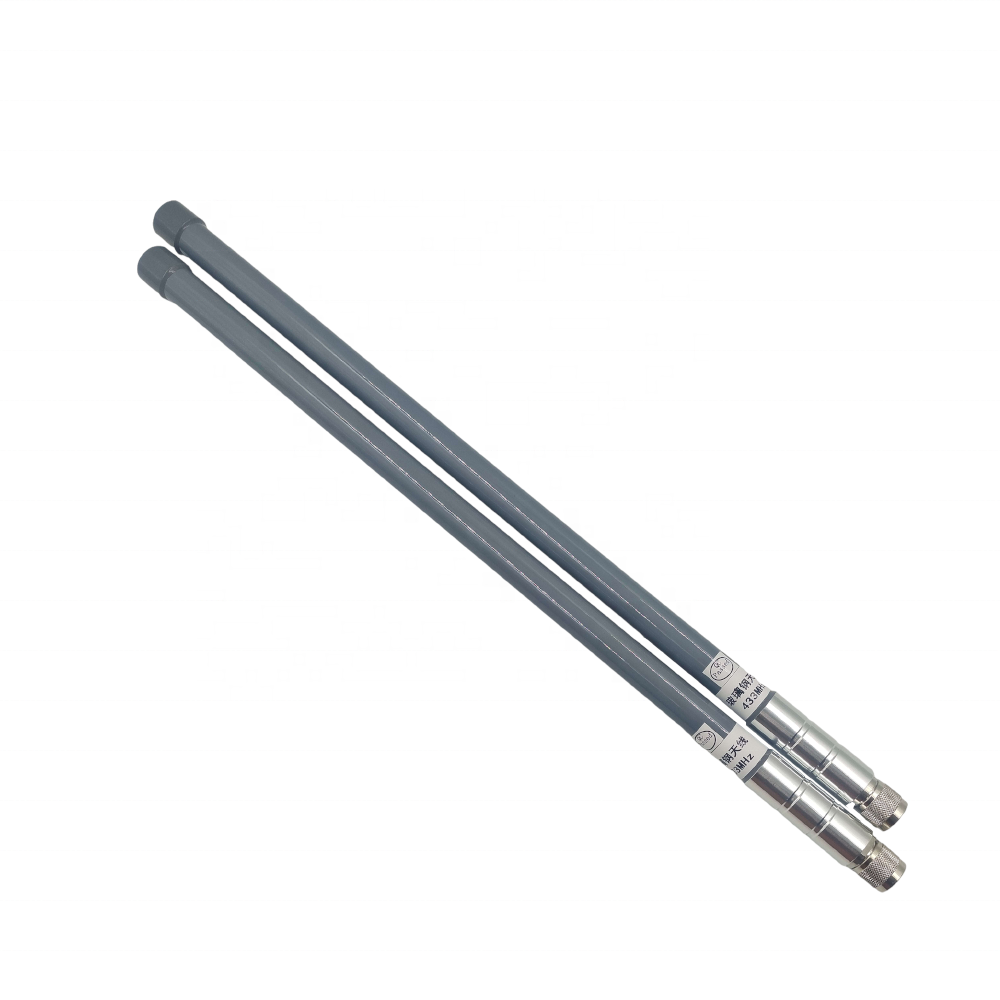
The GPS BDS dual system antenna represents a critical enabling technology for the next generation of positioning, navigation, and timing applications. By receiving signals from both GPS and BeiDou constellations simultaneously, these antennas provide the redundancy, accuracy, and reliability that modern autonomous systems, precision agriculture equipment, surveying instruments, and IoT devices demand.
For engineers, the key to successful implementation lies in carefully matching antenna specifications to application requirements, considering factors such as frequency band coverage, gain, noise figure, phase center stability, and environmental durability. For procurement professionals, supplier evaluation should encompass technical documentation quality, certification compliance, supply chain reliability, and customization capability.
For marketers and business development professionals, effective SEO and content marketing strategies are essential for reaching the engineers and procurement decision-makers who research and specify GNSS antennas. By targeting high-intent B2B keywords, creating technically authoritative content, and building industry authority through publications and engagement, antenna manufacturers can effectively reach their target audience in an increasingly competitive global marketplace.
As GNSS technology continues to advance and new applications emerge, the GPS BDS dual system antenna will remain at the forefront of positioning innovation, enabling the precise, reliable, and resilient navigation capabilities that tomorrow's systems will require.
Lucy Yang | lucy.y@toxutech.com
Dotty Zhao | sales04@toxutech.com
Global Business Director / Sales Team / Global Operations


 En
En Cn
Cn Korean
 Home >