

-
Products -PCBA Manufacturing RF Connectors RF Cable Assemblys Embedded Antennas External Antennas GNSS Positioning Solutions
RF Connectors

RF Cable Assemblys
Embedded Antennas
External Antennas
GNSS Positioning Solutions































 Language


Language


Time:2026-10-15 Views:0
In the rapidly evolving world of RF connectivity, the FAKRA to SMA cable assembly has emerged as a critical bridge between two distinct ecosystems: the automotive industry's standardized FAKRA connector system and the broader RF world's ubiquitous SMA interface. Whether you are designing an advanced driver assistance system (ADAS), building a precision GPS module, or setting up a test bench for automotive antenna validation, understanding the technical nuances, selection criteria, and market dynamics of FAKRA to SMA cable assemblies is essential for achieving optimal signal integrity and system reliability. This comprehensive guide explores every aspect of these specialized cable assemblies, from connector architecture and cable selection to customization options and future market trends.
Understanding the FAKRA Connector System
The FAKRA connector, named after the German automotive industry committee (Fachkreis Automobil) that developed it in the early 2000s, represents a standardized approach to automotive RF connectivity. Based on the SMB connector architecture, FAKRA connectors were designed to address the unique challenges of automotive environments: high vibration, extreme temperatures, space constraints, and the need for foolproof installation. The FAKRA interface operates at a characteristic impedance of 50 ohms and supports frequencies from DC to 6 GHz, making it suitable for a wide range of automotive communication protocols including GPS, LTE, V2X, and satellite radio.
One of the defining characteristics of FAKRA connectors is their mechanical keying system. The connector family employs 14 distinct key codes—designated by letters A through N, plus Z—each with a unique color and mechanical configuration to prevent mismating during installation. This colorcoded approach eliminates a significant source of installation error in automotive manufacturing lines, where dozens of coaxial connections must be made rapidly and correctly. The key codes and their primary applications include:
| Code | Color | Primary Application |
|---|---|---|
| A | Black | Radio with phantom supply |
| B | Cream White | Radio without phantom supply |
| C | Blue | GPS navigation and telematics |
| D | Claret Violet | GSM cellular |
| E | Green | TV1 (UHF) |
| F | Brown | TV2 (VHF) |
| G | Grey | Keyless entry / SDARS |
| H | Violet | GPS and navigation |
| I | Beige | Bluetooth / parking heating |
| K | Curry | Diversity radio / SDARS satellite |
| Z | Water Blue | Neutral (fits all key codes) |
The Z code is particularly noteworthy in the context of FAKRA to SMA cable assemblies, as it represents a universal keying option that can mate with any FAKRA jack regardless of its key code. This universality makes Zcode FAKRA connectors the preferred choice for cable assembly manufacturers who need to serve diverse automotive platforms without maintaining separate inventory for each key code variant.
The Role of SMA Connectors in the Assembly
At the other end of the assembly, the SMA (SubMiniature version A) connector provides a familiar and highly versatile RF interface. Developed in the 1960s, SMA connectors feature a threaded coupling mechanism that delivers excellent electrical performance from DC to 18 GHz, with precision versions extending to 26.5 GHz. The 50ohm impedance matches the FAKRA standard, ensuring minimal signal reflection at the transition point. SMA connectors are built in accordance with MILC39012 and CECC 22110/111 specifications, guaranteeing intermateability across manufacturers.
The combination of FAKRA's snapon interface and SMA's threaded coupling creates a cable assembly that serves as an interface adapter between the automotive world and the broader RF ecosystem. This is particularly valuable in test and measurement scenarios, where SMAequipped instruments and test equipment need to connect to automotivegrade FAKRA ports without permanent modification to either system.
Technical Specifications and Performance Characteristics
A typical FAKRA to SMA cable assembly operates at 50ohm impedance with a maximum frequency ranging from 3 GHz to 6 GHz, depending on the specific cable and connector configuration. The insertion loss and voltage standing wave ratio (VSWR) are the primary electrical performance metrics, with welldesigned assemblies achieving VSWR values of 1.4:1 or better across their operating frequency range.
Shielding effectiveness is another critical parameter, particularly for automotive applications where electromagnetic interference (EMI) can degrade GPS accuracy, disrupt cellular communication, or compromise ADAS sensor data. Highquality FAKRA to SMA assemblies employ doubleshielded cable constructions that deliver shielding effectiveness exceeding 90 dB, effectively blocking external interference and preventing signal leakage.
Temperature range is a defining requirement for automotivegrade assemblies. Standard configurations operate reliably from 40°C to +105°C, accommodating the extreme thermal conditions encountered in engine compartments, underdash installations, and exterior antenna mounting locations. This wide temperature tolerance, combined with the mechanical robustness of both connector types, ensures longterm reliability in the most demanding environments.
Cable Type Selection: RG174, RG58, RG316, and Beyond
The choice of coaxial cable significantly influences the electrical performance, mechanical flexibility, and physical dimensions of a FAKRA to SMA cable assembly. Three cable types dominate the market, each offering distinct advantages for specific applications:
RG174 is the most widely used cable in FAKRA to SMA assemblies, featuring a nominal diameter of approximately 2.8 mm. Its small size and excellent flexibility make it ideal for tight routing paths within vehicle interiors, such as behind dashboard panels or through door grommets. However, its higher attenuation characteristics limit practical applications to shorter runs, typically under one meter for GPS and cellular frequencies.
RG58 offers a larger diameter of approximately 5.0 mm and significantly lower attenuation per unit length compared to RG174. This makes RG58 the preferred choice for longer cable runs, such as connecting an exterior roofmounted antenna to a head unit located in the center console. The tradeoff is reduced flexibility and a larger bend radius, which may complicate installation in spaceconstrained areas.
RG316 occupies a middle ground with a diameter of approximately 2.5 mm, similar to RG174, but employs a PTFE (Teflon) dielectric that enables higher temperature operation and slightly better electrical performance. RG316 is particularly wellsuited for applications near heat sources, such as engine compartment sensor connections or exhaustadjacent antenna feeds.
More specialized cable options include LMR100, LMR195, and PEC100LSZH, which offer enhanced performance characteristics for specific scenarios. LMR195, for instance, provides significantly lower loss than RG58 at higher frequencies, making it suitable for 5 GHz and 6 GHz applications where signal integrity is paramount. LSZH (Low Smoke Zero Halogen) jacket materials are increasingly specified for passenger compartment installations where fire safety standards demand reduced toxicity in the event of a fire.
Connector Gender Configurations and Mechanical Options
FAKRA to SMA cable assemblies are available in a comprehensive matrix of gender and orientation combinations to accommodate virtually any installation requirement. On the FAKRA side, both plug (male) and jack (female) configurations are available, with straight and rightangle body styles. The same options apply to the SMA end, creating combinations such as FAKRA Plug to SMA Plug, FAKRA Jack to SMA Jack, and mixedgender assemblies.
Rightangle connectors are particularly valuable in automotive installations where vertical clearance is limited. A rightangle FAKRA connector can reduce the required mounting depth by up to 50% compared to a straight connector, enabling connections in cramped spaces behind instrument clusters or within antenna housings. Similarly, rightangle SMA connectors help preserve vertical clearance on PCBmounted test points or instrument panels.
Bulkheadmount configurations are also available, where the FAKRA or SMA connector is designed to pass through a panel or enclosure wall. This is common in telematics control units (TCUs), where the external antenna connection must be accessible from outside the module while maintaining environmental sealing.
Primary Applications: Automotive and Beyond
The most prominent application for FAKRA to SMA cable assemblies is within the automotive industry, where they serve as the critical link between vehiclemounted FAKRA ports and aftermarket or test equipment with SMA interfaces. Key automotive applications include:
Advanced Driver Assistance Systems (ADAS) represent one of the fastestgrowing application categories. Modern vehicles employ multiple radar, LiDAR, and camera sensors that require highfrequency RF connections. FAKRA to SMA assemblies enable the connection of these sensors to central processing units and test equipment during development and validation phases.
Precision GPS and GNSS systems depend on lowloss, wellshielded cable assemblies to maintain signal lock and positioning accuracy. The FAKRA connector's robust locking mechanism ensures that the antenna connection remains secure even under vibration, while the SMA end provides compatibility with a wide range of GPS receivers and test instruments.
360degree camera systems require reliable coaxial connections between exterior camera modules and interior processing units. FAKRA to SMA assemblies facilitate the connection of these cameras to development platforms and diagnostic equipment.
VehicletoEverything (V2X) communication modules, which enable vehicles to communicate with infrastructure, other vehicles, and pedestrians, rely on FAKRA connectors for their antenna interfaces. FAKRA to SMA assemblies allow engineers to connect these modules to spectrum analyzers, signal generators, and other test equipment during development.
Beyond automotive, FAKRA to SMA cable assemblies find applications in drones and UAVs, where their lightweight construction and resistance to vibration are essential. RFID systems, wireless infrastructure equipment, and handheld test devices also benefit from the combination of FAKRA's secure latching and SMA's universal compatibility.
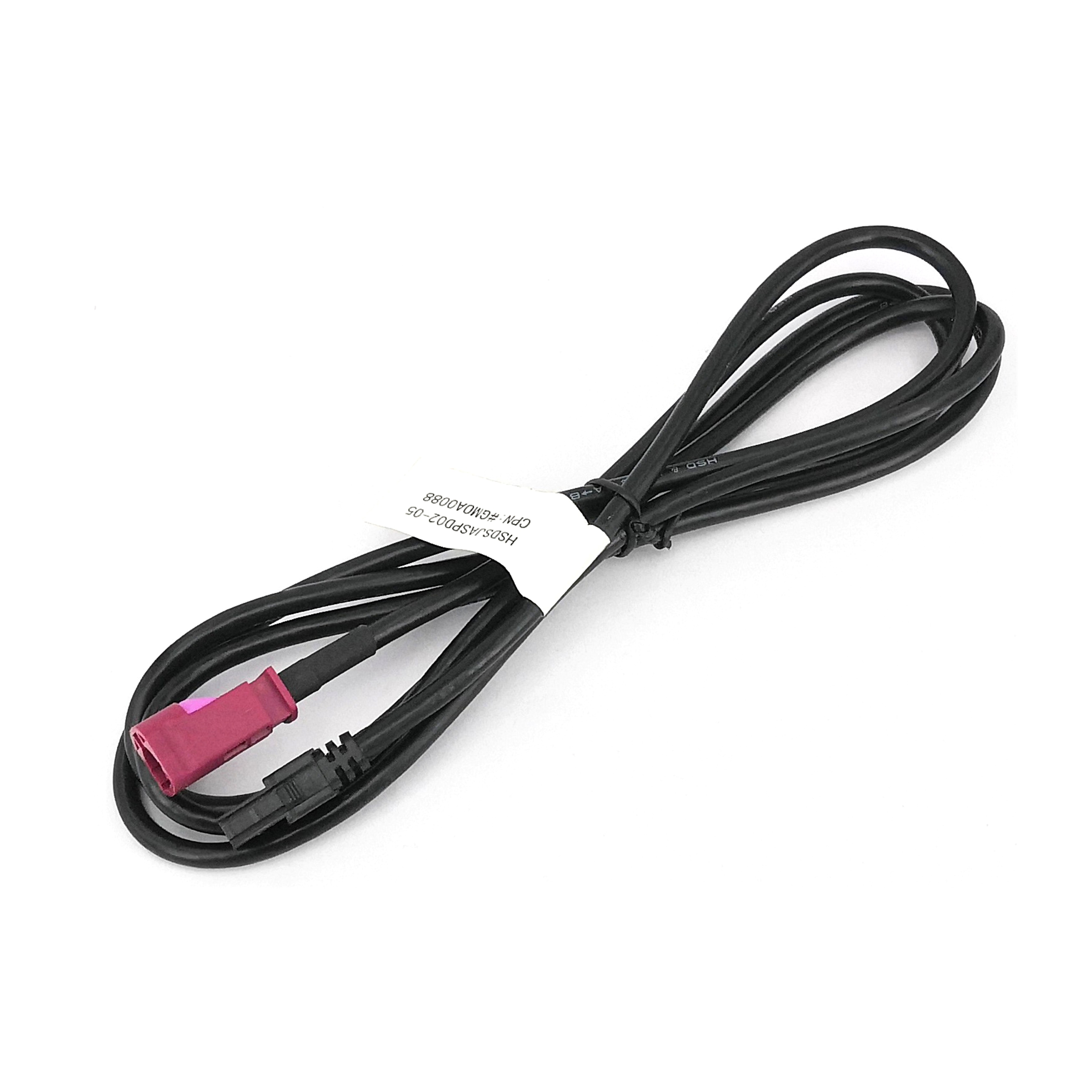
FAKRA to SMA vs. Direct SMA Assemblies: Key Advantages
Engineers often question whether a FAKRA to SMA cable assembly is necessary when direct SMA cable assemblies are readily available. The answer lies in the specific requirements of automotive and harshenvironment applications. FAKRA connectors offer several advantages over SMA in these contexts:
Snapon mating eliminates the need for threaded coupling, reducing installation time and eliminating the risk of crossthreading or insufficient torque. In highvibration environments, the FAKRA locking mechanism provides a more secure connection than threaded SMA, which can gradually loosen under sustained vibration.
Mechanical keying prevents mismating, a critical safety and reliability feature in vehicles where multiple RF connections exist in close proximity. The colorcoded and mechanically distinct key codes ensure that each cable connects only to its intended port.
Sealed and unsealed variants allow FAKRA connectors to meet IP67 and higher environmental protection ratings, making them suitable for exterior antenna mounting and underhood installations. While sealed SMA connectors exist, the FAKRA system was designed from the ground up for automotive environmental requirements.
Cost efficiency at scale is another advantage. FAKRA connectors use stamped and formed components rather than machined parts, enabling automated manufacturing processes that reduce perunit costs in highvolume production. TE Connectivity notes that this design approach can reduce PCB footprint by up to 75% compared to traditional connector solutions.
Selection Guide: Choosing the Right FAKRA to SMA Cable Assembly
Selecting the optimal FAKRA to SMA cable assembly requires careful consideration of several interrelated factors. The following framework can guide the decisionmaking process:
Frequency requirements should be the starting point. If your application operates below 3 GHz—which covers GPS (1.575 GHz), cellular (0.7–2.7 GHz), and most V2X frequencies—standard RG174 or RG58 assemblies will suffice. For 5 GHz WiFi or 6 GHz applications, consider lowloss cables such as LMR195 or PEC100LSZH with connectors rated to 6 GHz or higher.
Cable length directly impacts signal loss. For runs under 300 mm, RG174's higher attenuation is generally acceptable. For runs exceeding one meter, RG58 or a lowloss alternative becomes necessary to maintain acceptable signal levels. Always calculate the expected insertion loss based on the cable's attenuation specification at your operating frequency and add margin for connector losses and environmental factors.
Environmental conditions determine the required connector sealing and cable jacket material. For interior applications, unsealed connectors and standard PVC or LSZH jackets are adequate. For exterior or underhood installations, specify sealed FAKRA connectors with IP67 rating and cable jackets rated for the full automotive temperature range.
Mechanical constraints may dictate connector orientation and cable flexibility. Measure the available clearance at both connection points and select straight or rightangle connectors accordingly. Consider the minimum bend radius of the cable type and ensure that routing paths do not force tighter bends, which can damage the cable's shielding or change its impedance characteristics.
Key code compatibility must be verified against the mating FAKRA port. If the port's key code is known, specify the matching code for a secure, errorproof connection. If the assembly must be compatible with multiple ports or the key code is unknown, a Zcode (neutral) FAKRA connector provides universal mating capability.
Customization and OEM Solutions
While standard FAKRA to SMA cable assemblies cover many common requirements, OEM and specialized applications often demand custom configurations. Leading manufacturers offer extensive customization services including:
Custom cable lengths are available from 150 mm to 5 meters or more, with length tolerances typically held to ±5 mm for precision installations. Some suppliers offer sameday shipping for customlength assemblies, enabling rapid prototyping and design iteration.
Connector orientation and clocking can be specified to align with installation geometry. For FAKRA connectors, the clocking angle of the keyway relative to the cable exit direction can be customized. For SMA connectors, the hex nut flats can be oriented to facilitate torque application in tight spaces.
Cable type substitution allows designers to optimize for specific frequency, loss, or environmental requirements. Assemblies can be built on RG174, RG58, RG316, LMR100, LMR195, or custom cable types, with appropriate connector interfaces for each cable diameter.
Additional valueadded services include heat shrink booting for strain relief and environmental protection, custom labeling for identification and traceability, and RF testing with documentation of VSWR, insertion loss, and return loss performance. These services are particularly valuable for aerospace, defense, and medical applications where traceability and documented performance are mandatory.
Market Trends and Future Outlook
The global market for FAKRA connectors was valued at approximately $1.424 billion in 2025 and is projected to reach $2.236 billion by 2032, representing a compound annual growth rate (CAGR) of 6.7%. The broader RF and coaxial connector market is forecast to grow at 8.8% CAGR, reaching $10.031 billion by 2032. Several trends are shaping the future of FAKRA to SMA cable assemblies:
Higher frequency support is being driven by the expansion of automotive radar (77–81 GHz), 5G mmWave communication, and highresolution camera systems. While standard FAKRA connectors support up to 6 GHz, Mini FAKRA and HighSpeed FAKRA Mini (HFM) variants are pushing frequency capabilities to 9 GHz and beyond, with optimized designs reaching 15 GHz.
Miniaturization continues to be a priority as vehicles pack more RF systems into less space. Mini FAKRA connectors offer up to 75% reduction in PCB footprint compared to standard FAKRA, enabling higher packaging density in telematics control units and sensor modules.
Integration with highspeed data protocols is an emerging trend as automotive Ethernet and MIPI APHY interfaces gain adoption. While FAKRA remains the dominant RF connector standard, manufacturers are developing hybrid connectors that combine FAKRA RF ports with highspeed data contacts in a single housing, reducing connector count and assembly complexity.
Standardization and interoperability efforts continue to strengthen the FAKRA ecosystem. SAE USCAR17 provides a comprehensive testing framework that ensures connectors from different manufacturers will perform reliably when mated together, giving designers confidence to source from multiple suppliers without interoperability risk.
The FAKRA to SMA cable assembly represents far more than a simple adapter between two connector types. It embodies the convergence of automotivegrade reliability with the universal accessibility of the SMA interface, enabling engineers to bridge the gap between vehiclemounted RF systems and the broader test, measurement, and communication ecosystem. From the colorcoded keying system that prevents installation errors to the doubleshielded cable constructions that preserve signal integrity in electrically noisy environments, every aspect of these assemblies is engineered to meet the rigorous demands of modern automotive and industrial applications.
As vehicles become increasingly connected and autonomous, the demand for reliable, highperformance RF connectivity will only intensify. The FAKRA to SMA cable assembly, with its robust design, flexible configuration options, and broad compatibility, is wellpositioned to serve as a foundational component in this connected future. Whether you are specifying assemblies for production vehicles, developing prototype ADAS systems, or setting up a validation lab, understanding the technical details and selection criteria outlined in this guide will help you make informed decisions that ensure optimal performance and longterm reliability.
Lucy Yang | lucy.y@toxutech.com
Dotty Zhao | sales04@toxutech.com
Global Business Director / Sales Team / Global Operations


 En
En Cn
Cn Korean
 Home >