

-
Products -PCBA Manufacturing RF Connectors RF Cable Assemblys Embedded Antennas External Antennas GNSS Positioning Solutions
RF Connectors

RF Cable Assemblys
Embedded Antennas
External Antennas
GNSS Positioning Solutions































 Language


Language


Time:2026-10-15 Views:0
In the rapidly evolving world of automotive connectivity, the FAKRA SMA RF jumper harness has emerged as a critical component bridging two distinct RF ecosystems: the ruggedized automotive FAKRA interface and the precision instrumentation SMA interface. Whether you are an RF engineer designing a telematics control unit, a procurement specialist sourcing cable assemblies for ADAS production, or a systems integrator building a GPS/GNSS test bench, understanding the technical nuances, material choices, and performance characteristics of FAKRAtoSMA jumper harnesses is essential for ensuring signal integrity and longterm reliability.
This comprehensive guide explores every facet of FAKRA SMA RF jumper harnesses, from connector fundamentals and cable selection to assembly processes, testing protocols, and emerging market trends. By the end, you will have a thorough understanding of how to specify the right harness for your application and why these components are becoming indispensable in modern RF systems.
Understanding the FAKRA Connector
What Is FAKRA?
FAKRA (FAchKReis Automobil) is an interface standard developed by the German automotive industry for RF connections in vehicles. It comprises a standard SMB RF connector embedded within a colorcoded plastic housing designed for easy identification and mechanical keying. The FAKRA connector system was created to meet the stringent requirements of automotive environments, where vibration, temperature extremes, and the need for errorproof assembly are constant challenges.
The FAKRA connector interface supports DC to 6 GHz operation with a nominal impedance of 50 Ohms, making it suitable for a wide range of automotive RF applications including GPS navigation, satellite radio, cellular telematics, and vehicletoeverything (V2X) communication. The connector system is governed by standards such as SAE/USCAR18 and ISO 208601, which ensure dimensional interchangeability and performance consistency across manufacturers.
Key Features and Advantages
Modern FAKRA connectors, particularly Generation 4.0, incorporate several design innovations that enhance both manufacturability and field reliability:
14 mechanical and visual keying codes to prevent mismating during assembly
Audible locking mechanism for confirmed connection
Minimum 25 mating cycles of service life
Stamped and formed construction for fully automated cable termination
Mechanical pull force of minimum 90N
Detachable connector housing for field replacement without cable rework
These features make FAKRA connectors particularly wellsuited for highvolume automotive production lines where automated assembly and errorproofing are paramount.
FAKRA Color Codes and Applications
One of the most distinctive aspects of the FAKRA system is its colorcoding scheme, which provides immediate visual identification of the connector's intended application. The standard defines multiple codes, each assigned a specific color and function:
| Code | Color | Typical Application |
|---|---|---|
| A | Deep Black | DAB/AM-FM |
| B | Cream White | DAB with phantom supply |
| C | Signal Blue | GPS |
| D | Claret Violet | Cellular/Phone |
| E | Leaf Green | TV/SDARS |
| F | Nut Brown | TV/SDARS/Camera |
| G | Blue Gray | SDARS |
| H | Heather Violet | GPS Navigation |
| I | Beige | Bluetooth/VPM |
| K | Curry | SDARS |
| Z | Water Blue | Universal/Neutral |
This colorcoding system is not merely aesthetic; it serves as a critical errorprevention mechanism in automotive assembly, where a single mismated connector could disable a safetycritical system.
Understanding the SMA Connector
SMA Connector Fundamentals
The SMA (SubMiniature version A) connector is one of the most widely used RF coaxial connectors in the world. Originally developed in the 1960s, SMA connectors are designed for precision highfrequency applications and are characterized by their threaded coupling mechanism, compact size, and excellent electrical performance.
SMA connectors typically operate from DC to 18 GHz (with some precision variants reaching 26.5 GHz or higher), maintaining a constant 50 Ohm impedance. Their threaded interface provides a secure, vibrationresistant connection with consistent electrical characteristics, making them ideal for test equipment, antennas, and RF modules.
SMA vs. FAKRA: Complementary Interfaces
While both FAKRA and SMA connectors serve RF signal transmission, they occupy different niches:
| Characteristic | FAKRA | SMA |
|---|---|---|
| Primary Application | Automotive | Test & Measurement, Telecom |
| Frequency Range | DC–6 GHz | DC–18 GHz+ |
| Coupling Mechanism | Push‑on with latch | Threaded |
| Keying | 14 mechanical codes | None |
| Environmental Sealing | Sealed/unsealed options | Typically unsealed |
| Assembly | Automated crimp | Solder/crimp |
The complementary nature of these two interfaces is precisely what makes the FAKRA SMA RF jumper harness so valuable: it allows automotivegrade FAKRA connections to interface seamlessly with standard SMA test equipment, antennas, and RF modules.
FAKRA SMA RF Jumper Harness: Product Overview
What Is a FAKRA SMA Jumper Harness?
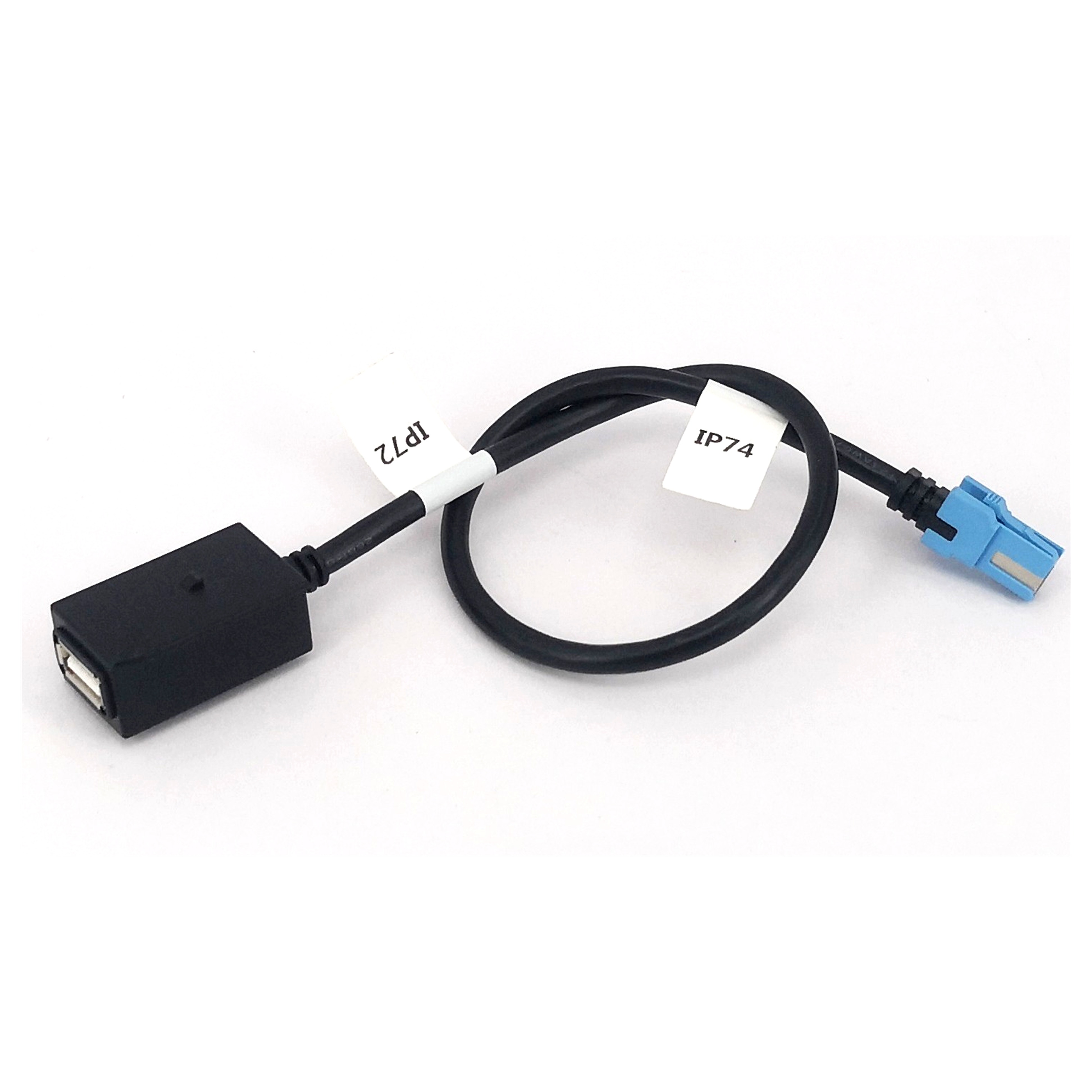
A FAKRA SMA RF jumper harness is a preterminated coaxial cable assembly with a FAKRA connector on one end and an SMA connector on the other. These assemblies are available in numerous configurations, including:
FAKRA Jack to SMA Male — the most common configuration for antenna connections
FAKRA Plug to SMA Female — for boardlevel or panel connections
Rightangle variants for spaceconstrained installations
Custom lengths ranging from 0.1 m to 5 m or more
For example, a typical SMA Male to Water Blue FAKRA Jack Cable using RG174 coax features a maximum VSWR of 1.4:1, operates from 40°C to +80°C, and provides 50 Ohm impedance with single shielding. More advanced variants, such as the SMA to FAKRA RF Adapter Cable using RG316, achieve VSWR ≤ 2.0 and insertion loss as low as 0.15 dB at 6 GHz, with an operating temperature range of 40°C to +85°C.
Connector Construction and Materials
The quality of a FAKRA SMA jumper harness depends heavily on its constituent materials. Premium assemblies typically feature:
Center Contacts: Goldplated beryllium copper for corrosion resistance and signal integrity
Connector Bodies: Nickelplated brass for durability and shielding effectiveness
FAKRA Housing: PA66 + 30% glass fiber for mechanical strength and thermal stability
Insulators: PTFE (Teflon) for low dielectric loss and hightemperature performance
Cable Jacket: PVC, PE, or LSZH depending on environmental requirements
These material choices directly impact the harness's electrical performance, mechanical durability, and suitability for different operating environments.
Cable Selection: RG174, RG316, and Beyond
The choice of coaxial cable is perhaps the single most important factor determining the performance of a FAKRA SMA jumper harness. Two cable types dominate this segment:
RG174 is a flexible 50 Ohm coaxial cable with a 0.110inch outer diameter. It offers good flexibility and moderate loss characteristics, making it suitable for short jumper runs in automotive and consumer applications. Typical insertion loss for RG174 is approximately 0.45 dB/ft at 1 GHz and 0.67 dB/ft at 3 GHz.
RG316 is a PTFEinsulated 50 Ohm cable with similar dimensions to RG174 but superior hightemperature performance and slightly lower loss. RG316 exhibits approximately 0.098 dB/ft at 1 GHz and 0.29 dB/ft at 3 GHz, along with a higher power handling capacity of 170 W compared to RG174's 20 W. The PTFE dielectric enables operation at temperatures up to 200°C, far exceeding RG174's PVClimited range.
For applications requiring even lower loss, cables such as LMR100 or PEC100LSZH may be specified. These cables offer improved shielding effectiveness and lower attenuation at the cost of slightly increased stiffness and diameter.
Technical Specifications and Performance
Electrical Characteristics
A welldesigned FAKRA SMA RF jumper harness should meet the following electrical specifications:
| Parameter | Typical Specification |
|---|---|
| Impedance | 50 Ω ± 3 Ω |
| Frequency Range | DC to 6 GHz |
| VSWR | ≤ 1.4:1 (typical), ≤ 2.0:1 (maximum) |
| Insertion Loss | ≤ 0.15 dB @ 6 GHz (RG316) |
| Dielectric Withstanding Voltage | 200–800 VRMS |
| Insulation Resistance | ≥ 1000 MΩ |
| Shielding Effectiveness | > 90 dB |
These specifications ensure that the harness delivers signal integrity with minimal reflection and attenuation across the operating band.
Mechanical and Environmental Specifications
Beyond electrical performance, FAKRA SMA jumper harnesses must withstand the mechanical and environmental stresses of their intended applications:
Operating Temperature: 40°C to +85°C (standard), 55°C to +125°C (hightemp variants)
Mating Cycles: ≥ 25 cycles (FAKRA), ≥ 500 cycles (SMA)
Vibration Resistance: Per SAE/USCAR2 and USCAR17 requirements
Sealing: IP67 (sealed FAKRA variants) or unsealed
RoHS Compliance: Mandatory for most markets
The sealed FAKRA connector variants are particularly important for underhood and exterior automotive applications, where exposure to moisture, dust, and road salt is a constant concern.
Assembly Process and Quality Control
Crimping and Termination
The assembly of FAKRA SMA jumper harnesses follows a precise, multistep process that ensures reliable electrical and mechanical connections:
1. Cable Preparation: The coaxial cable is stripped to exact dimensions, with care taken not to nick the center conductor or braid
2. Ferrule Placement: A crimp ferrule and heatshrink tubing are slid over the cable
3. Center Contact Crimping: The center contact is crimped to the cable's center conductor using a calibrated crimp tool
4. Insertion into Connector Body: The crimped contact is inserted into the connector subassembly
5. Braid Flaring and Ferrule Crimping: The cable braid is folded back over the ferrule, which is then crimped to secure the connection
6. HeatShrink Application: Heatshrink tubing is applied to provide strain relief and environmental protection
The ferrule crimp must withstand an axial pullout force of 110N minimum for FAKRA connectors, ensuring the assembly will not fail under mechanical stress.
Testing and Verification
Every FAKRA SMA jumper harness should undergo rigorous testing to verify its performance. Key test parameters include:
VSWR (Voltage Standing Wave Ratio): Measures impedance match and signal reflection. Tested using a Vector Network Analyzer (VNA)
Insertion Loss (S21): Measures signal power loss through the cable assembly, tested at multiple frequencies across the operating band
Return Loss (S11): Quantifies the reflected signal power, directly related to VSWR
Phase Stability: Critical for phasematched applications such as phasedarray antennas
These measurements are typically performed across the full operational frequency range, from 10 MHz to 6 GHz, to ensure consistent performance.
Applications of FAKRA SMA RF Jumper Harnesses
Automotive Telematics and Infotainment
The most prominent application for FAKRA SMA jumper harnesses is in automotive telematics and infotainment systems. These harnesses connect FAKRAequipped antennas—GPS, cellular, satellite radio—to SMAequipped telematics control units (TCUs) or head units. The FAKRA connector provides the ruggedized, sealed interface required for exterior antenna mounting, while the SMA connector offers the precision and reliability needed for sensitive RF frontend circuitry.
GPS/GNSS Systems
GPS and GNSS receivers frequently employ SMA connectors for their antenna inputs, while the vehicle's roofmounted antenna uses a FAKRA interface. A FAKRA SMA jumper harness bridges this gap, ensuring minimal signal loss and reliable operation across the GPS L1 (1575.42 MHz), L2 (1227.60 MHz), and L5 (1176.45 MHz) bands. The colorcoded FAKRA housing (typically Signal Blue for GPS) provides immediate identification during installation.
ADAS and Camera Systems
Advanced Driver Assistance Systems (ADAS) rely on highresolution cameras and radar sensors that transmit large volumes of data at high frequencies. FAKRA connectors are increasingly used for camera and sensor connections, with jumper harnesses adapting these automotive interfaces to SMAbased processing modules in development and production environments.
Test and Measurement
In RF laboratories and production test environments, FAKRA SMA jumper harnesses are essential for connecting automotive devices under test (DUTs) to standard SMA test equipment such as network analyzers, spectrum analyzers, and signal generators. The harness allows engineers to evaluate automotive RF performance using familiar SMAbased instrumentation.
Industrial and IoT Applications
Beyond automotive, FAKRA SMA jumper harnesses are finding applications in industrial IoT, remote monitoring, and machinetomachine communication. The ruggedized FAKRA interface provides environmental protection in outdoor or industrial settings, while the SMA interface ensures compatibility with standard RF modules and antennas.
How to Select the Right FAKRA SMA Jumper Harness
Step 1: Determine Connector Gender and Configuration
The first step is to identify the required connector genders. Common configurations include:
FAKRA Jack (Female) to SMA Male: For antennatodevice connections
FAKRA Plug (Male) to SMA Female: For devicetoantenna connections
RightAngle Variants: For installations with limited clearance
Step 2: Select the Cable Type
Choose the cable based on frequency requirements, loss budget, and environmental conditions:
RG174: Generalpurpose, costeffective, suitable for runs under 1 m and frequencies up to 3 GHz
RG316: Hightemperature, lowloss, suitable for longer runs or higher frequencies
LMR100/PEC100: Premium lowloss, suitable for critical applications
Step 3: Specify the FAKRA Color Code
Match the FAKRA color code to the application:
Code C (Signal Blue): GPS
Code D (Claret Violet): Cellular
Code E (Leaf Green): SDARS/TV
Code Z (Water Blue): Universal
Step 4: Determine Cable Length and Routing
Cable length directly impacts insertion loss. For example, a 1meter RG174 cable introduces approximately 1.5 dB of loss at 1 GHz, while a 3meter RG316 cable introduces approximately 0.3 dB at the same frequency. Select the shortest length that accommodates your routing requirements.
Step 5: Verify Environmental Requirements
Ensure the selected harness meets the operating temperature, sealing, and vibration requirements of your application. Sealed FAKRA variants (IP67) are recommended for exterior or underhood installations.
Market Trends and Future Outlook
The global market for FAKRA RF connectors was valued at approximately US$ 1,554 million in 2025 and is projected to reach US$ 2,341 million by 2032, representing a CAGR of 6.1% during the forecast period. The broader automotive RF connector market is growing even more rapidly, driven by the proliferation of ADAS, V2X communication, and 5G connectivity in vehicles.
Several key trends are shaping the future of FAKRA SMA jumper harnesses:
Miniaturization: Mini FAKRA connectors are gaining traction, offering space savings and higher frequency performance up to 9 GHz
Higher Frequencies: As automotive radar moves to 77–79 GHz, the demand for lowloss cable assemblies with excellent phase stability is increasing
Sealed and Ruggedized Solutions: Growing adoption of IP67 and IP69K rated connectors for exterior and underhood applications
Automated Manufacturing: Stamped and formed connector designs enable fully automated cable assembly, reducing costs and improving consistency
Integration with HighSpeed Data Protocols: FAKRA connectors are increasingly used for FPDLink, GMSL, and MIPI protocols, extending their reach beyond traditional RF applications
SEO Considerations for FAKRA SMA RF Jumper Harness Products
For manufacturers and distributors promoting FAKRA SMA RF jumper harnesses online, a wellstructured SEO strategy is essential. Key considerations include:
Keyword Optimization: Target primary keywords such as "FAKRA SMA jumper harness," "FAKRA to SMA cable assembly," and "automotive RF jumper cable" while incorporating longtail variations like "RG316 FAKRA SMA cable 3 meter" and "sealed FAKRA to SMA jumper for GPS"
Technical Content: Detailed specification tables, application guides, and selection tools provide valuable content that search engines reward with higher rankings
Product Schema Markup: Implement structured data for product listings, including price, availability, and technical specifications
Internal Linking: Crosslink between related products, application pages, and technical resources to improve site authority
Mobile Optimization: Ensure product pages load quickly and display correctly on mobile devices, as a significant portion of B2B searches occur on smartphones
The FAKRA SMA RF jumper harness represents a critical bridge between two of the most important RF connector ecosystems in modern electronics. By combining the ruggedized, colorcoded reliability of FAKRA with the precision and ubiquity of SMA, these cable assemblies enable seamless integration across automotive, industrial, and test environments.
From material selection and cable choice to crimping processes and performance verification, every aspect of a FAKRA SMA jumper harness contributes to its overall performance and reliability. As automotive RF systems continue to evolve toward higher frequencies, greater data rates, and more stringent environmental requirements, the demand for highquality FAKRA SMA jumper harnesses will only grow.
Whether you are specifying a harness for a production vehicle program, equipping a test laboratory, or designing an industrial IoT solution, understanding the technical details covered in this guide will help you make informed decisions and ensure optimal RF performance in your application.
Lucy Yang | lucy.y@toxutech.com
Dotty Zhao | sales04@toxutech.com
Global Business Director / Sales Team / Global Operations


 En
En Cn
Cn Korean
 Home >