

-
Products -PCBA Manufacturing RF Connectors RF Cable Assemblys Embedded Antennas External Antennas GNSS Positioning Solutions
RF Connectors

RF Cable Assemblys
Embedded Antennas
External Antennas
GNSS Positioning Solutions































 Language


Language


Time:2026-10-16 Views:0
Why Antenna Selection Can Make or Break Your IoT Deployment
In the rapidly evolving landscape of the Internet of Things, the humble antenna remains one of the most consequential yet frequently overlooked components of any connected system. For engineers designing compact IoT devices that require both cellular connectivity and satellite-based positioning, the compact IoT GNSS 4G antenna has emerged as the definitive solution—a single, space-efficient component that delivers dual-function wireless capability without compromising performance.
The stakes are high. A poorly selected or improperly integrated antenna can lead to dropped connections, inaccurate location data, shortened battery life, and ultimately, costly field failures. Conversely, the right compact combo antenna can accelerate time-to-market, reduce bill-of-materials complexity, and ensure reliable operation in the most demanding environments—from urban canyons to remote industrial sites.
The global IoT antenna market reflects this criticality. According to QY Research, the market was valued at US$ 5,999 million in 2025 and is projected to reach US$ 11,528 million by 2032, growing at a compound annual growth rate of 9.8% during the forecast period. This growth is driven by the proliferation of connected devices across smart metering, asset tracking, fleet management, industrial automation, and smart city infrastructure—all of which increasingly demand integrated cellular and positioning capabilities in ever-smaller form factors.
This comprehensive guide examines every facet of compact IoT GNSS 4G antennas, from the technical specifications that define performance to the practical considerations of installation, isolation, and environmental protection. Whether you are designing a fleet telematics device, a remote environmental sensor, or a next-generation smart city terminal, the insights in this article will help you make informed antenna decisions that support your system's success.
What Is a Compact IoT GNSS 4G Antenna?
A compact IoT GNSS 4G antenna is a multi-function radio frequency component that combines two or more wireless technologies into a single physical assembly. The most common configuration pairs a 4G LTE cellular element—often with backward compatibility to 3G and 2G networks—with a GNSS (Global Navigation Satellite System) element that supports GPS, GLONASS, Galileo, BeiDou, and often QZSS and SBAS constellations.
These antennas are typically categorized by the number of integrated elements:
2-in-1 Combo Antennas integrate a single 4G element with a GNSS element. A representative example is the Quectel YEMN205J1BM, a screw-mount 4G & GNSS 2-in-1 combo antenna measuring just Φ 46 mm × 16 mm. This ultra-wideband antenna provides coverage from 1565–1606 MHz for GNSS and 698–960 MHz and 1710–2690 MHz for 4G, while offering backward compatibility to 3G, 2G, LTE Cat-M, and NB-IoT networks.
3-in-1 Combo Antennas add a third element, typically dual 4G antennas for MIMO (Multiple-Input Multiple-Output) capability or a Wi-Fi element. The Quectel YEMA301J1AM, for instance, integrates dual 4G antennas and a GNSS antenna in a compact 3-in-1 design optimized for field operations, fleet management, and automotive telematics. It supports 4G operation across the same frequency bands as the 2-in-1 model, with GNSS coverage from 1559–1606 MHz and high inter-antenna isolation to minimize self-interference.
4-in-1 and Higher Configurations bundle 4G MIMO, Wi-Fi, and GNSS into a single housing. The Quectel YEMN410L1AM represents this category, measuring 89.3mm × 86.3mm × 35.4mm and covering 4G bands (698–960MHz, 1710–2690MHz), Wi-Fi bands (2400–2500MHz, 5150–5850MHz), and GNSS (1559–1606MHz). It features an IP67-rated, UV-resistant, and UL 94 V-0 flame-rated enclosure suitable for harsh outdoor environments.
Market Trends Driving Adoption of Compact Combo Antennas
Several converging trends are accelerating the adoption of compact IoT GNSS 4G antennas across industries.
The Miniaturization Imperative
The IoT antenna market is shifting from a standalone RF component business to a system-level connectivity enabler. Value is no longer determined solely by electrical metrics such as gain and efficiency, but by a combination of band coverage, device-level integration, and manufacturing consistency. Internal designs emphasize compact size, mountability, and tunability, while external designs emphasize installation convenience and environmental robustness.
This shift reflects a broader reality: as IoT devices become smaller and more cost-effective, engineers are under immense pressure to reduce PCB complexity, lower BOM costs, and shorten development cycles. Multi-band and multi-standard combo antennas directly address these pressures by consolidating multiple RF paths into a single component.
The Convergence of Connectivity and Positioning
The integration of location data into IoT systems is no longer optional—it is expected. As IoT sensors become smaller and more cost-effective, they increasingly integrate location data to transmit multi-modal information to central platforms. This convergence is particularly pronounced in the mobility market, where the rise of automation and vehicle-to-vehicle and vehicle-to-network technologies demands centimeter-level tracking accuracy provided by multi-constellation GNSS systems.
The global count of IoT connected devices is projected to double by 2030 to around 30 billion, indicating substantial anticipated growth in location-aware applications. From asset tracking and fleet management to smart agriculture and environmental monitoring, the ability to know precisely where a device is—and to transmit that information reliably over cellular networks—has become a fundamental requirement.
The Rise of Cellular LPWA and 5G
Across vendor catalogs, NB-IoT and LTE-M repeatedly appear as the core cellular IoT rails, positioned alongside legacy cellular bands and, increasingly, 5G. This signals that OEMs prefer antenna platforms that can span regions and operator band plans while remaining tunable and integration-friendly.
The demand for scalable deployments such as smart metering, asset tracking, and industrial monitoring places stronger requirements on low power, coverage, and reliability, directly accelerating adoption of sub-GHz and cellular IoT antennas. Compact combo antennas that support these technologies alongside GNSS positioning are becoming the default choice for next-generation IoT designs.
Key Technical Specifications: What the Numbers Mean
Understanding the technical specifications of compact IoT GNSS 4G antennas is essential for making informed selection decisions. Here are the parameters that matter most.
Frequency Bands and Coverage
A compact IoT GNSS 4G antenna must support the frequency bands required by both the cellular network and the satellite constellations in use. For 4G LTE, the most common bands are 698–960 MHz (low band) and 1710–2690 MHz (mid and high bands). These bands cover the majority of LTE deployments worldwide, including Band 1, 3, 5, 7, 8, 20, and 28.
GNSS coverage typically centers on the L1 band at 1559–1606 MHz, which encompasses GPS L1 (1575.42 MHz), GLONASS L1 (1602 MHz), Galileo E1 (1575.42 MHz), and BeiDou B1 (1561.098 MHz). Some advanced antennas also support the L5 band at 1176.45 MHz for enhanced accuracy and multipath rejection.
The Taoglas Stream II (STRM2) exemplifies broad coverage, with its two wideband antenna elements covering 600MHz to 8000MHz, supporting global 4G LTE, 5G NR, LTE-M, NB-IoT, Cat M, private LTE networks, Wi-Fi 6/6E, and other emerging wireless technologies.
Efficiency and Gain
Antenna efficiency measures how effectively the antenna converts input power into radiated RF energy. It is typically expressed as a percentage, with higher values indicating better performance. For compact antennas, efficiency is often compromised due to the fundamental relationship between electrical size and radiation performance.
The Quectel YEMA206J1AM achieves efficiency of up to 69.4% for 4G-FS and up to 45.3% for GNSS-FS, alongside GNSS LNA gain of approximately 16dB. The YEMA301J1AM delivers efficiency of up to 73.2% for 4G DIV-FS and up to 45.3% for GNSS-FS. The Taoglas STRM2 achieves up to 74.2% efficiency with peak gain of 4.40dBi or 5.11dBi.
VSWR and Return Loss
Voltage Standing Wave Ratio (VSWR) is a measure of impedance matching between the antenna and the transmission line. Lower VSWR values indicate better matching and less signal reflection. For IoT antennas, a VSWR of ≤1.5 is generally considered good, while ≤2.0 is acceptable for many applications. The TE Connectivity VersAnte Multi-Port IoT Puck Antennas specify a 4:1 VSWR across their 698MHz to 5.9GHz frequency range.
Isolation Between Elements
In combo antennas, isolation between the cellular and GNSS elements is critical to prevent self-interference. When isolation is insufficient, the powerful LTE-M or NB-IoT transmission can raise the noise floor, forcing the modem to increase transmit power while simultaneously reducing GNSS receiver sensitivity.
Industry guidelines suggest ensuring at least 15–20 dB isolation between antennas in the GNSS band by implementing suitable antenna placement. Better isolation results from antenna patterns with radiation lobes in different directions considering the GNSS frequency band, and adding a GNSS pass-band SAW filter along the GNSS RF line can further improve performance.
The Quectel YEMN310L1AM, for example, specifies isolation of ≤-17.2dB between LTE-1 and GNSS in free space, and ≤-9.4dB between LTE-1 and LTE-2.
Environmental Protection
For outdoor and industrial deployments, the IP rating of the antenna enclosure is a critical specification. IP67 indicates protection against dust ingress and water immersion up to 1 meter for 30 minutes. This rating is standard across most rugged compact IoT GNSS 4G antennas, including the Quectel YEMA series, TE Connectivity VersAnte, and Taoglas STRM2.
Some antennas achieve even higher protection. The TE Connectivity VersAnte is available with IP67 or IP69K ratings, the latter offering protection against high-pressure, high-temperature water jets—suitable for applications requiring washdown cleaning.
The operating temperature range of -40°C to +85°C is also standard across most industrial-grade combo antennas, ensuring reliable operation in extreme environments.
Design Challenges in Compact Multi-Band IoT Antennas
Designing a compact antenna that performs well across multiple frequency bands is a formidable engineering challenge. Understanding these challenges helps system designers appreciate the trade-offs inherent in antenna selection.
The Fundamental Size-Performance Trade-Off
There is an inescapable physical relationship between antenna size and performance. As antennas are miniaturized, bandwidth and gain are frequently compromised, requiring creative design strategies to preserve performance. Miniature antennas face fundamental physical limitations in terms of bandwidth, gain, and efficiency—three parameters theoretically linked to the electrical size of the antenna, thereby defining the insurmountable performance bounds of electrically small antennas.
The primary issue is reduced efficiency. As the antenna shrinks, losses increase, degrading both signal transmission and reception, impacting range and battery life. These issues are more pronounced in multi-band designs. A common drawback of multi-band miniaturization methods is that bandwidths become narrower and the bands sometimes even disappear when more bands are added.
Mutual Coupling and Isolation
When multiple antenna elements are placed in close proximity within a single housing, mutual coupling becomes a significant concern. Wide bandwidth, low profile, small size, low mutual coupling, low cost, stable radiation pattern, good gain, and efficient diversity parameters are among the design challenges faced by such multi-band MIMO antennas.
Isolation between GNSS and cellular elements is particularly critical. The isolation requirement between a GNSS antenna and a primary mobile communication antenna may be 20dB, achievable with a distance of at least 100mm. For a secondary mobile communication antenna, the isolation requirement may be 10dB, achievable with a distance of at least 40mm. In compact combo antennas where physical separation is limited, designers must employ alternative isolation techniques such as orthogonal polarization, pattern diversity, and filtering.
The Materials and Cost Equation
Choosing inexpensive materials might reduce production costs but may compromise durability and efficiency, especially in severe environments. Furthermore, wideband antennas can increase power consumption and interference susceptibility even when they improve spectrum coverage. Designers must balance these competing factors against the specific requirements of their application.
Multi-Band Complexity
Extending an antenna to cover additional bands—such as adding L5 GNSS support or 5G NR bands—requires different antenna geometries or additional elements, which could increase size or complexity. The challenge lies in developing a compact antenna capable of supporting the wide frequency spectrum from satellite communications to terrestrial networks without compromising performance in any band.
Installation Best Practices for Compact IoT GNSS 4G Antennas
Proper installation is as important as antenna selection. Even the most sophisticated compact IoT GNSS 4G antenna will underperform if installed incorrectly.
Mounting Location and Orientation
Antenna placement significantly affects performance. For external antennas, the antenna should normally be placed in a vertical orientation, with the cable exit at the top or the bottom. The antenna should be spaced a minimum of 30cm (12") from any nearby metal structure if possible.
For PCB-mounted chip antennas, it is generally recommended to install them either in the middle of the longer side or in the corner of the PCB. These positions help maximize radiation efficiency and minimize interference from other components.
For gateway installations, use the backplate provided by the manufacturer to keep a proper distance between antennas to avoid mutual interference, which could affect the base noise. If the pole in your deployment scenario cannot support the installation, install the gateway elsewhere and extend the antennas to mount them on the pole.
Ground Plane Considerations
Some antennas are ground-plane independent, meaning they can operate effectively on both metallic and non-metallic surfaces without requiring a dedicated ground plane. The TE Connectivity VersAnte is ground-plane independent and can operate on metallic and non-metallic surfaces, making it versatile for numerous applications. This capability simplifies installation and expands deployment options.
Avoiding Interference
Avoid installing the antenna in close proximity to large metal objects, thick walls, or electronic equipment. Test multiple mounting positions—not just in terms of height. Sometimes lower or side-mounted antennas perform better than roof-top installations. This counterintuitive finding underscores the importance of empirical testing in real deployment conditions.
Cable and Connector Considerations
Cable selection and connector quality significantly impact system performance. Gold-plated SMA, Fakra, and NMO connectors with shielded low-loss cables are recommended for vehicle-grade installations. Cable length should be minimized to reduce signal attenuation, and high-quality coaxial cables with appropriate impedance (typically 50Ω) should be used.
Applications Across Industries
Compact IoT GNSS 4G antennas enable a diverse range of applications across multiple industries.
Fleet Management and Vehicle Telematics
Fleet management remains one of the most significant markets for combo antennas. These antennas provide both the cellular connectivity needed for real-time vehicle tracking and the GNSS positioning essential for route optimization, driver behavior monitoring, and compliance reporting. The Quectel YEMA206J1AM is specifically designed for fleet management applications, delivering reliable cellular and positioning performance in a low-profile form factor suitable for space-constrained installations.
Asset Tracking and Logistics
Asset tracking requires antennas that can withstand the rigors of global supply chains while maintaining reliable connectivity. The Abracon adhesive-mount puck antenna, measuring 59.5 × 52.5 × 16.5 mm, combines an LTE Cat-M antenna with a multi-constellation active GNSS antenna, making it ideal for asset tracking, logistics, and telematics control units.
Smart City Infrastructure
Smart city deployments—from intelligent street lighting to environmental monitoring—increasingly rely on combo antennas to provide both connectivity and location awareness. The Quectel YEMA206J1AM is recommended for smart city infrastructure, connected utilities, and remote monitoring applications.
Industrial Automation and Monitoring
Industrial IoT applications demand rugged, reliable antennas capable of operating in harsh environments. The TE Connectivity VersAnte is suitable for IoT endpoints, digital displays, EV charging, smart lockers, and data monitoring, with its compact puck form factor reducing vulnerability to vandalism.
Smart Metering and Utilities
The demand for scalable deployments such as smart metering places stronger requirements on low power, coverage, and reliability, directly accelerating adoption of cellular IoT antennas. Compact combo antennas that support NB-IoT and LTE-M alongside GNSS are particularly well-suited to these applications.
Agriculture and Environmental Monitoring
Precision agriculture relies on accurate positioning for autonomous vehicles, crop monitoring, and livestock tracking. Compact GNSS 4G antennas enable real-time data transmission from field sensors while providing the location context necessary for actionable insights.
How to Select the Right Compact IoT GNSS 4G Antenna
Selecting the optimal antenna for your application requires a systematic evaluation of multiple factors.
Step 1: Define Your Frequency Requirements
Match local frequency bands for GNSS (multi-constellation GPS/BeiDou/Galileo/GLONASS full L1 band for stable positioning), 4G LTE (full regional bands to fit carriers in Europe, North America, and Australia), and Wi-Fi (2.4G + 5.8G dual band for onboard data transmission). Ensure the antenna's frequency range aligns with your IoT protocol and application. Multiband antennas offer flexibility, allowing your device to shift between different networks or standards as needed.
Step 2: Evaluate RF Performance Metrics
Look for VSWR ≤1.5 to reduce signal attenuation, high isolation between GNSS, 4G, and Wi-Fi to avoid electronic interference, and an active GNSS module with low noise figure that works well in tunnels and urban canyons. Consider the efficiency and gain specifications carefully—higher efficiency is particularly important for battery-powered devices.
Step 3: Assess Environmental Requirements
For outdoor or industrial applications, rugged antennas designed to withstand harsh conditions are critical to long-term reliability. Verify the IP rating (IP67 minimum for outdoor use), operating temperature range (-40°C to +85°C is standard), and UV resistance of the enclosure.
Step 4: Choose the Right Form Factor and Mounting Option
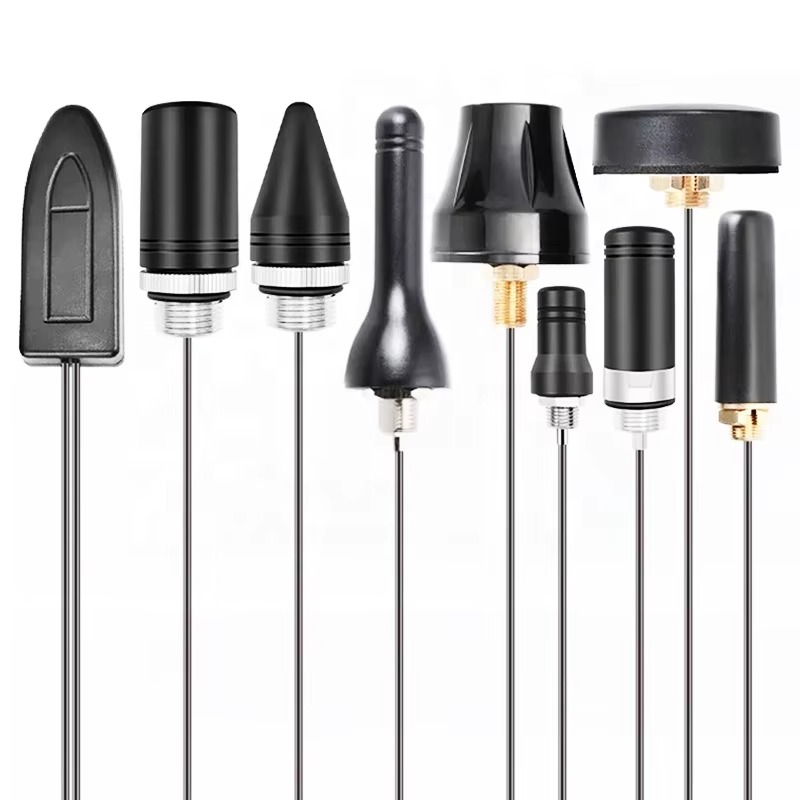
Options include shark fin integrated antennas (simplify wiring and cut assembly labor), 3M adhesive low-profile antennas (no drilling for light delivery vans), magnetic mount antennas (temporary installation for rental fleets), and flange nut mount antennas (heavy-duty solution for trucks and construction machinery). The form factor should fit the design and space limitations of your device.
Step 5: Consider Integration and Certification
Evaluate the antenna's compatibility with your chosen cellular module. Many vendors, including Quectel, offer antennas specifically designed and tested with their module families. Consider whether the antenna is RoHS and REACH compliant, and whether it meets the certification requirements for your target markets.
Future Outlook: Where Compact IoT Antennas Are Heading
The trajectory of compact IoT GNSS 4G antenna development is shaped by several emerging trends.
5G Integration: While current compact combo antennas primarily support 4G LTE, the transition to 5G is accelerating. Antennas supporting sub-6 GHz 5G bands alongside 4G and GNSS are already emerging, with the Taoglas Stream II covering 600MHz to 8000MHz to support global 5G NR.
Multi-Band GNSS: The transition from single-band to multi-band GNSS (L1 + L5) is underway. Multi-band capability helps lower multipath interference effects, improving signal integrity and enabling more reliable high-precision positioning in dense or RF-challenging environments. By integrating navigation signals from multiple satellite sources and utilizing GNSS correction services, antennas can support positional accuracy down to centimeter level.
NTN and Satellite IoT: Non-terrestrial networks (NTN) represent the next frontier. The TE Connectivity D2D Dual Mode Antennas offer dual-mode capability for terrestrial and non-terrestrial networks, providing direct communication with LEO satellites operating on the 25 LTE frequency band.
Virtual Antenna Technology: New approaches to antenna design, such as virtual antenna technology, are emerging to address the fundamental challenges of miniaturization. These technologies use non-resonant elements combined with matching networks to achieve performance that would otherwise require larger physical structures.
Integration with AI and Edge Computing: As edge computing becomes more prevalent in IoT devices, antennas will need to support higher data throughput while maintaining low power consumption—a challenging combination that will drive continued innovation in antenna design.
The compact IoT GNSS 4G antenna represents a convergence of multiple technological imperatives: the need for ubiquitous connectivity, the demand for precise location awareness, and the relentless pressure to miniaturize while maintaining performance. As the IoT ecosystem expands to encompass tens of billions of devices, the importance of selecting and integrating the right antenna solution will only grow.
From the fundamental trade-offs between size, bandwidth, and efficiency to the practical considerations of installation, isolation, and environmental protection, successful antenna integration requires a holistic approach that considers the entire system architecture rather than treating the antenna as an afterthought.
The market's strong growth trajectory—from US$ 5,999 million in 2025 to a projected US$ 11,528 million by 2032—reflects the central role that antennas play in enabling the connected, location-aware world of tomorrow. For engineers and system designers, the compact IoT GNSS 4G antenna is not merely a component; it is the critical link that transforms isolated devices into intelligent, connected, and contextually aware nodes in the broader IoT network.
By understanding the technical specifications, design challenges, and application requirements outlined in this guide, you are well-equipped to make informed decisions that will optimize performance, reduce development risk, and accelerate the deployment of your next-generation IoT solutions.
Lucy Yang | lucy.y@toxutech.com
Dotty Zhao | sales04@toxutech.com
Global Business Director / Sales Team / Global Operations


 En
En Cn
Cn Korean
 Home >