

-
Products -PCBA Manufacturing RF Connectors RF Cable Assemblys Embedded Antennas External Antennas GNSS Positioning Solutions
RF Connectors

RF Cable Assemblys
Embedded Antennas
External Antennas
GNSS Positioning Solutions































 Language


Language


Time:2026-10-15 Views:0
Why FAKRA Male Jumpers Matter in Today's Vehicles
If you've ever wondered how your car's GPS knows exactly where you are, how your backup camera sends a crystalclear image to your dashboard, or how your vehicle communicates with satellites and cellular networks simultaneously, the answer often comes down to a small but mighty component: the automotive FAKRA male jumper.
Modern vehicles are no longer just mechanical machines. They are sophisticated communication hubs on wheels, packed with advanced driverassistance systems (ADAS), infotainment platforms, telematics units, and vehicletoeverything (V2X) connectivity modules. At the heart of all these systems lies a critical need: reliable, highfrequency signal transmission. And that's precisely where FAKRA connectors and their male jumper cable assemblies come into play.
FAKRA, short for Fachkreis Automobil (German for "automotive expert group"), is an interface standard specifically developed for the vehicle industry. It comprises an SMB RF connector embedded within a colorcoded plastic housing designed to meet the unique mechanical and environmental demands of automotive applications. The FAKRA male jumper — a cable assembly with a male (plug) FAKRA connector on one or both ends — serves as the vital link between antennas, cameras, sensors, head units, and electronic control units (ECUs) throughout the vehicle.
The global FAKRA RF connectors market was valued at approximately US$ 1,554 million in 2025 and is projected to reach US$ 2,341 million by 2032, growing at a compound annual growth rate (CAGR) of 6.1% from 2026 to 2032. This remarkable growth trajectory underscores the indispensable role that FAKRA connectors play in the ongoing evolution of connected and autonomous vehicles. The increasing integration of FAKRA RF connectors in automotive systems, including infotainment, navigation, and ADAS, is a primary driver of this market expansion.
This comprehensive guide will walk you through everything you need to know about automotive FAKRA male jumper cable assemblies — from their technical specifications and colorcoding systems to their applications, selection criteria, and future trends. Whether you're a design engineer, procurement specialist, or automotive enthusiast, this article will provide you with actionable insights into one of the most important connectivity solutions in the automotive industry.
What Is a FAKRA Male Jumper? Understanding the Basics
The FAKRA Standard Explained
At its core, a FAKRA connector is a miniaturized coaxial RF connector based on the SMB (SubMiniature version B) interface. It was standardized by the German and American automotive industries to keep RF interconnection costs low while ensuring high levels of electrical and mechanical performance for telematics applications such as GPS, satellite radio, vehicular internet access, remote vehicle diagnostics, and Bluetooth.
The FAKRA standard is governed by two primary specifications: ISO 208601/2 and USCAR17/18. Components manufactured to these standards are guaranteed to be interoperable across different suppliers, which is critical for the automotive industry's complex supply chains.
Male vs. Female FAKRA Connectors
FAKRA connectors are available in two gender configurations: male (plug) and female (jack). The male FAKRA plug typically connects to a coaxial cable, while the female jack is usually mounted on a device such as a GPS receiver, camera module, or telematics unit. A FAKRA male jumper is therefore a cable assembly that features a male FAKRA connector on at least one end — commonly on both ends (maletomale) — designed to carry RF signals between two points in the vehicle's electronic architecture.
Knowing which gender is needed for each side of the connection is fundamental to ensuring proper mating and mechanical fit. FAKRA male jumpers are frequently used to connect devices where the receiving port is a female jack, such as antenna inputs on head units or camera interfaces on processing modules.
Key Components of a FAKRA Male Jumper
A typical FAKRA male jumper cable assembly consists of the following components:
Male FAKRA connector(s): The plug end(s) featuring a metal SMB inner contact within a plastic housing
Coaxial cable: The transmission medium, typically RG174, RG316, RG58, or other automotivegrade microcoaxial cables
Cabletoconnector termination: Crimped or soldered connections ensuring reliable electrical continuity
Optional sealing and strain relief: For harsh environment protection
The connector itself utilizes a standard metal SMB connector embedded within a plastic housing designed with multiple colored codes for easy identification. FAKRA connectors are designed to perform up to 4 GHz and meet the particular mechanical and environmental requirements of the automobile industry. The plastic housing includes a locking feature with an audible clicking noise, which confirms the connection is properly seated — a crucial safety feature in vibrationprone automotive environments.
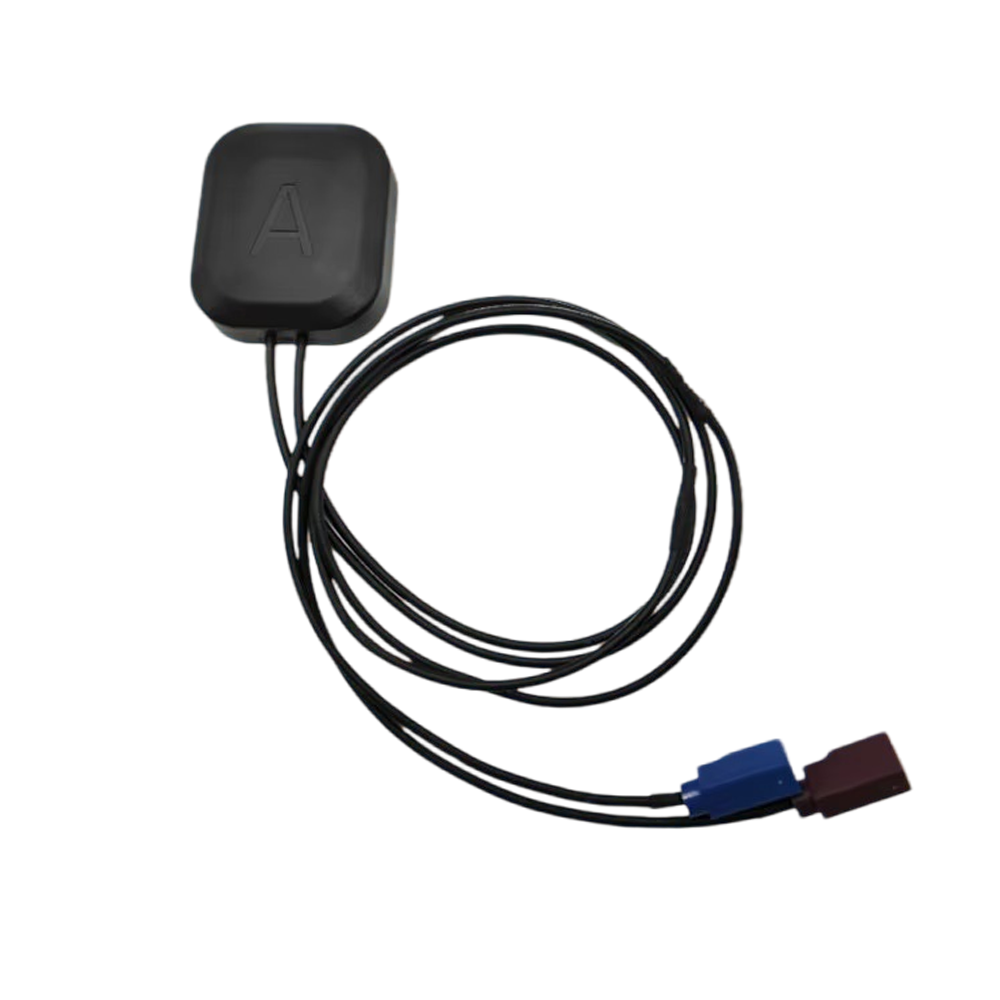
Technical Specifications of FAKRA Male Jumpers
Frequency Range and Bandwidth
The standard FAKRA connector supports a frequency range from DC to 6 GHz in its latest iterations, though earlier generations were rated for up to 4 GHz. This frequency range covers virtually all automotive RF applications, including:
GPS/GNSS (1.2–1.6 GHz)
Satellite radio (2.3 GHz)
WiFi (2.4/5 GHz)
Cellular/LTE (0.7–2.7 GHz)
DSRC/V2X (5.9 GHz)
For applications requiring even higher frequencies and data rates, the MiniFAKRA (HFM) connector system has emerged as the nextgeneration solution, supporting frequencies up to 20 GHz and data rates up to 28 Gbps with an impressive 80% space savings compared to standard FAKRA connectors.
Impedance and Signal Integrity
FAKRA male jumpers are designed with a 50ohm characteristic impedance, which ensures optimal signal transmission with minimal reflections. Impedance mismatches can lead to data loss, signal degradation, or even complete communication failure. The standard specifies a tolerance of 50Ω ± 2Ω for most automotive applications.
Key signal integrity parameters include:
VSWR (Voltage Standing Wave Ratio): Measures signal reflection; lower values indicate better performance
Insertion Loss: The signal strength reduction caused by the connector; minimal loss is ideal
Return Loss: Indicates the amount of signal reflected due to impedance mismatch; USCAR specifies return loss of ≥ 14 dB up to 3 GHz
These parameters are particularly critical for highfrequency or missioncritical applications such as ADAS camera feeds and radar sensor data transmission.
Mechanical and Environmental Specifications
FAKRA male jumpers are engineered to withstand the harsh conditions of the automotive environment. Key mechanical and environmental specifications include:
| Parameter | Specification |
|---|---|
| Engagement Force | ≤ 25 N |
| Cable Retention Force | ≥ 110 N (depending on housing) |
| Operating Temperature | −40°C to +105°C |
| Mating Cycles | Minimum 100 (standard); up to 500 (high-reliability variants) |
| Dynamic Load | Load Level 2 |
| Dielectric Withstanding Voltage | 800 VRMS minimum |
| Contact Resistance | 5.0 mΩ Max |
These specifications ensure that FAKRA male jumpers can endure the vibration, temperature extremes, and mechanical stress encountered throughout a vehicle's lifespan. The connectors also feature a snapon coupling mechanism with an audible click, providing both tactile and audible confirmation of proper mating.
Color Coding and Keying: Ensuring ErrorFree Connections
The FAKRA Color Coding System
One of the most distinctive features of FAKRA connectors is their comprehensive color and mechanical coding system. With up to 14 different mechanical and visual key codes, each assigned a specific color, the system is designed to prevent mismating during assembly and maintenance. This is particularly important in modern vehicles where dozens of RF connections may exist within a single wiring harness.
The coding system uses different combinations of ribs on the connector housing, each corresponding to a specific color. This physical keying ensures that, for example, a GPS connector cannot be accidentally plugged into a cellular antenna port.
| Code | Application | Color | RAL Number |
|---|---|---|---|
| A | DAB/AMFM (Radio without phantom supply) | Jet Black | 9005 |
| B | DAB with Power/AMFM (Radio with phantom supply) | Cream White | 9001 |
| C | GPS/Telematics | Signal Blue | 5005 |
| D | Cellular/GSM | Bordeaux Violet | 4004 |
| E | TV/SDARS Terrestrial | Leaf Green | 6002 |
| F | TV/SDARS Terrestrial/Camera | Nut Brown | 8011 |
| G | Remote Control/SDARS | Blue Grey | 7031 |
| H | GPS Navigation | Heather Violet | 4003 |
| I | Bluetooth/VPM | Beige | 1001 |
| K | SDARS Satellite/AMFM | Curry Yellow | 1027 |
| L | VPM | Carmine Red | 3002 |
| M | RKE/TPMS | Pastel Orange | 2003 |
| N | DSRC/VPM | Pastel Green | 6019 |
| Z | Universal (Neutral) | Water Blue | 5021 |
As the number of communication systems inside modern vehicles far exceeds the number of color codes available, the application assignment is not strictly enforced. However, the physical keying remains critical — connectors with different codes cannot be mated, providing a robust mechanical safeguard against assembly errors.
Why Color Coding Matters for Male Jumpers
For FAKRA male jumpers specifically, color coding offers several practical benefits:
1. Assembly speed: Technicians can quickly identify the correct connection point by matching colors
2. Error prevention: The mechanical keying prevents forcefitting incompatible connectors
3. Troubleshooting efficiency: Colorcoding simplifies diagnosis of connectivity issues
4. Serviceability: Replacement jumpers can be ordered with confidence using the correct code
Cable Types and Construction of FAKRA Male Jumper Assemblies
Common Coaxial Cable Types
FAKRA male jumpers are available with a variety of coaxial cable types, each suited to different applications and performance requirements:
RG174: A flexible 2.5 mm diameter cable ideal for tight routing in confined spaces
RG316: Similar to RG174 but with improved electrical characteristics
RG58: A 5 mm diameter cable offering lower signal loss for longer runs
RG178: An ultraminiature option for spaceconstrained applications
Automotivespecific cables (e.g., RTK031): Purposedesigned for vehicle environments
The choice of cable directly impacts the jumper's performance characteristics, including insertion loss, flexibility, and durability. For highflex applications requiring repeated movement, specialized highflex RG58 cable assemblies provide reliable RF connectivity up to 3 GHz.
Connector Construction and Generations
FAKRA connector technology has evolved significantly over the years, with each generation offering improvements in performance and manufacturability:
Generation 1.0: Machined body and contact, unassembled housing, hand tooled
Generation 2.0: Diecast body, machined contact, preassembled housing, hand tooled
Generation 2.5: Diecast body, stamped contact, preassembled housing, semiautomated tooling
Generation 3.0: Diecast body, stamped contact, preassembled housing, automated tooling
Generation 4.0: Fully stamped body, contact, and sleeve, supplied unassembled, fully automated tooling
This evolution has driven significant cost reductions while maintaining the high reliability required by the automotive industry. Modern FAKRA connectors are produced using innovative manufacturing processes that are more efficient and costeffective compared to traditional screwmachined methods, with crimp automation enabled by carrierfed components.
Assembly and Quality Control
The assembly of FAKRA male jumpers involves precision crimping of the center contact and outer ferrule to the coaxial cable, followed by insertion into the colorcoded plastic housing. The plastic housing features a locking mechanism that produces an audible clicking sound when properly engaged, providing immediate feedback to assembly technicians.
Leading manufacturers employ highly automated assembly processes with inline process monitoring to ensure consistent quality. This includes 100% electrical and physical testing of every cable assembly produced. The use of stamped and formed (SF) technology has enabled fully automated production with consistent performance characteristics across high volumes.
Key Applications of FAKRA Male Jumpers in Modern Vehicles
ADAS and Autonomous Driving Systems
Advanced driverassistance systems represent one of the fastestgrowing applications for FAKRA connectors. Modern vehicles may incorporate multiple cameras (front, rear, side, and surroundview), radar sensors, LiDAR units, and other perception devices — all requiring highbandwidth, lowlatency data transmission.
FAKRA male jumpers are commonly used to connect:
Camera modules to image processing ECUs
Radar sensors for adaptive cruise control and collision avoidance
LiDAR units for autonomous driving functions
Surroundview systems for parking assistance
The connectors support critical automotive data protocols including FPDLink III/IV, GMSL 2/3, and MIPI APHY, ensuring compatibility with the latest ADAS architectures.
Infotainment and Telematics
Modern infotainment systems demand seamless connectivity for audio, video, and data streams. FAKRA male jumpers enable:
AM/FM/DAB radio antenna connections
Satellite radio (SDARS) reception
GPS/GNSS navigation signal routing
WiFi and Bluetooth antenna feeds
Invehicle internet connectivity
Rearseat entertainment systems
The RF communication systems in modern vehicles have become indispensable, supporting telematics applications such as Global Positioning Satellite, Satellite Radio, Vehicular Internet Access, Remote vehicle diagnostics, and Bluetooth.
VehicletoEverything (V2X) Communication
V2X technology enables vehicles to communicate with other vehicles (V2V), infrastructure (V2I), and pedestrians (V2P). This requires reliable, highfrequency RF connections that FAKRA male jumpers are specifically designed to provide. The dedicated 5.9 GHz DSRC band and emerging CV2X cellular protocols both rely on robust coaxial connectivity.
The highspeed FAKRAMini (HFM) interconnect system supports datarich automotive applications including V2X communication, delivering data rates up to 28 Gbps at frequencies up to 20 GHz in a compact form factor.
Antenna Systems
FAKRA male jumpers are widely used to connect various antenna types to their respective receivers:
Shark fin antennas combining GPS, cellular, and satellite radio
Glassmounted antennas for AM/FM and DAB
Roofmounted cellular antennas for telematics
Diversity antenna systems for improved reception
Each antenna type typically uses a specific FAKRA color code, making the male jumper the final link between the antenna and the head unit or telematics module.
How to Select the Right FAKRA Male Jumper
Step 1: Determine Your Application Requirements
Before selecting a FAKRA male jumper, it's essential to understand the specific technical specifications and design elements of FAKRA connectors. These parameters determine whether a connector will perform efficiently within your system. Start by identifying:
The signal type (video, audio, RF data)
The required frequency range
The data rate and bandwidth requirements
The impedance of your system (typically 50Ω)
Step 2: Choose the Correct Connector Type
FAKRA connectors are typically available in male (plug) and female (jack) configurations. For a male jumper, you'll need to confirm that the mating interface on your device or module is a female jack. The plug usually connects to a coaxial cable, while the jack is mounted on a device such as a GPS receiver, camera module, or telematics unit.
Consider whether you need:
Straight or rightangle connector configurations
Sealed or nonsealed variants (for engine bay or exterior mounting)
Single or dual connector housings
Step 3: Verify Frequency and Signal Requirements
FAKRA connectors support a frequency range up to 6 GHz, making them suitable for various signal types including video feeds from cameras, audio signals to/from entertainment modules, and RF data for GPS, LTE, Bluetooth, WiFi, and satellite radio. Ensure the connector's rated frequency range exceeds your application's maximum frequency with adequate margin.
Step 4: Match the Color Code and Keying
This is perhaps the most critical step in FAKRA male jumper selection. Using the wrong code will result in a connector that physically cannot mate with the corresponding jack. Always verify:
The correct color code for your application
The mechanical keying configuration
Compatibility with your existing harness or device
Step 5: Select the Appropriate Cable Type
Choose a cable that balances performance, flexibility, and durability:
RG174 for standard flexibility and short runs
RG58 for lower loss over longer distances
RG316 for a balance of flexibility and performance
Highflex variants for applications involving repeated movement
Step 6: Evaluate Environmental Requirements
Consider the operating environment for your jumper:
Temperature range: Standard FAKRA handles 40°C to +105°C
Sealing: IPrated sealed variants for exposed locations
Vibration resistance: Critical for engine bay and chassismounted applications
Step 7: Verify Standards Compliance
Ensure your FAKRA male jumper complies with ISO 208601/2 and USCAR17/18 standards. These certifications guarantee interoperability and quality. Reputable manufacturers like Rosenberger, TE Connectivity, Amphenol, Molex, and JAE all produce compliant products.
Market Trends and Future Outlook
Market Growth and Forecast
The FAKRA RF connectors market is experiencing robust growth driven by the increasing demand for reliable, highfrequency connections in automotive, telecommunications, and consumer electronics sectors. Key market data points include:
2025 market value: US$ 1,554 million
2032 projected value: US$ 2,341 million
CAGR (20262032): 6.1%
Passenger vehicle application share: Over 80%
Top 5 manufacturer market share: Over 57% (Rosenberger, TE Connectivity, JAE, Amphenol, Molex)
North America and Europe are the largest producers of FAKRA RF connectors, holding a combined share of over 27%.
The Rise of MiniFAKRA
The most significant trend in the FAKRA ecosystem is the rapid adoption of MiniFAKRA (HFM) connectors. These compact connectors offer:
80% space savings compared to standard FAKRA
Data rates up to 28 Gbps
Frequencies up to 20 GHz
Support for advanced protocols including GMSL 2/3, FPDLink III/IV, and MIPI APHY
The global Automotive MiniFAKRA connector market is expected to grow at a remarkable CAGR of 21.7% from 2026 to 2032, reaching US$ 1,471 million by 2032. This growth is driven by the increasing number of cameras and sensors in modern vehicles, where space efficiency and highspeed data transmission are paramount.
Emerging Applications
Several emerging applications are expected to further drive demand for FAKRA male jumpers:
Autonomous driving: Increasing levels of autonomy require more sensors, cameras, and computing power, all connected via highspeed RF links
5G connectivity: Invehicle 5G modems and antenna systems require robust coaxial connections
Vehicle electrification: Electric vehicles introduce new RF challenges and opportunities
Edge computing: Distributed processing architectures require highbandwidth interconnects
Softwaredefined vehicles: Overtheair updates and reconfigurable architectures depend on reliable physical layer connectivity
Sustainability and Cost Optimization
The FAKRA connector industry continues to focus on reducing manufacturing costs through advanced stamping and automated assembly technologies. Generation 4.0 connectors, with fully stamped components and automated tooling, represent the current state of the art in costeffective production. Manufacturers are also exploring more sustainable materials and production methods to reduce environmental impact.
Frequently Asked Questions About FAKRA Male Jumpers
What is the difference between FAKRA and MiniFAKRA?
MiniFAKRA (also known as HFM) is a smaller, higherperformance version of the standard FAKRA connector. While standard FAKRA supports frequencies up to 6 GHz and data rates of a few Gbps, MiniFAKRA supports up to 20 GHz and 28 Gbps while occupying 80% less space.
Can I use a FAKRA male jumper for nonautomotive applications?
While FAKRA connectors are designed specifically for automotive environments, their robust construction and high performance make them suitable for other applications requiring reliable RF connections in harsh conditions, such as industrial automation, test equipment, and aerospace systems.
What is the maximum cable length for a FAKRA male jumper?
The maximum practical length depends on the cable type and frequency. For RG174 at 1 GHz, lengths up to 36 inches (91 cm) are common. For longer runs, RG58 is preferred due to its lower signal loss. Highfrequency signals degrade more rapidly, so shorter cables are generally recommended for applications above 3 GHz.
How do I know which color code to choose?
The color code should match the application and the corresponding jack on your device. If you're replacing an existing jumper, simply match the color. For new designs, refer to the FAKRA color coding table and your system's requirements. When in doubt, the neutral "Z" code (Water Blue) provides universal compatibility in many cases.
Are FAKRA male jumpers waterproof?
Standard FAKRA connectors are not waterproof, but sealed variants are available for applications requiring protection against moisture and fluid ingress. These sealed versions are typically used for exteriormounted antennas, cameras, and sensors. Always verify the IP rating when selecting a jumper for exposed locations.
What is the typical mating cycle life of a FAKRA connector?
Standard FAKRA connectors are rated for a minimum of 100 mating cycles, while highreliability variants can achieve up to 500 cycles. This is generally sufficient for automotive production and service requirements, as most connections are made once during assembly and remain undisturbed thereafter.
The automotive FAKRA male jumper is far more than a simple cable assembly — it is a critical enabler of the connected, intelligent vehicles that define modern mobility. From GPS navigation and satellite radio to ADAS cameras and V2X communication, FAKRA male jumpers provide the reliable, highfrequency signal transmission that keeps vehicles informed, entertained, and safe.
As the automotive industry continues its rapid evolution toward autonomous driving, electrification, and softwaredefined architectures, the demand for FAKRA connectors will only intensify. The market's projected growth from US$ 1.55 billion in 2025 to over US$ 2.3 billion by 2032 reflects the fundamental role these components play in vehicle connectivity.
For design engineers and procurement professionals, understanding the technical specifications, color coding systems, cable options, and selection criteria outlined in this guide is essential for making informed decisions. Whether you're specifying standard FAKRA male jumpers for an infotainment system or exploring MiniFAKRA solutions for nextgeneration ADAS architectures, choosing the right connector ensures optimal performance, reliability, and longevity.
As vehicles become increasingly connected and autonomous, one thing remains certain: the FAKRA male jumper will continue to be the unsung hero of automotive RF connectivity, quietly and reliably transmitting the signals that make modern driving safer, smarter, and more enjoyable.
Lucy Yang | lucy.y@toxutech.com
Dotty Zhao | sales04@toxutech.com
Global Business Director / Sales Team / Global Operations


 En
En Cn
Cn Korean
 Home >